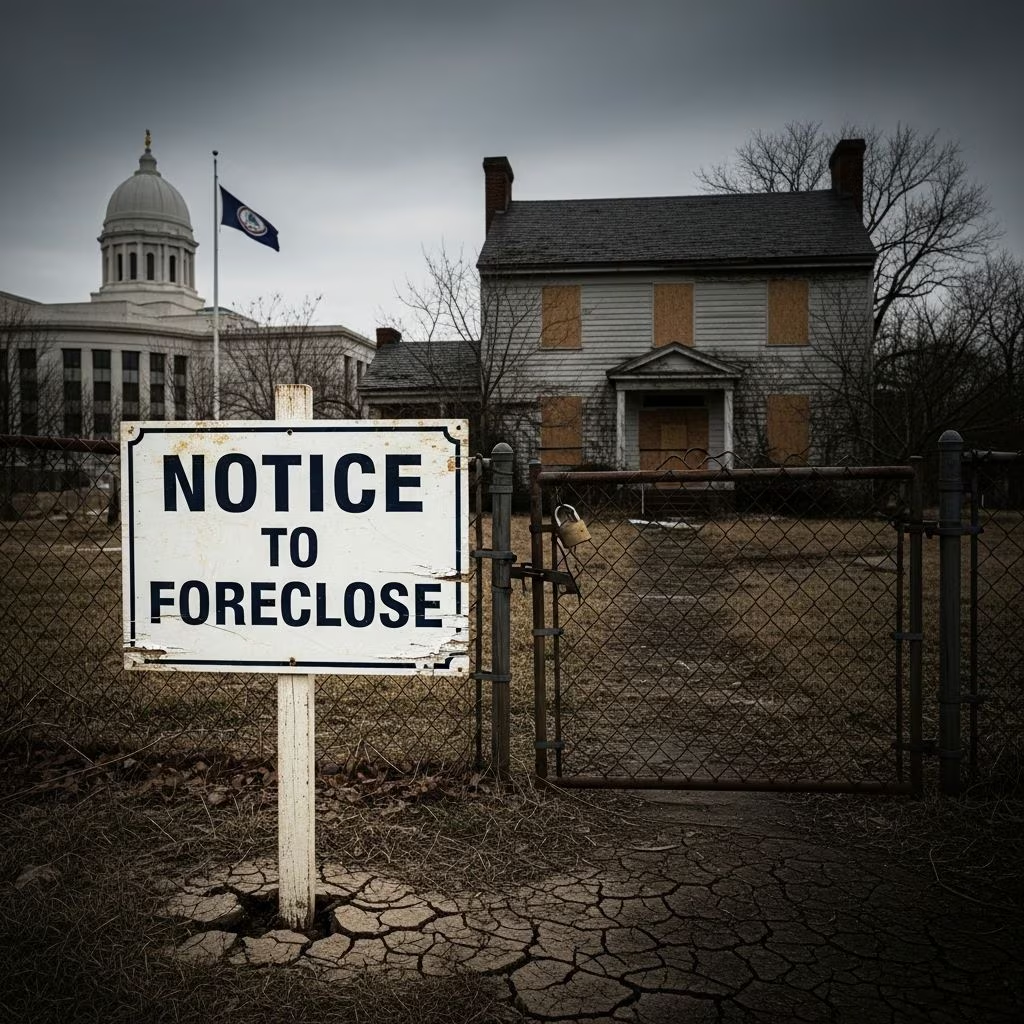
Property taxes fund essential public services in Virginia, such as schools, roads, and emergency response. Failing to pay these taxes on time triggers a series of financial and legal consequences designed to encourage compliance and recover owed funds. Homeowners who miss deadlines face mounting penalties, interest accrual, property liens, and ultimately, the risk of losing their real estate through judicial processes. This comprehensive guide outlines the timeline of events, local variations, prevention strategies, and recovery options based on Virginia statutes and county practices.
Property Tax Basics and Payment Deadlines in Virginia
Virginia localities assess property taxes annually on real estate and personal property like vehicles. Due dates vary by jurisdiction: real estate taxes often fall around December 5, while personal property taxes are due by the same date in many counties. For instance, Surry County specifies December 5 as the deadline for personal property taxes, after which collections intensify. Missing these dates initiates penalties immediately.
Taxes are calculated based on assessed values set by local assessors. Owners receive bills months in advance, providing ample notice. Grace periods are minimal; payments post-deadline incur charges right away. Understanding your specific locality’s schedule—via the treasurer’s office or online portals—is crucial for compliance.
Immediate Financial Penalties for Late Payments
The first repercussions are direct hits to your wallet. Virginia law mandates penalties and interest on overdue amounts, scaling with delinquency duration.
- Penalty Charges: A common 10% penalty applies on the unpaid balance the month after the due date. In Lee County, this is the greater of 10% of the overdue amount or $2, assessed on November 1 for taxes due prior. Hanover County adds 2% if paid within the due month, escalating to 10% thereafter.
- Interest Accrual: 10% annual interest compounds daily or monthly, starting the month after due. Chesterfield County applies 10% annual interest post-due date, alongside the 10% penalty.
- Escalating Fees: Fairfax County ramps penalties to 25% for delinquencies over 45 days on vehicle taxes.
These charges can double the original tax bill within a year. For a $3,000 tax bill, a 10% penalty adds $300 immediately, plus $300 yearly interest, snowballing rapidly.
| Locality | Initial Penalty | Interest Rate | Additional Notes |
|---|---|---|---|
| Lee County | 10% or $2 (greater) | 10% per annum | From Nov 1 post-due |
| Hanover County | 2% then 10% | Not specified | End of month escalation |
| Chesterfield County | 10% | 10% annual | Day after due date |
| Fairfax County | 10%, up to 25% | Not specified | Over 45 days |
This table illustrates variations; always verify with your local treasurer.
Collection Notices and Enforcement Actions
Local treasurers issue notices shortly after delinquency. Hampton’s process includes a 10% penalty on unpaid balances, with monthly payments applied to current bills first. Ignore these, and escalation follows: certified mail warnings, phone calls, and demands for payment plans.
After months of non-payment, accounts go to in-house collections or external attorneys. Surry County refers real estate delinquencies over two years—without payment efforts—to attorneys, adding fees. Payment agreements are available via the treasurer’s office. These plans require consistent payments; default voids them.
Tax Liens: The First Threat to Property Ownership
Unresolved delinquencies lead to a tax lien, a legal claim against the property securing the debt. Virginia counties record liens publicly, clouding title and complicating sales or refinancing. Liens include taxes, penalties, interest, and costs.
Liens persist until paid, accruing more charges. They appear on credit reports in some cases, impacting scores. The lien process is automatic in many areas, signaling serious intent to collect.
Judicial Sale Process Under Virginia Law
The most severe consequence is judicial sale. Virginia Code Title 58.1, Article 4 outlines “Bill in Equity for Sale of Delinquent Tax Lands.” Localities file complaints in circuit court for properties with delinquencies exceeding thresholds: typically when taxes plus penalties surpass 20-35% of assessed value.
Key Steps in the Process:
- Complaint Filing: Treasurer files in the property’s circuit court, naming owners and interested parties.
- Notice Publication: Public notices in newspapers alert owners and bidders.
- Redemption Period: Owners redeem pre-sale by paying all dues, including attorney fees, into court.
- Court-Ordered Sale: Auction to highest bidder; proceeds cover debts, surplus to owner.
- Post-Sale Rights: Buyers gain title; owners have limited challenge windows.
Instalment agreements up to 72 months are possible pre-sale, but default with 15 days’ notice voids them. Recent 2025 amendments allow conveying low-value properties to land banks for tax forgiveness.
Variations Across Virginia Counties
While state law governs, counties implement differently:
- Surry County: Personal property faces immediate jeopardy; real estate to attorneys after 2 years.
- Lee County: Uniform 10% penalties/interest for real and personal property.
- Hanover/Chesterfield: Tiered penalties with prompt interest.
Urban areas like Fairfax escalate faster due to higher volumes. Rural counties may offer more payment flexibility.
Preventing Escalation: Proactive Steps for Homeowners
Avoid crisis by acting early:
- Enroll in pre-pay or instalment plans before due dates.
- Appeal assessments if overvalued.
- Seek hardship deferrals for seniors or low-income owners under VA Code §58.1-3210+.
- Monitor bills via e-notifications.
- Consult tax relief professionals or legal aid.
Contact treasurers promptly upon missing payments; many offer amnesty periods waiving penalties.
Risks Beyond Financial Loss
Delinquency strains communities: unpaid taxes reduce funds for services, raising rates for payers. Personally, liens hinder equity access, sales, or inheritance. Foreclosure evicts families, eroding stability.
Frequently Asked Questions (FAQs)
What triggers the first penalties for unpaid taxes?
Penalties hit the month after due, typically 10% in most counties.
How long before a lien is placed?
Liens follow persistent delinquency, often within months; varies by locality.
Can I lose my home over unpaid taxes?
Yes, after judicial sale if unredeemed; redemption possible pre-sale.
Are payment plans available?
Yes, up to 72 months pre-sale; contact treasurer.
Does delinquency affect credit?
Liens may appear on reports, harming scores.
What if I sell the property?
Liens must be cleared at closing from proceeds.
References
- Delinquent Tax Collection Methods — Surry County, VA. Accessed 2026. https://www.surrycountyva.gov/181/Delinquent-Tax-Collection-Methods
- § 15-3 INTEREST AND PENALTY ON DELINQUENT REAL ESTATE — Lee County, VA Code Library. 2019-12-17. https://codelibrary.amlegal.com/codes/leecountyva/latest/leecounty_va/0-0-0-2570
- How Long Can You Go Without Paying Your Property Taxes in Virginia — The Cash Offer Company. Accessed 2026. https://www.thecashoffercompany.com/how-long-can-you-go-without-paying-your-property-taxes-in-virginia/
- Article 4. Bill in Equity for Sale of Delinquent Tax Lands — Virginia Law (VA Code §58.1). 2025. https://law.lis.virginia.gov/vacodefull/title58.1/chapter39/article4/
- Delinquent Taxes — Hanover County, VA. Accessed 2026. https://www.hanovercounty.gov/374/Delinquent-Taxes
- Delinquent Billings, Late Payments and Judicial Sales — Chesterfield County, VA. Accessed 2026. https://www.chesterfield.gov/3959/Delinquent-Billings-Late-Payments-and-Ju