
Unlocking Business Value Through Intellectual Capital
Discover how to identify, develop, and protect your company's intellectual capital to drive growth, innovation, and competitive advantage.
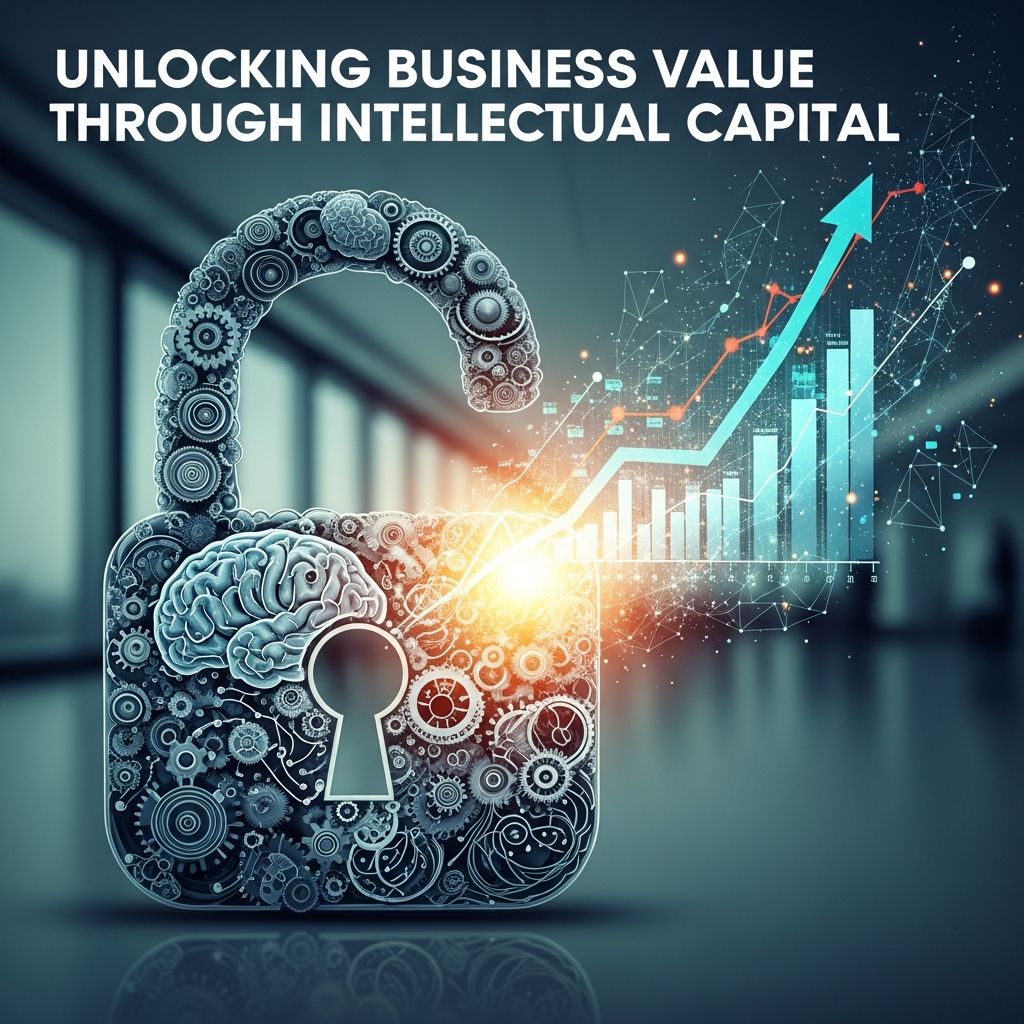
In today’s knowledge-driven economy, a company’s most valuable resources are often not its physical assets but the intangible knowledge, skills, and relationships that fuel innovation and growth. Intellectual capital represents this collective brainpower, encompassing everything from employee expertise to proprietary processes and customer networks. Effectively managing it can transform a business, enhancing profitability, fostering competitive edges, and attracting investors.
Defining the Pillars of Intellectual Capital
Intellectual capital breaks down into three core pillars: human, structural, and relational. Each plays a distinct yet interconnected role in driving organizational success.
Human Capital: The Power of People
Human capital refers to the skills, knowledge, experience, and creativity possessed by employees. It’s the individual capabilities that employees bring to their roles, acquired through education, training, and on-the-job learning. For instance, a software engineer’s coding prowess or a salesperson’s negotiation expertise directly contributes to revenue generation.
Unlike tangible assets, human capital walks out the door each evening, making retention strategies crucial. Companies invest in training programs, mentorship initiatives, and competitive compensation to nurture this asset. According to the Corporate Finance Institute, human capital is the ‘know-how and expertise of individuals within a company, which can bring the company value.’
Structural Capital: Systems and Processes
Structural capital includes the non-physical infrastructure that supports human efforts, such as databases, software tools, patents, trademarks, and organizational culture. This is the knowledge that remains within the company even after employees leave—think proprietary algorithms, operational manuals, or customer relationship management (CRM) systems.
EBSCO Research Starters defines organizational capital (synonymous with structural) as ‘the systems a company has in place to maximize the potential of its human capital,’ including processes, policies, and intellectual property. Building robust structural capital involves documenting best practices and investing in technology that captures and disseminates knowledge efficiently.
Relational Capital: Networks and Reputation
Relational capital captures the value derived from external relationships, including customer loyalty, supplier partnerships, brand reputation, and strategic alliances. A strong network provides market access, collaborative opportunities, and trust-based advantages.
For example, a company’s well-regarded brand can command premium pricing, while deep supplier ties ensure supply chain resilience. The Corporate Finance Institute notes that relational capital ‘consists of all the valuable relationships that an organization maintains with customers, suppliers, partners, clients, and other external entities.’
Why Intellectual Capital Matters for Business Growth
In an era where intangibles account for over 80% of a firm’s market value in knowledge-intensive industries, ignoring intellectual capital is a recipe for stagnation. It drives innovation by combining human creativity with structural tools, opens new markets through relational networks, and creates barriers to entry via protected IP.
Businesses that excel here, like tech giants, leverage intellectual capital to pivot quickly, scale operations, and outmaneuver competitors. Wikipedia’s overview emphasizes that intellectual capital management involves a ‘cycle of four inter-related sets of practices: Strategic Alignment, Exploration and Exploitation, Measurement,’ highlighting its strategic imperative.
Step-by-Step Guide to Building Intellectual Capital
Developing intellectual capital requires a systematic approach. Here’s how to get started:
- Audit Existing Assets: Conduct a comprehensive inventory of skills, processes, and relationships. Use surveys, interviews, and data analytics to map out hidden gems.
- Foster Knowledge Sharing: Implement collaboration platforms, intranets, and regular knowledge-sharing sessions to prevent silos.
- Invest in Development: Offer continuous training, hire for cultural fit, and encourage innovation through hackathons or R&D budgets.
- Leverage Technology: Deploy AI-driven tools for knowledge management, automating capture and retrieval of insights.
- Strengthen External Ties: Nurture partnerships via CRM systems and customer feedback loops.
Measuring and Valuing Intellectual Capital
Quantifying intangibles is challenging but essential for strategic decision-making. Traditional accounting overlooks them, so specialized frameworks are needed.
| Measurement Method | Description | Examples |
|---|---|---|
| Balanced Scorecard | Integrates financial and non-financial metrics | Employee turnover rates, patent filings |
| Intellectual Capital Navigator | Assesses human, structural, relational impacts | Knowledge flow indices, customer retention |
| VAIC (Value Added Intellectual Coefficient) | Calculates ROI from intellectual capital | VAHU (human), VASTR (structural) |
Companies often produce intellectual capital reports alongside financial statements, outlining assets qualitatively for stakeholders. The LegalZoom article suggests these reports detail ‘various aspects of the intellectual capital but without any dollar values attached,’ aiding internal planning or investor pitches.
Advanced metrics include R&D spend as a percentage of revenue or employee innovation contributions tracked via idea management software.
Protecting Your Intellectual Capital
Safeguarding is as vital as building. Key strategies include:
- Intellectual Property Registration: File for patents, trademarks, and copyrights promptly. The U.S. Patent and Trademark Office (USPTO) handles federal protections.[USPTO Official Site]
- Confidentiality Measures: Use NDAs, access controls, and secure data storage to prevent leaks.
- Trade Secret Protocols: Document processes internally without public disclosure, as with Coca-Cola’s formula.
- Cybersecurity Investments: Protect digital structural capital from breaches.
Indeed.com stresses that intellectual capital includes ‘intellectual property, relationships, processes and other intangible information assets,’ underscoring the need for legal safeguards.
Integrating Intellectual Capital into Strategy
Effective management aligns with business objectives. For market expansion, leverage relational capital for partnerships; for efficiency, optimize structural processes. Wikipedia describes this as ‘strategic alignment’ in the ICM cycle.
Case in point: Consulting firms use knowledge management systems (KMS) to store project insights, enhancing service delivery and client retention, as noted in sustainability directories.
Challenges and Solutions in Intellectual Capital Management
Common hurdles include tacit knowledge (hard-to-articulate expertise), measurement subjectivity, and employee turnover. Solutions?
- Communities of practice to codify tacit knowledge.
- Hybrid metrics blending qualitative and quantitative data.
- Succession planning and knowledge transfer programs.
The academic perspective from sources like Wikipedia highlights challenges in managing tacit knowledge and preventing leaks to competitors.
Future Trends in Intellectual Capital
AI and machine learning are revolutionizing ICM by automating knowledge discovery and predictive analytics. Blockchain ensures secure IP tracking, while remote work demands virtual collaboration tools. Forward-thinking leaders will prioritize these to stay ahead.
Frequently Asked Questions
What is the difference between intellectual capital and intellectual property?
Intellectual capital is the broader sum of knowledge and capabilities, while IP is the legally protected subset like patents and trademarks.
How can small businesses manage intellectual capital?
Start with employee training, basic CRM tools, and free IP resources from USPTO. Focus on culture to retain human capital.
Why measure intellectual capital?
It reveals true value drivers, informs investments, and boosts investor confidence through transparent reporting.
Can intellectual capital be quantified financially?
Indirectly via models like VAIC, but it’s often reported qualitatively to avoid overvaluation risks.
What role does culture play in ICM?
A collaborative culture amplifies all pillars, turning individual knowledge into collective advantage.
References
- Managing Your Company’s Intellectual Capital — LegalZoom. 2023. https://www.legalzoom.com/articles/managing-your-companys-intellectual-capital
- Intellectual Capital Management — Sustainability Directory. 2024-01-15. https://esg.sustainability-directory.com/term/intellectual-capital-management/
- Intellectual capital management — Wikipedia. 2025-11-20. https://en.wikipedia.org/wiki/Intellectual_capital_management
- What Is Intellectual Capital? (Types and Examples) — Indeed. 2024-05-10. https://www.indeed.com/career-advice/career-development/intellectual-capital
- Intellectual Capital — EBSCO Research Starters. 2023-08-01. https://www.ebsco.com/research-starters/economics/intellectual-capital
- Intellectual Capital – Definition, Branches, Measuring — Corporate Finance Institute. 2024-02-28. https://corporatefinanceinstitute.com/resources/valuation/intellectual-capital/
Similar Articles








Read full bio of medha deb


