
Guide to the University of Wisconsin Credit Union Visa Card
Understand rates, fees, rewards, and protections on the University of Wisconsin Credit Union Visa credit card before you apply.
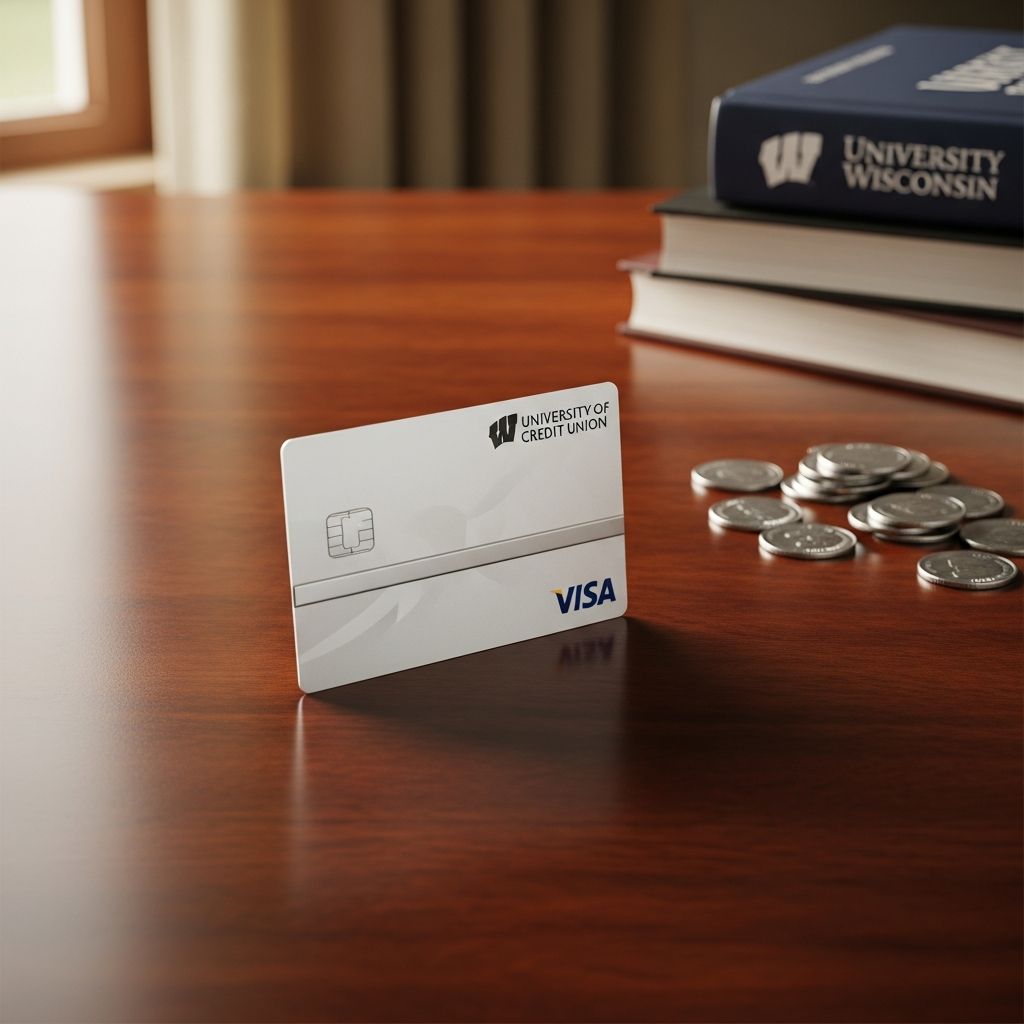
The University of Wisconsin Credit Union Visa credit card is a general-purpose card offered by a member-owned financial institution. It is designed to help everyday consumers, including students and alumni, finance purchases, build credit history, and access standard Visa protections. This guide walks through how the card works, what it may cost, and how to evaluate whether it aligns with your financial needs.
1. Overview of This Credit Union Visa Card
Credit union cards often differ from large bank credit cards in their fee structures, interest rates, and member focus. As a not-for-profit institution, a credit union typically aims to return value to members through competitive pricing and simpler terms, though you should always verify current disclosures before applying.
The University of Wisconsin Credit Union Visa card generally offers:
- Revolving credit line for everyday purchases and bills
- Variable interest rate tied to a benchmark index, such as the prime rate
- Standard Visa acceptance at millions of merchants worldwide
- Digital account access to monitor balances, make payments, and set alerts
Exact APRs, fees, and rewards structures can change over time, so always rely on the card’s current pricing and terms sheet provided by the issuer.
2. Membership and Eligibility Basics
Because this is a credit union card, eligibility starts with meeting membership requirements. Credit unions are allowed to serve defined fields of membership under U.S. law, such as people who work, study, or live in specific areas.
Typical membership criteria for a university-affiliated credit union can include:
- Enrollment or employment at the associated university
- Alumni status or affiliation through certain organizations
- Residence or employment in approved geographic regions
- Family relationship with an existing member
Sometimes a small membership share deposit (for example, in a savings account) is required to open membership and access credit products.
3. Interest Rates, APR, and How Your Costs Add Up
Most general-purpose Visa cards from credit unions use a variable Annual Percentage Rate (APR). The APR reflects the yearly cost of borrowing, expressed as a percentage of your outstanding balance.
3.1 Purchase, Balance Transfer, and Cash Advance APRs
Credit cards often apply different APRs to distinct types of transactions:
- Purchases: Day-to-day card use at merchants.
- Balance transfers: Moving existing balances from another card to this card.
- Cash advances: Using the card to withdraw cash or similar cash-like transactions.
Cash advance APRs are frequently higher than purchase APRs, and they typically have no grace period, meaning interest begins accruing immediately on the transaction date.
3.2 Variable Rate Structure
Variable APRs usually follow a formula like:
APR = Index (e.g., U.S. prime rate) + Margin
When the index changes, your APR can also change, altering your finance charges. Issuers must disclose these variable-rate features and how rate changes are determined.
| APR Type | Typical Use | Grace Period? |
|---|---|---|
| Purchase APR | Everyday card spending | Yes, if you pay statement balance in full by due date |
| Balance Transfer APR | Transferred balances from other cards | Usually no; interest accrues immediately |
| Cash Advance APR | ATM withdrawals, cash-like transactions | No; interest starts on transaction date |
3.3 How to Limit Interest Charges
To manage costs on a card like the University of Wisconsin Credit Union Visa:
- Pay your full statement balance each month to avoid interest on new purchases.
- Avoid or minimize cash advances due to their higher APR and lack of grace period.
- Consider whether a balance transfer makes sense after factoring any fees.
Consumer education from regulators encourages cardholders to compare APRs, fees, and features before choosing a card, and to understand how compounding interest can quickly increase total costs if only minimum payments are made.
4. Fees You May Encounter
Even when a card offers a competitive APR, fees can significantly influence your total cost of credit. Card issuers must disclose periodic and transactional fees in a standardized format so consumers can compare products more easily.
4.1 Common Fee Types
- Annual fee: Some cards charge a yearly fee; many credit union cards offer low or no annual fees for basic products.
- Balance transfer fee: Often a percentage of the amount transferred.
- Cash advance fee: Charged each time you access cash through the card.
- Late payment fee: If your payment is received after the due date, up to legal caps.
- Returned payment fee: When a payment cannot be processed due to insufficient funds or other issues.
- Foreign transaction fee: Applied to purchases processed through non-U.S. banks; some cards waive this fee.
4.2 How to Avoid or Reduce Fees
Practical strategies to manage fees include:
- Enabling payment reminders or automatic payments to prevent late fees.
- Confirming foreign transaction policies if you study or travel abroad.
- Reviewing the fee schedule prior to using options like balance transfers or cash advances.
5. Rewards, Benefits, and Cardholder Protections
While the primary function of a credit card is to provide short-term borrowing and a payment method, many issuers, including credit unions, add benefits to increase the card’s value.
5.1 Potential Reward Structures
Depending on the specific version of the University of Wisconsin Credit Union Visa card you choose, you might see:
- Cash back on purchases, often expressed as a percentage of spending
- Points redeemable for travel, merchandise, or statement credits
- Tiered rewards for categories like groceries, gas, or dining
Rewards typically accrue only when your account is in good standing, and issuers may impose expiration rules or minimum redemption thresholds. Always review the current rewards program terms for specifics.
5.2 Visa Network Protections
Because this card carries the Visa brand, cardholders usually benefit from network protections such as zero liability for unauthorized transactions, subject to timely reporting and issuer policies.
Common protections and features include:
- Fraud monitoring and alerts on suspicious activity
- EMV chip technology for more secure in-person transactions
- Dispute rights for certain billing errors or unauthorized charges
Federal law limits consumer liability for unauthorized credit card transactions, and card network policies often go further to protect cardholders when they promptly notify the issuer of loss or theft.
6. Building Credit with a University-Affiliated Card
For students and early-career consumers, a card like the University of Wisconsin Credit Union Visa can be a first step toward establishing a strong credit history. On-time card payments are a major factor in widely used credit scoring models.
6.1 How Responsible Use Helps Your Credit
- Making on-time payments every month supports a positive payment history.
- Keeping balances low relative to your credit limit (such as below 30%) can help maintain a strong credit utilization ratio.
- Maintaining the account over time contributes to a longer credit history length.
Consumer financial education resources consistently emphasize paying at least the statement balance in full when possible, or more than the minimum to reduce interest and lower your utilization.
6.2 Risks for New Credit Users
New cardholders, especially students, can face challenges such as:
- Underestimating how quickly balances can grow when only minimum payments are made
- Using the card for everyday spending without a clear budget
- Missing payments due to inexperience with billing cycles
Educational materials from financial regulators highlight the importance of reading card agreements carefully and understanding how late payments can lead to fees, increased APRs, and negative impacts on credit reports.
7. Digital Tools, Security, and Account Management
Credit unions increasingly provide robust digital banking tools that help you manage your Visa card effectively and securely.
7.1 Online and Mobile Access
While specific features vary by institution, many issuers allow you to:
- Check real-time balances and recent transactions
- Set up account alerts for due dates, large purchases, or low available credit
- Download monthly statements for budgeting or recordkeeping
- Make one-time or recurring payments from linked accounts
7.2 Security Best Practices
Safeguarding your card data is essential. Guidance on payment security stresses that card numbers should not be written down or stored in unsecured formats, since physical or digital records can be lost, stolen, or misused.[10]
Good habits include:
- Not sharing your card number, PIN, or security code by email or text
- Immediately reporting lost or stolen cards to the issuer
- Reviewing statements for unauthorized or incorrect transactions
- Using strong passwords and multi-factor authentication for online accounts
8. Comparing This Card to Other Options
The best credit card for you depends on how you spend, your credit profile, and your goals. Consumer finance experts recommend comparing several key elements before applying.
| Feature | Why It Matters | Questions to Ask |
|---|---|---|
| APR (Purchase, Cash, Transfer) | Determines borrowing cost if you carry a balance | Is the APR competitive for my credit range? |
| Fees | Annual, foreign transaction, late fees impact total cost | What fees apply and how can I avoid them? |
| Rewards | Cash back or points can offset costs when used wisely | Do rewards match my actual spending habits? |
| Credit Limits | Helps manage utilization and purchasing power | Is the starting limit appropriate for my needs? |
| Issuer & Network | Customer service quality and global acceptance | Is the card widely accepted where I shop or travel? |
A university credit union card can be especially appealing if you value local branches, member-focused service, and potentially simpler pricing. However, if you travel frequently or prioritize premium rewards, it may be worth comparing specialized travel or cash back cards alongside this option.
9. When This Card May Be a Good Fit
Based on the typical design of credit union Visa cards, the University of Wisconsin Credit Union Visa card may be best suited for consumers who:
- Want a straightforward card primarily for everyday spending and building credit
- Prefer working with a member-owned credit union rather than a large bank
- Value potentially lower rates and fees more than elaborate rewards structures
- Are students, alumni, or community members eligible for membership
If you carry a balance from month to month, a card with a competitive APR and no or low annual fee can provide more value than a high-rewards card with expensive interest charges.
10. Practical Tips for Using This Card Wisely
Regardless of which credit card you choose, good habits will have the greatest effect on your long-term financial outcomes.
- Budget first, then swipe: Treat your credit limit as a ceiling, not a target. Use a monthly budget to decide what you can afford to repay.
- Automate payments: Set up at least the minimum payment to auto-draft, and aim to pay the full statement balance when possible to avoid interest.
- Monitor your credit report: Check your credit reports regularly to ensure on-time payment history is being reported correctly and to spot errors or potential identity theft.
- Use alerts and tools: Turn on text or email alerts for upcoming due dates, large purchases, or low available credit.
- Contact the issuer if you have trouble: If you anticipate difficulty making a payment, reaching out early can sometimes lead to hardship options or alternative arrangements.
Frequently Asked Questions (FAQs)
Q1: Do I have to be a University of Wisconsin student to apply for this card?
A: Not necessarily. Credit union membership often includes students, alumni, employees, and sometimes local residents or family members of existing members. Check the credit union’s current field-of-membership rules to confirm your eligibility.
Q2: Will the University of Wisconsin Credit Union Visa card help me build credit?
A: Yes, when managed responsibly. On-time payments and low balances relative to your limit can support your credit scores, while late payments or high utilization can hurt them.
Q3: Is there a grace period on purchases?
A: Most general-purpose credit cards offer a grace period on new purchases if you pay your statement balance in full by the due date. However, cash advances typically do not have a grace period. Always review your card’s specific terms.
Q4: What happens if I pay late?
A: Late payments can trigger a late fee, may increase your cost of borrowing over time, and can negatively affect your credit reports if they are significantly past due. Setting up reminders or automatic payments can help you avoid this outcome.
Q5: Is this card a good option for international travel?
A: Many Visa cards work internationally, but you should confirm whether this specific card charges foreign transaction fees and whether it includes travel-oriented benefits. If you travel frequently, comparing several low-fee travel cards may be useful.
References
- 1026.58 Internet posting of credit card agreements — Consumer Financial Protection Bureau. 2023-01-01. https://www.consumerfinance.gov/rules-policy/regulations/1026/58
- Editorial Guidelines — CreditCards.com. 2024-01-10. https://www.creditcards.com/editorial-guidelines/
- Editorial Guidelines — CardRates.com. 2023-11-15. https://www.cardrates.com/editorial-guidelines/
- Guide to Securely Storing Credit Card Information — LawPay. 2023-06-20. https://www.lawpay.com/about/blog/storing-credit-card-information/
- Why You Should Never Write Down Credit Card Information — IntelliPay. 2022-09-14. https://intellipay.com/why-you-should-never-write-down-credit-card-information/
Similar Articles








Read full bio of medha deb




