
Understanding Wills in Prince Edward Island
A practical, plain-language guide to making, changing, and understanding wills for residents of Prince Edward Island.
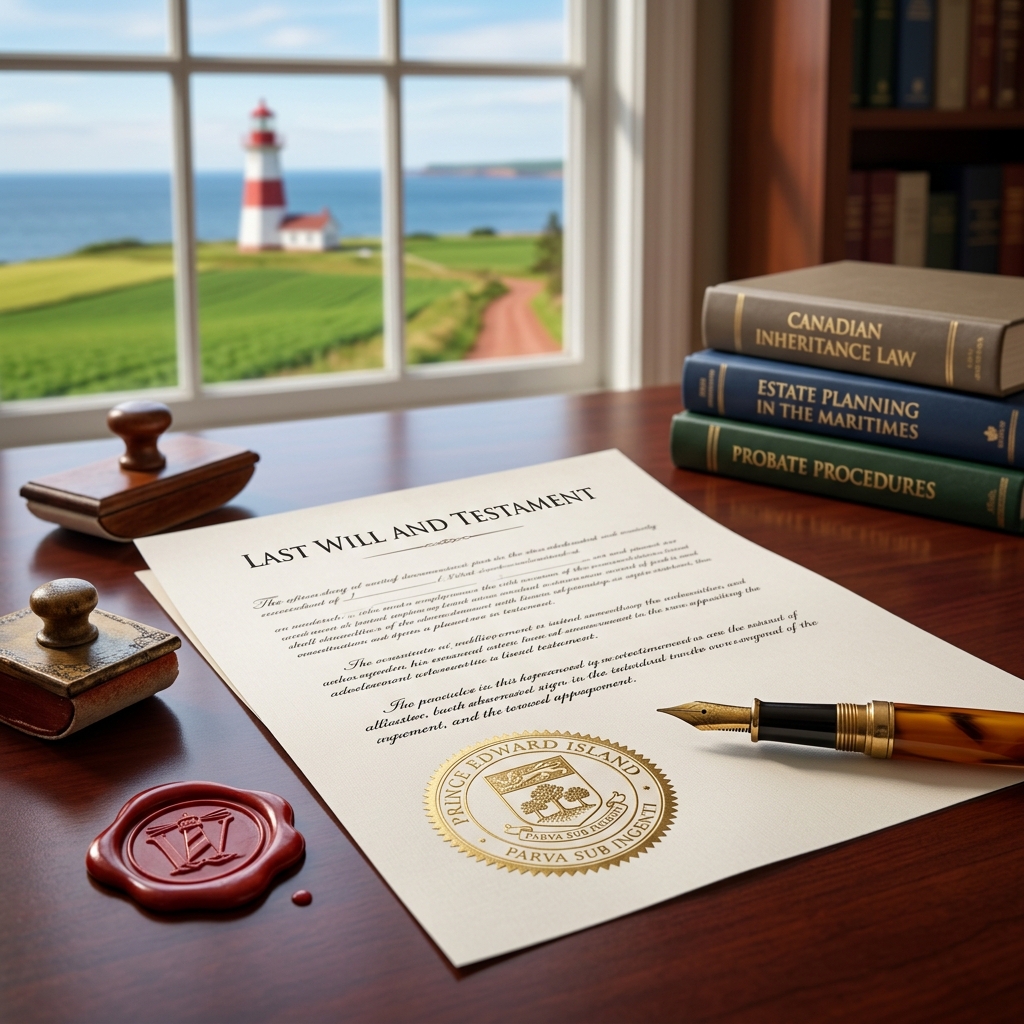
A will is a legal document that explains what you want to happen to your money, property, and personal belongings after you die, and who should manage your estate. In Prince Edward Island (PEI), wills are governed mainly by the Wills Act and the Probate Act, which set out how wills must be made, changed, and carried out. This guide offers a plain-language overview to help you understand the basics and feel more confident about planning your estate.
Why Having a Will Matters
Many people put off writing a will because it feels uncomfortable or complicated. However, not having a will can create delays, extra costs, and conflict for the people you care about.
Key reasons to make a will
- Control over your estate: You decide who receives your property and in what shares, instead of relying on default legal rules.
- Appoint someone you trust: You choose an executor to manage your estate and carry out your instructions.
- Support for dependants: You can provide for children, a spouse or common-law partner, or other dependants in a clear and organized way.
- Reduce stress and conflict: Clear instructions in a valid will can reduce the chance of disputes among family members and can make the probate process simpler.
- Leave specific gifts: You can leave particular items or amounts of money to individuals or charities that are important to you.
What happens if you die without a will?
If you die without a valid will (also called dying intestate), provincial estate laws decide who gets your property. The distribution is based on legally defined categories of relatives, not on personal wishes.
Common consequences of having no will include:
- Your spouse or common-law partner may have to share the estate with children or other relatives under provincial rules.
- Someone must apply to the court to be appointed as the estate administrator, which can cause delays and disagreements.
- People you might want to benefit, such as close friends or charities, may receive nothing.
- There may be more legal and administrative costs, reducing what is left for your beneficiaries.
Basic Legal Requirements for a Valid Will in PEI
While you should always seek legal advice for your specific situation, the Wills Act sets minimum requirements for a will to be valid in PEI. These rules help ensure the document truly reflects your wishes.
Who can make a will?
- Minimum age: In general, you must be at least 18 years old to make, change, or revoke a will.
- Mental capacity: You must understand what a will is, what property you own, and who might reasonably expect to benefit from your estate. This is known as having “testamentary capacity.”
Formal requirements
For most people, a standard formal or “attested” will must meet these conditions:
- The will is in writing.
- The will is signed by the testator (the person making the will), or by another person at the testator’s direction and in the testator’s presence.
- The signature is made or acknowledged by the testator in the presence of at least two witnesses at the same time.
- Each witness then signs the will in the presence of the testator and each other.
Some people may qualify to use other forms of wills, such as holograph (handwritten) wills, but these are easier to challenge and may not be recognized in every situation. Getting legal advice is important if you rely on a non-standard form of will.
Important rules about witnesses
Witnesses play a crucial role because their signatures help prove that you signed the will properly.
- Witnesses should be adults who are not beneficiaries under the will, and ideally are not closely related to beneficiaries.
- If a witness is also a beneficiary, there is a risk that their gift may be considered invalid.
- Witnesses must be present together when the testator signs or acknowledges the will, and they must sign in each other’s presence.
What Your Will Can Cover
A well-drafted will does more than list who gets your property. It can address several important matters about your estate and family.
Types of property
Under PEI law, your will can deal with both “real” and “personal” property.
| Type of property | Examples | Can usually be covered in a will? |
|---|---|---|
| Real property | Land, houses, cottages, farms | Yes, typically included and distributed through your will. |
| Personal property | Bank accounts, investments, vehicles, furniture, jewelry | Yes, you can divide or leave specific items or shares. |
| Registered plans / insurance | RRSPs, RRIFs, pension benefits, life insurance | Often have separate beneficiary designations; your will applies if no designation or if you name your estate as beneficiary. |
Other important instructions
Your will can also include directions about:
- Guardianship of minor children: Naming who should care for your children if both parents die.
- Personal items and family heirlooms: Giving specific items to particular people to avoid disagreement.
- Charitable gifts: Leaving gifts to charities or community organizations that matter to you.
- Business interests: Instructions about shares or interests in a family business or corporation.
- Debts and taxes: General guidance, such as whether debts should be paid from the residue of the estate or particular assets.
Choosing an Executor
The person you appoint as executor has legal authority to manage your estate after your death. Their duties are guided by the Probate Act and other laws. Choose someone you trust and who is capable of handling paperwork and financial matters.
Role and responsibilities of the executor
- Locate the will and make sure it is safely stored and then filed with the appropriate court.
- Apply for probate when required, which is the court process that confirms the will’s validity and the executor’s authority.
- Identify and secure assets, such as bank accounts, vehicles, and real estate.
- Pay debts and taxes owed by the estate before distributing the remainder to beneficiaries.
- Communicate with beneficiaries about the estate administration and provide reasonable updates.
- Distribute estate property in line with the instructions in the will.
Who can be an executor?
In PEI, any adult who is capable and willing can generally act as an executor, including a beneficiary.
When choosing an executor, consider:
- Whether the person is organized and reliable.
- Their willingness to take on the responsibility.
- Where they live – a PEI resident may find it easier to handle local procedures, but executors can live outside the province.
- Whether you should appoint more than one executor, or a substitute in case your first choice cannot serve.
Understanding Probate in Prince Edward Island
Probate is the court process that confirms the validity of a will and appoints the executor with legal authority to deal with the estate. Not every estate requires full probate, but many do, especially if there is significant property or if third parties (such as banks) need formal proof.
When is probate needed?
Probate is commonly required when:
- A financial institution, land registry office, or other organization asks for official proof of the executor’s authority.
- The estate includes real property (land or buildings) in the deceased’s name alone.
- There are disputes or doubts about the validity of the will.
Basic steps in the probate process
- The executor locates the original will and any codicils (formal amendments).
- The executor files the will with the PEI court and applies for letters probate using the forms required by the Probate Act.
- The court reviews the documents and, if satisfied, issues an order granting probate.
- The executor uses the probate documents to prove their authority to banks, government agencies, and others.
Changing, Revoking, or Updating Your Will
Your will is not a one-time document. Life events such as marriage, separation, birth of children, or major changes in assets often require updates. The Wills Act contains rules about how to make valid changes.
Ways to change your will
- New will: The most reliable way is to make a new will that clearly states it revokes all previous wills.
- Codicil: A codicil is a formal document that amends, adds to, or partially revokes the existing will. It must be signed and witnessed with the same seriousness as a will.
- Physical alterations: Simply crossing out or writing in changes on the original will is risky. Under PEI law, an alteration is valid only if it meets specific formal requirements similar to those for making a will.
When to review your will
It is wise to review your will regularly and after major life changes, such as:
- Marriage, divorce, or entering/leaving a common-law relationship.
- Birth or adoption of children or grandchildren.
- Death of a spouse, child, or named beneficiary.
- Buying or selling significant assets like a home or business.
- Moving into or out of Prince Edward Island, as laws differ by province.
Practical Steps to Prepare for Making a Will
Good preparation makes it easier and faster to create a will that reflects your wishes. Lawyers and legal information services often recommend gathering key details ahead of time.
Information to gather
- Full names and contact information for you, your spouse or partner, children, and other close relatives.
- List of assets, such as bank accounts, investments, vehicles, real estate, and registered plans.
- Details about any business interests or corporate shares you hold.
- Names of potential executors and guardians for minor children.
- Any special gifts you want to leave to individuals or charities.
Getting legal and other support
While PEI law does not require you to use a lawyer to make a will, professional advice can help prevent mistakes and misunderstandings. You may wish to:
- Consult a lawyer familiar with PEI estate law for personalized planning.
- Use reputable will preparation services that follow provincial rules.
- Review government and community legal information resources to understand your options.
Storing and Sharing Your Will
Once your will is signed and witnessed properly, keep it safe and make sure the right people know where to find it.
Best practices for storage
- Store the original document in a secure location, such as a fireproof home safe, your lawyer’s office, or another safe place.
- Avoid attaching notes with pins or staples that might later be considered changes to the will.
- Keep copies marked clearly as copies, not originals.
Who should know about your will?
- Tell your executor where the original will is stored and how to access it.
- Let close family members know that you have made a will and where it is kept.
- Consider providing relevant professionals (such as your lawyer or financial planner) with a copy.
Frequently Asked Questions (FAQ)
Do I need a lawyer to make a will in PEI?
No. PEI law does not require you to use a lawyer to make a will. However, legal advice can help ensure your will meets all requirements, addresses tax and family law issues, and is less likely to be challenged.
Can I write my own will?
Yes. Many people prepare their own wills, either by writing them directly or using trusted will kits or online services that comply with provincial law. The key is to follow the formal signing and witnessing rules so the document is legally valid.
What if a witness later dies or is unavailable?
The will can still be probated. The Probate Act allows proof of execution through other evidence, such as proof of signatures, if witnesses are dead or unavailable. This is one reason why correct witnessing and clear signatures are important.
Does my will cover my property outside PEI?
Generally, a will made validly in PEI can affect property in other provinces or countries, but local laws may create complications. If you own significant property in another jurisdiction, consider getting legal advice in both places.
Can I leave everything to one person?
In most cases, adults in PEI can choose how to distribute their estate, including leaving everything to one person. However, certain dependants may have rights to seek support from the estate under family or dependants’ relief laws. Professional advice can help you understand these obligations.
What should I do if I find an old will of a relative who has died?
Do not destroy or hide the will. Under the Probate Act, concealing or suppressing a will can lead to penalties. Instead, contact the court or a lawyer to discuss how to file the will and begin the estate process.
References
- Wills Act — Legislative Assembly of Prince Edward Island. 2022-01-01. https://docs.assembly.pe.ca/download/dms?objectId=6c9caaf4-739e-42de-bc2a-32932119a7ae&fileName=bill-31.pdf
- Probate Act — Government of Prince Edward Island. 2018-01-01. https://www.princeedwardisland.ca/sites/default/files/legislation/p-21-probate_act.pdf
- Estates and wills — What to do when someone dies — Government of Canada. 2024-05-01. https://www.canada.ca/en/services/life-events/death/estates-wills.html
- Wills — Community Legal Information — Community Legal Information (PEI). 2023-06-01. https://legalinfopei.ca/information/resource/wills
- Making a Will — Key Murray Law. 2018-06-01. https://keymurraylaw.com/wp-content/uploads/2018/06/Key-Murray-Law-Wills-Brochure_01.pdf
- How to Write a Last Will and Testament in Prince Edward Island — LegalWills.ca. 2021-01-01. https://www.legalwills.ca/mywill.aspx?sp=Prince%20Edward%20Island
- Willful Is Now Available In Prince Edward Island, Newfoundland and Labrador — Willful. 2020-09-01. https://www.willful.co/blog/willful-is-now-available-in-pei-nfld
Similar Articles








Read full bio of medha deb


