
Contesting A Will In Florida: Essential Preparation Checklist
A practical guide to deadlines, evidence, mediation, and courtroom preparation in Florida probate conflicts.
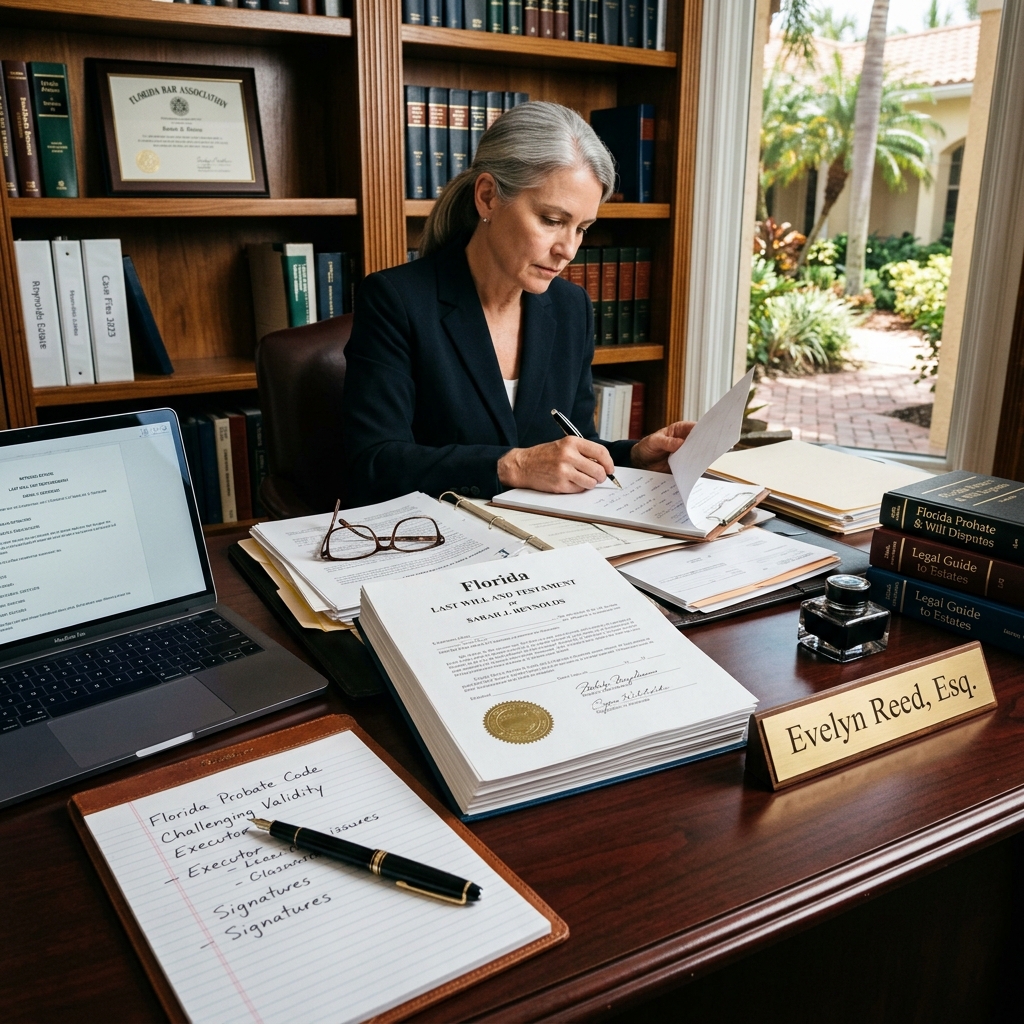
When a will is questioned in Florida, the dispute can move quickly from family disagreement to formal probate litigation. The best preparation is usually a mix of fast legal action, careful document review, and a realistic plan for settlement or trial. Whether you expect to challenge a will or defend one, the outcome often depends on timing, standing, evidence, and how well each side prepares before the first hearing.
What a Will Dispute Usually Involves
A Florida will dispute is a probate case in which one or more interested parties ask the court to examine whether the document should be enforced as written. In practice, these cases often focus on whether the person who signed the will had the legal ability to make it, whether someone exerted improper pressure, or whether the will was signed and witnessed correctly under Florida law.
Some disputes are narrow and involve only one provision. Others affect the entire estate plan and can change who inherits property, who serves as personal representative, and how long administration will take. Because the probate court process is deadline-driven, early organization matters almost as much as the legal arguments themselves.
Who Has the Right to Challenge a Will
Not every disappointed relative can bring a challenge. In Florida, a person generally needs a direct legal or financial interest in the estate to participate meaningfully in a contest. That usually includes heirs who would inherit if no valid will existed, beneficiaries under an earlier will, or others whose rights could change depending on whether the current will is accepted.
This standing requirement matters because it helps the court screen out claims from people who are emotionally involved but not legally affected. Before spending time on evidence, a potential challenger should confirm that their interest is recognized under the probate rules and that their status will allow them to file an objection or petition.
Deadlines That Can Make or Break the Case
Florida probate disputes are governed by short filing windows, and missing them can end a challenge before the merits are ever heard. The notice of administration is often the trigger for objection deadlines, and parties served with that notice must act quickly if they want to contest validity.
Because the exact deadline can depend on how and when notice was served, the safest approach is to assume the clock is already running and to review the probate file immediately. A lawyer handling the matter will usually check the notice language, service dates, and whether any later events affect the final deadline.
| Issue | Why it matters | Practical response |
|---|---|---|
| Notice of administration | Often starts the objection period | Record the date of service immediately |
| Standing | Determines whether you can challenge the will | Confirm your legal interest in the estate |
| Filing deadline | Late objections may be barred | Prepare and file as early as possible |
| Evidence gathering | Supports your theory of the case | Collect records before memories fade |
Common Reasons a Florida Will Is Challenged
Most disputes are built around a few recurring theories. One common claim is that the testator lacked testamentary capacity when the will was signed. Another is undue influence, which often arises when someone in a position of trust allegedly shaped the testator’s decisions to benefit themselves.
Other claims may involve fraud, duress, improper execution, or revocation. In some cases, the argument is not that the entire will is invalid, but that a specific change was caused by pressure or mistake. The right theory depends on the facts, the documents, and the available witnesses.
- Lack of capacity: The testator may not have understood the nature of the document, their property, or the natural objects of their bounty.
- Undue influence: Another person may have overwhelmed the testator’s free choice.
- Fraud or duress: The will may have been obtained through deception or coercion.
- Execution problems: The signing or witnessing process may not satisfy Florida formalities.
- Revocation: A later act or later instrument may have replaced the challenged will.
Evidence That Often Matters Most
Good will dispute preparation starts with documents. The original will, prior versions, trust papers, beneficiary designations, property records, bank statements, and correspondence can all help tell the story of what happened. Medical records and caregiver notes may also be important if the dispute involves capacity or vulnerability.
Witness testimony is another major piece of the puzzle. People who saw the testator near the time the will was signed can describe memory, independence, confusion, pressure from others, or unusual behavior. Financial records may show sudden changes in transfers or control over accounts. Emails, text messages, and handwritten notes can sometimes reveal intent more clearly than formal legal documents.
How Mediation Fits Into the Process
Many Florida probate disputes are resolved in mediation before they reach trial. Mediation gives the parties a structured setting to discuss settlement with a neutral third party, without the formality and expense of a full courtroom battle. It is often used because estate conflicts are personal, expensive, and sometimes capable of resolution through compromise.
To use mediation well, both sides need preparation. That means reviewing the strongest and weakest parts of the case, understanding the estate’s value, and deciding what outcomes are acceptable. A mediator can help identify overlap between the parties’ positions, but the parties still need a clear view of their own legal and financial goals.
What to Bring to Mediation
- Copies of all versions of the will and related estate documents
- A timeline of key events before and after the will was signed
- Medical or financial records that support your position
- A list of disputed assets and estimated values
- Questions about settlement options and distribution scenarios
Building a Strategy for Litigation
If mediation fails or is not appropriate, the case may move toward hearings and trial. At that stage, preparation becomes more formal and more technical. The contestant must be ready to prove the legal basis for invalidating the will, while the defending party must be ready to show that the document was valid and reflected the testator’s true intentions.
Litigation strategy often begins with identifying the weakest fact in the other side’s case. For example, if undue influence is alleged, the defense may focus on the testator’s independence, the absence of control over the drafting process, and the involvement of neutral professionals. If capacity is challenged, the defense may gather testimony from doctors, attorneys, and witnesses who interacted with the testator around the signing date.
How the Defense Side Should Prepare
A person defending a will should not assume that the document itself will speak for the testator. The best defense usually combines the written estate plan with outside proof that the signing process was sound. That may include the drafting lawyer’s file, notes showing the testator gave instructions voluntarily, and evidence that the testator understood the nature of the estate plan.
Defendants should also preserve texts, emails, and financial records that show ordinary decision-making rather than secret manipulation. If the challenger claims someone isolated the testator, the defense may need records showing regular contact with friends, professionals, or multiple family members.
Practical Steps for the Challenger
A person who wants to challenge a will should move in a disciplined order. The first step is to confirm the filing deadline and gather the probate documents. The next step is to identify the strongest factual theory, not just the most emotionally satisfying one. Then the challenger should work with counsel to request records, interview witnesses, and develop a timeline that connects the facts to the legal claim.
Challengers should also be realistic about what a successful case might achieve. In some situations, the result is invalidation of the entire will. In others, only a specific amendment is set aside, or the parties negotiate a new distribution to avoid the uncertainty of trial.
Communication and Conduct During the Case
Estate disputes often involve relatives who must continue interacting long after the legal fight ends. For that reason, tone and communication matter. Messages that are aggressive, careless, or inconsistent can weaken a legal position and make settlement harder. Clear, factual, and respectful communication is usually more useful than accusations made in anger.
Parties should also avoid discussing the case publicly or with unnecessary third parties. Probate litigation can involve sensitive financial and medical information, and careless statements may later become evidence. A measured approach protects both the legal case and the family relationships that may remain after the dispute ends.
Working With Counsel Early
Florida probate disputes are not well suited to delay. An attorney can review deadlines, determine standing, preserve evidence, and advise whether mediation or litigation is the better path. Early involvement is especially valuable where there are multiple heirs, blended-family issues, a long illness, or rapid changes to the estate plan near the end of life.
Even when the dispute seems straightforward, small procedural errors can have large consequences. Legal help is often most valuable at the beginning, when the case is still being shaped and key evidence can still be preserved.
Frequently Asked Questions
Can a person challenge a will before the testator dies? No. A will dispute generally arises only after death, when the document is presented in probate.
Do all will contests go to trial? No. Many cases settle through negotiation or mediation before trial becomes necessary.
Is a handwritten note enough to defeat a signed will? Usually not by itself. The court will look at the legal validity of the will and the surrounding evidence.
Can a beneficiary be penalized for filing a good-faith challenge? Florida law does not generally enforce no-contest clauses in the same way some states do, so a careful legal review is still important before filing.
What is the biggest mistake people make in these cases? Waiting too long. Deadline problems, missing records, and fading witness memories can all damage a claim before it begins.
Checklist for Stronger Preparation
- Identify whether you have standing to participate.
- Confirm the relevant filing deadline from the probate notice.
- Collect every version of the will and related estate documents.
- Gather medical, financial, and communication records.
- List the witnesses who knew the testator near the time of signing.
- Decide whether your best path is settlement, mediation, or trial.
- Preserve evidence before records disappear or memories fade.
References
- Contesting a Will in Florida: Grounds, Process & Deadlines — Zoecklein Law P.A.. 2025-10-01. https://www.zoeckleinlawpa.com/probate-litigation-attorney/contesting-a-will-in-florida/
- How to Contest a Will in Florida — Barnes Walker. 2025-01-01. https://barneswalker.com/how-to-contest-a-will-in-florida/
- What Happens When a Will Is Contested During Probate? — The Estate Plan Florida. 2025-01-01. https://www.theestateplanfl.com/blog/what-happens-when-a-will-is-contested-during-probate/
- When to Seek Mediation in Florida Will Disputes — Florida Probate Lawyer Blog. 2025-10-01. https://www.florida-probate-lawyer.com/blog/2025/october/when-to-seek-mediation-in-florida-will-disputes/
- Florida Probate Code, Chapter 733 — The Florida Senate. 2026-07-10. https://www.flsenate.gov/Laws/Statutes/2025/Chapter733
- Florida Probate Rules — Supreme Court of Florida. 2026-07-10. https://www.flcourts.gov/Resources-Services/Court-Improvement/Probate-Rules
Similar Articles








Read full bio of medha deb


