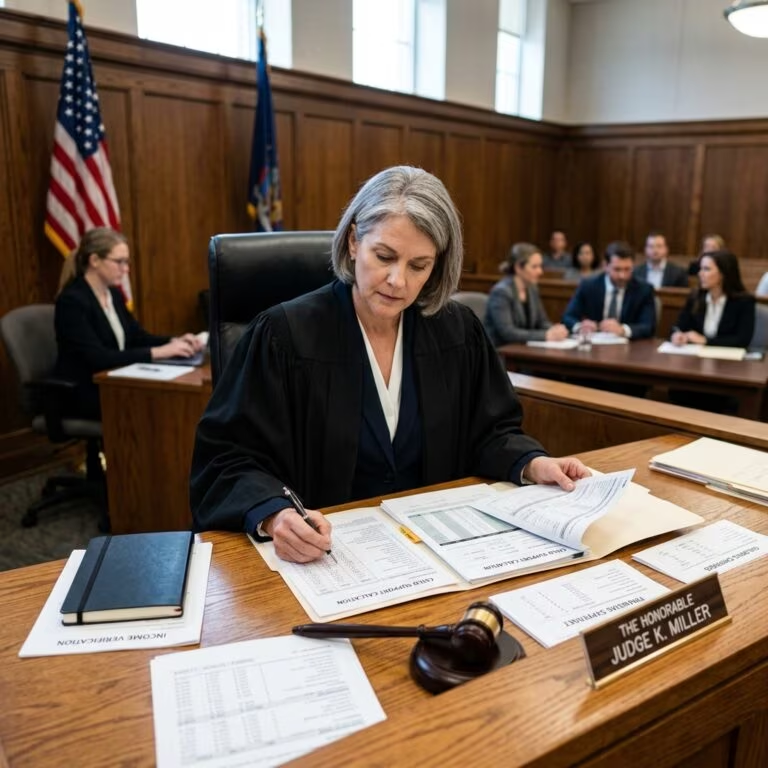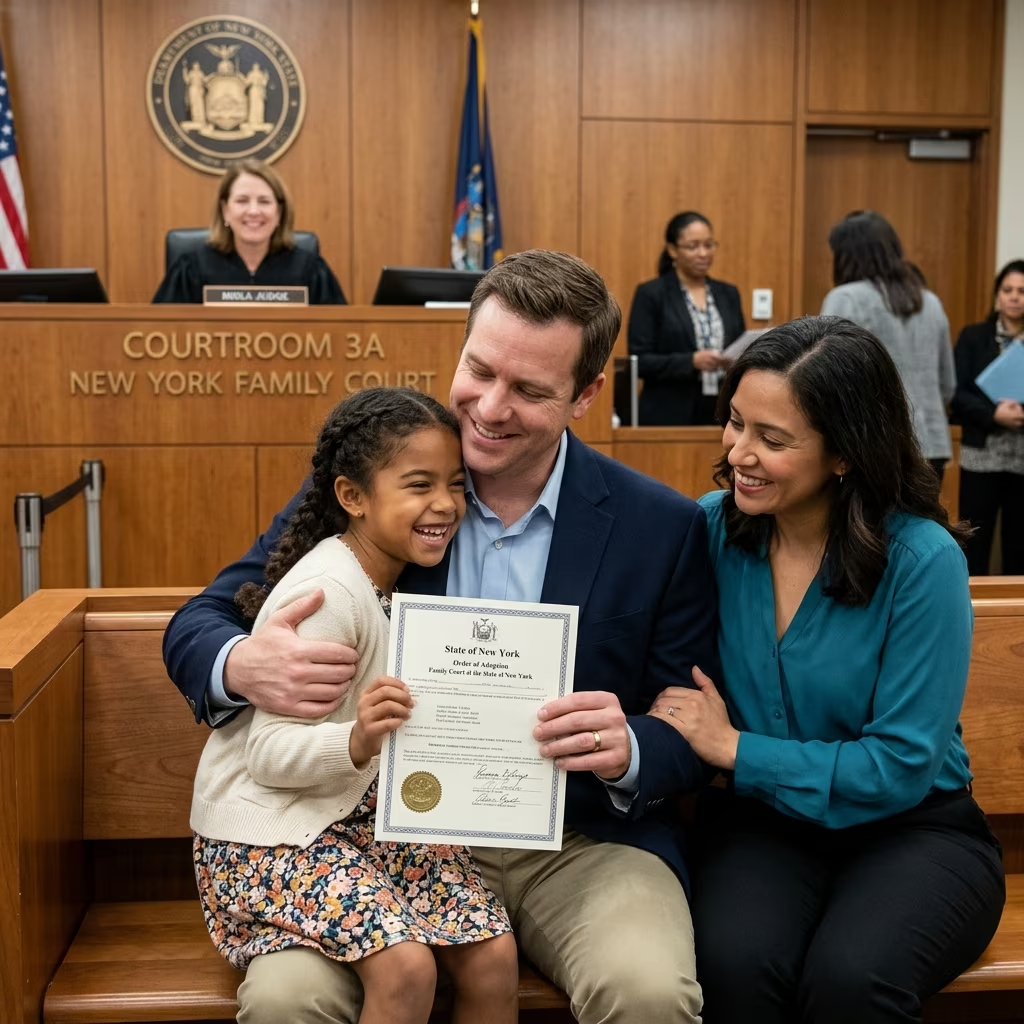
Stepparent adoption is a powerful way to secure a child’s future in a blended family, but in New York it involves very specific legal steps and strict court oversight. This guide explains the major rules, procedures, and practical considerations for stepparents who want to become the legal parent of their spouse’s child in New York State.
What Is Stepparent Adoption?
In New York, stepparent adoption is a court process in which a person legally adopts the child of their spouse or partner, becoming a full legal parent to that child. The adoption creates a new parent-child relationship under law and, in most cases, permanently cuts off parental rights of the other biological or legal parent.
Once finalized, the adoptive stepparent has the same rights and duties as any other parent, including decision-making authority and financial responsibilities. The child, in turn, gains a legal connection to the stepparent’s family for inheritance and benefits purposes.
Common Reasons Families Choose Stepparent Adoption
- Stability and security – formalizing a long-term relationship between a child and stepparent.
- Decision-making authority – ensuring the stepparent can make medical, educational, and other important decisions.
- Financial and inheritance rights – allowing the child to inherit from the stepparent and qualify for certain benefits, such as Social Security survivor benefits.
- Name change and identity – some families use adoption to align last names or reinforce family identity.
Key Legal Effects of Stepparent Adoption
New York courts treat adoption as a significant and largely permanent change in a child’s legal status. When a stepparent adoption is approved, two major legal consequences occur:
Creation of New Parental Rights for the Stepparent
The adopting stepparent becomes a full legal parent. This generally includes:
- The right to make decisions about the child’s education, health care, and religious upbringing.
- The obligation to support the child financially, similar to a biological parent.
- The child’s right to inherit from the stepparent even if the stepparent dies without a will.
- Eligibility for various benefits through the stepparent, such as Social Security survivor benefits.
Termination of Rights of the Other Biological/Legal Parent
Except in rare situations, stepparent adoption requires that the other biological or legal parent’s rights be legally terminated. When that occurs:
- The former parent no longer has the right to seek custody or visitation.
- The former parent’s duty to pay child support normally ends going forward.
- The parent-child legal relationship is severed, subject to any court-approved post-adoption contact agreement.
Because these consequences are serious, courts are cautious and require careful proof that adoption is in the child’s best interests.
Consent Requirements in New York Stepparent Adoption
One of the most important issues in stepparent adoption is consent: whose permission is required before the court will allow the adoption to go forward. New York law specifies several categories of people whose consent may be necessary.
Consent from Parents
In most stepparent adoptions, both legal parents must consent, unless the court decides that one parent’s consent is not legally required.
| Person | When Consent Is Typically Required |
|---|---|
| Spouse (the child’s custodial parent) | Almost always; this parent’s rights stay in place after adoption. |
| Other biological/legal parent | Generally required unless the court excuses consent due to abandonment, unfitness, or prior termination of rights. |
When the Court Can Excuse a Parent’s Consent
New York courts may decide that the other parent’s consent is unnecessary if certain legal standards are met. While the exact rules depend on the facts of each case, common grounds include:
- Abandonment – the parent has failed to maintain contact or pay support for a legally defined period, often about one year.
- Unfitness – the parent is proven unable to safely care for the child, such as due to chronic substance abuse, severe neglect, or ongoing violence.
- Prior termination of rights – the parent’s rights were already ended in a previous court case, for example in a child protection matter.
Courts treat the termination of parental rights as a last resort and require strong evidence. A formal hearing may be held to decide whether the parent is unfit or has abandoned the child.
Child’s Consent
New York generally requires that a child who is 14 years of age or older consent to their own adoption. If the child does not agree, the adoption normally cannot proceed. The judge may speak directly with the child or review written consent.
Background Checks, Home Studies, and Safety Screening
To protect children, New York uses several screening tools before any adoption is approved. These requirements apply to stepparent adoption, although some rules are less strict when the stepparent has already lived with the child for a significant period.
Criminal Background Checks and Child Abuse Registry
Stepparents must undergo fingerprinting and criminal background checks. Agencies and courts review records for serious offenses and any history of child abuse or neglect.
New York also checks the Statewide Central Register of Child Abuse and Maltreatment to identify substantiated reports involving the applicant or other adults in the home. These checks are designed to ensure that adoption will not place the child at risk.
Home Study and Best Interests of the Child
A home study is an evaluation of the family’s living situation, usually completed by a social worker or adoption agency. For stepparent adoptions, the court may order a home study to answer whether adoption is in the child’s best interests.
Typical home study elements include:
- Interviews with the stepparent and spouse.
- Observation of the home environment and interactions with the child.
- Review of financial stability and support systems.
- Discussion of parenting style, discipline, and long-term plans.
Agency regulations generally require completion of home studies within a specific timeframe after an application is submitted, often about four months in standard agency placements. Stepparent cases may move more quickly, but courts still emphasize the child’s safety and well-being.
Certification as a Qualified Adoptive Parent
In many private adoptions, prospective parents must be formally certified by the court as qualified adoptive parents before taking custody. However, New York practice often waives this certification step for stepparents who have already lived with the child for more than a year before filing the petition.
Where and How to File a Stepparent Adoption in New York
The adoption case itself is handled through the New York court system. Understanding which court to use and how the process unfolds can help families plan effectively.
Choice of Court
New York allows adoption proceedings to be filed in either:
- Family Court in the county where the adoptive parents reside.
- Surrogate’s Court in the same county.
Local practice varies, so many families rely on an attorney familiar with the courts in their county to decide where to file.
Typical Steps in the Court Process
While every case has unique details, a New York stepparent adoption usually follows these steps:
- Consultation with an attorney – Many families begin by speaking with a lawyer who focuses on adoption or family law.
- Gathering records and consents – This includes birth certificates, marriage certificates, and written consents from necessary parties.
- Filing the petition to adopt – The attorney submits the petition and supporting documents in Family Court or Surrogate’s Court.
- Background checks and home study – The court or agency orders fingerprinting, registry checks, and any required home study.
- Court hearings – If consent is disputed or a parent’s rights may be terminated, the court holds one or more hearings to review evidence.
- Waiting period and supervision – In many agency cases, the law requires at least three months of post-placement supervision before finalization; stepparent cases may be shorter but these timelines still guide courts’ practice.
- Finalization hearing – The judge reviews all documents, hears brief testimony, and signs the adoption order if it is in the child’s best interests.
Post-Adoption Issues: Names, Records, and Contact
Once the adoption is finalized, families often address practical follow-up tasks, such as updating documents and managing ongoing relationships with extended family.
Birth Certificate and Name Changes
After the adoption order is entered, the child is typically issued a new birth certificate listing the adoptive stepparent as a legal parent. Many families request a change of the child’s last name at the time of adoption to align with the stepparent or family name, though this is not legally required.
Post-Adoption Contact Agreements
New York law allows post-adoption contact agreements in certain cases, which can be approved and enforced by the court. These agreements may govern communication between:
- The child and the former parent whose rights were terminated.
- Biological siblings and half-siblings.
- Other relatives such as grandparents.
The court will only enforce these agreements if it finds them consistent with the child’s best interests.
Special Considerations for New York Stepparent Adoptions
Stepparent adoption is often simpler than adopting an unrelated child but can still involve complex legal questions. Several practical issues commonly arise.
Stepparent Already Living with the Child
When the stepparent has lived with the child for more than a year before filing for adoption, some procedural requirements, such as certification as a qualified adoptive parent, may be waived. However, the court will still review background checks and may order a home study to verify the child’s safety.
Adoption Without Consent of the Other Parent
If the other parent refuses to consent, the case becomes more complicated. The adopting stepparent or custodial parent may ask the court to find that consent is not required due to abandonment or unfitness.
Courts consider factors such as:
- Length of time since the parent last contacted the child.
- History of child support payments.
- Prior findings of abuse, neglect, or endangerment.
- Efforts the parent has made to resume a relationship.
Because terminating parental rights is serious, many families benefit from experienced legal counsel in these contested situations.
Frequently Asked Questions About Stepparent Adoption in New York
Does stepparent adoption always end the other parent’s child support?
Generally, once the adoption is finalized and the other parent’s rights are terminated, that parent no longer owes future child support. However, any past-due support typically remains a separate legal issue and may still be enforceable.
Can a stepparent adopt an adult child in New York?
New York law allows adoption of adults in certain circumstances, but the rules and purposes differ from minor-child adoption. Many stepparent adoptions occur while the child is still under 18, when parental rights and responsibilities are most relevant.
How long does a stepparent adoption usually take?
Timeframes vary by county and case complexity. In some agency adoptions, law requires roughly three months of supervision before finalization. Contested cases involving termination of a parent’s rights may take significantly longer due to hearings and evidence gathering.
Do we need an attorney for a stepparent adoption?
While New York does not absolutely require an attorney, state guidance notes that adoption is usually completed with help from an attorney who prepares the petition and appears in court. Given the technical rules around consent, termination of rights, and court procedures, most families choose professional representation.
Is a home study always required?
Courts commonly order some form of evaluation to determine whether adoption is in the child’s best interests, but the depth of the home study can vary. Stepparents already living with the child may face a more streamlined process than parents adopting through an agency.
References
- LEGALease: Adoption in New York — New York State Bar Association. 2020-01-01. https://nysba.org/legalease-adoption-in-new-york/
- The Adoption Process in New York State — New York State Office of Children and Family Services. 2023-06-01. https://ocfs.ny.gov/programs/adoption/process.php
- Stepparent Adoption Laws & Procedures — Justia. 2024-01-01. https://www.justia.com/family/adoptions/who-may-adopt/adoption-by-family-members/stepparent-adoption/
- Stepparent Adoption in New York State — Law Office of Peter L. Schottenfels (PSBNY Law). 2022-09-01. https://www.psbnylaw.com/family-law-divorce/adoption-in-new-york-state/
- Step-Parent Adoption Requirements in New York — Testa Law Firm, P.C. 2021-05-01. https://testalawfirmpc.com/step-parent-adoption/
- Adopting a Stepchild in New York — Talmud Law, PLLC. 2025-01-15. https://www.rjtalmudlaw.com/blog/2025/01/adopting-a-stepchild-in-new-york/