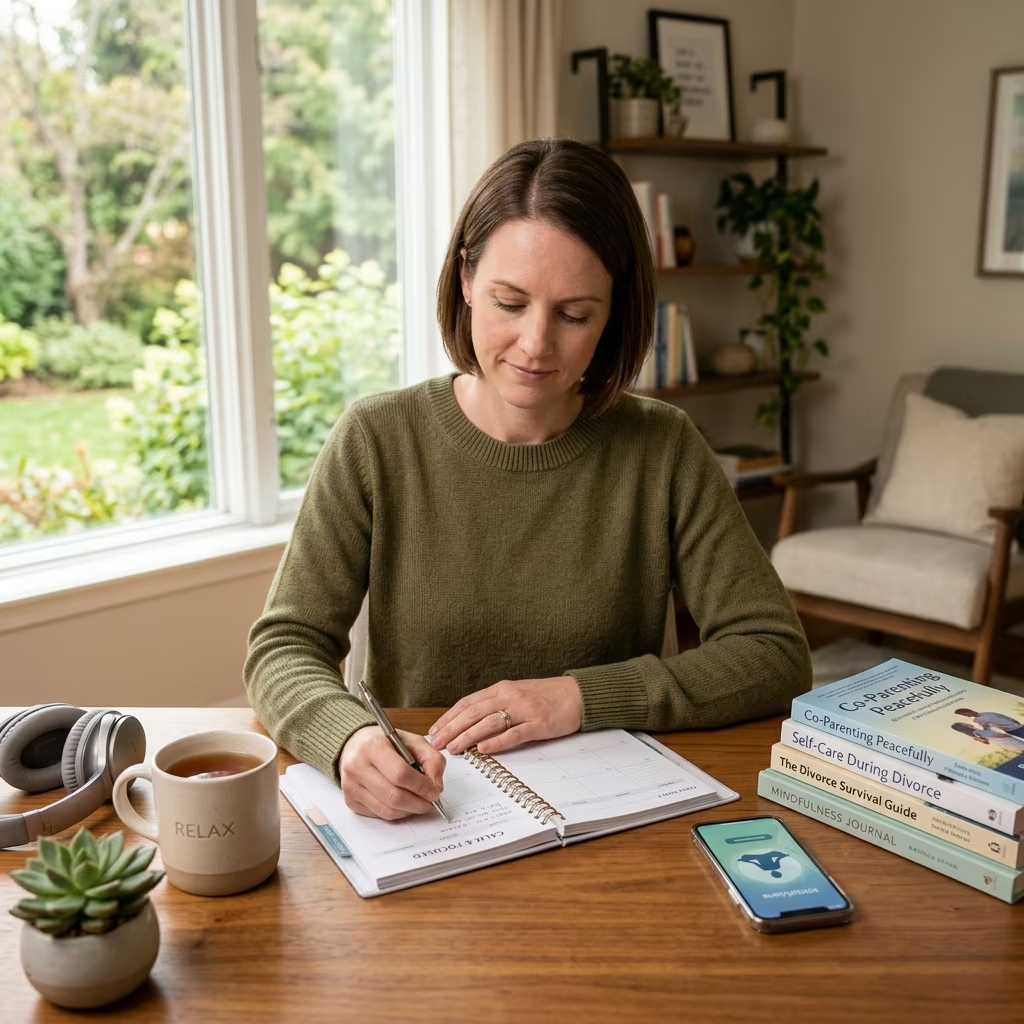
Divorce touches almost every area of life: your finances, housing, parenting, social circles, and sense of identity. It is no surprise that research links marital separation and divorce with increased stress, anxiety, depression, and even worse physical health outcomes over time. While you may not be able to control every legal or emotional twist in the process, you can take concrete steps to reduce stress, protect your mental health, and move through the transition more steadily.
This guide explains why divorce feels so overwhelming and offers practical, evidence-informed strategies you can start using right away—both on your own and with the support of legal and mental health professionals.
Why Divorce Is So Emotionally Overwhelming
Understanding what is happening in your body and mind during a divorce can make the experience feel less chaotic and more manageable. Divorce is not just a legal event; it is also a major life stressor that can activate your body’s stress response for months or even years.
| Area of Life | Common Stress Reactions |
|---|---|
| Emotions | Sadness, anger, guilt, relief, fear, mood swings |
| Body | Muscle tension, headaches, stomach issues, sleep problems |
| Thinking | Racing thoughts, difficulty concentrating, rumination about the past |
| Behavior | Withdrawing from others, changes in eating, increased use of alcohol or substances |
According to research from Oklahoma State University, the prolonged stress associated with divorce can keep the body’s “fight-or-flight” response activated, which over time is linked to elevated blood pressure, immune changes, and poorer health outcomes. This is one reason it is so important not only to resolve legal issues fairly, but also to actively manage your stress during the process.
Normalizing the Grief Process
Divorce often involves grieving the loss of a relationship, shared plans, and a familiar life structure. Mental health experts emphasize that it is normal to cycle through feelings such as denial, anger, bargaining, sadness, and acceptance, and that there is no “correct” timetable for recovery. Recognizing that grief is a healthy response can reduce the shame or self-criticism that often makes stress worse.
- Allow feelings to surface instead of forcing yourself to “be strong” at all times.
- Acknowledge mixed emotions; you may feel both relief and sadness in the same day.
- Remind yourself that intense emotions usually lessen over time as you adjust.
Taking Care of Your Mental and Physical Health
Many people try to handle divorce by ignoring their own needs. Evidence suggests the opposite approach is more protective: actively supporting your mental and physical health can lower stress and improve your ability to cope.
Build a Daily Self-Care Routine
Small, consistent routines help anchor you when everything else feels uncertain.
- Keep regular meal and sleep times as much as possible.
- Include at least one calming activity daily (reading, music, a walk, or a warm bath).
- Limit news and social media if they increase your stress.
Self-care is not indulgence; it is a basic tool for keeping your nervous system from staying in overdrive.
Movement and Exercise
Physical activity is one of the most studied and effective non-medication strategies for reducing stress and improving mood. Even moderate exercise can help:
- Decreases muscle tension and improves sleep.
- Releases endorphins that can lift mood.
- Provides a break from constant thinking about the divorce.
You do not need an intense routine. Options include:
- Brisk 20–30 minute walks on most days.
- Yoga, stretching, or gentle home workouts.
- Household tasks or gardening that keep you moving.
Sleep, Nutrition, and Substances
Stress often disrupts sleep and eating patterns, which then makes coping even harder. Mental health guidance recommends:
- Aim for 7–8 hours of sleep per night, with a regular bedtime and wake time.
- Eat balanced meals rather than skipping food or relying on high-sugar, highly processed options.
- Limit alcohol and avoid using drugs or food as your main way to numb emotions.
These are simple steps, but they create a stronger foundation for facing difficult legal and emotional conversations.
Emotional Coping Skills That Reduce Divorce Stress
Alongside self-care, specific coping skills can help you manage intense thoughts and feelings. Many of these techniques are used in evidence-based therapies and are safe to try on your own.
Acknowledge and Name Your Feelings
Trying to push away emotions often makes them more intense. Mental health experts advise acknowledging your feelings rather than avoiding them.
- Silently describe what you are feeling: “I notice sadness right now” or “I am feeling anxious.”
- Remind yourself: “It is understandable to have big feelings during a divorce.”
- Use journaling to write down your thoughts if speaking feels overwhelming.
Challenge Unhelpful Self-Talk
Stressful events can trigger harsh inner dialogue such as “I am failing” or “I will never be happy.” Psychologists often teach people to practice more balanced self-talk.
- Notice extreme words like “always,” “never,” or “ruined.”
- Ask, “What evidence do I have for and against this thought?”
- Replace it with something more realistic, for example: “This is very hard, but many people rebuild their lives after divorce.”
Mindfulness and Grounding Techniques
Mindfulness practices can calm the stress response by bringing your attention to the present moment instead of replaying past conflicts or worrying about the future.
Simple methods include:
- Breathing exercises: Inhale slowly to a count of four, hold for four, and exhale for six to eight counts. Repeat several times.
- Grounding with the senses: Look around and name five things you see, four things you can touch, three sounds you hear, two things you can smell, and one thing you can taste.
- Short meditation: Spend a few minutes focusing on your breath or a calming word. When your mind wanders, gently return to the focus.
Boundaries, Communication, and Conflict Reduction
Many of the most stressful moments in a divorce come from conflict with a current or former spouse. Setting boundaries and choosing communication methods strategically can significantly lower emotional strain.
Healthy Boundaries With Your Ex-Partner
Boundaries are guidelines you set to protect your emotional and physical well-being. During divorce, some useful boundaries may include:
- Limiting conversations to necessary topics such as parenting schedules or finances.
- Agreeing to communicate in writing (email or a parenting app) rather than by late-night phone calls.
- Deciding not to respond immediately to provocative messages; instead, waiting until you feel calm.
If direct communication consistently escalates, your attorney or mediator can sometimes serve as an intermediary to reduce conflict.
Protecting Children From Adult Conflict
Children can also experience significant stress during a divorce, and exposure to ongoing conflict is one of the strongest predictors of negative outcomes. Mental health guidance emphasizes:
- Do not involve children in adult disputes or ask them to choose sides.
- Avoid criticizing the other parent in front of your child.
- Reassure children that they are not responsible for the divorce and that both parents still care about them.
Parenting classes or support groups can provide additional strategies for supporting children through family changes.
Legal and Practical Steps That Lower Stress
Much of the stress of divorce comes from uncertainty about money, housing, and the legal outcome. While no one can guarantee a particular result, practical planning and the right professional support can make the process more predictable and less frightening.
Working Effectively With Your Divorce Attorney
A knowledgeable family law attorney can help you understand your rights, clarify your options, and handle negotiations, which can relieve a significant amount of stress.
To make the most of that relationship:
- Prepare questions in advance so you leave meetings with clear information.
- Gather important documents (tax returns, bank statements, property records) to save time and reduce last-minute scrambling.
- Be honest about your concerns and priorities so your lawyer can advise you realistically.
Considering Alternatives to Court Battles
Lengthy courtroom conflicts can be expensive, time-consuming, and emotionally draining. In many cases, alternatives such as mediation or collaborative divorce can reduce the intensity of the process while still protecting your rights.
- Mediation: A neutral third party helps you and your spouse negotiate issues such as property division and parenting time.
- Collaborative divorce: Both parties agree to work toward a settlement with the help of specially trained attorneys and sometimes other professionals.
These approaches are not suitable for every situation, especially where there is a history of severe power imbalance or abuse, but they can significantly reduce stress for many couples.
Organizing Finances and Daily Life
Financial uncertainty is a major source of anxiety during divorce. Practical steps can reduce that stress:
- Create a simple budget listing income and essential expenses.
- List all assets and debts so you have a clear picture to discuss with your attorney.
- Consider meeting with a financial professional who has experience with divorce when needed.
On the practical side, maintaining a predictable daily routine—wake times, meals, school drop-offs, work hours—can give you and any children a sense of stability even while larger issues are being resolved.
The Role of Support Networks and Professional Help
Trying to navigate divorce entirely on your own often increases stress and feelings of isolation. Research and clinical guidance consistently recommend seeking support from both personal networks and qualified professionals.
Leaning on Friends and Family
Supportive relationships buffer the impact of stressful events. Helpful support usually looks like:
- Having people who listen without rushing to judge or give advice.
- Practical help with childcare, meals, or transportation during busy legal periods.
- Spending time with people who help you feel valued and energized.
It may also help to ask specific questions such as, “Can you watch the kids during my court date?” or “Would you be willing to check in with me after my mediation session?” Many people want to help but do not know what you need.
Support Groups and Peer Communities
Some people find it easier to talk with others who are facing similar experiences. Divorce support groups, whether in person or online, can provide:
- A sense that you are not alone in your feelings.
- Ideas for coping strategies that have helped others.
- A space to express emotions without worrying about burdening close family.
When to Consider Counseling or Therapy
Working with a mental health professional can be especially valuable if:
- You notice ongoing symptoms of depression or anxiety, such as changes in sleep, appetite, or interest in activities.
- You feel stuck in intense anger or hopelessness.
- Conflict with your ex-partner feels unmanageable or frightening.
Therapists, counselors, or psychologists can help you process emotions, learn coping skills, and plan for the future in a safe, confidential setting. For children, individual or family therapy may also provide important support during and after the divorce process.
Planning for Life After Divorce
Looking ahead can be stressful, but it can also reduce anxiety by reminding you that the divorce process is a chapter, not your entire story. Mental health resources emphasize that exploring new interests, connections, and goals is an important part of recovery.
Creating a Vision for Your Next Chapter
As your legal case moves forward, consider gradually shifting some attention from “What went wrong?” to “What do I want now?” Questions that may help include:
- What kind of daily life do I want in one to three years?
- What relationships—family, friends, community—do I want to invest in?
- Which interests or hobbies do I want to explore or return to?
This does not mean you must have everything figured out. It simply invites you to acknowledge that the future can hold new sources of meaning and satisfaction.
Allowing Time for Adjustment
Healing after divorce is rarely a straight line. There will be ups and downs, and it is common to feel a surge of emotion around important dates or milestones. Over time, most people find that the intensity of distress decreases and that they are able to build a new, workable normal.
Being patient with yourself, continuing to use the strategies described above, and reaching out for help when needed can make that adjustment process less overwhelming.
Frequently Asked Questions About Divorce Stress
How long does divorce-related stress usually last?
There is no fixed timeline. Many people feel the most intense stress in the months surrounding separation and major legal decisions. For some, distress lessens significantly within a year or two; for others, especially when there is ongoing conflict or financial strain, it can last longer. Seeking support and actively using coping strategies tends to shorten the time that stress feels unmanageable.
Is it normal to feel relief as well as sadness?
Yes. Mixed emotions are very common. You may feel relief at leaving an unhappy situation and deep sadness about the loss of the relationship or family structure. Both can exist at the same time and do not cancel each other out.
When should I be concerned about my mental health?
Consider reaching out to a mental health professional if you notice persistent symptoms such as ongoing insomnia, significant appetite changes, loss of interest in usual activities, constant anxiety, or thoughts of harming yourself. These can be signs of depression or other conditions that benefit from professional treatment.
How can I help my children cope with the stress of divorce?
Children tend to do better when conflict between parents is minimized, routines are kept as predictable as possible, and they receive clear reassurance that they are loved and not to blame for the divorce. Encouraging children to express their feelings and, when appropriate, seeking counseling for them can also be helpful.
Will working with a lawyer really reduce my stress?
While hiring a lawyer cannot eliminate stress entirely, having someone who understands the legal system, can explain your options, and can handle negotiations on your behalf often reduces uncertainty and conflict, which are major sources of stress. For many people, this support makes the process feel more manageable.
References
- Understanding the Impact of Divorce on Mental Health — Divorce Education / University of Illinois Extension. 2020-06-01. https://divorce-education.com/impacts-of-divorce-and-mental-health/
- Re-Adjusting After Divorce: Stress, Health Risks and Coping Tools — Oklahoma State University Extension. 2019-08-01. https://extension.okstate.edu/fact-sheets/re-adjusting-after-divorce-stress-health-risks-and-coping-tools
- 8 Ways to Cope with Divorce Stress — Psych Central. 2022-09-14. https://psychcentral.com/stress/reduce-the-stress-of-a-divorce
- Managing Stress During Divorce: Key Strategies for Emotional and Physical Well-Being — Baha Law. 2023-03-10. https://bahalaw.com/blog/managing-stress-during-divorce/
- How to Deal with a Breakup or Divorce — HelpGuide.org. 2023-05-05. https://www.helpguide.org/mental-health/grief/dealing-with-a-breakup-or-divorce
- How to Handle Emotional Burnout During a Divorce — Ward Hadaway. 2022-11-08. https://www.wardhadaway.com/insights/updates/how-to-handle-emotional-burnout-during-a-divorce/
- Setting Boundaries to Reduce Stress During and After Divorce — Masters Law Group. 2023-01-19. https://www.masters-lawgroup.com/news/setting-boundaries-to-reduce-stress-during-and-after-divorce/