
How To Sue A Contractor In Kansas: 7 Practical Steps Explained
Understand Kansas contractor disputes, from evidence gathering to filing a lawsuit.
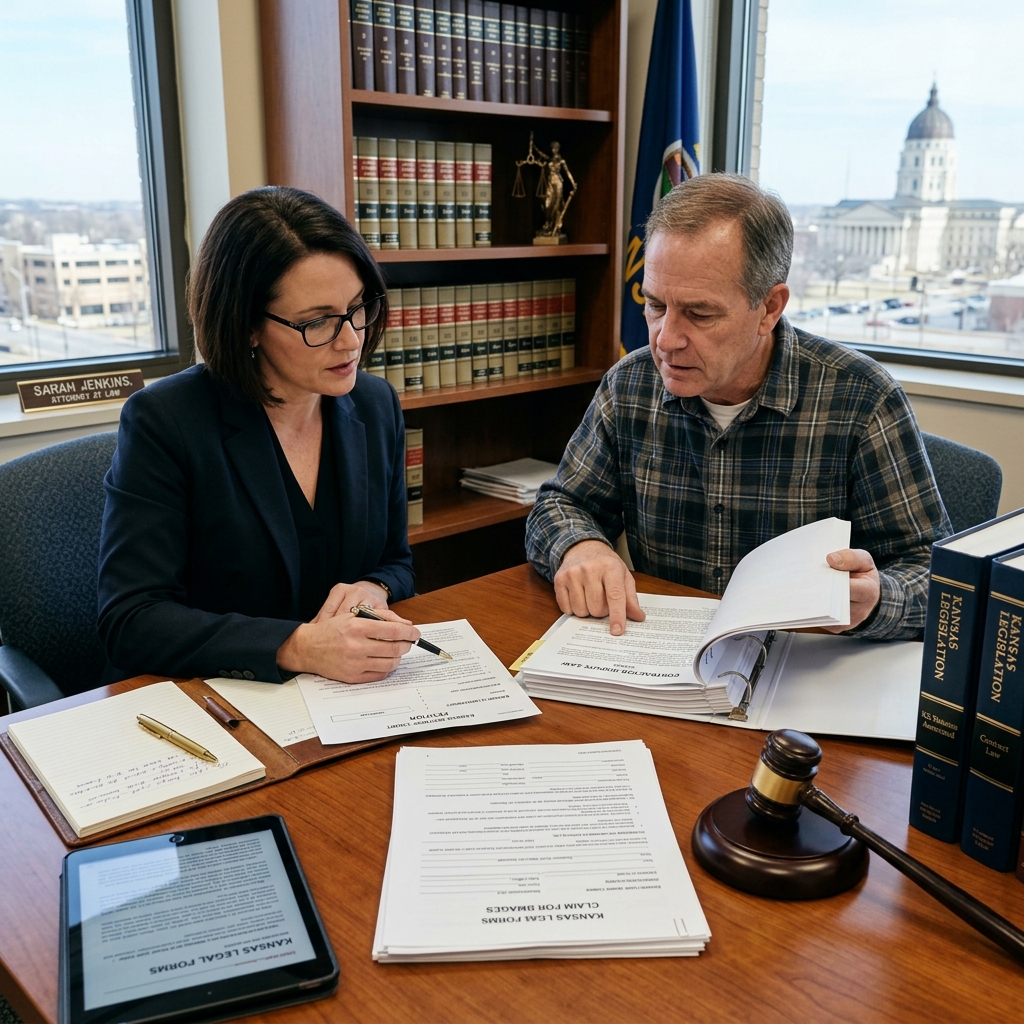
Disputes with contractors often begin with a simple promise: a project will be completed on time, on budget, and according to the agreed specifications. When the finished work falls short, Kansas homeowners may have legal options ranging from negotiation to filing a lawsuit. The strongest cases usually rely on clear documentation, a contract that defines the work, and proof that the contractor failed to deliver what was promised.
In Kansas, the path to a lawsuit may depend on the type of claim, the kind of property involved, and whether state law requires advance notice before filing. That means a homeowner should not rush straight to court without first understanding the legal steps that can affect the case.
When a Contractor Dispute Becomes a Legal Claim
Not every bad project turns into a lawsuit, but certain problems often do. A contractor dispute may become actionable when the contractor:
- fails to finish the project
- performs work that is substantially below the promised standard
- uses materials that do not match the contract
- causes defects through careless construction practices
- refuses to correct obvious problems after being notified
A lawsuit usually depends on showing more than dissatisfaction. The homeowner must connect the contractor’s conduct to a legal wrong, such as breach of contract, breach of warranty, or another construction-related claim.
Start With the Paper Trail
The foundation of a strong claim is evidence. Before contacting a lawyer or court, the homeowner should gather every record that explains what was promised and how the work failed. Useful materials often include the written contract, invoices, receipts, payment records, estimates, emails, text messages, photos, videos, and any inspection reports.
Documentation matters because construction cases often become a question of proof. A contractor may argue that the work matched the agreement, that the problem was caused by another trade, or that the homeowner changed the scope mid-project. Clear records help answer those defenses.
If possible, the homeowner should preserve evidence before making repairs. Once work is changed or replaced, it becomes harder to prove the original condition of the project. In many disputes, photographs taken immediately after discovery of the defect are especially useful.
Legal Theories Commonly Used in Kansas
Several legal theories may support a contractor lawsuit in Kansas. The best option depends on the facts of the project and the wording of the agreement.
| Legal theory | Typical use |
|---|---|
| Breach of contract | The contractor did not do what the written or oral agreement required. |
| Implied warranty claim | The work was so defective that it failed to meet the basic standards expected in residential construction. |
| Construction defect claim | There are specific problems with the build, such as leaks, structural defects, or failure to follow required construction practices. |
For a breach of contract claim, the homeowner generally must show the contract, the contractor’s failure to perform, and the resulting damages. For a warranty-based claim, the issue is often whether the home or improvement was built in a workmanlike manner and fit for its intended use.
The Importance of Kansas Deadlines
One of the most important issues in any lawsuit is the statute of limitations. In Kansas, the time limit can vary depending on the claim, and the available sources indicate a range of roughly three to five years depending on the legal theory and facts involved. Missing the deadline can bar the case entirely.
Because deadline rules can be complicated in construction disputes, homeowners should not assume there is plenty of time. The clock may begin running when the defect is discovered, when the work is completed, or when the injury becomes legally actionable, depending on the claim. A prompt review of the facts is essential.
Special Notice Rules for New Residential Construction
Kansas law includes specific pre-suit procedures for certain claims involving defective residential construction. These rules matter because a homeowner may need to give the contractor a written notice describing the alleged defects before filing suit. The notice is meant to give the contractor an opportunity to inspect, respond, and potentially repair the problem.
Under the procedure reflected in Kansas construction law, the homeowner must provide written notice of the defects and allow the contractor a chance to make an offer to repair or pay for the damage. The statute also places timing requirements on the response process. If the contractor does not respond properly, the homeowner may later pursue a lawsuit.
These notice rules can be especially important in new home disputes. They are designed to reduce unnecessary litigation and encourage resolution before the case reaches court.
How the Pre-Suit Process Works
When the Kansas construction notice process applies, the exchange usually follows a sequence. First, the homeowner sends a notice identifying the construction conditions claimed to be defective. Then the contractor is expected to respond within the required time frame.
The contractor’s response may take different forms, such as a proposal to inspect the property, an offer to repair the defect at no cost, a settlement offer, or a rejection of the claim. If an inspection is agreed to, that inspection must occur within the statutory period, and the contractor may then need to issue a further written response after the inspection.
If the contractor refuses to act, does not respond, or states that no further repair will be made, the homeowner may proceed with litigation. If the contractor makes an offer and the homeowner rejects it, the homeowner may also be able to move forward after providing the required written rejection.
Choosing the Right Court
Most contractor disputes in Kansas are filed in district court. That is the usual venue for breach of contract claims and residential defect actions that involve substantial damages or complex issues. Smaller disputes may sometimes be eligible for a more streamlined process in lower-value claims, but the right forum depends on the amount involved and the nature of the case.
Before filing, the homeowner should calculate the likely damages. This may include the cost to repair defective work, the cost to complete unfinished work, or other measurable financial losses caused by the contractor’s conduct. The amount claimed can affect where the suit is filed and how the case proceeds.
What Damages May Be Available
In construction disputes, the main goal is usually financial compensation rather than punishment. A homeowner may seek money to fix the problem, hire a replacement contractor, or recover losses caused by delay and defective work.
- repair costs
- completion costs for unfinished work
- difference in value caused by poor workmanship
- related out-of-pocket expenses
Kansas law also requires the plaintiff to prove damages with reasonable certainty. That means the homeowner should be ready to show actual financial harm rather than only general disappointment. Estimates from qualified contractors, inspection reports, and receipts can help establish the amount claimed.
Why a Demand Letter Still Matters
Even when the law does not require a formal demand letter, sending one often helps build the case. A clear written demand can show that the homeowner gave the contractor a chance to fix the issue before suit. It can also create evidence that the contractor knew about the defects and chose not to address them.
A strong demand letter should identify the project, describe the defects, explain what needs to be corrected, and set a reasonable deadline for response. The letter should be professional and factual. Emotional language is less useful than a concise explanation of the problem and the requested remedy.
What to Expect After Filing
Once the lawsuit is filed, the contractor must be served with the complaint and given a chance to respond. The contractor may deny the claims, argue that the work was acceptable, or assert that the homeowner failed to follow required notice procedures. The contractor may also bring up issues such as payment disputes, scope changes, or homeowner interference.
From there, the case may move into discovery, where both sides exchange documents and take testimony. In many cases, the next stage involves settlement talks or mediation. Construction cases often settle once the parties see the strength of the evidence and the likely cost of continued litigation.
Common Defenses Contractors Raise
Contractors often rely on a few recurring defenses in these cases. Understanding them early can help a homeowner prepare.
- The work matched the contract or the approved change orders.
- The alleged defect was caused by normal wear, another contractor, or misuse by the homeowner.
- The homeowner failed to give proper notice or opportunity to cure.
- The claim is untimely under the applicable limitations period.
- The damages are overstated or not supported by documentation.
These defenses do not defeat a claim automatically, but they show why evidence and timing are so important.
When a Lawyer Can Make a Difference
Some disputes are small enough to handle alone, but contractor litigation can become technical quickly. A lawyer can help evaluate whether the claim is based on contract, warranty, or defect law, determine whether notice rules apply, and calculate damages in a way that stands up in court.
Legal help is especially valuable when the project involves a new home, hidden structural defects, significant repair costs, multiple subcontractors, or a contractor who has stopped communicating. In those cases, a lawyer can also help preserve evidence and avoid procedural mistakes that might weaken the case.
Practical Steps for a Homeowner
Before filing suit, a homeowner can take a series of practical steps to strengthen the claim and improve the chance of a good result.
- Collect the contract and every written change order.
- Save photos, videos, and inspection reports.
- Write down dates, conversations, and repair attempts.
- Get independent estimates for correction work.
- Send written notice to the contractor.
- Check whether Kansas pre-suit notice rules apply.
- Review the deadline for filing in court.
Taking these steps early can reduce the risk of losing evidence or missing a legal deadline.
FAQ: Can I sue if the contractor refuses to return my calls?
Yes, lack of communication can support a lawsuit if the contractor also failed to perform the contract or left serious defects unresolved. Silence alone is not the claim; the legal issue is the underlying breach and the damages caused by it.
FAQ: Do I need a written contract to sue?
A written contract is very helpful because it defines the scope of work, price, and deadlines. However, some disputes may still be based on oral agreements, invoices, messages, or implied warranty theories, depending on the facts.
FAQ: Can I recover the cost of hiring someone else to fix the work?
Often yes. Repair or completion costs are among the most common damages in construction cases, as long as they are supported by reliable proof and are tied to the contractor’s failure.
FAQ: What if the contractor offered to repair the problem?
That offer may affect the case, especially if Kansas notice rules apply. The homeowner should evaluate whether the offer is reasonable and whether accepting or rejecting it changes the right to sue later.
References
- How to Sue a Contractor in Kansas — LegalMatch. 2026-07-10. https://www.legalmatch.com/law-library/article/how-to-sue-a-contractor-in-kansas.html
- Kansas Statutes Chapter 60, Section 4706 — Kansas Legislature. 2012-01-01. https://www.kslegislature.gov/li_2012/b2011_12/statute/060_000_0000_chapter/060_047_0000_article/060_047_0006_section/060_047_0006_k/
- State of Kansas Construction Law Compendium of Law — Dysart Taylor. 2020-02-01. https://www.dysarttaylor.com/wp-content/uploads/2020/02/State-of-Kansas-Construction-Law-Compendium-of-Law-Brumitt-McMonigle.pdf
Similar Articles








Read full bio of medha deb




