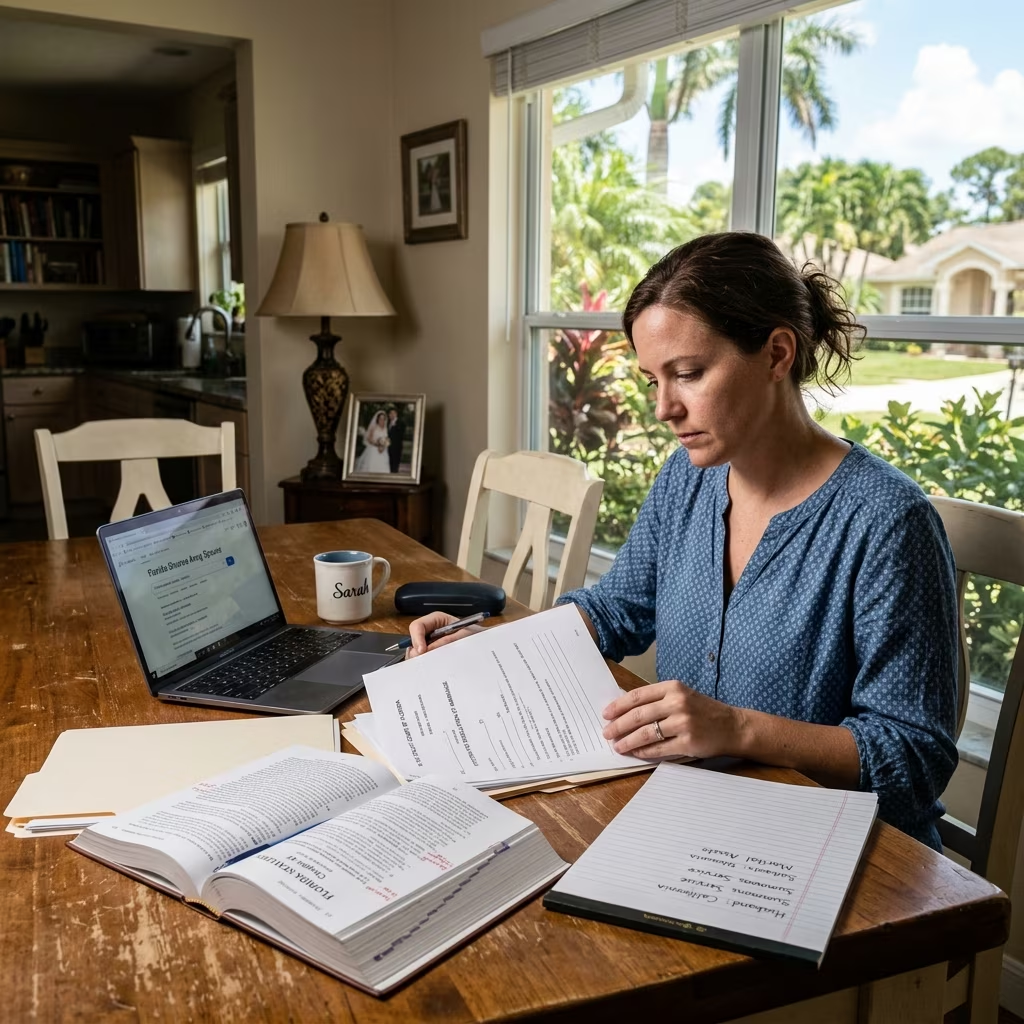
Florida allows a divorce case to move forward even when one spouse lives in another state, but the case must satisfy specific rules about residency, notice, and court authority. The main questions are whether Florida can hear the divorce at all and whether the court can decide money, property, or support issues involving the absent spouse.
This guide explains the practical steps, legal standards, and common complications that arise when a Florida resident wants to end a marriage while the other spouse is outside the state.
What Makes a Florida Divorce Possible?
The starting point is residency. Florida requires at least one spouse to have lived in the state for six months before filing for divorce. That rule gives the court authority to dissolve the marriage, even if the other spouse has never lived in Florida or has moved away.
However, ending the marriage is only part of the case. If the filing spouse wants the court to divide property, award alimony, or decide other financial issues against the out-of-state spouse, the court usually needs a stronger connection to that spouse.
- Six-month state residency is the basic filing requirement.
- County residency may also matter for where the case is filed.
- Personal jurisdiction becomes important when the case involves money or property.
Residency and Filing Location
Florida law focuses on the filing spouse’s residence, not the other spouse’s location. If one spouse has lived in Florida long enough, the petition can usually be filed in a proper Florida court.
In many cases, the filing spouse must also show residence in the county where the case is brought. That requirement helps determine the correct courthouse and avoids delays caused by filing in the wrong place.
For couples with a history in more than one state, the state and county rules may overlap. A person who recently moved may need to wait until the residency period is complete before starting the case.
Why Jurisdiction Over the Other Spouse Matters
A Florida court can often dissolve the marriage itself once the residency requirement is met, but that does not automatically give the court authority over the out-of-state spouse for every issue. The difference between general divorce power and personal jurisdiction is critical.
Personal jurisdiction is the court’s power to make decisions that bind the other spouse individually. Without it, the court may be limited to granting the divorce and unable to order certain financial remedies.
| Issue | What Florida may be able to do | What may require personal jurisdiction |
|---|---|---|
| Ending the marriage | Usually yes, if residency is met | Not always required |
| Property division | Sometimes | Often yes, if the property or spouse has sufficient Florida contacts |
| Alimony | Sometimes | Usually yes |
| Other money judgments | Limited without jurisdiction | Usually yes |
When a Florida Court May Reach the Out-of-State Spouse
Florida courts can sometimes assert personal jurisdiction over a spouse who lives elsewhere. This usually depends on whether that spouse has meaningful ties to Florida or has chosen to participate in the case without objecting.
Common situations include a marital home in Florida, the spouse being physically served while in Florida, or the spouse waiving any challenge to jurisdiction by responding in a way that accepts the court’s authority.
- The couple owned or maintained a marital home in Florida.
- The spouse was served while physically present in Florida.
- The spouse responded without timely objecting to jurisdiction.
- The spouse has substantial contacts with Florida, such as business activity or regular visits.
When those facts are missing, the court may be able to grant only a limited divorce. In that situation, the marriage ends, but issues like support and financial distribution may need to be handled elsewhere or negotiated privately.
How the Other Spouse Gets Notice
Even if the court has jurisdiction, the filing spouse must still give proper notice of the case. Service of process is the formal delivery of the divorce papers, and it is required so the other spouse has a fair chance to respond.
When the spouse lives out of state, service methods vary depending on the circumstances and the rules of the destination state. The chosen method must be legally valid, or the case may stall.
- Certified mail may work if the other spouse agrees and signs for the papers.
- Personal service through a sheriff or private process server is often preferred.
- Publication may be allowed if the spouse cannot be found after diligent effort.
Personal Service, Mail, and Publication
Personal service is usually the most reliable method because it creates a clear record that the papers were delivered. A local sheriff or process server in the state where the spouse lives may be used to complete service and prepare proof for the Florida court.
Certified mail is simpler, but it generally works only when the receiving spouse cooperates. If the spouse refuses to sign or evades delivery, the mailing method may fail.
When the spouse cannot be located, service by publication may be available. That process requires notice to be printed in an approved newspaper, usually in the area where the spouse was last known to live. It is slower and more procedural than direct service, but it may be the only option in some cases.
What Happens After the Papers Are Served?
Once the petition and summons are properly delivered, the responding spouse has a limited time to answer. If a response is filed, the case may proceed as contested litigation, with the court resolving disputed issues through hearings or negotiation.
If no response is filed on time, the petitioner may ask for a default. A default can simplify the process, but it does not eliminate the need to show that the court has authority over the issues being decided.
- A timely answer can preserve objections and raise disputes.
- A default may allow the case to proceed without the other spouse’s participation.
- Financial requests still depend on the court’s legal authority.
Money, Property, and Support in Cross-State Cases
Divorce cases become more complicated when the spouses own property, share debt, or need support orders. Florida courts may divide assets located in Florida and may address other financial issues if personal jurisdiction exists, but a court’s power is not unlimited.
If the court cannot reach the absent spouse personally, some claims may be unavailable or may need to be handled in the state where that spouse lives. That can create parallel proceedings, added expense, and longer timelines.
For that reason, a filing spouse should think early about what relief is truly needed. A case that seeks only the legal end of the marriage is simpler than one that also asks for alimony, debt allocation, and property division.
Children and Parenting Issues
If children are involved, the case may require additional filings and jurisdiction analysis. The court must determine whether Florida is the proper place to make custody-related decisions and whether another state has a stronger claim to hear those issues.
These issues often involve where the children have lived, which state has been their home state, and whether another court is already handling a custody dispute. Because parenting orders affect daily life, courts are careful about jurisdiction before entering them.
- Parenting plans may require extra forms.
- Custody questions can involve another state’s courts.
- Careful filing is important when children have lived in more than one place.
Common Mistakes That Delay the Case
Out-of-state divorce cases often slow down because a filing spouse overlooks a procedural detail. Missing residency proof, serving papers incorrectly, or assuming Florida can decide every issue without jurisdiction are all common problems.
Another mistake is filing in the wrong county or failing to recognize that the other spouse may object to Florida’s authority. Once a jurisdiction challenge is raised, the court may pause the case until the issue is resolved.
- Starting the case before meeting the six-month residency requirement.
- Using an invalid or incomplete service method.
- Assuming the court can divide all property without personal jurisdiction.
- Ignoring possible custody or support issues tied to another state.
Practical Steps to Move Forward
A successful out-of-state divorce usually begins with a careful checklist. First, confirm the residency rule is satisfied. Next, determine whether the court needs personal jurisdiction over the other spouse. Then select a valid service method and prepare for the possibility of a response or a jurisdictional challenge.
Many cases are easier to manage when the filing spouse gathers financial records, marriage documents, address history, and any evidence showing Florida contacts. Those materials can help support the petition and reduce avoidable disputes.
- Confirm Florida residency before filing.
- Identify the proper county for the petition.
- Choose a service method that fits the spouse’s location.
- Collect records showing Florida contacts and shared assets.
- Plan for custody, support, and property issues early.
When Legal Help Is Worth Considering
Although some Florida divorces are straightforward, an out-of-state case can become technical very quickly. The main complications involve service, jurisdiction, and whether the court can issue the orders you actually need. A small mistake may limit what the court can do or delay the case for weeks or months.
That is why many people choose to consult a Florida family law attorney when a spouse lives elsewhere. Legal guidance can help determine whether Florida is the right forum, whether another state may have parallel authority, and how to present the case efficiently.
Frequently Asked Questions
Can I file for divorce in Florida if my spouse lives in another state?
Yes, if at least one spouse has lived in Florida for six months before filing. The other spouse does not need to live in Florida for the court to dissolve the marriage.
Does Florida need personal jurisdiction over my spouse?
Not always. Florida may end the marriage without personal jurisdiction, but money-related orders such as alimony or certain property decisions often depend on it.
What if my spouse refuses to accept the papers?
You may be able to use personal service through a process server or sheriff, and in some cases service by publication if the spouse cannot be found after diligent efforts.
Can my spouse stop the divorce by living somewhere else?
Living in another state does not automatically block the divorce. The spouse may challenge jurisdiction or service, but the case can still move forward if Florida’s legal requirements are satisfied.
Will the court decide custody if my spouse lives away?
Possibly, but custody and parenting issues follow additional jurisdiction rules. The children’s living history and any existing court orders can affect where those issues are decided.
References
- Florida Courts: Dissolution of Marriage (Divorce) — Florida Courts. 2026-07-10. https://www.flcourts.gov/Services/family-courts/domestic-relations-court-resources/dissolution-of-marriage-divorce
- Florida Law Help: Divorce, Separation, & Annulment — Florida Law Help. 2026-07-10. https://www.floridalawhelp.org/families-children/divorce-separation-annulment
- Florida Divorce — WomensLaw.org. 2026-07-10. https://www.womenslaw.org/laws/fl/divorce
- Filing for Divorce in Florida When Spouse Lives in Another State — Florida Divorce Me. 2026-07-10. https://www.floridadivorceme.com/divorce-in-florida-when-spouse-lives-in-another-state/
- Out-of-State Divorce in Florida: Guide for Estranged Spouses — C. Alvarez Law. 2026-07-10. https://www.calvarezlaw.com/blog/how-to-handle-a-florida-divorce-when-your-spouse-lives-out-of-state/