
Wrongful Eviction in New York: Tenant Rights and Remedies
Understand how New York protects tenants from illegal evictions, lockouts, utility shutoffs, and other self-help tactics by landlords.
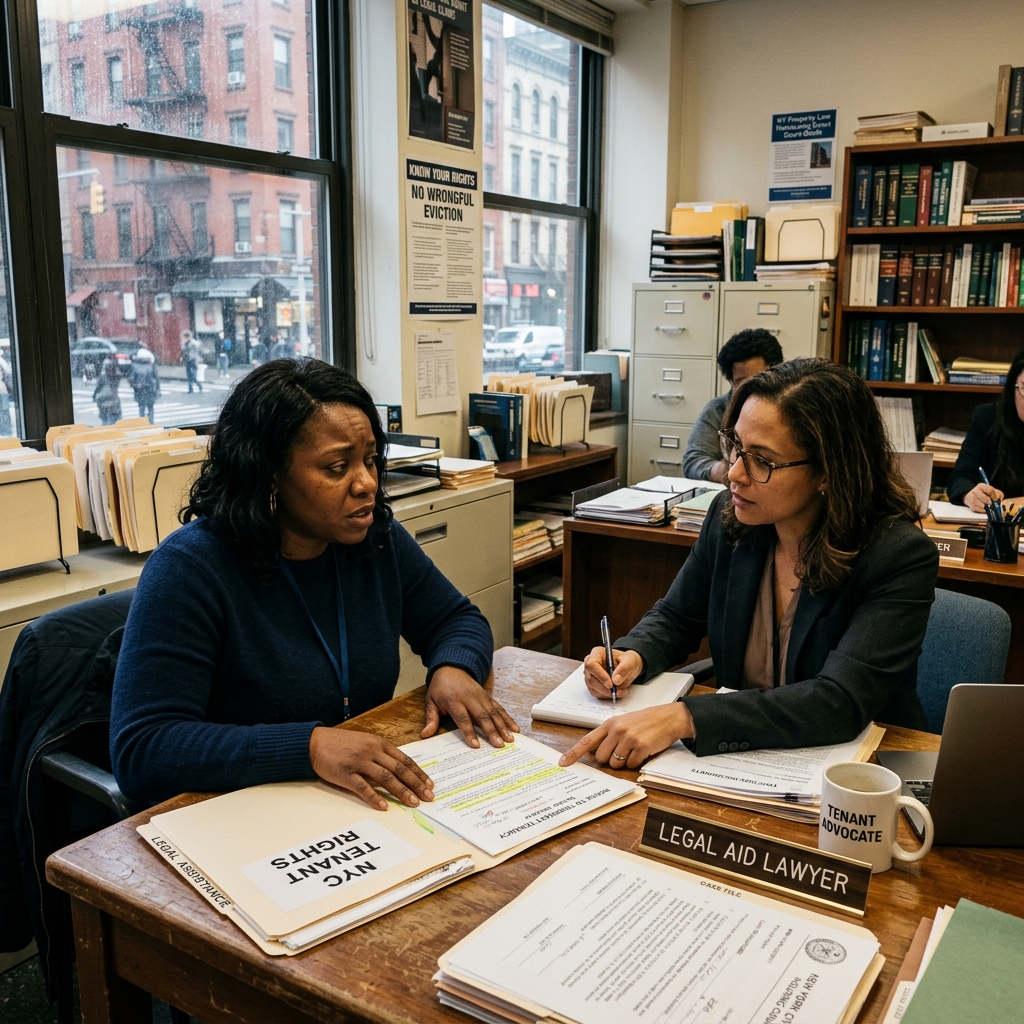
New York has some of the strongest protections in the country against wrongful eviction, also called illegal eviction or unlawful lockout. These laws exist to stop landlords from forcing tenants out through harassment, lock changes, or utility shutoffs instead of going through the required court process. Understanding these rules is critical whether you are a tenant trying to stay in your home or a landlord trying to avoid serious legal penalties.
Legal Eviction vs. Wrongful Eviction
In New York, the central rule is simple: no court, no eviction. A landlord cannot remove a tenant or bar access to the home unless a judge has ordered the eviction and a law enforcement officer serves a valid warrant of eviction.
What a lawful eviction requires
- The landlord must start a formal case in housing court or another court with jurisdiction.
- The tenant must receive official court papers (for example, a notice of petition and petition in a summary proceeding).
- A judge must hear the case and issue a judgment authorizing eviction, if the landlord proves a legal basis.
- The court issues a warrant of eviction, which must be served by a sheriff, marshal, or constable, giving the tenant a final deadline to move (often at least 14 days).
If any of these steps is skipped, an attempt to remove the tenant may be an illegal eviction.
What wrongful eviction looks like
A wrongful eviction occurs when a landlord tries to force a tenant out without following the required court process, or by using methods that New York law specifically forbids. This is often called a self‑help eviction because the landlord takes matters into their own hands instead of relying on the courts and law enforcement.
- Physically locking a tenant out without a court order.
- Removing or disabling the apartment door or lock.
- Shutting off heat, water, or electricity to drive the tenant out.
- Harassing the tenant with repeated threats or interference with their quiet use of the home.
New York City’s Administrative Code explicitly makes such tactics illegal once a person has lawfully occupied the unit for at least 30 days or has a lease.
Key New York Laws Protecting Tenants from Illegal Evictions
Wrongful evictions are not just unfair—they can be both civil and criminal violations under New York law.
| Law / Source | Main Protection | Applies Where |
|---|---|---|
| NYC Admin. Code § 26-521 (Unlawful Eviction) | Prohibits force, utility shutoffs, lock changes, and other tactics to push out lawful occupants without a court order. | New York City |
| Real Property Actions and Proceedings Law (RPAPL) – Illegal Eviction misdemeanor provisions | Makes illegal evictions a Class A misdemeanor and allows criminal and civil penalties. | New York State |
| Housing court rules & procedures | Require a court case and warrant of eviction before physical removal. | Statewide |
| Local protections and tenant assistance programs | Provide enforcement tools, complaint processes, and city support for unlawfully evicted tenants. | Primarily NYC |
NYC Administrative Code: Unlawful Eviction
New York City’s Administrative Code § 26‑521 defines unlawful eviction and lists specific prohibited conduct, including:
- Using or threatening force to make an occupant leave.
- Interrupting or discontinuing essential services (such as heat, water, gas, or electricity) to drive the person out.
- Removing the occupant’s possessions from the dwelling.
- Removing the entrance door, plugging or disabling the lock, or changing the lock without promptly providing a key.
This law covers anyone who has lived in the unit for at least 30 consecutive days or who has a lease or a lawful right to request one. It applies whether the unit is rent‑stabilized, market‑rate, or another type of residential dwelling.
Statewide criminal penalties
State law also treats illegal evictions as a criminal offense. A landlord who attempts to evict a tenant without using the required court process can be charged with a Class A misdemeanor and may face fines and other penalties. In addition to criminal consequences, landlords may owe civil damages to the tenant, including the possibility of enhanced or multiple damages for losses caused by the illegal eviction.
Examples of Illegal Eviction Tactics
While every situation is unique, New York guidance consistently identifies certain actions as illegal when used to remove or pressure a tenant without proper legal authority.
- Changing or removing locks so the tenant cannot enter the home.
- Removing the front door or altering it so it no longer functions.
- Shutting off utilities—heat, hot water, electricity, or gas—without a legitimate reason allowed by law.
- Blocking access to the building, hallway, or unit.
- Removing belongings or placing them on the street without a marshal or sheriff executing a warrant.
- Threats or harassment meant to make the tenant move out, including constant intimidation, late-night visits, or interference with the tenant’s peaceful use of the home.
These actions may be unlawful even if the landlord believes the tenant is not paying rent or the lease has ended. Nonpayment or lease violations are issues that must be handled through the court process.
Who Is Protected from Wrongful Eviction?
New York law protects a wide range of occupants, not just traditional leaseholders.
- Tenants with written leases, including rent‑stabilized and market‑rate tenants.
- Month‑to‑month or oral tenants who pay rent regularly, even without a written lease.
- Roommates or subtenants who have lawfully occupied the unit with consent or under a legal arrangement.
- Long‑term occupants who have lived in the unit at least 30 days, including some hotel or single‑room occupancy residents.
In New York City, the unlawful eviction protections specifically apply once a person has occupied a dwelling for 30 consecutive days or has a lease or lawful right to request one.
Common Legitimate Reasons for Eviction (That Still Require Court)
Even when a landlord has a legitimate reason to end a tenancy, self‑help is not allowed. The landlord must still follow the formal process.
- Nonpayment of rent – Seeking eviction for unpaid rent, after serving proper notices and starting a nonpayment case.
- Holdover after lease expiration – Attempting to remove a tenant who stays after the lease ends or after a month‑to‑month tenancy is properly terminated.
- Serious lease violations – Such as illegal subletting, unauthorized occupants, or chronic late payment, proven in court.
- Nuisance or dangerous behavior – Severe disturbances or illegal activity, where the landlord can present evidence to a judge.
Even in these scenarios, tenants keep their right to appear in court, present defenses, and challenge the landlord’s claims before any eviction can lawfully take place.
Immediate Steps Tenants Can Take During an Illegal Lockout
If a landlord locks you out or uses other unlawful tactics, acting quickly increases your chances of getting back into your home and protecting your rights.
1. Stay calm and document everything
- Write down dates, times, and what happened.
- Save text messages, emails, and letters from the landlord.
- Take photos or video of changed locks, removed doors, notices, or property placed outside.
- Identify any witnesses who saw the lockout or harassment.
2. Call law enforcement
In many parts of New York, police and sheriffs are instructed to treat illegal lockouts as potential criminal matters, not mere civil disputes.
- Call 911 if you are locked out of your home or facing threats.
- Explain that New York law makes illegal evictions a crime and that you are requesting assistance in regaining entry.
- Ask the officer to make a police report documenting the incident.
If an officer indicates it is only a civil matter, you can calmly mention that state law has been updated to treat illegal evictions as a Class A misdemeanor and ask for a supervisor if necessary.
3. Go to housing court
Tenants who have been locked out can go to housing court to file an illegal lockout case or request an order restoring possession. The court can order the landlord to let you back in and may schedule a quick emergency hearing.
- Bring all documentation: ID, lease or rent receipts, photos, messages, and any police report.
- Ask the clerk about procedures for illegal lockout or restoration cases.
- Be prepared to show you lawfully lived in the unit.
4. Seek legal help
Depending on your location and income, you may qualify for free or low‑cost legal representation.
- In New York City, many tenants facing eviction are covered by a right‑to‑counsel program in housing court.
- Legal aid organizations and bar association referral services can help you find an attorney if you are outside NYC.
Potential Remedies and Damages for Wrongful Eviction
Tenants who are victims of wrongful eviction may be entitled to several forms of relief, depending on the facts and the laws invoked.
- Restoration to the apartment – A court order directing the landlord to give you back the unit and keys.
- Compensation for losses – Reimbursement for hotel costs, storage, damaged property, and other out‑of‑pocket expenses caused by the lockout.
- Statutory or multiple damages – In some illegal eviction cases, tenants may recover “treble” (triple) damages or other enhanced awards, depending on the statute used.
- Civil penalties against the landlord – Government agencies or courts may impose fines.
- Criminal consequences – Landlords may face prosecution for misdemeanor offenses related to illegal evictions.
Because these remedies can be complex and vary by locality, consulting with an attorney or legal aid organization is usually the most effective way to pursue them.
How New Good Cause and Tenant Protections Fit In
New York has also expanded substantive protections that limit when a landlord can remove certain tenants even through the court process. For example, recent “Good Cause Eviction” laws give eligible tenants the right to remain in their homes as long as they pay rent and follow their lease, and require landlords to show a legally acceptable reason for non‑renewal or eviction. These protections do not replace the ban on self‑help; instead, they add another layer of safeguards.
In practice, this means:
- Many tenants cannot be evicted at the landlord’s sole discretion; a legally valid “good cause” is required.
- Even where the landlord has good cause, they still must go through court—self‑help remains illegal.
Practical Tips for Tenants and Landlords
For tenants
- Never move out based solely on a text, email, or verbal demand; those are not legal eviction notices.
- Do not ignore court papers—failing to appear can result in a default judgment and lawful eviction.
- Keep records of rent payments, communications, and conditions in your home.
- If threatened with an illegal lockout, calmly state you know a court order is required before any eviction can lawfully take place.
For landlords
- Do not change locks, shut off utilities, or remove doors to try to end a tenancy.
- Use housing court or another proper venue to resolve nonpayment or lease disputes.
- Keep written records of notices, payments, and communications with tenants.
- When in doubt, consult counsel; illegal eviction findings can lead to criminal charges, fines, and significant civil liability.
Frequently Asked Questions About Wrongful Eviction in New York
1. Can my landlord evict me without going to court?
No. In New York, your landlord must bring a court case and obtain a judgment and warrant of eviction before you can be legally removed from your home. Any attempt to force you out without a court order—such as changing locks or shutting off utilities—may be an illegal eviction.
2. What should I do if I come home and the locks are changed?
If you are lawfully living in the unit and discover you are locked out:
- Document the situation with photos and notes.
- Call 911 and report an illegal lockout, explaining that state and city law prohibit self‑help evictions.
- Go to housing court as soon as possible to request an order restoring you to possession.
3. Is it legal for my landlord to shut off my electricity because I owe rent?
Generally, no. Cutting off essential services such as heat, water, and electricity to pressure you to leave is considered an unlawful eviction tactic in New York City and is prohibited under state guidance as well. Landlords must handle rent disputes through court.
4. Do I have rights if I do not have a written lease?
Yes. Many tenants in New York are protected even without a written lease. If you have occupied the unit for at least 30 days or pay rent regularly as a tenant, you usually cannot be removed without a court order, and lockouts and similar tactics are still illegal.
5. Can I get money damages if my landlord wrongfully evicts me?
In many cases, you can. Depending on the law applied and your specific circumstances, courts may award compensation for your actual losses and, in some situations, multiple damages or statutory penalties. Speaking with a legal services provider can help you understand what remedies might be available.
References
- § 26-521 Unlawful eviction — New York City Administrative Code / American Legal Publishing. 2025-01-01. https://codelibrary.amlegal.com/codes/newyorkcity/latest/NYCadmin/0-0-0-47505
- New York City Housing Court: NYC Illegal Eviction Law — New York State Unified Court System. 2024-05-01. https://www.nycourts.gov/new-york-city-housing-court/nyc-illegal-eviction-law
- An introduction to eviction in New York State — LawHelpNY. 2023-06-15. https://www.lawhelpny.org/resource/introduction-eviction-new-york-state
- Illegal Evictions — Legal Assistance of Western New York, Inc.
- Unlawful Evictions or Lockouts — Mayor’s Office to Protect Tenants (NYC.gov). 2022-09-01. https://www.nyc.gov/content/tenantprotection/pages/unlawful-evictions-lockouts
- No Court, No Eviction: What Every NYC Tenant Needs to Know — Neighbors Together. 2025-08-23. https://neighborstogether.org/2025/08/23/no-court-no-eviction-what-every-nyc-tenant-needs-to-know/
- Good Cause Eviction Protections gives eligible tenants new rights — Housing Justice for All. 2025-06-17. https://housingjusticeforall.org/kyr-good-cause/
Similar Articles








Read full bio of medha deb


