
New York Car Accident Insurance Claims: A Practical Guide
Learn how New York’s no-fault system, serious injury rules, and insurance claim process affect your rights after a car crash.
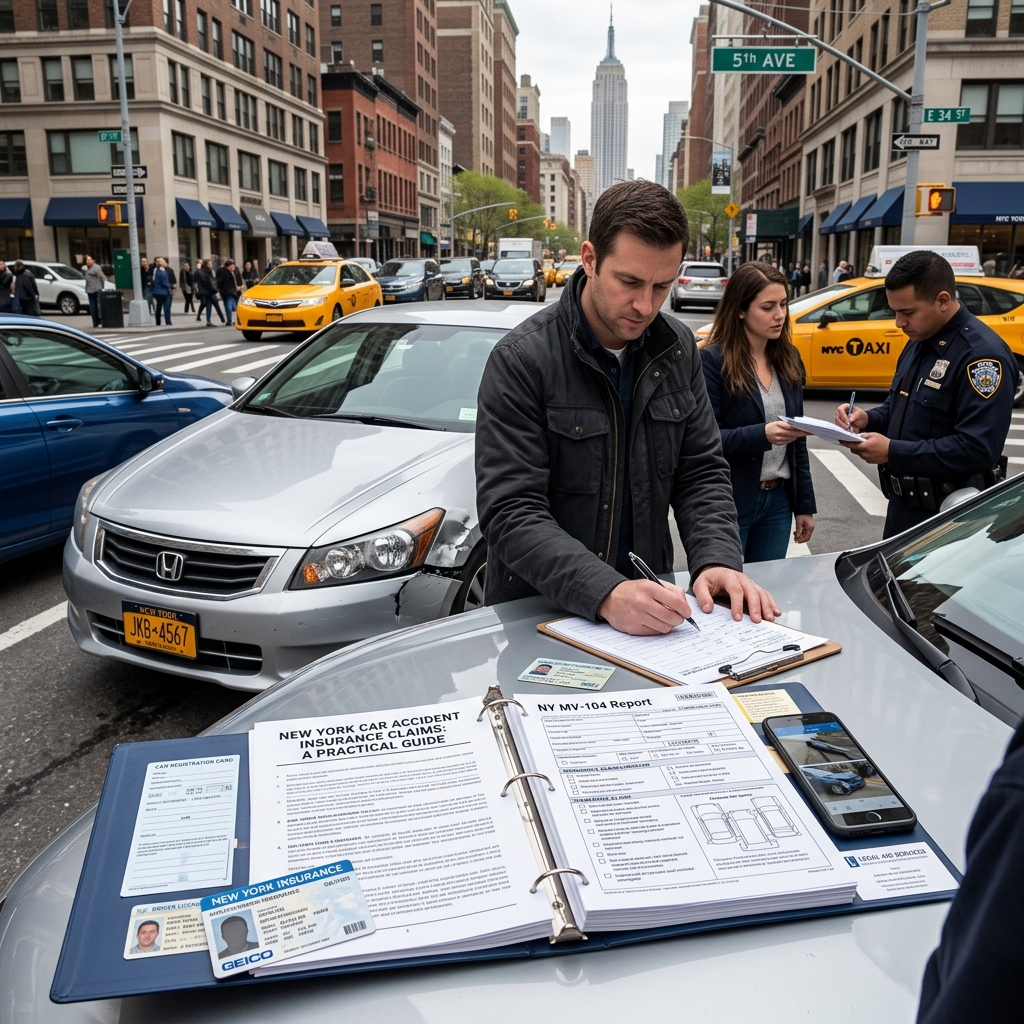
New York has one of the most distinctive auto insurance systems in the United States. After a car accident, your claim will almost always begin with no-fault benefits under your own policy, and only in specific situations can you pursue additional compensation from the at-fault driver. Understanding how this system works, which deadlines apply, and how to deal with insurance companies is essential if you want to protect your financial and legal interests.
This guide explains how New York car accident insurance claims operate, what benefits you can expect, when you may sue for further damages, and practical steps to strengthen your case.
1. Overview of New York’s No-Fault Auto Insurance System
New York is a compulsory no-fault insurance state. That means every vehicle owner must carry coverage that pays certain losses to people injured in motor vehicle accidents, regardless of who caused the crash. Your own insurer is generally responsible for paying your basic economic losses up to specified limits.
1.1 What No-Fault Coverage Usually Includes
No-fault benefits are typically provided through Personal Injury Protection (PIP). PIP is designed to supply prompt payment of essential costs without requiring you to prove someone else was negligent.
- Medical expenses that are reasonable and necessary, such as hospital care, surgery, diagnostic tests, and rehabilitation.
- Lost wages up to certain percentages and limits if you cannot work due to accident-related injuries.
- Other reasonable and necessary expenses, such as transportation to medical appointments and some household help if medically required.
- A modest death benefit that may be payable to survivors if a covered person is killed in the crash.
These benefits apply regardless of fault but are generally capped at about $50,000 in basic no-fault benefits per person, unless you or the vehicle owner purchased additional coverage.
1.2 What No-Fault Does Not Cover
No-fault protection has important limitations:
- It does not cover pain and suffering or other non-economic damages.
- It does not pay for vehicle repair or property damage; those claims are handled under separate coverages (such as collision or liability property damage).
- It may not apply if the injured person was engaged in certain criminal or highly dangerous behavior, such as driving while intoxicated, at the time of the accident.
To recover compensation beyond these economic losses, you must meet New York’s serious injury threshold or exceed basic economic loss limits.
2. Immediate Steps After a New York Car Accident
Your actions in the minutes and days after a crash often have a major impact on your insurance claim. Safety comes first, but documenting the incident and notifying insurers promptly is also critical.
2.1 Safety and Medical Care
- Check for injuries to yourself, passengers, and others involved. Call 911 if anyone appears hurt or if there is significant property damage.
- Avoid moving a seriously injured person unless remaining in place is dangerous. Keep them warm and try to keep them conscious until help arrives.
- Seek a medical evaluation even if you feel “fine.” Many injuries, such as soft-tissue trauma or concussions, may not show immediate symptoms. Medical records are key evidence in any claim.
2.2 Documenting the Scene and Gathering Information
Evidence collected at the accident scene helps insurers and, if necessary, courts understand what occurred.
- Take photographs of vehicle damage, skid marks, road conditions, traffic signals, and visible injuries.
- Exchange contact and insurance information with all drivers involved.
- Obtain contact details for any witnesses, who may later provide statements.
- Request a copy of the police report or obtain the incident number so you can access it later.
2.3 Notifying Insurance Companies
New York law and many insurance policies require prompt notice of claims. Failing to report can jeopardize coverage.
- Notify your own insurer as soon as reasonably possible after the accident. Provide basic facts but avoid speculating about fault or the extent of injuries until you have more information.
- If you are injured, file a written No-Fault claim identifying all injured persons, usually within 30 days of the accident.
- If other parties make claims against you, refer them directly to your insurer and do not make private payments or promises.
3. Filing No-Fault and PIP Claims in New York
The first formal step for injury compensation is usually a No-Fault or PIP claim with your own insurer, even if another driver clearly caused the crash.
3.1 How to Start Your No-Fault Claim
According to New York’s Department of Financial Services, you must file a written notice with the No-Fault insurer that identifies the injured person or persons and includes key accident details.
- Use any No-Fault application forms provided by your insurer and follow the instructions carefully.
- Submit the claim within the required timeframe, often 30 days from the accident date unless you can show reasonable justification for delay.
- Include copies of medical bills, wage-loss documentation, and other expenses so the insurer can process payments.
3.2 Typical Timeline and Claim Processing
Once your claim is filed, the insurer will review medical records, police reports, and other evidence to determine eligibility and the amount payable. Claims may take weeks or months to resolve, depending on the severity of injuries and the complexity of the case.
Insurers may request additional documentation, schedule independent medical examinations, or ask written questions. Responding promptly and accurately helps avoid unnecessary delays.
4. When You Can Sue Beyond No-Fault: The Serious Injury Rule
No-fault benefits are intended to cover most minor accidents. However, New York law allows injured people to pursue a fault-based claim or lawsuit in certain circumstances.
4.1 Serious Injury Threshold
Under New York Insurance Law, you may sue a negligent driver or vehicle owner if you suffer a “serious injury” or if your economic losses exceed the basic $50,000 No-Fault limit. Serious injuries generally include, among other categories:
- Significant disfigurement.
- Fractures or broken bones.
- Permanent loss or limitation of use of a body organ, member, function, or system.
- Non-permanent injury that prevents you from performing substantially all usual activities for at least 90 out of 180 days after the accident.
If your injuries meet this threshold, you can seek non-economic damages such as pain and suffering in addition to economic losses.
4.2 Economic Loss in Excess of Basic No-Fault Limits
You may also have the right to sue if your medical expenses, lost wages, and other economic losses exceed the $50,000 in basic no-fault benefits, even if your injuries do not technically meet the serious injury categories.
In those cases, you can pursue additional economic damages and, if the serious injury standard is met, non-economic damages as well.
4.3 Comparative Fault in New York
New York applies a comparative fault rule. Your compensation in a fault-based claim is reduced in proportion to your share of responsibility for the accident.
For example, if your total damages are $100,000 but you are found 25% at fault, your recovery may be limited to $75,000. This rule applies even in serious injury cases.
5. Dealing With Insurance Companies Strategically
Insurance adjusters and company representatives are trained to minimize payouts. Understanding how to communicate with them helps preserve the value of your claim.
5.1 Common Pitfalls to Avoid
- Recorded statements: You are not required to give a recorded statement to the other driver’s insurer, and doing so without legal advice can be risky. Adjusters may later use your words to challenge liability or the seriousness of injuries.
- Signing releases too soon: Accepting a settlement or signing a release before the full scope of your injuries is known can permanently limit recovery. Once you sign, you may not be able to seek additional compensation.
- Delaying medical treatment: Gaps in treatment or failing to follow medical advice can be interpreted as evidence that your injuries are minor or unrelated to the accident.
5.2 Strengthening Your Claim File
Maintaining thorough records is one of the most effective ways to support your claim.
- Keep all medical records, bills, and prescriptions linked to the crash.
- Document wage loss with employer statements and pay stubs.
- Retain photographs, witness contact information, and copies of all written communications with insurers.
- Store court papers and legal documents related to any lawsuit in a safe, organized manner.
6. Typical Legal Claim Path After a Serious Accident
When injuries are severe, the process often extends beyond insurance claims into formal litigation. While specifics vary, several core steps are common.
| Stage | What Usually Happens |
|---|---|
| Investigation | Collection of police reports, medical records, photos, and witness statements to reconstruct the accident and document injuries. |
| Filing a complaint | Your attorney initiates a lawsuit in civil court against one or more at-fault parties, outlining your claims and requested damages. |
| Discovery | Both sides exchange documents, take depositions, and may conduct independent medical exams to assess injuries. |
| Negotiation | Attorneys negotiate with insurers to reach a settlement that fairly compensates you for economic and non-economic losses. |
| Trial (if needed) | If settlement fails, the case proceeds to trial where a judge or jury decides liability and damages. |
6.1 Statute of Limitations
New York imposes strict deadlines for filing lawsuits, known as statutes of limitations. Missing these deadlines typically ends your right to sue.
- For most personal injury claims arising from a car accident, you have three years from the date of the crash to file suit.
- For wrongful death claims, shorter time limits (often around two years) may apply.
Other deadlines, such as those for claims involving government entities, can be even shorter and may require special notices. Legal advice is crucial for calculating these timeframes.
7. Special Situations: Passengers and Multiple Insurance Policies
Not every accident involves only one driver and one insurance policy. Passengers and multiple insurers add complexity to claims.
7.1 Rights of Injured Passengers
Passengers in New York car accidents have important rights similar to those of drivers.
- They may seek medical care and file claims for PIP benefits, often through the policy covering the vehicle they occupied or their own No-Fault policy.
- They can pursue fault-based claims against one or more negligent drivers if they meet serious injury or economic loss thresholds.
- They retain the right to legal representation to help determine which insurer should pay and how to maximize recovery.
7.2 Multiple Insurance Policies and Coverage Coordination
In some accidents, several policies may apply—for example, your own No-Fault coverage, the driver’s policy, and possibly an employer’s or rideshare company’s coverage. Coordinating claims among these insurers can be complicated.
Attorneys often help identify all potential sources of coverage and order them properly, ensuring you exhaust available PIP benefits before pursuing fault-based compensation.
8. Frequently Asked Questions About New York Car Accident Claims
8.1 Can I choose whether to file under my own policy or the other driver’s policy?
For injury claims, New York usually requires you to start with your own No-Fault or PIP coverage regardless of fault. Property damage claims, however, may be brought against the other driver’s liability coverage or through your collision coverage, depending on your policy and who caused the accident.
8.2 How long will it take to settle my claim?
There is no fixed timeline. Straightforward No-Fault claims may be paid in weeks or a few months, while serious injury cases involving litigation can take many months or even years. Factors include medical treatment duration, disputes about fault, and court schedules.
8.3 What types of damages can I recover beyond No-Fault?
If you meet the serious injury threshold or exceed basic economic loss, a successful fault-based claim may provide compensation for medical expenses, future medical needs, lost wages, reduced earning capacity, property damage, and non-economic damages such as pain and suffering and loss of enjoyment of life.
8.4 What if my claim is denied by the insurance company?
Insurers can deny claims for various reasons, including alleged policy violations, late notice, or disputes over whether injuries are accident-related. You may challenge the denial, provide additional documentation, or pursue legal action. In some cases, courts may award interest on delayed payments or, in rare circumstances, punitive damages if the insurer acted in bad faith.
8.5 Do I need a lawyer for a New York car accident claim?
While not legally required, consulting an attorney is often advisable, particularly when injuries are serious or when an insurer disputes your claim. Lawyers help interpret New York’s complex no-fault rules, serious injury standards, and statutes of limitations, and they can negotiate with insurers or represent you in court.
References
- Filing Claims Under Your Own Policy — New York State Department of Financial Services. 2022-05-12. https://www.dfs.ny.gov/consumers/auto_insurance/filing_claims_under_your_own_policy
- LEGALease: If You Have An Auto Accident — New York State Bar Association. 2021-03-01. https://nysba.org/legalease-if-you-have-an-auto-accident/
- Who Pays For Medical Bills After A Car Accident In New York? — Rosenblum Law Group. 2023-04-10. https://www.rlgfirm.com/articles/who-pays-medical-bills-after-car-accident
- Why Do New York Auto Accident Claims Get Denied By Insurance Companies? — Napoli Shkolnik PLLC. 2022-07-18. https://www.napolilaw.com/article/why-do-new-york-auto-accident-claims-get-denied-by-insurance-companies/
- NY Car Accidents: Insurance & Legal Help — Brett Nomberg Law. 2023-02-09. https://brettnomberglaw.com/practice-areas/car-accident-lawyers/car-accidents-insurance-legal-information/
- Dealing with Insurance Companies After a New York Car Accident — WNY Injury Lawyers. 2022-11-05. https://www.wnyinjurylawyers.com/dealing-with-insurance-companies-after-a-new-york-car-accident/
- Understanding Your Rights As a Passenger After a NYC Car Accident — Denlea & Carton LLP. 2022-08-12. https://www.denleacarton.com/blog/personal-injury-blog/understanding-your-rights-as-a-passenger-after-a-nyc-car-accident/
Similar Articles








Read full bio of medha deb




