
Suing A Car Loan Company In Florida: Practical Guide For 2025
Learn when and how Florida borrowers can take legal action against car loan companies over unfair practices, contract breaches, or unlawful repossessions.
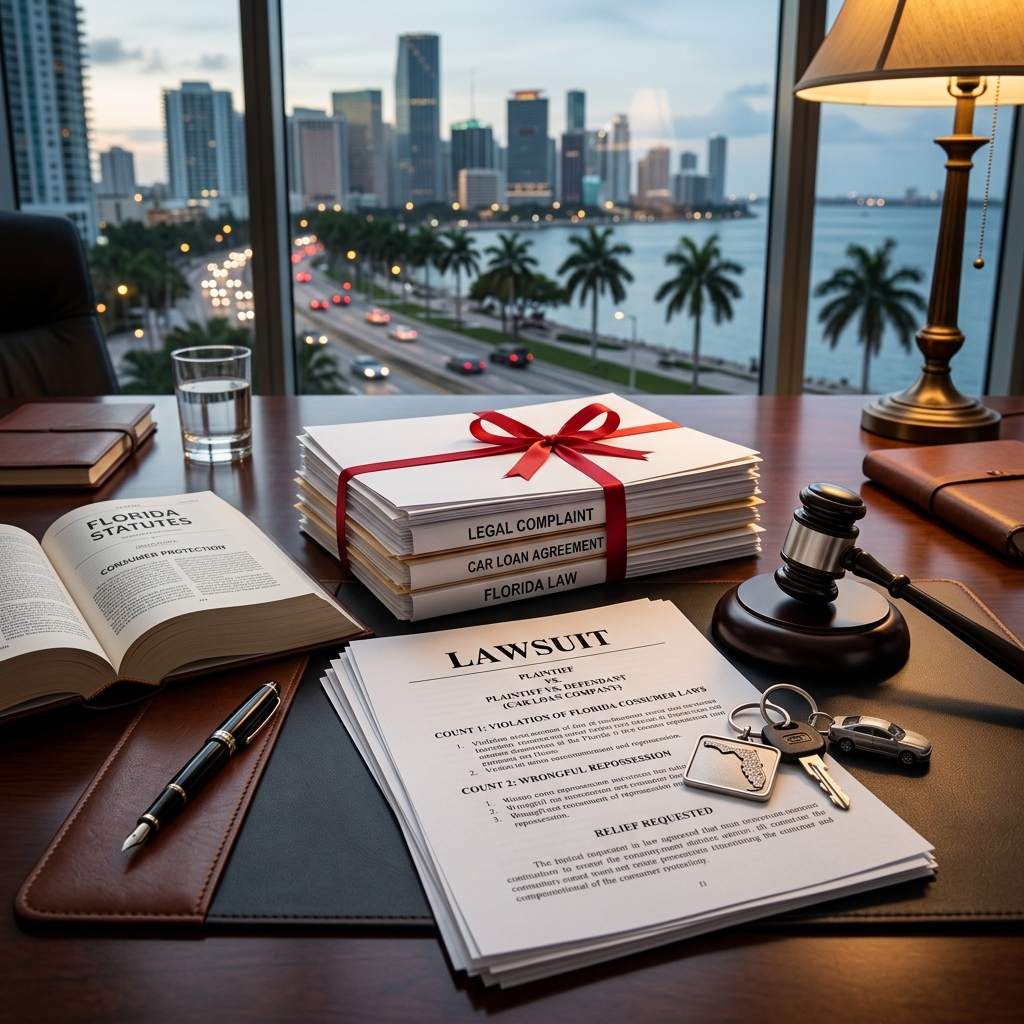
Car loans are often the only way many Floridians can afford reliable transportation. When a car loan company mishandles an account, misrepresents terms, or unlawfully repossesses a vehicle, the consequences can be severe: damaged credit, loss of transportation, and financial stress. Florida law and federal law provide consumers with specific rights and remedies, including the ability in some situations to sue the lender or finance company. This guide explains when you may sue a car loan company in Florida, what legal theories might apply, and how to prepare yourself for possible litigation.
Understanding the Legal Framework for Florida Car Loans
Disputes with car loan companies generally fall within three overlapping legal areas: contract law, consumer protection, and secured transactions. Florida borrowers should understand how these systems interact.
At a high level, auto finance in Florida is governed by:
- Contract principles that enforce the written terms of the loan agreement and related documents.
- Florida consumer protection statutes, including laws aimed at deceptive or unfair business practices by lenders and dealers.
- Uniform Commercial Code (UCC) rules adopted in Florida that regulate secured transactions and repossession of collateral, such as vehicles.
- Federal consumer laws like the Truth in Lending Act (TILA) and Fair Credit Reporting Act (FCRA), which require accurate disclosures and fair handling of credit information.
Each of these legal frameworks can provide different causes of action and remedies, and in many cases a single dispute may involve multiple overlapping claims.
Common Legal Claims Against Car Loan Companies in Florida
Borrowers considering a lawsuit usually rely on one or more standard legal theories. An experienced consumer or contract attorney can help identify which claims best fit the facts.
Breach of Contract
Every car loan is built on a contract—often a retail installment sales contract or finance agreement. A car loan company may breach that contract in several ways, such as:
- Applying incorrect interest rates or miscalculating monthly payments.
- Charging unauthorized fees or penalties not permitted by the agreement.
- Failing to credit payments properly or treating on-time payments as late.
- Refusing to honor promises regarding loan modifications, deferments, or payoff amounts.
To succeed on a breach of contract claim, a borrower typically must show: a valid contract exists, the lender failed to perform as promised, and the borrower suffered damages as a direct result. Evidence such as the loan agreement, payment history, and written communications with the lender is critical.
Deceptive or Unfair Practices
Florida consumers are protected from misleading and unfair business conduct by state statutes such as the Florida Deceptive and Unfair Trade Practices Act (FDUTPA). These laws can apply when a car loan company or dealer:
- Uses deceptive advertising or sales tactics to induce a borrower into a loan.
- Fails to disclose key terms, such as interest rates, fees, or balloon payments.
- Misrepresents the costs of add-on products like extended warranties or protection plans.
- Engages in bait-and-switch financing or falsely promises certain approval terms.
Under consumer protection statutes, borrowers may seek actual damages and, in some cases, attorneys’ fees or other relief. Because these laws are designed to protect the public, they often focus on whether the conduct would mislead a reasonable consumer, rather than just on the wording of the contract itself.
Unlawful Repossession
When a borrower falls behind and a car loan company decides to repossess the vehicle, Florida law requires the lender to follow specific procedures. Rules under the UCC and related statutes govern how repossession must occur and what the lender must do afterward.
Potential legal problems arise if the lender:
- Reposseses the vehicle without a valid default or contrary to the contract terms.
- Breaches the peace—for example, using threats, force, or entering locked property without lawful authority.
- Fails to give required notices about sale of the vehicle or calculation of any “deficiency” balance.
- Sells the car in a way that is not commercially reasonable, resulting in an unfairly high deficiency against the borrower.
If repossession violates these rules, borrowers may have defenses to any deficiency lawsuit and, in some cases, affirmative claims for damages.
Improper Credit Reporting and Collection Practices
Disputes with car loan companies frequently involve how payment history is reported to credit bureaus and how debts are collected. Federal law (like the FCRA) and Florida’s debt collection statutes give consumers protections against inaccurate reporting and harassment.
Claims may arise where a lender or debt collector:
- Reports late payments or defaults that are not accurate or properly documented.
- Fails to correct errors after being given proof of timely payment.
- Uses harassing, abusive, or misleading collection tactics, such as repeated threatening calls.
In such cases, consumers might pursue statutory damages, actual financial losses, and sometimes attorneys’ fees. Complaints to regulatory bodies can also support future litigation.
Key Evidence to Gather Before You Sue
Regardless of the specific claim, success in litigation depends heavily on documentation. Courts rely on written evidence, not just a borrower’s recollection. Before approaching a lawyer or filing a lawsuit, it is wise to organize the key materials.
- Loan and purchase documents
Keep the original finance contract, purchase agreement, and any add-on products such as GAP insurance or service contracts. - Payment records
Maintain bank statements, receipts, online payment confirmations, and any correspondence about adjustments or forbearance. These prove whether you paid on time and the amounts involved. - Communications with the lender
Preserve emails, letters, text messages, and notes of phone conversations, including dates, times, and the names of representatives. - Credit reports
Obtain current copies of your credit reports from the major bureaus; review how the auto loan is being reported, and save copies in case the information changes later. - Repossession and sale notices
If your vehicle was taken, retain any notices about the repossession, sale date, sale proceeds, and calculation of any deficiency.
| Type of Evidence | Why It Matters |
|---|---|
| Finance contract and disclosures | Establishes the agreed terms and allows proof of breach or misrepresentation. |
| Payment history | Shows whether the borrower was truly in default or wrongly treated as delinquent. |
| Communications with lender | Demonstrates promises, threats, or failures to correct mistakes. |
| Credit reports | Documents any inaccurate reporting and resulting credit harm. |
| Repossession and sale documents | Helps evaluate whether repossession and sale complied with Florida law. |
Practical Steps Before Filing a Lawsuit
Jumping directly to court is rarely the first step. Florida consumers typically benefit from a staged approach: attempting resolution, documenting the problem, and then escalating to regulators or attorneys if necessary.
1. Review Your Contract and Account History
Start by carefully reading your loan agreement, including small print, and comparing it to your payment records. Confirm whether alleged late payments, added fees, or changes in terms are supported by the contract. Misunderstandings sometimes stem from overlooked provisions or timing of payments.
2. Communicate with the Lender in Writing
Clear, written communication can resolve many disputes and creates useful evidence if you later sue. Consider:
- Sending a detailed letter explaining the problem and attaching supporting documents.
- Requesting an account statement and written clarification of disputed charges.
- Keeping copies of everything you send and any responses you receive.
Using certified mail for important letters helps prove that the lender received your correspondence and when.
3. File Regulatory Complaints if Needed
If a lender or dealer refuses to correct clear errors or engages in unlawful conduct, regulatory complaints can both pressure the company and create a record of the issue.
- Federal agencies – For lender disputes, consumers can submit complaints to the Consumer Financial Protection Bureau (CFPB). For dealer-related issues, complaints may be filed with the Federal Trade Commission (FTC).
- State authorities – Borrowers may also contact the Florida Attorney General’s office about deceptive or unfair practices by lenders or dealers.
While regulators do not represent you personally in court, their investigations and records can support civil claims and may lead companies to voluntarily correct problems.
4. Consult a Florida Consumer or Contract Attorney
Auto finance disputes often involve complex legal rules and short deadlines. Borrowers are strongly encouraged to seek advice from an attorney experienced in Florida consumer law, contract disputes, or auto loan litigation.
During a consultation, an attorney can:
- Evaluate whether the facts support breach of contract, consumer protection, or repossession claims.
- Identify available remedies, including damages, rescission, or defenses to deficiency suits.
- Discuss costs, potential fee-shifting under certain statutes, and realistic outcomes.
Possible Remedies in a Lawsuit Against a Car Loan Company
The type and amount of relief available depend on the legal theory and facts of the case. Common remedies include:
- Actual damages – Out-of-pocket losses, such as improper fees, increased interest charges, and towing or storage costs related to wrongful repossession.
- Consequential damages – Losses caused by the lender’s misconduct, such as missed work due to lack of a vehicle or higher borrowing costs because of damaged credit, where allowed by law.
- Statutory damages – Certain consumer protection laws provide fixed amounts or ranges of damages for proven violations.
- Rescission or contract reformation – In some cases, courts may cancel a contract or modify its terms to reflect what should have been agreed.
- Attorney’s fees and costs – Some statutes allow successful consumers to recover reasonable attorney’s fees, which can make litigation more accessible.
Borrowers should discuss with their lawyer how these remedies interact, whether punitive damages are realistic in their situation, and how long a lawsuit might take.
Defending Yourself When the Lender Sues You
In many Florida disputes, borrowers do not initiate the lawsuit; instead, the lender sues for the remaining balance after repossession (a “deficiency”). Even in this scenario, consumers may assert counterclaims or defenses rather than simply accepting the lender’s calculations.
Possible defenses and counterclaims include:
- Arguing the repossession was not lawful, which can affect the lender’s ability to collect a deficiency.
- Challenging whether sale of the vehicle was commercially reasonable (for instance, if it was sold for far less than market value without proper advertising).
- Raising prior breaches of contract or deceptive practices that caused default.
- Asserting violations of consumer protection statutes, including unlawful debt collection or inaccurate credit reporting.
Because time limits to respond to a lawsuit are short, borrowers served with court papers should contact an attorney promptly.
FAQs About Suing a Car Loan Company in Florida
Can I sue my car loan company just because I am unhappy with my interest rate?
Typically, no. If the rate was clearly disclosed and you signed the contract, dissatisfaction alone does not create a cause of action. However, if the lender or dealer misrepresented the rate, failed to disclose it properly, or changed it contrary to the contract, you may have a claim under breach of contract or consumer protection laws.
What if my lender reports me as late when I have proof of on-time payments?
Incorrect credit reporting can support claims under federal credit reporting laws and state consumer statutes if not corrected after you provide documentation. You should send the lender a written dispute with copies of payment records, monitor your credit reports, and consult an attorney if the issue persists.
Is every repossession that feels unfair automatically illegal?
No. Lenders generally have the right to repossess collateral if the borrower is in default and the contract permits it. A repossession becomes potentially unlawful when it violates contractual requirements, is carried out in a way that breaches the peace, or fails to follow statutory notice and sale rules.
Should I file complaints with agencies before I sue?
In many cases, yes. Filing complaints with the CFPB, FTC, or state authorities can help document the issue and might prompt the company to resolve the dispute voluntarily. However, these complaints do not replace the need to file a lawsuit if you seek damages or court orders.
Do I need a lawyer, or can I sue on my own?
Florida law allows individuals to represent themselves, but car loan disputes often involve complex statutes, federal rules, and evidentiary issues. Consulting a Florida consumer or contract attorney is strongly recommended, especially if significant money or your primary vehicle is at stake.
References
- How to Sue a Car Loan Company in Florida — LegalMatch. 2024-01-10. https://www.legalmatch.com/law-library/article/how-to-sue-a-car-loan-company-in-florida.html
- What should I do if I think an auto dealer or lender is breaking the law? — Consumer Financial Protection Bureau. 2022-10-17. https://www.consumerfinance.gov/ask-cfpb/what-should-i-do-if-i-think-an-auto-dealer-or-lender-is-breaking-the-law-en-719/
- Dirty Dealers: Auto Fraud and Consumer Rights — Weisberg Consumer Law Group. 2023-05-20. https://www.carlemon.com/dirty-dealers.html
- Car Repossessions & Deficiency Lawsuits in Florida: What Lenders Must Prove Before They Can Collect — Florida Consumer Lawyers. 2021-09-01. https://www.floridaconsumerlawyers.com/car-repossessions-deficiency-lawsuits-in-florida-what-lenders-must-prove-before-they-can-collect
- Car Loan Debt and Repossession Defense — Bernhardt Riley, Attorneys at Law. 2023-03-15. https://brflorida.com/practice-area/debt-collection-harassment/car-loan-debt/
- What should I do if I think an auto dealer or lender is breaking the law? (Servicemember resources) — Consumer Financial Protection Bureau. 2022-10-17. https://www.consumerfinance.gov/ask-cfpb/what-should-i-do-if-i-think-an-auto-dealer-or-lender-is-breaking-the-law-en-719/
Similar Articles








Read full bio of Sneha Tete




