
Wrongful Wage Garnishment in New York: Worker Rights and Remedies
Understand New York wage garnishment rules, spot illegal deductions, and learn practical steps to stop wrongful withholding of your paycheck.
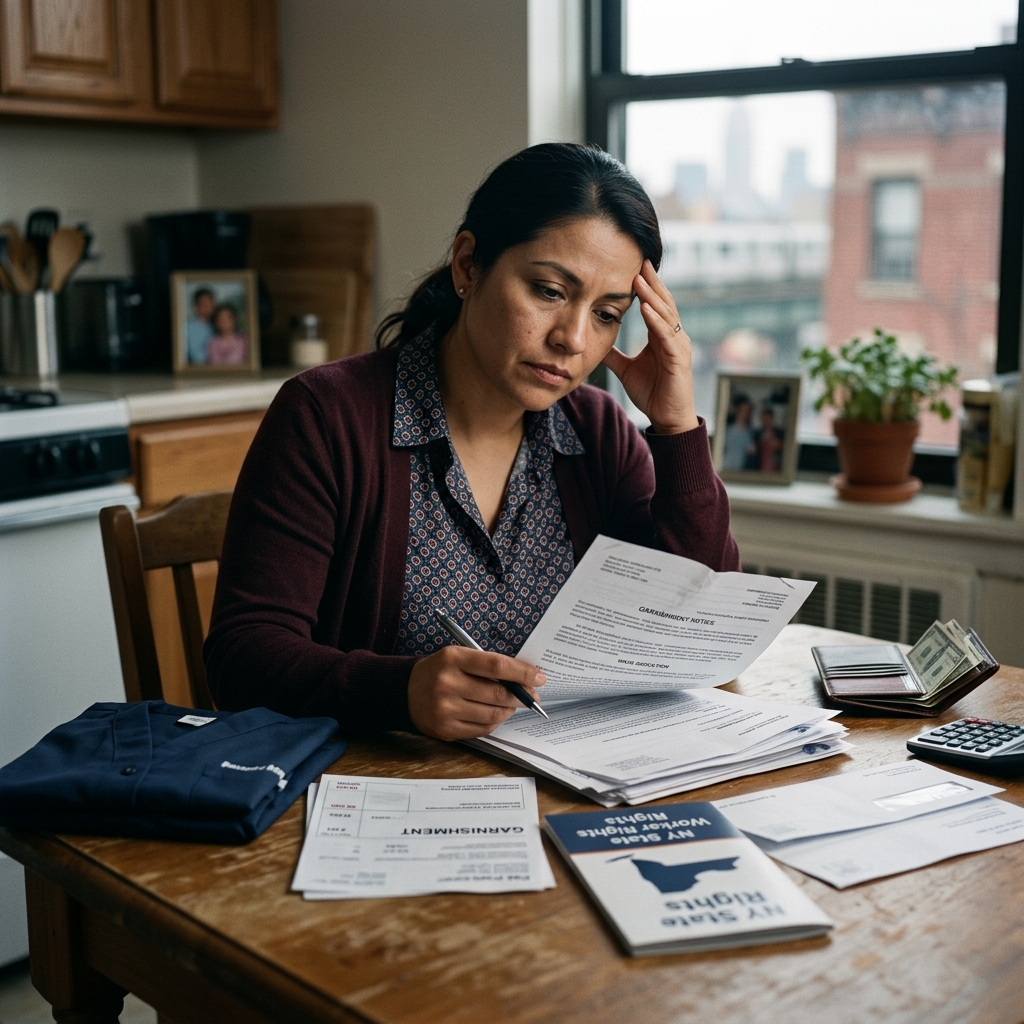
Having money taken from your paycheck for a debt can be stressful under any circumstances. When the garnishment is incorrect, excessive, or based on a mistake, the impact on your finances and peace of mind can be devastating. This guide explains how wage garnishment works in New York, what counts as wrongful wage garnishment, and what you can do to challenge and stop unlawful deductions.
What Wage Garnishment Means in New York
In New York, wage garnishment is usually referred to as an income execution. It is a legal process that allows a creditor, after winning a court judgment, to have part of a worker’s wages withheld and sent directly toward the debt.
Key features of New York income executions include:
- An income execution normally requires a court judgment against the debtor before wages can be taken.
- The execution is served on the employer, who must withhold the specified portion from each paycheck and forward it to the sheriff, marshal, or other designated official, and then to the creditor.
- Only one judgment creditor can garnish wages at a time, with limited exceptions for obligations like child support.
Some debts, such as federal taxes or child support, may be collected through garnishment even without a civil judgment, under separate federal or state authority.
Legal Limits on Wage Garnishment in New York
New York law imposes strict limits on how much of your paycheck can be taken, and these protections are generally stronger than federal law. Understanding these limits is crucial to spotting a wrongful garnishment.
Core Numerical Limits
| Rule | Description |
|---|---|
| Protection of minimum income | Your weekly disposable earnings cannot be garnished if they are less than 30 times the applicable minimum wage (state or federal, whichever is higher). |
| General maximum amount | A judgment creditor may garnish at most the lesser of 10% of gross wages or 25% of disposable earnings, and only to the extent those earnings exceed 30 times the minimum wage. |
| Single creditor rule | Ordinarily only one judgment creditor may garnish wages at a time, with separate rules for child support, taxes, and similar obligations. |
For many workers, this means:
- If your disposable income is below the protected threshold (for example, below 30 times the state minimum wage), your wages cannot be garnished at all.
- If your income is above the threshold, only the portion above that amount can be considered when calculating the allowable garnishment.
- The practical cap often ends up being around 10% of gross wages, but the exact figure depends on your pay and current minimum wage levels.
Special Rules for Support and Certain Government Debts
Some obligations are governed by distinct rules under federal law and may allow larger percentages to be taken:
- Child support and spousal support: Federal law allows up to 50% of disposable earnings to be garnished if you support another spouse or child, and up to 60% if you do not. An additional 5% may be taken if you are more than 12 weeks behind.
- Federal student loans: Up to 15% of pay may be taken administratively by or on behalf of the U.S. Department of Education for defaulted federal student loans.
- Federal taxes: The IRS can levy wages without a prior civil court judgment, following federal levy procedures and tables.
Even in these categories, however, New York’s baseline protections for very low income can still be relevant, and multiple garnishments are subject to combined limits.
What Counts as Wrongful Wage Garnishment?
A wage garnishment becomes wrongful when it violates governing law, ignores court procedures, or continues despite the debt having been resolved. Wrongful garnishment can result from errors by creditors, employers, courts, or collection agencies.
Common Forms of Wrongful Garnishment
- No valid judgment: For most consumer debts, the creditor must sue you and win a judgment before garnishing wages. Garnishment without a judgment is improper unless the debt falls within a special category like certain taxes or support obligations.
- Exceeding legal limits: Withholding more than the permissible percentage of your wages, or garnishing wages that should be fully protected because your income is below the legal threshold, can constitute wrongful garnishment.
- Ignoring hardship protections: New York law and court rules allow for modification or suspension of garnishment in cases of extreme financial hardship. Continuing an unduly burdensome garnishment after the court has reduced or stayed it can be unlawful.
- Garnishment after the debt is paid: If the judgment amount (including fees and interest) has been fully satisfied, continued deductions from your paycheck are improper and may require restitution.
- Failure to give proper notice: Workers must receive notice of the income execution and an opportunity to challenge it. Where notice is defective or missing, the garnishment may be subject to challenge and reversal.
- Multiple overlapping garnishments: In ordinary civil judgment cases, only one creditor can garnish wages at a time. Simultaneous garnishments beyond authorized exceptions can violate state law.
Wrongful garnishment is not limited to creditor misconduct. Employers who deduct the wrong amount, miscalculate disposable earnings, or ignore court modifications may also be responsible for restoring wrongfully taken wages.
Warning Signs That Your Garnishment May Be Illegal
Employees often discover problems with garnishments when their paycheck suddenly drops, leaving them unable to cover basic expenses. Watch for these warning signs:
- Your wages are being garnished, but you never received court papers about a lawsuit or judgment.
- The amount taken each pay period is more than about 10% of your gross pay for a consumer judgment, without any explanation based on special categories like child support.
- You earn close to the minimum wage, yet a substantial portion of your pay is being taken.
- Garnishment continues even after you believe the debt was paid or a settlement was reached.
- Different creditors appear to be garnishing your paycheck at the same time for separate consumer debts.
- Your employer cannot clearly explain how the garnished amount was calculated or what law they are following.
Any of these signs warrant a closer review of the underlying court documents and garnishment notices.
Step-by-Step Actions if You Suspect Wrongful Garnishment
If you think your wages are being taken unlawfully or in excess of legal limits, it is important to act quickly. There are several layers of protection you can invoke.
1. Gather Documents and Verify the Debt
- Obtain copies of your recent pay stubs showing the garnished amount.
- Request a copy of the income execution or garnishment order from your employer or from the sheriff or marshal who served it.
- Locate the underlying court judgment, including the case number, creditor name, and total judgment amount.
- Compare the debt described in the judgment with your records to confirm that it is your obligation and has not already been paid or settled.
Sometimes, errors arise because a debt belonged to someone else with a similar name, or because a paid account was never properly updated in court records.
2. Check Legal Limits Against Your Income
Use your pay information to determine whether the garnishment amount is within New York’s legal limits:
- Calculate your disposable earnings (your pay after legally required deductions such as taxes and Social Security).
- Verify whether your disposable weekly earnings exceed 30 times the applicable minimum wage. If they do not, your wages should not be garnished at all.
- If they do exceed the threshold, compare the amount being taken with the maximum allowed: the lesser of 10% of your gross wages or 25% of your disposable earnings above the protected baseline.
If the garnished amount is higher than these limits, you may have strong grounds to challenge the order.
3. Raise Objections and Hardship Claims in Court
New York law allows you to contest a garnishment or request that it be reduced if it creates severe financial hardship.
- You may file an objection or exemption claim with the court that issued the judgment, explaining why the garnishment violates statutory limits or why the debt is not valid.
- To address hardship, you can submit a detailed financial affidavit showing your income, necessary expenses, and the impact of the garnishment on your ability to meet basic needs.
- Courts in New York have authority under provisions such as CPLR § 5240 to modify, reduce, or temporarily suspend garnishments when they cause extreme hardship or are abusive.
If you believe the judgment itself was entered without proper notice or is fundamentally flawed, you may also be able to request that the court vacate (set aside) the judgment, which can halt the garnishment while the case is reconsidered.
4. Notify Your Employer and Seek Corrections
Employers are legally obligated to follow garnishment orders accurately, but they sometimes misread or miscalculate the required amount.
- Provide your employer with written notice if you believe the garnished amount violates legal limits or a court modification order.
- Ask payroll or human resources to review the order and confirm the calculation used.
- If the employer continues to deduct the wrong amount after being notified, the court may order restitution, and the employer could face civil liability for failing to comply with New York’s garnishment rules.
5. Explore Settlement or Bankruptcy Options
Beyond contesting the garnishment itself, you may be able to address the underlying debt through negotiation or bankruptcy:
- Contact the creditor or its attorney to discuss a settlement or alternative payment plan that could lead to a reduction or release of the income execution once documented in a satisfaction of judgment filed with the court.
- In cases involving multiple debts or severe financial distress, filing for bankruptcy can halt most garnishments through the automatic stay and may ultimately discharge some obligations.
Legal advice from an attorney or a qualified legal aid organization can be critical in deciding whether these steps are appropriate for your situation.
Employer Duties and Potential Liability
When an income execution is served, employers must comply with precise legal and procedural requirements. Failure to do so can affect both employees and employers.
- Employers must start withholding only after properly receiving the garnishment order and must follow its terms exactly.
- They must calculate disposable earnings correctly and ensure that the garnishment does not exceed legal limits, including minimum income protections.
- If employers deduct more than allowed, continue garnishment after the debt is paid, or ignore court modifications, they may be ordered to repay wrongfully taken wages and can face civil penalties.
- Retaliation against an employee for asserting rights related to garnishment or for challenging an unlawful income execution can also trigger liability under federal and state employment laws.
Workers who suspect employer misconduct should document communications carefully and consider consulting counsel, especially if the employer is unresponsive to correction requests.
Where to Seek Help for Wrongful Garnishment Issues
Challenging wrongful wage garnishment often requires navigating both court procedures and administrative rules. New York residents have several potential sources of assistance:
- Legal aid organizations: Nonprofit legal services entities in New York regularly assist low- and moderate-income workers with garnishment disputes and related debt collection issues.
- Private attorneys: Lawyers specializing in consumer law, debt collection defense, or employment law can review your case, file objections, and represent you in court.
- State and city agencies: For employer-related violations, complaints may be directed to agencies such as the New York State Department of Labor or city offices overseeing payroll practices.
- Court help centers: Many New York courts offer help centers or self-help materials explaining how to file motions to vacate judgments, request hardship modifications, or challenge garnishment amounts.
Because deadlines for objections and motions can be short, contacting one of these resources promptly can make a significant difference in the outcome.
Frequently Asked Questions About Wrongful Wage Garnishment in New York
Can my wages be garnished without any court case in New York?
For typical consumer debts such as credit cards or medical bills, the creditor must first sue you and obtain a judgment before wages can be garnished. However, certain government debts and support obligations can be collected through garnishment or levy under separate authority without a civil lawsuit.
How do I know if the garnishment amount is too high?
Compare the amount being taken from each paycheck with New York’s limits: the lesser of 10% of your gross wages or 25% of your disposable earnings, and only above the protected minimum income level. If the deduction exceeds these figures or leaves you below the minimum weekly threshold, you should consider filing an objection or seeking legal advice.
What if I never received notice of the lawsuit or judgment?
If you first learn of the debt only when your wages are garnished, you may be able to ask the court to vacate the judgment on the ground that you did not receive proper notice. A successful motion can pause the garnishment while the court reviews whether the case should be reopened.
Can my employer be held responsible for a wrongful garnishment?
Employers are required to comply with garnishment laws and orders. If they over-withhold, continue garnishment after the debt is paid, or fail to honor court modifications, they may be ordered to reimburse wrongfully taken wages and could face civil penalties. They may also be liable for retaliation or discrimination related to garnishment issues.
Is bankruptcy a way to stop wage garnishment?
Filing for bankruptcy generally triggers an automatic stay that stops most collection activities, including many wage garnishments, while the case proceeds. Whether bankruptcy is advisable depends on your broader financial situation and should be evaluated with professional counsel.
References
- Wage Garnishment — Legal Assistance of Western New York, Inc. 2026-01-01. https://www.lawny.org/page/651/wage-garnishment
- New York Wage Garnishment Laws & Limits — Nolo. 2023-08-01. https://www.nolo.com/legal-encyclopedia/new-york-income-execution-wage-garnishment-law.html
- Debt collectors are taking money from my paycheck — LawHelpNY. 2024-05-15. https://www.lawhelpny.org/resource/wage-garnishments
- Wage Garnishment Issues — Horn Wright, LLP. 2024-06-10. https://www.hornwright.com/employment-law/wage-hour-disputes/wage-garnishment-issues/
- Wage Garnishments — New Economy Project. 2023-09-30. https://www.neweconomyproject.org/our-work/legal-power-for-financial-justice/know-your-rights/lawsuits/wage-garnishments/
- Lien, Garnishment and Levy Laws in New York City — New York City Bar Association. 2022-11-01. https://www.nycbar.org/get-legal-help/article/debts-debt-collection/lien-garnishment-levy/
Similar Articles








Read full bio of medha deb




