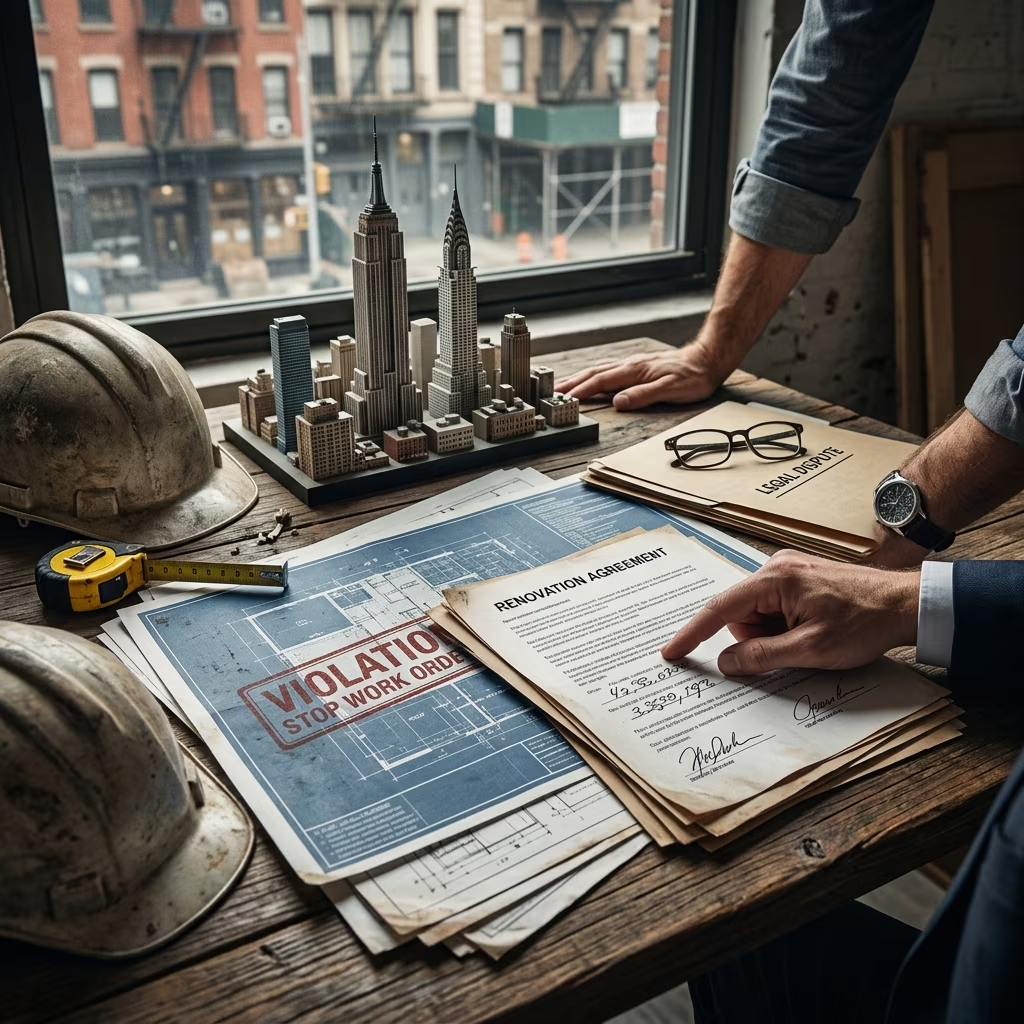
Contractor fraud occurs when a home improvement contractor uses false statements, deceptive promises, or misleading written representations to induce a property owner to sign a contract or pay for work. In New York, these disputes often arise in home repair and renovation projects, where the law gives homeowners specific remedies when fraud is proven.
Fraud is more than poor workmanship or a simple disagreement over price. It usually involves intentional deception, such as promising services the contractor never intended to perform, hiding material facts, or using false documents to secure a job. Because construction and remodeling projects often depend on trust, New York law provides homeowners with both civil and consumer-protection tools to respond when that trust is abused.
How contractor fraud differs from an ordinary dispute
Not every failed renovation is fraud. A project can go wrong because of delays, cost overruns, permit issues, or imperfect work without any false intent. Fraud generally requires proof that the contractor made a material misrepresentation, knew it was false or acted recklessly, and caused the homeowner to rely on it.
That distinction matters because fraud claims can support penalties and attorney’s fees under New York law when the misstatements were made in writing and were part of the decision to enter the home improvement contract. By contrast, a routine breach of contract claim usually focuses on whether the contractor failed to do what was promised, not whether the contractor lied to obtain the agreement.
Common ways fraud appears in home improvement work
Contractor fraud can take many forms, and the pattern is often revealed by the paperwork. A homeowner may be told that permits are unnecessary when they are actually required, or may receive a written estimate that omits major costs and then changes dramatically after work begins.
Other warning signs include:
- Pressure to sign immediately or pay a large deposit before reviewing the contract.
- Promises about materials, timelines, or qualifications that are not accurate.
- Fake or incomplete business information that makes the contractor difficult to verify.
- Use of written statements that conceal defects, scope limitations, or licensing problems.
Fraud can also involve false billing practices, misrepresentation of who will perform the work, or claims that a homeowner must authorize extra work to avoid safety problems when that is not true. In public work settings, disclosure obligations may also apply to contractors and subcontractors, reflecting the state’s interest in preventing fraud in construction-related settings.
What New York law allows homeowners to do
New York General Business Law section 772 gives an owner who was induced into a home improvement contract by false or fraudulent written representations the right to sue and recover a statutory penalty of $500, plus reasonable attorney’s fees and any actual damages caused by the false statements.
This remedy is important because it recognizes that fraudulent conduct can create harms beyond the immediate repair cost. A homeowner may pay more than expected, hire another contractor to fix the job, or suffer property damage, delay, or other losses tied to the deception. The law also states that these remedies do not replace other statutory, common law, or contractual duties that may apply.
In practical terms, a homeowner may have more than one path to relief. A fraud claim may be paired with a breach of contract claim, a consumer protection claim, or other remedies depending on the facts. The strongest cases often involve written misstatements that can be matched against invoices, emails, estimates, or signed agreements.
What a homeowner must usually prove
To succeed on a fraud-based claim, the homeowner generally needs evidence of four things: a false statement or omission, knowledge or reckless disregard of its falsity, reliance on the statement, and damages resulting from that reliance.
| Element | What it means in a contractor case |
|---|---|
| False statement | The contractor said or wrote something material that was untrue, such as misstating licensing status or project scope. |
| Knowledge or recklessness | The contractor knew the statement was false or ignored clear reasons to doubt it. |
| Reliance | The homeowner signed the agreement or paid money because of that statement. |
| Damages | The homeowner lost money, needed repairs, or suffered other measurable harm. |
New York civil cases are decided by the preponderance of the evidence standard, meaning the homeowner must show it is more likely than not that the fraud occurred. That is a lower standard than criminal proof beyond a reasonable doubt, but it still requires persuasive documentation and consistent facts.
How written contracts affect the case
Written documents are often the centerpiece of a contractor fraud dispute. New York law places special importance on written representations in home improvement fraud claims, and written agreements also help determine whether the contractor promised something specific enough to enforce.
A complete written contract can help a homeowner by showing the original price, scope of work, payment schedule, and deadlines. At the same time, a vague or incomplete contract may make it harder for a contractor to dispute what was promised. New York consumer guidance also warns homeowners not to sign documents with blanks or without reading them carefully.
Where the contract itself is missing or incomplete, other evidence may still matter, such as text messages, emails, proposals, receipts, before-and-after photos, and permit records. Those records can help show whether the contractor made promises that were later denied or ignored.
Possible remedies and damages
When fraud is proven, the owner may seek actual damages, which can include the cost to repair defective work, the cost to hire a replacement contractor, or additional losses caused by the deception.
Depending on the facts, a case may also involve:
- Recovery of attorney’s fees under the statute for qualifying fraud claims.
- Consequential damages that flow from the fraud, such as temporary housing or project delays.
- In some cases, punitive damages or injunctive relief where the conduct is especially serious or ongoing.
The statutory penalty in section 772 is modest compared with the cost of many renovations, but the ability to recover fees can make litigation more realistic for an individual homeowner. That fee-shifting feature can be especially important when the actual dollar loss is smaller than the cost of hiring a lawyer.
How fraud cases relate to criminal and regulatory enforcement
Contractor fraud can be handled in civil court, but some conduct may also trigger administrative or criminal scrutiny if it involves broader deception, public contracts, or false claims against government entities. For example, New York’s public integrity and false claims framework reflects the state’s effort to detect and stop fraud in government-related work.
That does not mean every dishonest contractor faces criminal charges. Most homeowner disputes remain civil matters focused on compensation and contract enforcement. Still, evidence of forged documents, stolen deposits, false licensing claims, or repeated deceptive practices may attract attention from regulators or prosecutors depending on the circumstances.
How homeowners can reduce the risk before hiring
The best time to deal with contractor fraud is before the first payment is made. New York’s Attorney General recommends checking a contractor’s name, address, references, insurance, and reputation before hiring. The New York City Bar likewise advises homeowners to compare bids, verify licensing where required, and insist on a signed written agreement before work starts.
Useful precautions include:
- Ask for multiple estimates before selecting a contractor.
- Verify the contractor’s business identity, insurance, and licensing status.
- Get a detailed written contract that lists materials, scope, payment terms, and timing.
- Avoid cash deposits and high-pressure sales tactics.
- Keep copies of all emails, receipts, permits, and change orders.
Homeowners should also confirm whether any permits are required and check with local building authorities before substantial work begins. If insurance is involved, the contractor’s work should be coordinated with the insurer so that repairs are properly covered.
When a dispute is more than fraud
Some cases are really about negligence, poor project management, or contract interpretation rather than intentional deception. If a contractor performed the work badly but never made a false statement to obtain the job, the stronger claim may be for breach of contract, defective workmanship, or another civil theory rather than fraud.
That is why the facts matter so much. Emails that show misleading promises, invoices that diverge from the original scope, or proof that a contractor used false paperwork can shift a case from a routine dispute into a fraud claim. If the evidence instead shows only delay or substandard results, the legal strategy may be different.
Frequently asked questions
Is every bad renovation a fraud case?
No. A poor outcome may reflect breach of contract, shoddy workmanship, or a scheduling problem without fraud. Fraud usually requires a false statement and proof that the homeowner relied on it.
Does the false statement have to be in writing?
For the specific penalty under New York General Business Law section 772, the statute focuses on false or fraudulent written representations or written statements used to induce the owner to contract.
Can a homeowner recover attorney’s fees?
Yes, the statute allows reasonable attorney’s fees for a qualifying fraud claim, and it also permits fees to the contractor if the suit had no arguable legal merit.
Should a homeowner contact a lawyer right away?
Prompt legal advice can help preserve evidence, evaluate whether the conduct amounts to fraud, and determine whether a contract, consumer protection, or property damage claim is the best route forward.
What documents are most useful?
Written estimates, signed contracts, emails, text messages, photos, receipts, permit records, and records of payments are often the most useful evidence in a contractor fraud dispute.
References
- New York General Business Law § 772 – Penalty for Fraud — Justia. 2025-01-01. https://law.justia.com/codes/new-york/gbs/article-36-a/772/
- Contractor and Subcontractor Disclosure Obligations Under Public Authorities Law — Metropolitan Transportation Authority. 2026-01-01. https://www.mta.info/transparency/protections-for-reporting-fraud-in-new-york/contractor-and-subcontractor-disclosure-obligations-under-public-authotities
- Construction Fraud Attorney Explains Liability and Recovery — Daeryun Law. 2026-01-01. https://www.daeryunlaw.com/us/insights/construction-fraud-in-new-york
- Contract Disputes in New York — LawNY. 2026-01-01. https://www.lawny.org/page/605/contract-disputes-new-york
- Contractors and home maintenance — New York Attorney General. 2026-01-01. https://ag.ny.gov/resources/individuals/consumer-issues/contractors-home-maintenance
- Home Improvement and Repair Contract Attorney in NYC — New York City Bar. 2026-01-01. https://www.nycbar.org/get-legal-help/article/consumer-law/consumer-contracts-for-certain-services/home-improvement-repair-contracts/