When a car accident happens, most people focus first on injuries, but property damage to your vehicle can also have serious financial consequences. Knowing how damage is evaluated, what insurers look for, and how settlements are calculated can help you avoid costly mistakes and protect your rights.
This guide explains the basics of vehicle damage after a collision, from repair estimates and total loss decisions to diminished value claims and dealing with adjusters.
1. The Main Types of Vehicle Damage in a Collision
Not all vehicle damage is the same in the eyes of insurers and repair professionals. Different categories can affect whether your car is repaired, written off, or subject to a special title.
1.1 Visible vs. Hidden Damage
After a crash, some problems are easy to spot while others are concealed under the body panels.
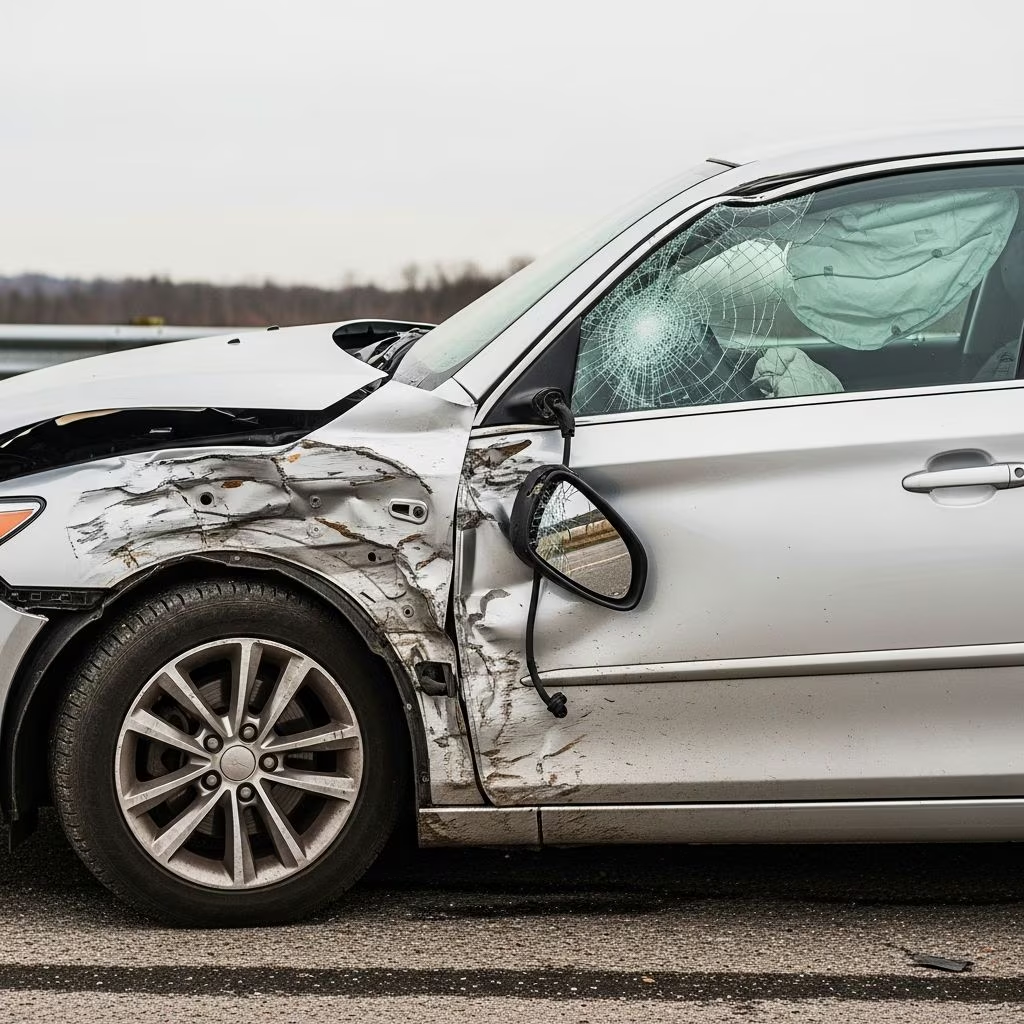
- Visible damage: Crumpled bumpers, broken lights, smashed fenders, windshield cracks, and obvious dents.
- Structural or frame damage: Bending or distortion of the vehicle’s main structural elements, which may compromise crashworthiness and alignment.
- Mechanical damage: Harm to the engine, transmission, suspension, steering, or braking systems that may not show from the outside.
- Cosmetic damage: Scratches, paint transfer, and small dents that do not affect safety but still lower appearance and resale value.
Hidden structural or mechanical damage is one reason estimates sometimes increase after a repair shop begins disassembly.
1.2 Common Damage Patterns and What They Suggest
The location of damage often reveals how a crash occurred, which can matter for determining fault.
| Damage Area | Typical Cause | Possible Liability Implications |
|---|---|---|
| Rear-end damage | Vehicle struck from behind | Rear driver often presumed at fault, subject to local law |
| Front-end damage | Hit another vehicle or object | May indicate following too closely or failure to yield |
| Side impact (T-bone) | Intersection or failure to obey traffic control | Helps evaluate who had right of way |
| Sideswipe damage | Lane change, merging, or passing | Relevant to lane discipline and blind-spot checks |
Insurance adjusters and crash reconstruction experts use these patterns, along with skid marks and debris, to piece together what likely happened.
2. How Insurers Decide Between Repair and Total Loss
Your insurer (or the at-fault driver’s insurer) must decide whether your vehicle will be repaired or declared a total loss. This decision is heavily influenced by cost calculations set out in company procedures and sometimes in state law.
2.1 Repairable Damage
A vehicle is usually considered repairable when:
- The cost of parts and labor is significantly less than the vehicle’s actual cash value (ACV).
- No catastrophic frame or structural damage makes future safety questionable.
- The vehicle can be restored to a condition that is safe and reasonably similar in appearance and function to its pre-crash state.
Repair estimates should be written, itemized, and based on accepted labor rates and parts prices in your area.
2.2 When a Car Becomes a Total Loss
A car is typically deemed a total loss when the cost to repair plus the anticipated salvage value meets or exceeds the vehicle’s pre-accident value.
Many insurers apply an internal threshold—often around 70% to 80% of ACV—though the exact percentage can depend on the jurisdiction and company policy. Some states use formulas combining repair costs and scrap value to determine whether the vehicle is legally considered totaled.
When a car is totaled:
- The insurer pays the ACV (minus any deductible, if your own policy is paying).
- The damaged vehicle may receive a salvage title if it is later repaired and returned to the road, signaling a serious prior loss.
- You might be able to negotiate the valuation by presenting recent comparable vehicle listings, service records, or upgrades.
2.3 Actual Cash Value vs. Replacement Cost
Most auto policies pay for property damage based on actual cash value, which considers depreciation, age, and condition.
- Actual Cash Value (ACV): The market value of your vehicle right before the crash, often based on comparable sales and valuation tools.
- Replacement cost coverage (less common): Pays what it would cost to buy a similar new or like-new vehicle, typically available only on specific policy types.
Understanding which applies to your claim is important when reviewing a settlement offer.
3. Diminished Value: The Loss That Remains After Repairs
Even if your car is fully repaired, it may suffer a diminished value because it now has an accident history. Buyers generally pay less for vehicles that have been in crashes, especially serious ones.
3.1 What Is Diminished Value?
Diminished value is the difference between:
- The vehicle’s market value if it had never been in an accident; and
- Its market value after proper repairs.
There are several forms of diminished value recognized in legal and insurance discussions, including immediate post-accident reduction and stigma damage that remains even after quality repairs.
3.2 When You May Have a Diminished Value Claim
Depending on the law in your state and your policy language, you may be able to pursue diminished value from the at-fault driver’s insurer. Factors that tend to increase such claims include:
- Newer or luxury vehicles with previously clean histories.
- Substantial structural damage or airbag deployment.
- High pre-accident market value and low mileage.
Documenting pre-crash condition, mileage, and features is critical to support a diminished value argument.
4. Who Pays for Vehicle Damage?
Which insurer ultimately pays depends on fault rules in your state, the type of coverage you purchased, and who caused the crash. Many U.S. states use some form of fault-based liability for property damage.
4.1 At-Fault Driver’s Property Damage Liability Coverage
Most drivers are required by law to carry property damage liability coverage, which pays for damage they cause to others’ vehicles or property.
- This coverage belongs to the at-fault driver and usually does not pay for their own car.
- It is subject to policy limits; damage beyond those limits may need to be recovered through other means.
4.2 Your Own Collision and Comprehensive Coverage
If you have collision coverage, your own insurer may pay for repairs or total loss to your vehicle regardless of fault, then seek reimbursement from the at-fault party through subrogation.
- Collision coverage usually has a deductible that you must pay.
- Comprehensive coverage applies to non-collision losses such as theft, fire, or hail and is evaluated using similar ACV and repair principles.
4.3 Comparative Fault and Shared Responsibility
Some states apply comparative negligence, reducing your recovery by your percentage of fault. For example, if you are found 20% at fault, your property damage claim may be reduced by 20%.
Conversely, if another driver bears most of the fault, their insurer may owe for the bulk of your repair or total loss, subject to policy limits and local rules.
5. Documenting Vehicle Damage After a Crash
Thorough documentation can significantly strengthen your property damage claim and help resolve disputes with adjusters.
5.1 Steps at the Scene
As long as it is safe to do so and you are not badly injured, consider the following steps recommended by insurance regulators and consumer guidance:
- Photograph each vehicle from multiple angles, including close-up shots of damage.
- Capture wider images that show vehicle positions, road markings, traffic signals, and skid marks.
- Exchange contact and insurance information with other drivers.
- Obtain names and contact details of witnesses when possible.
- Report the crash to law enforcement if required by state law or if there are injuries or substantial damage.
5.2 Working With Repair Shops and Adjusters
Once the immediate emergency has passed, you will typically interact with a claims adjuster and a repair facility.
- Request a written estimate that lists labor, parts, and any anticipated supplements.
- Ask whether the shop will use original equipment manufacturer (OEM) parts or aftermarket parts.
- Keep copies of all estimates, invoices, towing receipts, and rental car bills.
- If the insurer disputes the estimate, you may seek an independent assessment or invoke any appraisal or dispute processes described in your policy.
6. Negotiating a Fair Property Damage Settlement
Vehicle damage claims often settle without court involvement, but you are not required to accept the first offer. Understanding how valuations are reached can help you negotiate more effectively.
6.1 Reviewing Total Loss Offers
When your car is declared a total loss, the insurer should provide documentation showing how they arrived at the ACV, often by comparing recent sales of similar vehicles.
You can strengthen your position by gathering:
- Recent local listings for comparable vehicles with similar mileage and condition.
- Maintenance and service records showing good care.
- Receipts for recent major repairs or upgrades (such as new tires or a replaced transmission).
If the offer seems low, present this information and ask for a written explanation of how their valuation accounts for these facts.
6.2 Handling Repair Disputes
If your vehicle is being repaired and you disagree with the scope or quality of the work:
- Discuss specific concerns with the repair shop and request corrections where necessary.
- Contact the adjuster if the shop says insurer-imposed limits prevent proper repairs.
- Review your policy for an appraisal or mediation clause that outlines steps for resolving valuation or repair disputes.
6.3 When to Consult an Attorney
Legal advice may be helpful if:
- Liability is contested and the location or pattern of damage is important evidence.
- Your claim involves high-value property, such as a luxury vehicle or multiple totaled cars.
- The insurer denies coverage, delays unreasonably, or offers an amount far below documented value.
7. Frequently Asked Questions About Vehicle Damage Claims
Q1: Do I have to use the repair shop recommended by the insurance company?
In many states, you can choose your own repair facility, even if the insurer suggests a preferred shop. However, recommended shops may have arrangements that streamline billing and guarantees. Check your state’s consumer protection rules and your policy language for details.
Q2: Can I keep my car if it is declared a total loss?
Often you can, but the insurer will typically deduct the vehicle’s salvage value from your payout, and the vehicle may receive a salvage or branded title if repaired and returned to the road.
Q3: Will my insurance rates automatically increase after a property damage claim?
Rate changes depend on company policies, state regulations, and whether you were at fault. Some insurers offer accident forgiveness or limit surcharges for small claims, while at-fault crashes causing substantial payouts may lead to premium increases.
Q4: What if new damage is discovered after repairs start?
Shops often submit a supplemental estimate to the insurer when hidden damage is revealed during disassembly. This can increase repair costs and may even change a repairable vehicle into a total loss if thresholds are exceeded.
Q5: Can I be compensated for loss of use or rental car costs?
If the at-fault driver’s insurer accepts liability, it may cover reasonable loss of use or rental car expenses while your vehicle is being repaired or until a total loss payment is made, subject to policy limits and local law.
References
- Vehicle Damage Guide for Traffic Crash Investigators — Texas Department of Transportation. 2015-01-01. https://ftp.txdot.gov/pub/txdot-info/trf/crash_notifications/2015/crash-report-80.pdf
- Car Accident: Determining Fault by Location of Damage — Ace Law Group. 2025-02-01. https://www.acelawgroup.com/blog/2025/02/car-accident-determining-fault-by-location-of-damage/
- Texas Car Accident Property Damage Guide — Herrman & Herrman, P.L.L.C. 2023-01-01. https://www.herrmanandherrman.com/texas-personal-injury-firm/car-wreck/property-damage-guide/
- Vehicle Damage Ratings — Texas A&M Transportation Institute (for FMCSA). 2023-09-01. https://cts.tti.tamu.edu/files/2023/09/FMCSA_LEO_rear-end_23_v4.pdf
- Guide to Calculating Damages in a Car Accident — Rice, Hadley, Gates & Manuel LLC. 2023-06-01. https://rhhk.com/wp-content/uploads/2023/06/Guide-to-Calculating-Damages-in-a-Car-Accident.pdf
- Were You in a Wreck? Tips for Auto Insurance Claims — Texas Department of Insurance. 2023-08-01. https://www.tdi.texas.gov/tips/what-to-do-after-a-wreck.html
- What to Do After a Car Accident: A Step-by-Step Guide — Allstate Insurance. 2024-01-01. https://www.allstate.com/resources/car-insurance/in-case-of-a-car-accident
- Guide to Texas Car Accident Claims — Thomas J. Henry Law. 2020-08-01. https://thomasjhenrylaw.com/wp-content/uploads/2020/08/A-Guide-to-Texas-Car-Accident-Claims-Thomas-J.-Henry-Injury-Attorneys.pdf