
Understanding Vandalism Charges, Penalties, and Defenses
Learn how vandalism is defined, charged, punished, and defended in U.S. criminal law, from minor graffiti to serious property damage.
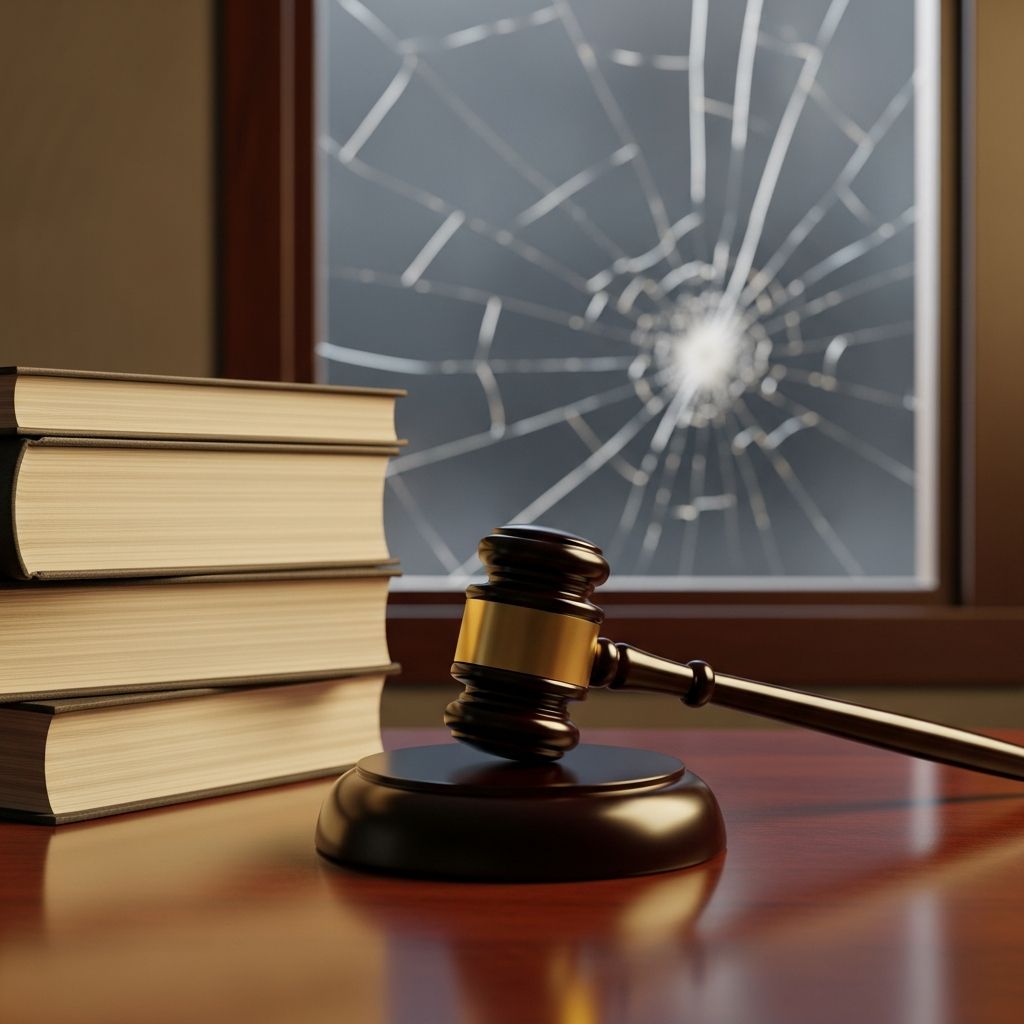
Vandalism is more than just graffiti on a wall. In most U.S. jurisdictions, it is a criminal offense that can lead to fines, jail time, and a lasting criminal record. This guide explains how vandalism is defined, how charges are classified, what penalties you may face, and what defenses might be available.
What Counts as Vandalism?
While each state writes its own criminal laws, vandalism generally involves willful or malicious damage to someone else’s property without permission. Many states label these offenses as “criminal mischief” or use both terms together.
Core Legal Elements
Most vandalism or criminal mischief statutes require some or all of the following elements:
- Act — physically damaging, destroying, or defacing property.
- Mental state — acting willfully, intentionally, or maliciously (not by pure accident).
- Property of another — the item, building, or land belongs to someone else, a business, or a public entity.
- Lack of consent — the owner or authorized party did not give permission.
- Damage or defacement — the conduct leaves a physical mark, impairment, or cost of repair.
States often make small wording changes, but these themes appear repeatedly in statutes across the country.
Common Examples of Vandalism
Vandalism can be obvious or subtle. Typical examples include:
- Spray-painting or marking buildings, bridges, or fences with graffiti.
- Breaking windows, doors, mailboxes, or outdoor lighting.
- Keying or scratching cars and other vehicles.
- Defacing public monuments, statues, or memorials.
- Damaging school property such as desks, lockers, or restrooms.
- Tampering with signs, traffic devices, or utility equipment.
Some states treat graffiti as a specialized sub-offense with its own penalties and restitution requirements.
How States Label and Classify Vandalism
Although the underlying conduct is similar, states may use different legal labels and penalty ranges.
Common Statutory Names
- Vandalism — used in plain language descriptions and some statutes.
- Criminal mischief — widely used term for damaging property of another.
- Making graffiti or graffiti crimes — specific statutes focused on tagging or marking property.
Misdemeanor vs. Felony Vandalism
Most states distinguish between minor and serious vandalism based on the dollar amount of damage and sometimes on the type of property involved.
| Factor | Typical Misdemeanor | Typical Felony |
|---|---|---|
| Value of damage | Low repair or replacement cost (often under a state-set threshold, such as a few hundred or a few thousand dollars). | Higher repair cost above statutory thresholds; may involve major loss or extensive damage. |
| Potential sentence | Up to one year in local jail, fines, restitution, and community service. | More than one year in state prison and significantly larger fines in serious cases. |
| Typical context | Minor graffiti, broken windows, small-scale property damage. | High-value property damage, repeated acts, or damage tied to other serious crimes. |
Examples of State Approaches
To understand how the general principles work, it helps to look at how some jurisdictions frame these offenses in their statutes.
Maryland: General Property Damage Statute
Maryland law makes it a crime to willfully and maliciously destroy, injure, or deface the property of another. The law then sets penalty tiers based on damage amount:
- Damage at least $1,000 — misdemeanor, up to three years in jail and up to a $2,500 fine.
- Damage under $1,000 — misdemeanor, up to 60 days in jail and up to a $500 fine.
The statute also separately addresses graffiti as a permanent drawing or marking without permission.
Florida: Criminal Mischief and Graffiti
In Florida, vandalism falls under the offense of criminal mischief. A person commits criminal mischief by willfully and maliciously damaging another’s real or personal property, including through graffiti or other acts of vandalism.
Florida law, like many states, scales penalties according to damage value and includes the placement of graffiti within the definition. Even relatively low-value damage can still result in a criminal record, fines, and possible jail time.
New York: Criminal Mischief and Graffiti
New York’s Penal Law distinguishes between several degrees of criminal mischief, generally focusing on whether the person:
- Intentionally damages property of another without right or reasonable belief of right.
- Recklessly causes damage over a specified amount.
New York also defines graffiti as etching, painting, covering, or otherwise marking property with intent to damage it, and prohibits making graffiti without the owner’s express permission.
Potential Penalties and Court-Ordered Consequences
Sentencing options vary widely, but the following sanctions commonly appear in vandalism cases.
Criminal Penalties
- Jail or prison — from a few days for minor misdemeanors up to several years for high-value or repeat felony vandalism.
- Fines — court-ordered payments that can range from a few hundred dollars to many thousands, depending on state law and damage level.
- Probation — community supervision, often requiring regular check-ins, no new offenses, and compliance with conditions (like obeying curfews or work requirements).
- Restitution — reimbursement to the property owner for repair or replacement costs; often mandatory in vandalism cases.
Additional Court Conditions
Judges often impose conditions tailored to vandalism offenses, such as:
- Community service, including graffiti removal or other cleanup work.
- Stay-away orders from certain locations, such as schools, parks, or neighborhoods.
- Counseling or education programs, particularly for young or first-time offenders.
- Curfews or electronic monitoring in more serious or repeated cases.
Aggravating Factors That Can Increase Punishment
Two cases with the same repair bill can produce very different sentences depending on surrounding circumstances. Some factors that can elevate charges or penalties include:
- High monetary damage — extensive or costly damage is more likely to be charged as a felony and punished more severely.
- Target of the vandalism — damage to schools, houses of worship, cemeteries, public utilities, or critical infrastructure may trigger harsher treatment.
- Hate or bias motivation — vandalism targeting victims because of race, religion, national origin, sexual orientation, or other protected characteristics can be prosecuted under hate crime enhancements in many jurisdictions.
- Use of fire or explosives — when property damage involves arson-like conduct, the case may fall under separate felony arson or explosives laws in addition to vandalism statutes.
- Prior convictions — repeat offenders often face increased penalties, including longer jail or prison sentences and higher fines.
Collateral and Long-Term Consequences
Even a relatively minor vandalism conviction can create long-lasting effects beyond the immediate sentence.
- Criminal record — a vandalism or criminal mischief conviction can appear on background checks for employment, housing, and licensing.
- Education and scholarships — students may face school discipline, loss of scholarships, or difficulty in admissions, especially when school property or campus buildings are involved.
- Immigration impacts — noncitizens may experience immigration consequences depending on the severity of the offense and their overall record; consultation with an immigration attorney is critical in such cases.
- Civil lawsuits — property owners may also bring civil claims to recover damages beyond criminal restitution, including interest or additional costs.
- Driver’s license or other privileges — certain states and localities may impose license-related consequences for youth involved in graffiti or repeated vandalism.
Common Legal Defenses to Vandalism Charges
The viability of a defense depends on the law in your state and the specific facts of the case, but several recurring themes appear in vandalism litigation.
Lack of Intent or Accident
Because many statutes require willful, malicious, or intentional conduct, a person may argue that the damage occurred by accident or through negligence rather than deliberate action. For example:
- Tripping and accidentally breaking property.
- Causing damage while performing a task you reasonably believed you were authorized to do.
In such cases, prosecutors may have difficulty proving the required mental state beyond a reasonable doubt.
Mistaken Identity or Insufficient Evidence
Vandalism often occurs at night or out of public view, which can lead to disputes over who is responsible. Defense strategies may highlight:
- Unreliable or unclear video surveillance.
- Lack of eyewitnesses or conflicting accounts.
- Absence of forensic evidence linking the accused to the scene.
If the state cannot reliably show that the defendant committed the act, charges may be reduced or dismissed.
Consent or Ownership Rights
In some disputes, the alleged vandal may argue there was permission or a good-faith belief in having the right to alter or remove the property. For instance:
- You reasonably believed you owned or co-owned the property.
- You acted at the direction or with the approval of a person who appeared authorized to grant consent.
Some statutes explicitly recognize that having a right or reasonable ground to believe you have a right to damage property can defeat criminal liability.
Value or Extent of Damage
Because the level of damage often determines whether a case is a misdemeanor or a felony, challenging the claimed repair cost or asserting that marks are minor or easily removable can reduce exposure.
- Independent estimates may show lower repair costs than the prosecution’s figures.
- Evidence that markings can be cleaned without permanent harm may undermine felony-level allegations.
Constitutional and Procedural Defenses
As in other criminal cases, defendants can sometimes seek to exclude evidence obtained in violation of constitutional rights, such as:
- Illegal searches of homes, vehicles, phones, or personal effects without valid warrants or recognized exceptions.
- Improper interrogations that violate the right to remain silent or the right to counsel.
If key evidence is suppressed, the prosecution’s case may weaken substantially, improving the chances of dismissal or a favorable plea.
Practical Steps if You Face a Vandalism Charge
If you or a family member is under investigation or has already been charged with vandalism or criminal mischief, consider the following actions:
- Do not discuss details of the incident with anyone other than an attorney, especially not on social media.
- Consult a criminal defense lawyer who handles property crimes in your state. Local experience is critical because vandalism statutes and practices vary.
- Preserve evidence such as receipts, photos, messages, or potential alibi information that might support your defense.
- Comply with court dates and any temporary release conditions to avoid additional charges or the revocation of bail.
- Explore diversion or alternative programs, if available, especially for first-time or juvenile offenders. Some jurisdictions offer programs that combine restitution and education in exchange for reduced charges or dismissals.
Frequently Asked Questions About Vandalism Charges
Q: Is vandalism always a misdemeanor?
A: No. While many vandalism cases are charged as misdemeanors, high-value damage, repeated offenses, or vandalism involving sensitive property can be prosecuted as felonies, which may carry more than a year in state prison.
Q: Can I go to jail for graffiti?
A: Yes. Graffiti is often specifically identified in state laws as a form of vandalism or criminal mischief, and even relatively minor graffiti can result in fines and potential jail time, especially if there are prior convictions or aggravating factors.
Q: What if I paid for the damage — can the case still continue?
A: Paying restitution does not automatically end a criminal case, but it can be an important factor in negotiations and sentencing. In some jurisdictions, restitution and compliance with other conditions may be built into diversion or plea agreements.
Q: How is the damage amount calculated?
A: Courts typically consider the reasonable cost of repair or replacement, often relying on estimates, invoices, or expert testimony. Disputes about the proper valuation are common because the damage amount may determine whether the offense is charged as a misdemeanor or felony.
Q: Do juveniles face different consequences for vandalism?
A: Juvenile cases are generally handled in separate courts with an emphasis on rehabilitation. However, youth can still be ordered to pay restitution, perform community service, and attend counseling, and in serious cases may face detention.
References
- Criminal Law §6-301 – Malicious Destruction of Property — Maryland General Assembly. 2024-01-01. https://mgaleg.maryland.gov/mgawebsite/Laws/StatuteText?article=gcr§ion=6-301
- Florida Statutes § 806.13 – Criminal Mischief; Penalties — Florida Legislature (Online Sunshine). 2024-01-01. https://www.leg.state.fl.us/statutes/index.cfm?App_mode=Display_Statute&URL=0800-0899/0806/Sections/0806.13.html
- Vandalism: Crimes and Penalties — CriminalDefenseLawyer.com (Nolo). 2023-03-15. https://www.criminaldefenselawyer.com/crime-penalties/federal/Vandalism.htm
- Vandalism and Criminal Mischief — Gottesman & Hollis, New York Crime Lawyers. 2022-09-01. https://www.gjllp.com/resources/penal-law-summary/vandalism-and-criminal-mischief/
- Is Vandalism a Criminal Act? Laws, Penalties, and Defenses — Gabriela Guraiib Law. 2023-06-20. https://gabrielaguraiiblaw.com/vandalism-criminal-act/
- Understanding Texas Laws: Vandalism and its Consequences — Texas Criminal Defense Group. 2023-02-10. https://texascriminaldefensegroup.com/understanding-texas-laws-vandalism-and-its-consequences/
Similar Articles








Read full bio of Sneha Tete




