
Understanding What Makes a Will Legally Valid
Learn the core legal requirements that make a last will and testament valid, enforceable, and less vulnerable to probate disputes.
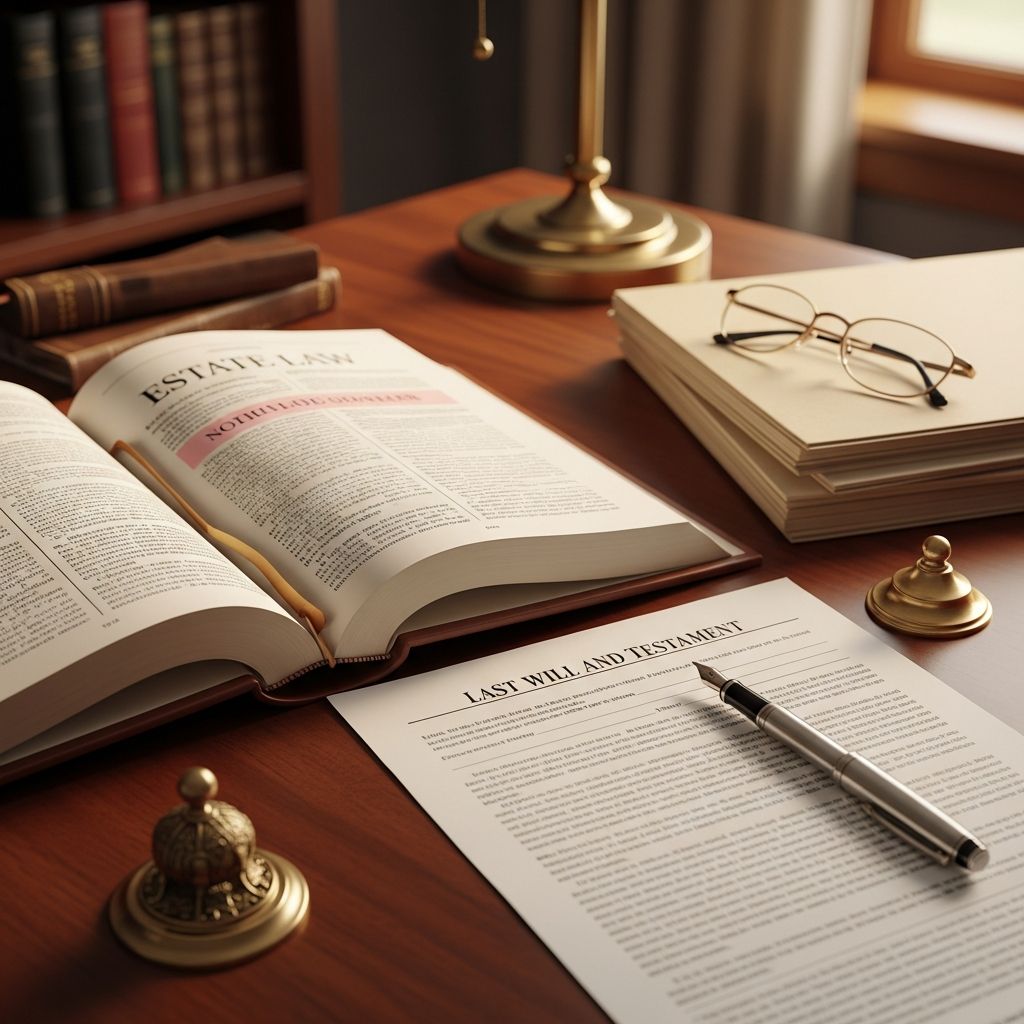
A last will and testament is one of the most important estate planning documents you can create. It directs who receives your property after death, who manages the process, and, in many cases, who will care for your minor children. To have any legal effect, however, your will must be valid under the laws of the state where it is probated. This guide explains the typical legal requirements for a valid will, why they matter, and how to avoid common mistakes that can render a will unenforceable or spark costly disputes.
Core Legal Elements of a Valid Will
Although each U.S. state has its own statutes, several foundational elements appear in most jurisdictions. In general, a will is more likely to be valid if it satisfies all of the following:
- The person making the will (the testator) has legal and mental capacity.
- The document clearly shows an intention to serve as a will.
- The will is in writing.
- The testator signs the will (or directs someone to sign for them).
- Required witnesses sign in the proper manner.
- The will is executed voluntarily, free from fraud, duress, or undue influence.
Some states add technical rules—such as notarization for a “self-proving” will or special rules for handwritten documents—that affect how easily the will can be admitted to probate, even if they do not strictly determine validity.
Testator Capacity and Eligibility
Capacity focuses on whether the testator is legally and mentally able to make a will at the time it is signed.
Minimum Age Requirement
Most states require the testator to be at least 18 years old (or legally emancipated) to make a will. This age threshold is meant to ensure that the person has reached a level of maturity consistent with making decisions about property and dependents.
Testamentary Capacity (Sound Mind)
“Sound mind” in the context of wills is often called testamentary capacity and is generally a lower threshold than the capacity required to sign contracts. At the time of execution, the testator should typically be able to:
- Understand that they are creating a will and that it disposes of property at death.
- Know the general nature and extent of their assets.
- Recognize the “natural objects of their bounty” (for example, close family members).
- Form a rational plan for distributing property.
Capacity is evaluated at the moment of signing. A diagnosis of dementia or mental illness does not automatically invalidate a will if, at the time of execution, the testator met the legal standard of testamentary capacity.
Free and Voluntary Decision-Making
Even if the testator is of age and of sound mind, a will can be invalidated if it was not created voluntarily. Courts may refuse to enforce a will if it was the product of:
- Undue influence – when someone exerts excessive pressure, often in a confidential or caregiving relationship, to secure an unfair benefit.
- Duress – when threats or coercion force the testator to sign.
- Fraud – for example, tricking the testator into signing a document they do not realize is a will.
- Mistake – serious misunderstandings about the contents or nature of the document.
Evidence of coercion, secrecy, or sudden unexplained changes in an estate plan can be grounds for relatives to challenge a will during probate.
Writing, Form, and Types of Wills
In nearly all states, a will must be in some form of written document to be valid. Oral (spoken) wills—known as nuncupative wills—are either prohibited entirely or permitted only in very narrow circumstances, such as certain military or emergency situations.
Common Will Formats
- Typewritten or computer-generated wills – The most common modern format. Typically prepared by an attorney or using reputable estate planning tools.
- Handwritten (holographic) wills – Some states recognize wills written entirely in the testator’s handwriting, sometimes even without witnesses, but others do not.
- Statutory forms – A few states offer standardized fill-in-the-blank will forms defined by statute.
Because state law varies on which types of wills are accepted and what formalities are required, using a format recognized in your state is critical for validity.
| Will Type | Typical Formalities | Key Advantages | Potential Drawbacks |
|---|---|---|---|
| Typewritten / Attorney-Drafted | Written, signed by testator, witnessed (and often notarized self-proving affidavit). | Clear language, customized planning, high likelihood of validity. | Higher cost than DIY options; requires scheduling and planning. |
| Handwritten (Holographic) | Entirely in testator’s handwriting; witness rules vary by state. | Can be prepared quickly in emergencies; no technology required. | Greater risk of ambiguity, mistakes, or non-compliance with state law. |
| Online or Form-Based | Printed and executed with required signatures and witnesses. | Relatively low cost, convenient for simple estates. | May not address complex assets, blended families, or tax concerns. |
Signature Requirements
Signing is the act that formally turns a draft into a legal will. Most states require that:
- The testator signs the will at the end of the document; or
- Someone signs the testator’s name in the testator’s presence, and at the testator’s direct direction, if the testator is physically unable to sign.
States may also expect the will to be dated, although an omitted date does not always render the document invalid. Dating helps resolve disputes when more than one will is discovered and can clarify which version is the most recent.
The Role of Witnesses
Witness requirements are central to will validity. They serve to verify that the testator knowingly signed the document and appeared to be of sound mind and free from undue influence at the time.
How Many Witnesses Are Required?
Most states require at least two adult witnesses to sign the will, though some may require three. State statutes frequently specify that witnesses must:
- Be present when the testator signs or acknowledges their signature.
- Sign within a reasonable time after witnessing the testator’s act.
- Be competent adults (commonly age 18 or older).
Interested vs. Disinterested Witnesses
Many jurisdictions discourage or limit the use of “interested” witnesses—those who stand to inherit under the will—because their testimony could be biased. Some states require witnesses to be disinterested (not named as beneficiaries), while others still honor the will but may reduce or cancel the witness-beneficiary’s gift to avoid suspicion.
Witness Ceremony Best Practices
To strengthen the will’s enforceability, consider these practical steps:
- Gather all signers in the same room when feasible.
- Have the testator clearly state that the document is their will and that they intend to sign it.
- Ask witnesses to observe the entire signing process.
- Ensure witnesses print their names and provide current contact information.
Following a clear, simple signing ceremony makes it easier for a court to confirm the will was validly executed if questions arise later.
Notarization and Self-Proving Wills
Notarization is different from witnessing. In many states, a will does not have to be notarized to be valid. However, notarization is commonly used to create a self-proving will.
What Is a Self-Proving Will?
A self-proving will typically includes a sworn statement (affidavit) signed by the testator and witnesses in front of a notary. This affidavit attests that the will was properly executed. When a self-proving will is presented to the probate court, the court can usually accept it without needing live testimony from the witnesses.
Benefits of a self-proving will include:
- Streamlined probate because witnesses may not need to appear in person.
- Reduced risk of delay if witnesses move, die, or are difficult to locate.
- Additional evidence that formalities were followed.
Even in states that do not require notarization, many estate planning attorneys recommend it for these practical advantages.
State Law Variations You Should Know
While the broad principles of will validity are similar nationwide, critical details differ by jurisdiction. Some examples include:
- Recognition of holographic wills – Some states accept them; others insist on witness signatures for any will.
- Number and qualifications of witnesses – States may vary on how many are required and whether they must be disinterested.
- Harmless error rules – A minority of states allow courts to validate a will that technically violates some formalities if there is clear and convincing evidence it was intended as a will.
- Special rules for military or emergency situations – Limited recognition of oral or informal wills in narrowly defined contexts.
Because of these differences, a will that would be perfectly valid in one state might be rejected or limited in another, especially if it uses non-standard forms or informal execution procedures.
Common Mistakes That Jeopardize Will Validity
People who draft wills without legal guidance often make errors that later cause disputes, delays, or outright invalidation. Frequent problems include:
- Failing to obtain the correct number of witnesses or using beneficiaries as witnesses where prohibited.
- Not signing at the appropriate place or omitting the testator’s signature entirely.
- Relying on an unsigned draft or digital file without a proper execution ceremony.
- Writing ambiguous or conflicting provisions that are difficult for a court to interpret.
- Failing to revoke or clearly update prior wills, leading to confusion over which document controls.
- Using an oral statement or informal note instead of a written will where such formats are not recognized.
A careful, properly witnessed, and, ideally, self-proving written will greatly reduces the risk of these problems.
Practical Steps to Create a Strong, Enforceable Will
To increase the likelihood that your wishes will be honored without expensive litigation, consider the following best practices:
- Confirm your state’s requirements for age, witnesses, notarization, and will format before drafting.
- Use clear, consistent language that unambiguously identifies beneficiaries and assets.
- Update your will after major life events such as marriage, divorce, birth of a child, or significant changes in assets.
- Store the original document in a safe but accessible place, and tell your executor where to find it.
- Consider legal advice if you have blended families, a business, special-needs beneficiaries, or substantial assets.
Even simple estates benefit from attention to formalities. The cost of revising or re-executing a will while you are alive is usually far less than the cost of litigation among heirs after your death.
Frequently Asked Questions About Valid Wills
Do I need a lawyer to create a valid will?
No state requires you to hire an attorney to make a will. However, legal guidance can be especially valuable if you have complex assets, a blended family, or concerns about someone contesting your will. An attorney can help ensure your document complies with state law and is properly executed.
Is a handwritten will automatically invalid?
Not necessarily. Some states recognize handwritten (holographic) wills if they meet specific requirements, such as being entirely in the testator’s handwriting and clearly expressing testamentary intent. Other states do not recognize them at all or impose strict limitations, so it is important to check your local law.
Does my will have to be notarized?
In many jurisdictions, a will does not have to be notarized to be valid. However, notarization is often used to create a self-proving affidavit, which can make probate faster and easier because the court can accept the will without calling witnesses to testify.
Can a will be changed after it is signed?
Yes. As long as you retain capacity, you can revoke or amend your will at any time. Changes are usually made either by executing a new will that clearly revokes the old one or by signing a formal amendment called a codicil, which must follow the same execution formalities as the original will.
What happens if my will is found invalid?
If a court rules that a will is invalid, some or all of your estate may be distributed according to your state’s intestacy laws rather than your expressed wishes. In many states, this means property passes first to a surviving spouse and children, then to more distant relatives if there is no immediate family. Litigation over validity can also delay distributions and reduce the value of the estate due to legal fees.
References
- What Makes a Will Legal and Valid? — Will Requirements Explained — Keystone Law Group. 2022-05-10. https://keystone-law.com/what-makes-a-will-legal-and-valid
- What Are the Three Conditions to Make a Will Valid? — Bratton Law Group (citing NJRS §§ 3B:3-1 to 3B:3-5). 2021-08-18. https://www.brattonlawgroup.com/faqs/haddeonfield-estate-planning-lawyer/what-are-the-three-conditions-to-make-a-will-valid/
- What Makes a Will Valid? — Super Lawyers. 2020-11-02. https://www.superlawyers.com/resources/wills/what-makes-a-will-valid/
- What Makes a Will Legal? — LegalZoom. 2022-03-15. https://www.legalzoom.com/articles/what-makes-a-will-legal
- What Makes a Valid Will? — Margerie Law LLC (Wisconsin). 2021-06-01. https://www.margerielaw.com/what-makes-a-valid-will/
- Foundations of Law: Statutory Requirements for a Valid Written Will — LawShelf Educational Media. 2019-09-01. https://lawshelf.com/coursewarecontentview/statutory-requirements-for-a-valid-written-will/
- What Constitutes a Valid Will? — The U.S. Will Registry. 2023-02-20. https://theuswillregistry.org/estate-articles/what-constitutes-a-valid-will/
Similar Articles








Read full bio of medha deb


