
Understanding USDA Rural Housing Service Home Loans
Learn how USDA Rural Housing Service loans can help low- to moderate-income borrowers buy, build, or repair homes in eligible rural communities.
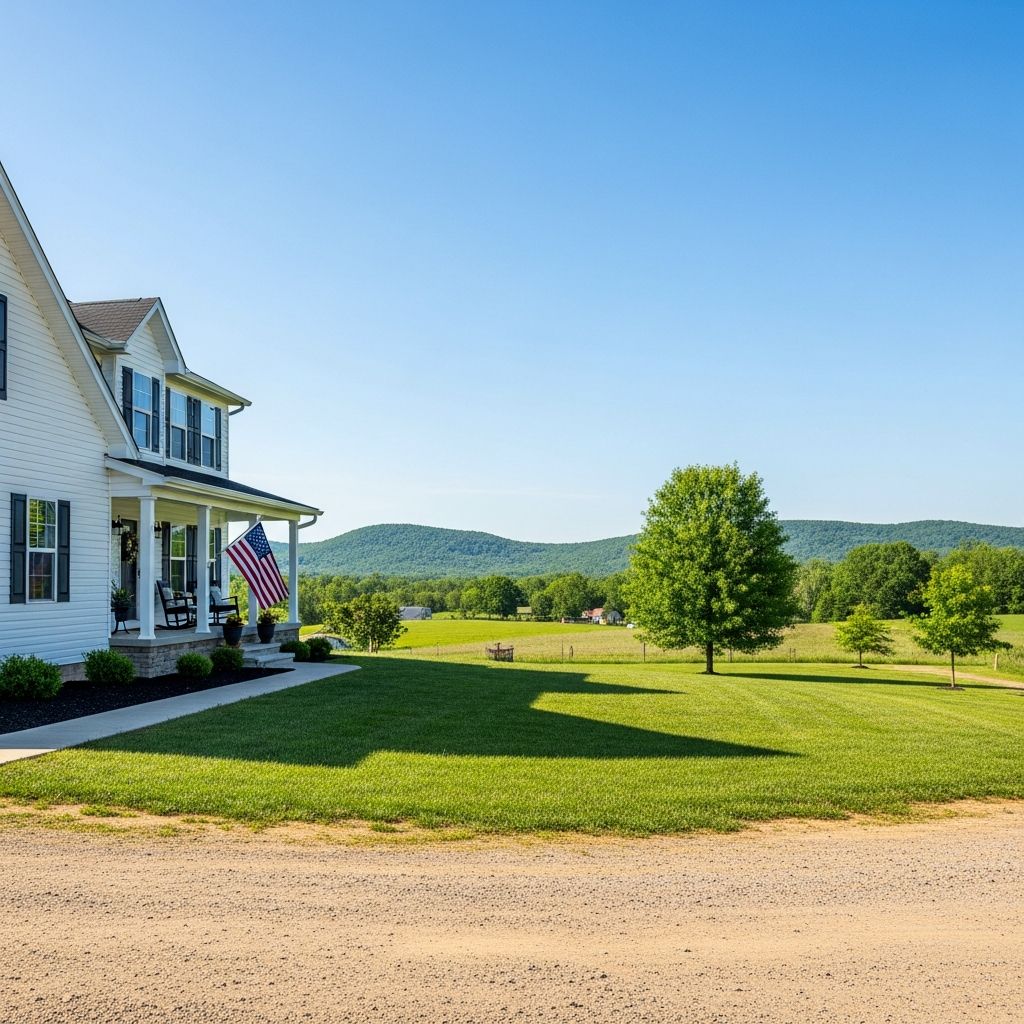
The Rural Housing Service (RHS), part of the U.S. Department of Agriculture (USDA), offers mortgage programs that help low- and moderate-income households in rural areas buy, build, or repair homes they can afford. These programs are an important alternative for people who cannot easily qualify for conventional mortgages but still need safe and decent housing.
This guide explains how USDA Rural Housing Service loans work, who can qualify, the main loan types, and how to get started if you think one of these programs might be right for you.
1. What Is the USDA Rural Housing Service?
The Rural Housing Service is a division within USDA Rural Development that focuses on housing and essential community facilities in rural America. Its mission is to expand access to safe, decent, and affordable housing in communities that private lenders and investors often overlook.
RHS programs primarily support:
- Single-family housing (owner-occupied homes)
- Multifamily housing (rental developments and farm labor housing)
- Repairs and rehabilitation of existing homes
- Community facilities such as health clinics, public safety buildings, and other local infrastructure in rural areas
For homebuyers and homeowners, the most relevant offerings are USDA’s single-family housing loan and grant programs administered by RHS.
2. How USDA Rural Housing Loans Work
USDA Rural Housing Service loans support rural homeownership through two basic mechanisms:
- Direct loans made by the federal government (USDA is your lender)
- Guaranteed loans made by private lenders but insured by USDA against most of the loss if you default
Both approaches are designed to make homeownership more accessible to income-eligible borrowers who live in rural or small-town areas.
2.1 Direct vs. Guaranteed: Side-by-Side Overview
| Feature | USDA Direct Loan (Section 502 Direct) | USDA Guaranteed Loan (Section 502 Guaranteed) |
|---|---|---|
| Lender | USDA Rural Development lends directly to the borrower | Private lender (bank, credit union, mortgage company) makes the loan; USDA guarantees a large portion of the risk |
| Target income level | Low- and very-low-income borrowers | Low- and moderate-income borrowers (up to 115% of area median income) |
| Down payment | Often no down payment required, depending on program specifics | Typically 0% down for eligible borrowers; 100% financing is common |
| Interest and term | Subsidized payment assistance can reduce effective interest rate; typical term about 33 years, possibly 38 years for some borrowers | 30-year fixed-rate mortgages offered by participating lenders |
| Use of funds | Buy, build, repair, or improve a modest home in an eligible rural area; can also cover site preparation and basic utilities | Buy, build, rehabilitate, improve, or relocate an owner-occupied home in an eligible rural area; closing costs and some household equipment may be included |
| Application path | Borrower applies directly with USDA Rural Development office | Borrower applies through an approved private lender; lender works with USDA for guarantee approval |
3. Where These Loans Can Be Used: Defining “Rural”
USDA programs are limited to eligible rural areas. In general, these are small towns and non-metropolitan communities below certain population thresholds, but the definition is more precise and can vary over time.
Key points about eligible rural areas include:
- Areas are usually outside major cities and their immediate suburbs.
- Many communities with populations under a set limit (often around 20,000, sometimes higher depending on context) can qualify if they are rural in character.
- USDA provides an online eligibility map where you can enter a specific address to see whether the property is in an eligible area.
Because the boundaries are detailed and periodically updated, it is important to check a specific property address rather than assume a location is eligible based only on population.
4. Main Types of USDA Rural Housing Service Home Loans
For single-family owner-occupied housing, the principal RHS programs are:
- Section 502 Direct Home Loans (direct mortgages from USDA)
- Section 502 Guaranteed Loans (mortgages from private lenders backed by USDA)
- Section 504 Home Repair Loans and Grants (for essential repairs and accessibility modifications)
4.1 Section 502 Direct Home Loans
The Single Family Housing Direct Home Loan program (often simply called a USDA Direct Loan) serves low- and very-low-income households who cannot obtain a conventional mortgage on reasonable terms.
Key characteristics include:
- Eligible borrowers: Low- and very-low-income households who lack decent, safe, and sanitary housing and cannot get affordable credit elsewhere.
- Purpose: Buy, build, repair, renovate, or relocate a modest primary residence in an eligible rural area; funds can also help prepare the site and install basic utilities.
- Payment assistance: USDA may provide payment assistance, a subsidy that temporarily reduces your effective mortgage payment based on your income.
- Loan term: Typically about 33 years, potentially extended to 38 years for very low-income borrowers who need a longer term to afford payments.
Because USDA is the lender, you work directly with your local Rural Development office rather than a bank. The program is designed as a long-term path to homeownership, with the expectation that if your income significantly improves, you may eventually be able to refinance into private financing.
4.2 Section 502 Guaranteed Loan Program
The Single Family Housing Guaranteed Loan Program aims at low- and moderate-income households who can qualify for a mortgage with some support but still face barriers such as saving for a down payment or meeting conventional underwriting standards.
Important features:
- Lender relationship: You apply with an approved private lender. If you qualify, USDA provides the lender a loan note guarantee (generally up to 90% of the loan), reducing the lender’s loss if you default.
- 100% financing: Borrowers can often obtain no-down-payment mortgages (100% financing) if they meet program rules and lender requirements.
- Eligible uses: Purchase, build, rehabilitate, improve, or relocate a primary residence in an eligible rural area. Some closing costs, site preparation expenses, and necessary household equipment can be included in the loan amount if they meet USDA guidelines.
- Income limits: Household income generally must be at or below 115% of the area median income for the county or region.
- Loan terms: 30-year, fixed-rate mortgages only.
Because private lenders originate these loans, you will still go through a traditional underwriting process—credit review, income documentation, and property appraisal—just under USDA program standards instead of conventional-only rules.
4.3 Section 504 Home Repair Loans and Grants
RHS also oversees home repair and rehabilitation assistance for very-low-income homeowners through the Section 504 program.
Main aspects include:
- Loans: Low-interest loans (often at 1% interest) to very-low-income homeowners in rural areas to repair, improve, or modernize their homes.
- Grants: Grants for eligible older homeowners (typically age 62 or older) who cannot afford to repay a loan, used specifically to remove health and safety hazards.
- Common uses: Fixing structural defects, repairing roofs or heating systems, making accessibility modifications, or addressing unsafe conditions.
These programs help households stay safely housed and preserve the quality of the rural housing stock when a full mortgage is not needed or affordable.
5. Who Can Qualify for USDA Rural Housing Loans?
Each USDA program has its own rules, but some common themes appear across RHS home loan offerings.
Typical requirements may include:
- Income limits: Your household income must fall within program-specific ranges (low, very-low, or moderate) based on local median income.
- Primary residence: The home must be your primary, owner-occupied residence, not a vacation home or rental investment.
- Rural location: The property must be located in an eligible rural area according to USDA’s definition and mapping tool.
- Citizenship or eligible status: Applicants must typically be U.S. citizens, U.S. non-citizen nationals, or certain qualified noncitizens.
- Ability to repay: You must demonstrate reasonable ability to repay the loan based on income, debts, and credit history, even when payment assistance is available.
- Property standards: The home must be modest, decent, safe, and sanitary, and it has to meet specific program and appraisal standards.
Because requirements can evolve with new regulations or funding levels, it is essential to review the most current eligibility details directly with USDA or an approved lender.
6. Advantages and Trade-Offs of USDA Rural Housing Loans
USDA Rural Housing Service programs can be powerful tools for qualified households, but they are not a perfect fit for everyone. Here are some key benefits and considerations.
6.1 Potential Benefits
- Lower or no down payment: Many USDA loans allow you to buy a home with little or no cash down, which is a major advantage for households that cannot easily save for a large down payment.
- Support for lower incomes: Direct loan subsidies and income-based payment assistance make ownership possible for households who could not otherwise qualify for a mortgage.
- Competitive fixed rates: The program structure encourages stable, fixed-rate mortgages that protect borrowers from sudden interest rate increases.
- Repair and rehabilitation options: Section 504 loans and grants help existing homeowners fix safety hazards and preserve their homes without taking on an unaffordable conventional loan.
- Focus on rural communities: By targeting rural and small-town areas, USDA loans support local housing markets that might otherwise lack adequate financing options.
6.2 Important Considerations
- Geographic limits: You must live in an eligible rural area, which excludes many cities and suburbs; even within rural states, not all locations will qualify.
- Income caps: Households with higher incomes may be ineligible, even if they face difficulty qualifying for conventional loans for other reasons.
- Property restrictions: Homes must be modest in size and cost and meet USDA’s property guidelines; luxury properties or those used primarily for income (like most farms or large rental properties) generally do not qualify.
- Program-specific fees and rules: Guaranteed loans often involve a guarantee fee, similar to mortgage insurance, and direct loans may require recapture of some subsidies if you sell the home or your income rises substantially over time (details vary by program and law).
- Documentation requirements: As with any government-backed mortgage, you should expect thorough income, asset, and property documentation.
7. Getting Started with a USDA Rural Housing Service Loan
If you are considering a USDA loan, a step-by-step approach can help you decide whether to move forward and, if so, which program is most suitable.
7.1 Initial Steps
- Confirm rural eligibility: Use USDA’s online eligibility tools to check whether your current home or a property you are considering is located in an eligible rural area.
- Check income limits: Review the latest income limits for your county or talk to USDA or an approved lender to understand which programs your household income may qualify for.
- Review your credit and debts: Obtain your credit reports and scores, list your debts, and estimate how much monthly payment you can realistically afford.
7.2 Choosing the Right Path
- If your income is very low and you cannot qualify for a standard mortgage, explore Section 502 Direct and, if you are already a homeowner needing repairs, the Section 504 repair program.
- If your income is low to moderate and you can meet standard credit requirements, ask lenders about the Section 502 Guaranteed program and compare it with FHA, VA (if applicable), or conventional mortgage options.
7.3 Where to Get Help
- USDA Rural Development offices: Provide information about direct loans, repair programs, and area eligibility, and can explain current program terms and application procedures.
- Approved private lenders: Banks, credit unions, and mortgage companies participating in the Guaranteed Loan Program can explain their specific underwriting standards and help you apply.
- Housing counselors: HUD-approved housing counseling agencies or nonprofit legal and housing organizations can help you evaluate options, prepare a budget, and understand your rights and responsibilities as a borrower.
8. Frequently Asked Questions (FAQs)
Q1: Are USDA Rural Housing Service loans only for farmers?
No. Although USDA is commonly associated with agriculture, RHS home loan programs are primarily for rural residents who want to buy, build, or repair a home, regardless of whether they are farmers. The main requirements involve income and rural location, not occupation.
Q2: Can I use a USDA loan to buy a second home or rental property?
Generally not. USDA single-family housing loans are intended for owner-occupied primary residences. Investment properties, vacation homes, and most short-term rentals are not eligible.
Q3: Is mortgage insurance required on USDA loans?
USDA Guaranteed Loans typically involve a guarantee fee paid to USDA, which functions similarly to mortgage insurance by protecting the lender against loss. Direct loans handle risk differently because USDA is the lender, but may have other program-specific costs. Exact fee structures can change, so you should review current disclosures from USDA or your lender.
Q4: How does a USDA loan compare with an FHA loan?
Both USDA and FHA loans are government-backed and aim to broaden access to homeownership, but they differ in key ways. USDA loans are restricted to eligible rural areas and require income to be within program limits, but they often allow 0% down payment for qualified borrowers. FHA loans are available in a wider range of locations and income levels but generally require a minimum down payment and higher mortgage insurance costs. Comparing both with a lender can help determine which best fits your situation.
Q5: Do USDA loans cover home repairs or accessibility upgrades?
Yes. USDA programs can support repairs and improvements in two main ways: through funds included in a purchase or construction loan and through separate repair-focused assistance such as Section 504 loans and grants for very-low-income homeowners in rural areas. These funds can help address health and safety issues, accessibility needs, and essential structural or systems repairs.
References
- USDA Rural Housing Programs — National Housing Law Project. 2022-04-01. https://www.nhlp.org/resource-center/usda-rural-housing-programs/
- Single Family Housing Direct Home Loans — USDA Rural Development. 2024-01-10. https://www.rd.usda.gov/programs-services/single-family-housing-programs/single-family-housing-direct-home-loans
- Single Family Housing Guaranteed Loan Program — USDA Rural Development. 2024-01-10. https://www.rd.usda.gov/programs-services/single-family-housing-programs/single-family-housing-guaranteed-loan-program
- Rural Housing Programs — National Association of REALTORS®. 2023-09-15. https://www.nar.realtor/rural-housing-programs
- What is a USDA Rural Housing Service loan? — Consumer Financial Protection Bureau. 2022-08-18. https://www.consumerfinance.gov/ask-cfpb/what-is-a-usda-rural-housing-service-loan-en-114/
- Rural Housing Service — USDA Rural Development. 2023-11-30. https://www.rd.usda.gov/about-rd/agencies/rural-housing-service
- Single Family Housing Programs — USDA Rural Development. 2024-03-05. https://www.rd.usda.gov/programs-services/single-family-housing-programs
Similar Articles








Read full bio of medha deb


