
Understanding U.S. State Fishing Laws and Regulations
Learn how state fishing laws work, why they matter, and how to stay compliant wherever you cast a line in the United States.
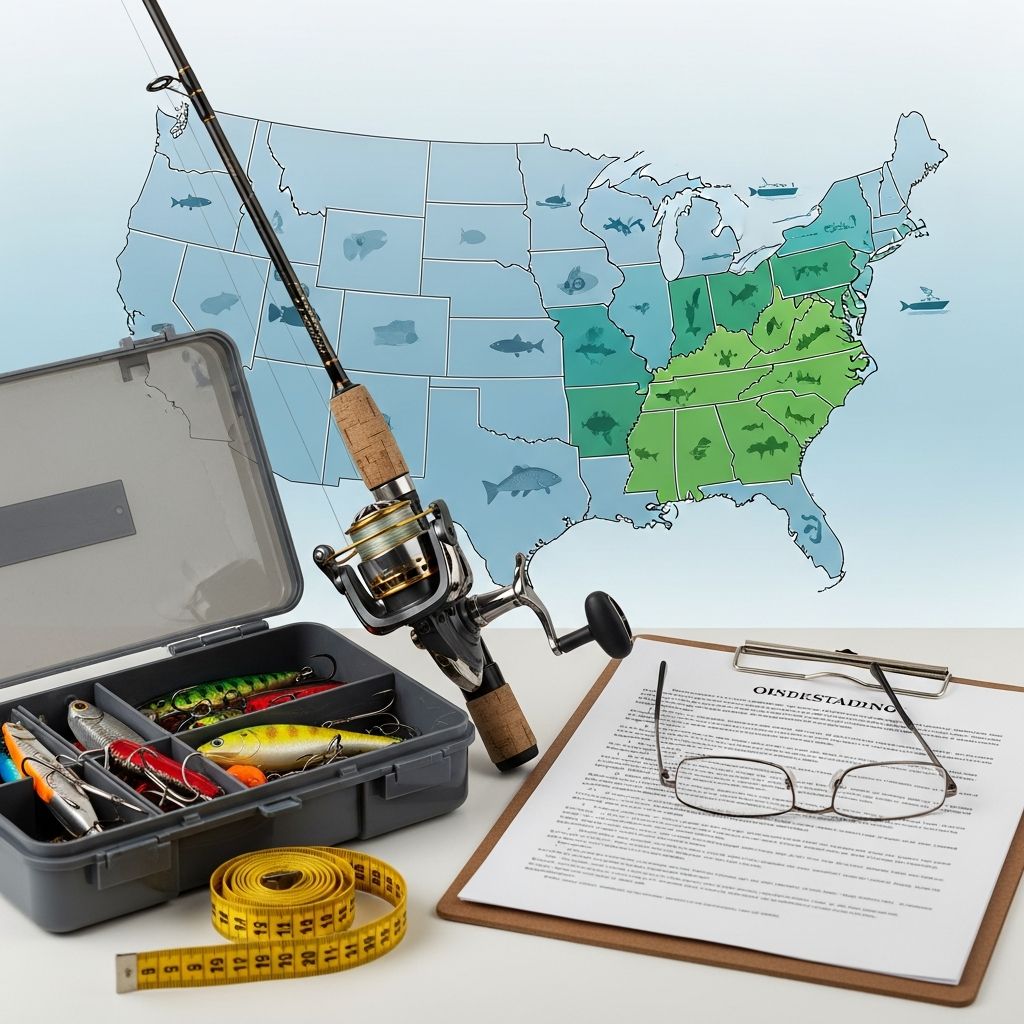
Fishing in the United States is regulated primarily at the state level, with additional rules in federal waters and on tribal lands. These laws protect fish populations, support conservation, and ensure that everyone can enjoy fair and sustainable access to public waters.
This guide explains how state fishing laws are structured, the most common rules you will encounter, and how to find the specific regulations that apply where you plan to fish.
Why Fishing Laws Exist
Modern fishing laws are built on conservation and public resource management principles. Agencies such as state fish and wildlife departments, the U.S. Fish & Wildlife Service (USFWS), and NOAA Fisheries are charged with protecting fish and aquatic ecosystems under a network of federal and state laws.
- Conservation of fish stocks: Limits on seasons, size, and daily harvest prevent overfishing and allow fish populations to reproduce.
- Protection of threatened and endangered species: Laws prohibit the take, possession, or sale of listed species and their habitats.
- Fair access to public resources: Licensing and creel limits help distribute opportunities among residents, nonresidents, and commercial users.
- Funding for management: License and permit fees fund habitat restoration, hatcheries, enforcement, and research.
Layers of Authority Over Fishing
When you fish in the U.S., several layers of law can apply at once. Understanding who manages what helps you locate the right rules.
| Level | Typical Responsibilities | Examples of Rules |
|---|---|---|
| State governments | Regulate most inland and nearshore recreational fishing | Licenses, inland seasons, daily bag limits, gear restrictions, special regulations for specific lakes or rivers |
| Federal government | Regulate fisheries in federal waters (generally 3–200 nautical miles offshore) and some species nationwide | Permits for highly migratory species, federal catch limits, vessel requirements, national conservation laws |
| Tribal governments | Manage fishing on tribal lands and in treaty-reserved areas | Separate licenses or permits, tribal seasons, and harvest rules |
| Local or site-specific rules | Regulate certain reservoirs, parks, or wildlife management areas | Special catch-and-release areas, equipment bans, restricted hours |
State Fishing Licenses: Who Needs One?
Almost every state requires a fishing license for recreational fishing in public waters, with limited exemptions for age, disability, or designated free-fishing days.
Common License Types
- Resident recreational license: For state residents; usually the lowest fee.
- Nonresident license: For visitors from other states or countries, often available as daily, short-term, or annual licenses.
- Freshwater vs. saltwater licenses: Some states issue separate licenses for inland freshwater and coastal saltwater fishing.
- Combination licenses: Bundled hunting and fishing privileges, or combined freshwater/saltwater options.
- Special permits: May be required for trout waters, salmon, steelhead, or controlled access fisheries.
Typical Exemptions
Many states exempt certain groups or situations from licensing requirements, but the details differ by jurisdiction:
- Youth under a specified age (often 16 or 17 and younger).
- Senior residents above a certain age, sometimes with a reduced-fee or lifetime license.
- Residents fishing on their own land in private ponds or waters not open to the public (subject to state rules).
- Free fishing days designated by the state when anyone may fish without a license.
Federal law also requires registration for certain saltwater anglers, typically satisfied automatically when you purchase a state saltwater license, as recognized by the National Saltwater Angler Registry.
Core State Fishing Regulations You Will See Everywhere
While the specifics differ by state and even by waterbody, most regulations fall into recurring categories: methods, seasons, harvest limits, and protected areas.
1. Legal Methods of Fishing
States define what equipment and methods are allowed in various waters. Rules tend to be stricter in inland public waters and special management areas.
- Hook and line: In many inland waters, fish must be taken only by rod and reel or hand line, with a limited number of lines per angler.
- Prohibited gear: Commonly banned methods include explosives, poisons, electricity, and many types of nets or traps for game fish.
- Special gear for nongame fish: Some states allow additional gear (such as trotlines or certain nets) for nongame or invasive species under specific conditions.
- Limitations around dams and structures: Fishing near dams, fish ladders, or designated safety zones is often restricted or entirely prohibited to protect both fish and anglers.
2. Seasons and Open/Closed Waters
States use seasons and area closures to protect fish during spawning or to rebuild vulnerable populations.
- Species-specific seasons: Certain game fish may only be taken during defined dates (for example, trout or salmon runs).
- Year-round vs. seasonal waters: Some lakes and rivers are open year-round, while others open only during part of the year.
- Daily hours: Although many waters allow fishing 24 hours a day, some areas restrict fishing to daylight hours or prohibit night fishing.
- Emergency closures: Agencies may temporarily close or further restrict fisheries if surveys show low populations, disease, or environmental stress.
3. Size Limits and Measuring Fish
Size limits help ensure that fish have a chance to reach maturity and spawn before being harvested. Many states publish species-specific length rules for each waterbody.
- Minimum size limits: You must release any fish shorter than the stated minimum length.
- Maximum size limits: Some waters require release of fish longer than a given length to protect large breeders.
- Slot limits: Only fish within or outside a stated size range may be kept; the rest must be released.
- Standard measurement method: States typically define length as the distance from the snout to the tip of the tail fin when compressed, and may require that fish remain whole (head and tail intact) until you finish fishing for the day.
4. Daily Bag and Possession Limits
The daily bag limit is the number of a given species you may keep in one day; the possession limit is the total number you may lawfully have in your control at any time while in the field, on a boat, or in transit.
- Per-species bag limits: For example, a set number of bass, trout, or panfish that may be harvested each day per licensed angler.
- Aggregate limits: One combined limit for several related species (such as different bass species counted together).
- Possession limits over multiple days: Many states cap possession at no more than a specified multiple of the daily bag limit, regardless of how many days you have fished.
- Individual responsibility: Each angler is responsible for his or her own catch; pooling or sharing limits among a group is often illegal.
Protected, Invasive, and Special-Status Species
Not all fish are regulated in the same way. Some are heavily protected; others are targeted for removal.
Threatened and Endangered Species
Federal conservation laws, including the Endangered Species Act, empower the U.S. Fish & Wildlife Service and NOAA Fisheries to list species that are at risk of extinction and to restrict activities that affect them.
- No take or possession: It is generally unlawful to take, kill, possess, or sell listed species unless you hold a specific permit.
- Habitat protection: Critical habitats may be closed to certain types of fishing or subject to extra rules.
- State-listed species: States often maintain their own lists of protected fish and aquatic species, with corresponding regulations.
Invasive and Nuisance Species
In contrast, some non-native species are considered invasive and can damage native fish communities. States and federal agencies often encourage or require anglers to help control these populations.
- Restrictions on stocking and transport: Many states prohibit releasing or transporting live invasive fish, including moving them between waterbodies.
- Special rules for use as bait: Using certain live fish as bait may be banned or tightly regulated to prevent spread of disease or invasive species.
- Reporting requirements: Agencies often ask anglers to report suspected new occurrences of invasive fish or plants so they can respond quickly.
Federal Fishing Rules in U.S. Waters
Beyond state waters, the federal government manages marine fisheries in the U.S. Exclusive Economic Zone (generally 3 to 200 nautical miles offshore), as well as certain species even in state waters.
- Regional fishery management councils: Under the Magnuson–Stevens Fishery Conservation and Management Act, regional councils propose management measures such as catch limits and seasons for federal fisheries.
- NOAA Fisheries regulations: NOAA issues binding rules governing recreational, commercial, and subsistence fishing in federal waters, which may include gear restrictions, closed areas, and catch documentation.
- Federal permits: Some highly migratory species or specialized fisheries require federal recreational permits or registration, in addition to any state license.
Where to Find State-Specific Fishing Regulations
Because fishing rules vary by state, region, and even by individual waterbody, it is essential to consult current official regulations before you fish.
- State fish and wildlife agency websites: Each state publishes current fishing regulations, maps, and statewide summaries on its official site, often with downloadable PDFs and interactive maps.
- Printed regulation digests: Many agencies distribute free booklets at license vendors, bait shops, and visitor centers summarizing key laws and special rules.
- eRegulations and official online platforms: Some states partner with online regulation portals that host the official text of hunting and fishing seasons, limits, and methods.
- Mobile apps: Several agencies offer mobile apps with searchable rules, waterbody-specific regulations, and in some cases, digital licenses.
- On-site signs: Pay attention to posted signs at boat launches, dams, parks, and wildlife areas; these may list special regulations that differ from general statewide rules.
Practical Compliance Tips for Anglers
Staying compliant is usually straightforward if you prepare ahead of time and keep a few habits in mind.
- Always verify the current year’s rules: Regulations can change annually or mid-season. Check the latest online versions or official updates.
- Know your waterbody: Many states have unique rules for specific lakes, rivers, or management areas. Look up your exact destination rather than relying on general statewide limits.
- Carry your license: Keep your license or proof of electronic licensing with you, and know how to show it to an officer upon request.
- Measure and count carefully: Use a reliable measuring device, learn the correct way to measure length, and track your individual bag limit throughout the day.
- Handle fish responsibly: Even where not legally required, practicing careful catch-and-release for unwanted or undersized fish supports sustainable fisheries.
- Clean and drain equipment: Remove aquatic plants, drain bilges and live wells, and dry gear between waterbodies to prevent spreading invasive species.
- When in doubt, release: If you are unsure whether a fish meets legal requirements or whether you are in a special regulation area, releasing the fish is the safest option.
Frequently Asked Questions About State Fishing Laws
Q: Do I need a separate fishing license for each state?
A: Yes. Fishing licenses are generally issued and recognized on a state-by-state basis. If you cross state lines or fish waters managed by another state, you typically need that state’s license, unless a specific reciprocity agreement says otherwise.
Q: Are state rules different for freshwater and saltwater fishing?
A: Usually, yes. Many states have separate licenses and regulation sets for inland freshwater and coastal saltwater fishing. In coastal areas, state rules interact with federal regulations for certain marine species, so you may need to check both sets of laws.
Q: How do I know if a particular lake has special regulations?
A: State regulation summaries often include a waterbody-specific section listing unique size limits, gear rules, and seasons. Many websites also offer interactive maps or search tools where you can select a lake or river and see its current rules.
Q: What happens if I accidentally catch a protected or out-of-season fish?
A: In most cases, you must release the fish immediately back into the water where it was caught, taking care to minimize handling and injury. Intentionally keeping or harming protected fish can lead to fines and other penalties under state or federal law.
Q: Can I keep fish that I buy from a store or fish farm beyond normal possession limits?
A: Many states treat commercially purchased fish differently from recreationally caught fish. For example, fish legally acquired from licensed aquaculture operations for stocking or consumption may not count against your recreational possession limit if properly documented, but rules vary by state. Always keep receipts and check local regulations.
Q: Are online regulation digests always legally binding?
A: Official state publications and websites are generally considered authoritative, but the underlying statutes and administrative codes are the actual law. If there is a discrepancy, agencies often correct it quickly. When possible, rely on official state or federal websites and the most recent digital or printed summaries.
References
- General Freshwater Fishing Regulations — Virginia Department of Wildlife Resources. 2025-01-01. https://dwr.virginia.gov/fishing/regulations/general/
- General Statewide Bag and Length Limits — Florida Fish and Wildlife Conservation Commission. 2024-01-01. https://myfwc.com/fishing/freshwater/regulations/general/
- Resources for Recreational Fishing in U.S. Federal Waters — NOAA Fisheries. 2023-06-15. https://www.fisheries.noaa.gov/topic/resources-fishing/recreational-fishing
- Federal Fishing Rules and Regulations by Region — NOAA Fisheries. 2024-03-10. https://www.fisheries.noaa.gov/rules-and-regulations/fisheries
- Laws & Regulations — U.S. Fish & Wildlife Service. 2023-09-20. https://www.fws.gov/laws
- Understanding How Federal Fishing Regulations Are Made — NOAA Fisheries. 2022-11-30. https://www.fisheries.noaa.gov/insight/understanding-how-federal-fishing-regulations-are-made
- West Virginia Fishing Regulations & 2025 Summary — West Virginia Division of Natural Resources. 2025-01-01. https://wvdnr.gov/fishing/fishing-regulations/
Similar Articles








Read full bio of Sneha Tete


