
Understanding U.S. Primary Election Systems
Explore how different primary election formats shape candidate selection and voter participation across the United States.
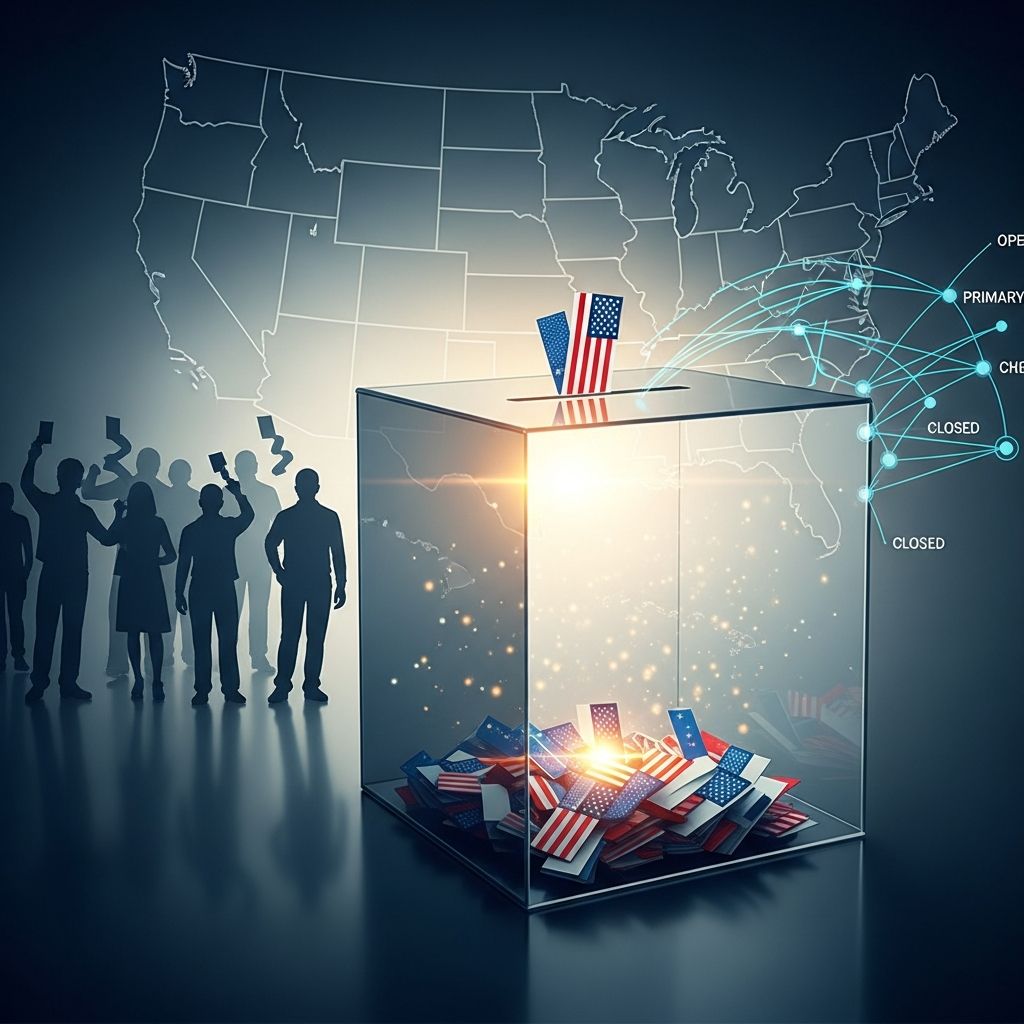
How Primary Elections Shape American Democracy
In the United States, the path to the general election ballot is paved through primary elections. These contests are not the final decision point for voters, but they are often where the real competition unfolds. Unlike general elections, which are designed to choose officeholders, primaries are internal party or state-run processes that narrow the field of candidates. Because each state has broad authority over how elections are conducted, the rules for primaries vary significantly across the country. This variation creates a patchwork of systems that can be confusing to voters but also reflects different philosophies about party control, voter access, and electoral fairness.
The Role of Primaries in Candidate Selection
At their core, primary elections serve as a filtering mechanism. Political parties and state governments use them to determine which individuals will appear on the general election ballot. In most partisan races, the winner of a party’s primary becomes that party’s official nominee. In some states, however, the primary functions more like a preliminary round, where the top vote-getters advance regardless of party affiliation.
Because primaries are typically held months before the general election, they play a crucial role in shaping the political landscape. Candidates must build name recognition, raise funds, and appeal to a specific electorate—whether that is a party base or a broader cross-section of voters. The type of primary system in place directly influences who participates, how campaigns are run, and which candidates ultimately make it to the November ballot.
Open Primaries: Allowing Broader Voter Participation
An open primary is a system in which any registered voter, regardless of party affiliation, can participate in any party’s primary election. In these states, a Democrat can vote in the Republican primary, and an independent voter can choose which party’s ballot to receive on election day.
There are two main variations of open primaries:
- True Open Primaries: Voters can request any party’s ballot at the polls or when voting by mail, without needing to be affiliated with that party.
- Open Primaries with Ballot Declaration: Voters must publicly or privately indicate which party’s primary they wish to vote in, but they are not required to be registered members of that party.
States with open primaries argue that this system increases voter participation and allows for more moderate candidates to emerge, since nominees must appeal to a broader electorate. Critics, however, worry that it can lead to strategic voting, where supporters of one party cross over to vote for a weaker opponent in the other party’s primary.
Closed Primaries: Party Control Over Nomination
In a closed primary, only voters who are officially registered with a political party can vote in that party’s primary. For example, only registered Republicans can vote in the Republican primary, and only registered Democrats can vote in the Democratic primary.
This model emphasizes party autonomy. Parties argue that they should have the right to choose their own nominees without interference from voters who are not formally aligned with them. Closed primaries are often seen as protecting the integrity of the party brand and ensuring that nominees reflect the preferences of committed party members.
However, closed systems can limit participation, especially in states with large numbers of independent or unaffiliated voters. In some cases, voters must change their registration weeks or months in advance to participate in a particular primary, which can be a barrier for casual or infrequent voters.
Semi-Open and Semi-Closed Systems
Many states use hybrid models that fall between fully open and fully closed systems. These are often referred to as semi-open or semi-closed primaries.
- Semi-Open Primaries: Unaffiliated or independent voters are allowed to participate in a party’s primary, but voters registered with a party can only vote in their own party’s primary. In some cases, independents must request a specific party’s ballot in advance.
- Semi-Closed Primaries: Parties have the option to allow or prohibit unaffiliated voters from participating. This gives parties some control over who can influence their nomination process.
These systems attempt to balance party control with voter access. They are common in states where there is political disagreement about whether primaries should be internal party affairs or more inclusive public elections.
Nonpartisan and All-Candidate Primaries
Some states have moved away from traditional party-based primaries altogether, adopting nonpartisan or all-candidate systems. In these formats, all candidates for a given office appear on a single ballot, regardless of party affiliation.
The most well-known versions are:
- Top-Two Primaries: All candidates run on one ballot, and the two highest vote-getters advance to the general election, even if they are from the same party.
- Top-Four or Multi-Candidate Primaries: A variation where the top four candidates advance, often used in conjunction with ranked-choice voting in the general election.
California, Washington, and Alaska use versions of this model for most state and federal races (excluding presidential primaries). These systems are designed to reduce partisan polarization by encouraging candidates to appeal to a wider range of voters from the start. They also eliminate the risk of a party being shut out of the general election due to a crowded primary field.
How Different Primary Types Affect Campaigns and Voters
The structure of a primary system has real consequences for how campaigns are run and how voters behave.
Impact on Candidate Strategy
- In closed primaries, candidates often focus on energizing the party base, emphasizing ideological purity and loyalty to party platforms.
- In open and nonpartisan primaries, candidates may adopt more moderate positions to appeal to a broader electorate, including independents and even members of the opposing party.
- In top-two systems, candidates from the same party may compete against each other in the general election, which can lead to more nuanced policy debates but also risks splitting the party vote.
Impact on Voter Behavior
- Open and semi-open systems tend to increase participation among independent voters, who might otherwise feel excluded from the nomination process.
- Closed systems can discourage crossover voting but may also reduce overall turnout if many voters are unaffiliated.
- Nonpartisan primaries can simplify the ballot for voters but may also make it harder to distinguish between candidates’ party affiliations and policy positions.
State-by-State Variation in Primary Rules
Because the U.S. Constitution leaves election administration largely to the states, there is no single national primary system. Instead, each state designs its own rules for primaries, subject to federal constitutional constraints.
Key variables that differ from state to state include:
- Whether primaries are open, closed, or semi-open
- Whether unaffiliated voters can participate
- Whether voters must declare a party preference in advance
- Whether the primary is partisan (selecting party nominees) or nonpartisan (narrowing the field for the general election)
For example:
- States like New Hampshire and Michigan use closed primaries for major parties.
- States like Texas and Wisconsin use open primaries.
- California and Washington use top-two nonpartisan primaries for most offices.
Primaries vs. Caucuses: Different Paths to Nomination
While most states use primary elections, a smaller number rely on caucuses to select party nominees. Caucuses are party-run events where voters gather in person to discuss candidates, express preferences, and sometimes elect delegates.
Key differences between primaries and caucuses include:
- Administration: Primaries are run by state and local election officials; caucuses are run by political parties.
- Participation: Primaries are generally more accessible, especially for voters with limited time or mobility; caucuses require a greater time commitment.
- Transparency: Primaries use secret ballots and are subject to election laws; caucuses may have less formal procedures and fewer public records.
In recent years, several states have moved from caucuses to primaries to increase participation and reduce barriers to entry, particularly in presidential nomination contests.
Presidential Primaries: A Special Case
Presidential primaries operate under a unique set of rules that blend state and party control. In most states, voters in a presidential primary are technically selecting delegates to their party’s national convention, not directly choosing the nominee.
Key features of presidential primaries include:
- They are usually held 6–9 months before the general election.
- They are often conducted under the same open/closed rules as other primaries in the state.
- Delegates are allocated based on primary or caucus results, and the candidate who secures a majority of delegates becomes the party’s nominee.
Because presidential nominations are so high-stakes, the rules for these contests are closely scrutinized and sometimes changed by parties to influence the outcome.
Common Misconceptions About Primaries
Several myths and misunderstandings surround primary elections:
- Myth: Winning a primary guarantees a general election victory.
Reality: While many primary winners go on to win in November, strong general election opponents, third-party candidates, and shifting political conditions can change the outcome. - Myth: Primaries are the same in every state.
Reality: Rules vary widely, and a voter in one state may have very different rights and options than a voter in another. - Myth: Only party members can vote in any primary.
Reality: In many states, independents and even members of other parties can participate, depending on the system.
FAQs About U.S. Primary Elections
What is the main purpose of a primary election?
The main purpose is to narrow the field of candidates so that each party has one nominee (or a small number of top finishers in nonpartisan systems) for the general election.
Can I vote in a primary if I’m not registered with a party?
It depends on the state. In open and semi-open primaries, unaffiliated voters can usually participate. In closed primaries, only registered party members can vote in that party’s primary.
What happens if two candidates from the same party advance in a top-two primary?
In a top-two system, if the two highest vote-getters are from the same party, they will face each other in the general election. This can lead to more competitive intraparty races but may also reduce the number of choices for voters in the general election.
Do primaries decide the president directly?
No. In presidential primaries, voters choose delegates who will support a candidate at the party’s national convention. The convention formally nominates the presidential candidate.
Why do some states use caucuses instead of primaries?
Some parties prefer caucuses because they allow for more direct engagement with voters, discussion of issues, and selection of delegates. However, caucuses are less accessible and have been phased out in many states in favor of primaries.
How do I find out what type of primary my state uses?
You can check your state’s election website or contact your local election office. Most states publish clear information about primary rules, deadlines, and voter eligibility.
Conclusion: The Evolving Landscape of Primaries
Primary elections are a cornerstone of the American electoral system, but they are far from uniform. From closed party-run contests to open, all-candidate preliminaries, the variety of systems reflects ongoing debates about democracy, representation, and party power.
As voter behavior changes and concerns about polarization grow, some states are experimenting with new models like top-two and top-four primaries. These reforms aim to make the nomination process more inclusive and less partisan, but they also raise questions about party autonomy and voter choice.
Understanding the different types of primaries is essential for any engaged citizen. Whether you are a lifelong party member, an independent voter, or someone new to the process, knowing how your state conducts primaries helps you make informed decisions and participate more effectively in the democratic process.
References
- State Primary Election Types — National Conference of State Legislatures (NCSL). 2023. https://www.ncsl.org/elections-and-campaigns/state-primary-election-types
- Primary Election Types — U.S. Election Assistance Commission (EAC). 2023. https://www.eac.gov/voters/primary-election-types
- Presidential Primaries and Caucuses — USA.gov. 2023. https://www.usa.gov/primaries-caucuses
- Types of Primary Systems, Explained — Unite America. 2022. https://www.uniteamerica.org/articles/types-of-primary-systems-explained
- What Are the Different Types of Elections? — U.S. Vote Foundation. 2023. https://www.usvotefoundation.org/what-are-different-types-elections
Similar Articles








Read full bio of medha deb


