
Understanding the U.S. Patent and Trademark Office
A practical guide to what the USPTO is, what it does, and how small businesses and creators interact with it.
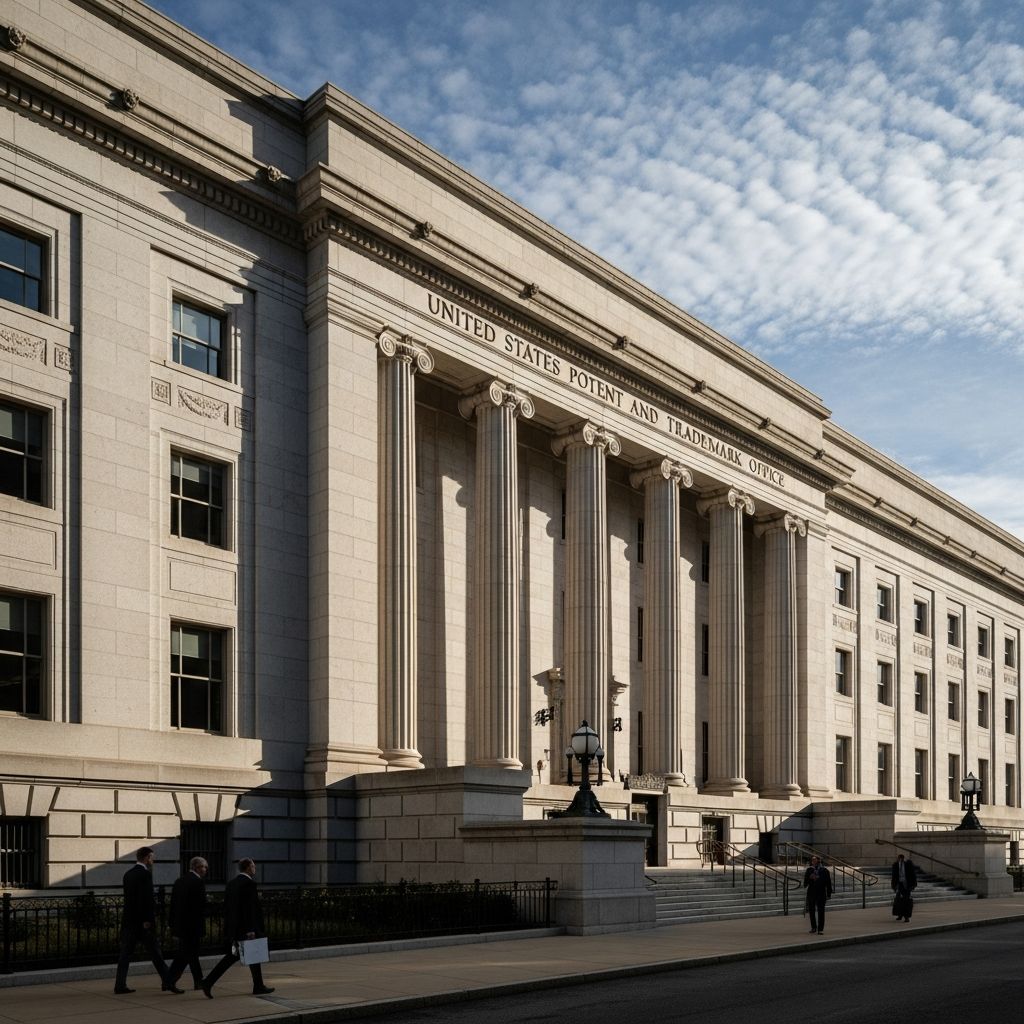
The United States Patent and Trademark Office (USPTO) is the federal agency that examines patent and trademark applications and grants official rights to inventors and brand owners in the United States. For entrepreneurs, small businesses, and creatives, understanding how this agency works is critical to protecting products, technology, and brand identity.
This guide explains what the USPTO is, how it fits into the federal government, what services it provides, and what you should know before engaging with it.
Where the USPTO Fits in the Federal Government
The USPTO is part of the U.S. Department of Commerce, within the executive branch of the federal government. Congress created and governs it under federal law, particularly 35 U.S.C. § 1, using its constitutional authority over patents and interstate commerce. Its mandate ultimately flows from Article I, Section 8 of the U.S. Constitution, which empowers Congress to promote the progress of science and useful arts.
| Aspect | USPTO Role |
|---|---|
| Agency Type | Federal agency in the Department of Commerce |
| Core Mission | Grant U.S. patents and register U.S. trademarks; support innovation and economic growth |
| Funding | Primarily funded by user fees rather than general tax revenue |
| Leadership | Headed by the Under Secretary of Commerce for Intellectual Property and Director of the USPTO, appointed by the President with Senate consent |
| Headquarters | Alexandria, Virginia, with regional offices in several U.S. cities |
Because the USPTO operates largely on fees paid by applicants and registrants, it is often described as functioning more like a service provider than a traditional appropriated federal agency.
Core Responsibilities of the USPTO
The USPTO’s primary legal responsibility is to examine and decide applications for patents and trademarks. Around those core decisions, the agency carries out a broader set of functions that shape the U.S. intellectual property (IP) system.
1. Examining and Granting Patents
A patent is a limited-duration exclusive right in an invention that meets statutory requirements such as novelty and non-obviousness. The USPTO is the sole federal body that can issue patents valid in the United States.
Patent examiners at the USPTO review applications to determine whether an invention satisfies key criteria in U.S. law, including:
- Subject matter eligibility (35 U.S.C. § 101) – whether the invention falls into a patent-eligible category such as a process, machine, manufacture, or composition of matter.
- Novelty (35 U.S.C. § 102) – whether the invention is new compared to prior art (existing publications, uses, or patents).
- Non-obviousness (35 U.S.C. § 103) – whether the invention would not have been obvious to a skilled person at the time, in view of prior art.
- Adequate disclosure (35 U.S.C. § 112) – whether the application describes the invention clearly enough that others could make and use it after the patent expires.
If the examiner concludes the application meets all statutory requirements, the USPTO issues a patent, which gives the owner the right to exclude others from making, using, selling, or importing the claimed invention for a limited time (typically 20 years from filing for utility patents).
2. Examining and Registering Trademarks
A trademark is a word, symbol, design, or combination that identifies the source of goods or services and distinguishes them from others. The USPTO examines applications for federal trademark registration, assessing whether a mark:
- Functions as a source identifier rather than merely descriptive language.
- Is distinctive enough to qualify for registration (inherent or acquired distinctiveness).
- Is not confusingly similar to an already-registered or pending mark for related goods or services.
Approved marks are listed on either the Principal Register or the Supplemental Register, depending on their distinctiveness. Federal registration provides benefits such as nationwide priority (subject to certain limitations), a presumption of ownership, and access to federal courts for enforcement.
3. Maintaining Public Patent and Trademark Records
The USPTO maintains searchable public databases of issued patents, published patent applications, and registered trademarks. These records serve several important functions:
- Allowing businesses and attorneys to perform clearance searches before filing new applications.
- Providing technical information that others can build on once patents expire, encouraging cumulative innovation.
- Documenting ownership and assignment records for IP assets.
4. Policy Advice and International Cooperation
The USPTO also advises the President, the Secretary of Commerce, and other federal agencies on intellectual property policy, trade issues, and enforcement strategies. It works with foreign patent and trademark offices and participates in international arrangements to streamline cross-border protection.
Key forms of cooperation include:
- Collaboration with the European Patent Office (EPO) and Japan Patent Office (JPO) as part of the so-called Trilateral Offices.
- Participation in the Patent Cooperation Treaty (PCT), which allows applicants to file a single international application that can later be pursued in multiple countries.
5. Dispute Resolution and Appeals
Within the USPTO, specialized boards review certain disputes and appeals, including challenges to patent validity and refusals of trademark registration. These administrative proceedings can be an alternative or complement to federal court litigation.
Why the USPTO Matters for Innovation and the Economy
The USPTO’s work is central to the U.S. innovation ecosystem. Its mission is to drive innovation, inclusive capitalism, and global competitiveness by providing reliable IP rights and clear rules. By granting time-limited exclusivity and creating public records of inventions and marks, the agency:
- Encourages investment in research and development.
- Supports technology transfer from universities and labs to the marketplace.
- Protects brand identity and reduces consumer confusion in commerce.
- Contributes to job creation and economic growth across industries.
How Inventors and Businesses Interact with the USPTO
While every case is unique, most users encounter the USPTO in one of two ways: through a patent application or a trademark application. The agency provides extensive guidance on both processes.
Engaging with the Patent System
At a high level, the patent process involves:
- Determining whether your idea is likely patentable under U.S. law.
- Preparing a detailed application describing and claiming the invention.
- Filing with the USPTO and paying the required fees.
- Responding to examiner communications (often called “office actions”).
- Receiving either a grant (patent issuance) or a final rejection, subject to appeal.
The USPTO recommends that applicants carefully evaluate which type of patent fits their invention. Under U.S. law, there are three principal patent categories:
- Utility patents – for new and useful processes, machines, manufactures, or compositions of matter.
- Design patents – for new, original, and ornamental designs for an article of manufacture.
- Plant patents – for new and distinct asexually reproduced plant varieties.
Engaging with the Trademark System
For trademarks, typical steps include:
- Identifying the mark (word, logo, slogan, or combination) and the goods or services it will represent.
- Conducting a search of USPTO records to avoid conflicts with existing marks.
- Filing an application based on actual use in commerce or a good-faith intent to use the mark.
- Working with the examining attorney to address any refusals or objections.
- Maintaining and renewing the registration by filing required declarations and evidence of continued use.
USPTO Regional Presence and Access to Services
Although the USPTO’s headquarters is in Alexandria, Virginia, it also operates regional offices to better serve innovators across the country. These offices provide local outreach, education, and support, particularly for small businesses and independent inventors. In addition, the USPTO offers:
- Online filing systems for patents and trademarks.
- Public search tools for patents and trademark records.
- Educational programs, pro bono resources, and small-entity or micro-entity fee categories to improve access.
USPTO vs. Other Intellectual Property Bodies
The USPTO deals specifically with patents and trademarks. Copyrights and certain other IP issues involve different agencies or legal frameworks. For example, the U.S. Copyright Office administers copyright registration, while trade secrets are primarily governed by state and federal statutes enforced through the courts. The USPTO nonetheless plays a broader advisory role on IP-related trade and policy questions for the executive branch.
Common Misunderstandings about the USPTO
Many small businesses and creators encounter the USPTO for the first time when they are already under time pressure. Misconceptions can lead to costly mistakes. Some key clarifications include:
- The USPTO does not enforce IP rights in court. It grants and registers rights but does not sue infringers; enforcement is up to rights holders through private actions, sometimes in coordination with other government actors.
- Federal registration is not mandatory for all IP rights. For trademarks, limited rights can arise from use alone in commerce, but registration confers additional legal advantages.
- USPTO authority is territorial. Rights granted by the USPTO are generally effective only within the United States; protection abroad usually requires separate filings or international routes recognized by foreign offices.
Strategic Considerations for Businesses
Using the USPTO effectively is not just a legal formality; it is a strategic business decision. Some considerations include:
- Timing – Patent filing often must precede public disclosure to preserve rights internationally, and trademark filings can secure priority over later users.
- Portfolio planning – Deciding which innovations to patent, which brands to register, and how to align filings with business expansion plans.
- Costs and budgeting – Balancing filing, prosecution, and maintenance fees with anticipated commercial value.
- Global strategy – Coordinating USPTO activity with filings in other jurisdictions when products or services will be offered internationally.
Frequently Asked Questions (FAQs)
Q: Is registration with the USPTO required to use a trademark?
No. Trademark rights in the United States can arise from actual use of a mark in commerce, even without federal registration. However, USPTO registration offers stronger nationwide protection, clearer public notice, and procedural advantages in enforcement.
Q: Does a U.S. patent from the USPTO protect my invention worldwide?
No. A U.S. patent generally provides rights only within the United States and its territories. Protection in other countries requires filings with their own patent offices or through international mechanisms such as Patent Cooperation Treaty applications.
Q: Can I file my own patent or trademark application without a lawyer?
Individuals may represent themselves before the USPTO, and the agency provides extensive public guidance and online resources. However, patent law and trademark practice are complex, and many applicants choose to work with registered practitioners to improve clarity, strategy, and compliance.
Q: How can I check if an invention or brand name is already protected?
The USPTO maintains publicly accessible databases for patents and trademarks that can be searched online. While these tools are powerful, comprehensive clearance often also involves professional searching and legal analysis of similar or related records.
Q: Does the USPTO help me enforce my patent or trademark?
The USPTO’s primary job is to examine and grant rights, not to act as an enforcement agency. Enforcement typically occurs through negotiations, private lawsuits, or administrative proceedings, sometimes relying on USPTO records and determinations as evidence.
References
- United States Patent and Trademark Office (USPTO) — Legal Information Institute, Cornell Law School. 2020-07-01. https://www.law.cornell.edu/wex/united_states_patent_and_trademark_office_(uspto)
- U.S. Patent and Trademark Office (USPTO) — USA.gov. 2024-01-01. https://www.usa.gov/agencies/u-s-patent-and-trademark-office
- Patent basics & Trademark basics — United States Patent and Trademark Office. 2024-06-01. https://www.uspto.gov
- Mission of the United States Patent and Trademark Office — Performance.gov. 2023-09-01. https://www.performance.gov/agencies/doc/service-providers/doc-uspto/
- Patent and Trademark Office — Federal Register. 2022-05-01. https://www.federalregister.gov/agencies/patent-and-trademark-office
- What does the Patent and Trademark Office (USPTO) do? — USAFacts. 2024-02-01. https://usafacts.org/explainers/what-does-the-us-government-do/subagency/united-states-patent-and-trademark-office/
- What is the USPTO and Their Responsibilities? — Emerson Thomson Bennett. 2021-08-01. https://www.etblaw.com/what-is-the-uspto-and-their-responsibilities/
Similar Articles








Read full bio of medha deb


