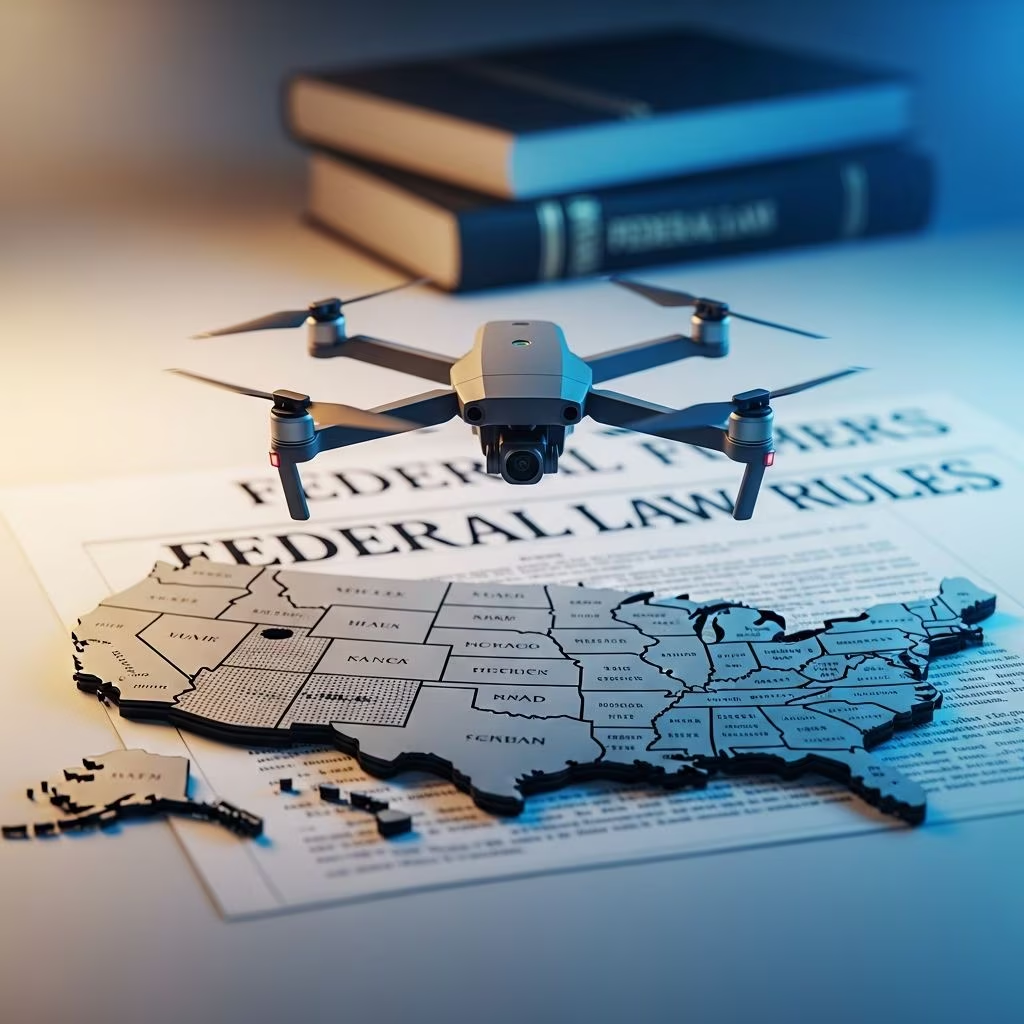
Drones (also called unmanned aircraft systems, or UAS) are now used for photography, inspections, agriculture, mapping, and recreation. As drone use has grown, so has the web of federal, state, and local rules that pilots must follow. Understanding how these layers of regulation fit together is essential if you want to avoid fines, lawsuits, or criminal charges while flying.
This guide explains the basic federal framework, shows how state laws differ, and offers practical tips for safe and lawful flight across the United States.
1. The Big Picture: Who Regulates What?
Drone regulation in the U.S. is built on two main pillars:
- Federal rules from the Federal Aviation Administration (FAA), which control the airspace and safety requirements nationwide.
- State and local laws, which focus mostly on privacy, trespass, law enforcement use, and land use (for example, where you may take off or land).
In practice, this means:
- The FAA decides how high you can fly, where you can fly in controlled airspace, and whether your drone needs to be registered.
- States decide issues like whether hovering over someone’s backyard can count as illegal surveillance or invasion of privacy.
2. Core FAA Requirements Every Pilot Must Know
No matter which state you are in, you must comply with federal rules. The FAA distinguishes between recreational and non-recreational (typically commercial) flying, but many safety basics overlap.
2.1 Key Federal Safety Rules
- Maximum altitude: Fly at or below 400 feet above ground level in uncontrolled airspace, unless you have specific authorization in controlled airspace.
- Visual line of sight: You (or a visual observer) must be able to see the drone at all times during flight.
- Weight and registration: Most drones weighing more than 0.55 pounds (250 grams) must be registered with the FAA before flight.
- Marking: Registered drones must display their FAA registration number on the aircraft.
- Do not fly while impaired: Operating under the influence of drugs or alcohol is prohibited.
- Avoid people and vehicles: There are strict limits on flying directly over people or moving vehicles, particularly for non-recreational pilots.
2.2 Remote ID and Identification Requirements
Remote ID acts like a digital license plate for drones. As of 2025, most drones that must be registered are also required to broadcast identification and location information.
Compliance options generally include:
- Standard Remote ID drones with built-in capability.
- Remote ID broadcast modules added to older drones.
- Flying in FAA-Recognized Identification Areas (FRIAs), where certain older drones without Remote ID may still operate.
Pilots are responsible for checking the latest FAA guidance, as enforcement dates and technical requirements can evolve.
3. Why States Regulate Drones Differently
While the FAA focuses on safety in the national airspace, many state legislatures have focused on how drones affect people on the ground. According to the National Conference of State Legislatures (NCSL), the vast majority of U.S. states have enacted at least one drone-related law since 2013.
Common state-level concerns include:
- Privacy: Voyeurism, harassment, unauthorized photography or video of private spaces.
- Trespass and property rights: Low-altitude flights that interfere with the use and enjoyment of land.
- Critical infrastructure: Power plants, refineries, prisons, and other sensitive facilities.
- Law enforcement use: Police use of drones for surveillance or evidence collection.
Some states also empower local governments, universities, or park authorities to set their own rules about where drones may take off, land, or be operated.
4. Major Themes in State Drone Laws
Although each state has its own statutes, you see recurring patterns. The table below summarizes several of the most common types of provisions.
| Regulatory Theme | Typical State Approach | What It Means for Pilots |
|---|---|---|
| Privacy & Surveillance | Bans or restricts using drones to capture images, video, or audio of people in places where they reasonably expect privacy. | Filming inside backyards, windows, or private gatherings can lead to civil liability or criminal charges. |
| Trespass & Harassment | Prohibits repeated or intentional low flights over private property that disturb occupants or livestock. | Hovering over someone’s land without a clear purpose or consent can be treated similarly to physical trespass. |
| Critical Infrastructure | Forbids flying over prisons, power facilities, or certain industrial sites without permission. | Ignorance of restricted facilities is not a defense; pilots are expected to research no-fly zones. |
| Weaponization | Some states explicitly ban attaching weapons or dangerous devices to drones. | Carrying firearms, explosives, or similar items on a drone may be a separate criminal offense. |
| Interference with First Responders | Outlaws operating drones in a way that interferes with police, firefighters, or emergency medical operations. | Flying near wildfires, accident scenes, or search-and-rescue operations can result in significant penalties. |
5. Examples of State Approaches to Drone Regulation
Because drone law is highly state-specific, it helps to look at examples that illustrate different strategies, especially around privacy and private property.
5.1 Privacy Protections and “Peeping” Concerns
Many states have taken their existing privacy or anti-voyeurism laws and specifically extended them to drones. For example, California amended its civil code to cover UAV activities, allowing lawsuits against anyone who uses a drone to intrude on another person’s privacy by capturing images or recordings in private settings. Other states rely on more general privacy statutes or create drone-specific crimes for intrusive surveillance.
Consequences can include:
- Civil lawsuits for invasion of privacy or emotional distress.
- Statutory damages or fines for each violation.
- Criminal charges in serious or repeated cases.
5.2 Flying Over Private Property
Property owners often ask whether they can stop a drone from flying over their land. U.S. law recognizes that landowners have some rights to the usable airspace above their property, but they do not own all airspace up to the sky. States have responded in different ways:
- Some states prohibit using drones to engage in persistent surveillance or trespass over private land without consent.
- Others define specific distances (such as within a certain number of feet of a dwelling) where flights without consent may constitute an offense.
- Several states emphasize that using drones to record private activities on another’s land may violate both trespass and privacy laws.
Because these rules vary, pilots should never assume that a permissible flight in one state will be legal in another.
5.3 Law Enforcement and Government Use
Using drones for policing has sparked debates about civil liberties and warrants. Many states have passed statutes that:
- Require police to obtain a warrant before using drones for long-term surveillance, except in emergencies.
- Limit how long aerial data can be retained if it is not relevant to a case.
- Restrict drone use for crowd monitoring or protests without specific justification.
These provisions are aimed primarily at government agencies, but they illustrate broader concerns about how aerial technology affects privacy and constitutional rights.
6. State Differences at a Glance
While every jurisdiction is different, several broad patterns appear when you compare drone policies nationwide.
- States with comprehensive frameworks: Some states have multiple statutes covering privacy, infrastructure, law enforcement, and interference with first responders.
- States with targeted rules: Others focus narrowly on one issue such as voyeurism, hunting with drones, or flying near prisons.
- States relying on general laws: A handful primarily use existing trespass, harassment, and privacy laws, with minimal drone-specific legislation.
- Local overlays: Cities, counties, and park systems may add extra requirements, such as bans in particular parks or near special events.
Several independent surveys and analyses maintain comparative summaries of state provisions, but these should always be treated as starting points; statutory text and official state resources are the final word on what is currently in force.
7. Practical Compliance Tips for Drone Pilots
Because drone law combines nationwide and state-specific rules, careful preparation is crucial. Consider the following best practices before each flight.
7.1 Know Your Legal Role
- Decide whether your flight is recreational or non-recreational (for example, commercial work or for a business). Different FAA rules apply.
- If flying under Part 107 (the main commercial rule set), ensure you hold a valid Remote Pilot Certificate and comply with all operating limitations.
7.2 Research the Airspace
- Check whether you are in controlled airspace (near airports) and, if so, whether you need prior authorization.
- Use FAA-approved tools or apps that display no-fly zones and temporary flight restrictions.
7.3 Check State and Local Rules
- Look up whether your state restricts flights over critical infrastructure, prisons, or other sensitive locations.
- Review privacy and trespass rules, especially if you plan to fly close to homes, backyards, or private businesses.
- Verify whether state parks, city parks, or campuses impose their own operational limits.
7.4 Plan for Privacy and Courtesy
- Avoid hovering over private property without a clear reason or consent.
- Refrain from filming people in places where they reasonably expect privacy (e.g., fenced yards, inside buildings).
- When possible, inform nearby property owners before undertaking low-altitude or noisy operations.
7.5 Keep Records
- Carry proof of FAA registration when flying drones that require it.
- Maintain a basic log of flights, locations, and purposes, especially for commercial work.
- Store manuals, maintenance records, and Remote ID information in case of inspection or incident review.
8. Common Legal Risks and How to Avoid Them
Many enforcement actions arise from a few recurring mistakes. Being aware of these can help you avoid trouble.
- Flying too close to emergency scenes: Drones over wildfires or accident sites have forced grounded aircraft and led to serious penalties.
- Ignoring privacy: Filming or tracking individuals without consent, particularly in residential areas, can trigger state privacy and harassment laws.
- Disregarding restricted facilities: Prisons, power stations, and some government buildings are often subject to strict no-drone rules.
- Lack of Remote ID compliance: Operating a drone that should broadcast Remote ID without meeting the requirement can result in enforcement action.
9. Frequently Asked Questions About U.S. Drone Laws
Q: If my drone is small and for fun, do I still have to follow laws?
Yes. Even recreational pilots of small drones must follow FAA safety rules, and many states apply their privacy and trespass laws regardless of drone size.
Q: Can I fly my drone over someone else’s backyard if I do not land on their property?
Not necessarily. Some states treat repeated or low-level flights as a form of trespass or unlawful surveillance, especially if you are recording images or video without consent.
Q: Do state laws override FAA rules?
No. The FAA controls the national airspace, but states can create additional rules about privacy, trespass, and land use. Pilots generally must comply with both sets of requirements.
Q: How do I find current drone rules for a specific state?
Start with official state legislative or transportation websites and, if available, state aviation or UAS task force pages. Comparative resources and directories can help, but you should always verify against primary sources.
Q: Are there extra rules for flying drones for my business?
Yes. Most business-related operations fall under the FAA’s Part 107 rules, which require passing an aeronautical knowledge test and meeting specific operational limits. State and local restrictions still apply in addition to those federal requirements.
References
- Recreational Flyers & Community-Based Organizations — Federal Aviation Administration. 2023-09-13. https://www.faa.gov/uas/recreational_flyers
- New Drone Laws in the USA [Updated in 2025] — Drone U Blog. 2025-01-05. https://www.thedroneu.com/blog/usa-drone-laws-regulations-by-state/
- Current Unmanned Aircraft State Law Landscape — National Conference of State Legislatures (NCSL). 2023-06-28. https://www.ncsl.org/transportation/current-unmanned-aircraft-state-law-landscape
- Can You Fly a Drone Over Private Property? — Drone Pilot Ground School. 2024-02-10. https://www.dronepilotgroundschool.com/drones-private-property/
- Drone Laws in California (2025) — Pilot Institute. 2025-03-12. https://pilotinstitute.com/drones/states/california/
- Drone Laws by State 2025 — World Population Review. 2025-04-01. https://worldpopulationreview.com/state-rankings/drone-laws-by-state
- Master List of Drone Laws (Organized by State / Country) — UAV Coach. 2024-11-15. https://uavcoach.com/drone-laws/