
Understanding U.S. Driver’s License Rules and Requirements
Learn how driver’s license laws work in the U.S., from learner permits to renewals, suspensions, and special commercial driving rules.
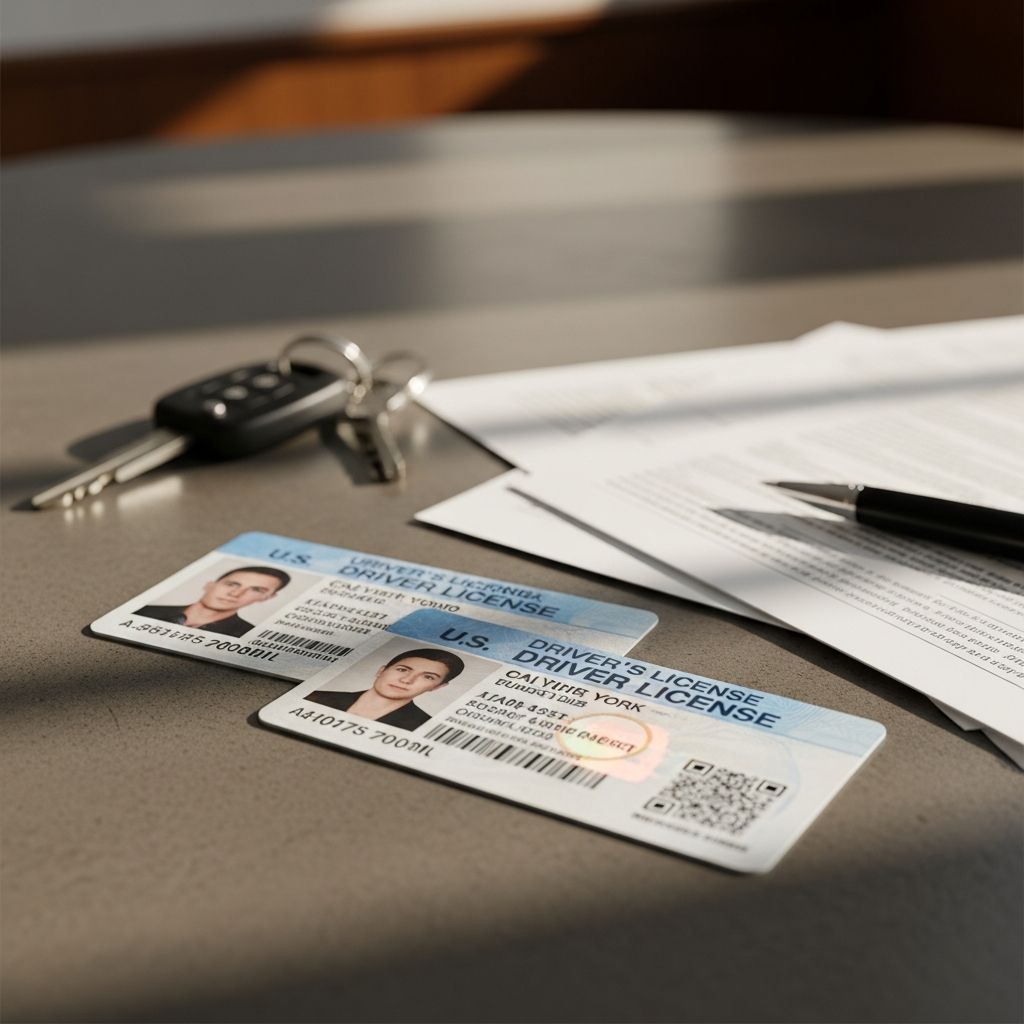
Driver’s license rules in the United States are primarily created and enforced by individual states, but they operate within a framework of federal safety standards and nationwide recognition. Each state’s department of motor vehicles (DMV) or equivalent agency sets the specific requirements for getting and keeping a license, yet most follow a similar pattern: instruction permits for new drivers, full licenses for qualified drivers, and stricter credentials for commercial vehicle operators.
How Driver’s License Authority Is Divided
In the U.S., both state and federal governments play a role in licensing drivers, but they have distinct responsibilities.
- States issue all ordinary driver’s licenses, set testing standards, and decide when licenses can be suspended or revoked.
- Federal law sets minimum safety and testing rules for commercial drivers and prohibits holding more than one commercial driver’s license.
- Mutual recognition of valid licenses allows a driver licensed in one state to drive in any other state, subject to that state’s traffic laws.
Because licensing is decentralized, details such as minimum age, fees, and renewal periods differ, but the underlying structure is broadly similar across the country.
Basic Types of Driver Credentials
States typically recognize several categories of driving credentials based on vehicle type and driver experience.
- Learner’s permits – For new drivers who are learning; usually require adult supervision.
- Standard (non-commercial) licenses – For everyday passenger vehicles, light trucks, and similar vehicles.
- Motorcycle endorsements or licenses – For riders operating motorcycles or motor scooters.
- Commercial Driver’s Licenses (CDLs) – For heavy vehicles, buses, and hazardous materials transport.
- Provisional or graduated licenses – Intermediate licenses for teen drivers with added restrictions to reduce risk.
| Credential Type | Typical Purpose | Common Restrictions |
|---|---|---|
| Learner’s Permit | Practice driving while supervised | Adult in front seat, no late-night driving, passenger limits |
| Full Non-Commercial License | Everyday personal driving | Vision or medical conditions may require corrective lenses or other limits |
| Provisional/Graduated License | Transitional stage for teens | Nighttime curfews, passenger caps, cell phone bans |
| Motorcycle License | Operating motorcycles | Helmet requirements, often separate skills test |
| Commercial Driver’s License (CDL) | Driving trucks, buses, hazmat vehicles | Medical exams, specialized tests, higher penalties for violations |
Who Is Eligible to Apply?
Eligibility depends heavily on age, residency, and sometimes citizenship or immigration status.
- Age
- Many states issue learner’s permits around age 15–16 and full non-commercial licenses around 16–18.
- For commercial licenses, federal rules require drivers to be at least 21 to operate large commercial vehicles in interstate commerce or carry hazardous materials, though some states allow intrastate CDLs at 18.
- Residency
- Applicants generally must be residents of the licensing state. Proof can include leases, utility bills, or other official documents.
- Permanent residents (green card holders) and other eligible non-citizens may qualify if they meet state residency and identification rules.
- Identity and lawful presence
- Most states require identity documents such as birth certificates, passports, or immigration records.
- Some states issue non-commercial licenses regardless of immigration status, but these licenses can have different markings or limitations.
Licensing Steps: From Permit to Full License
Although every state has its own procedures, a typical path from first-time driver to fully licensed driver includes several key stages.
1. Knowledge Test and Learner’s Permit
New drivers usually begin by studying the state driver handbook and then taking a written knowledge test. Topics typically include:
- Rules of the road (speed limits, right-of-way, signage)
- Safe driving practices (following distance, lane usage)
- Effects of alcohol and drugs on driving ability
- Penalties for major traffic offenses such as DUI
Passing the written exam and a basic vision screening leads to a learner’s permit, which often comes with these limitations:
- Must drive with a licensed adult in the front seat.
- May be barred from driving late at night.
- May have passenger limits, especially for teen drivers.
- Permit is valid for a fixed period and may need to be held for a minimum number of months.
2. Supervised Practice and Driver Education
States often require new drivers—especially teens—to log supervised driving hours before scheduling a road test.
- Minimum supervised hours (for example, 40–50 hours total, with some portion at night).
- Completion of an approved driver education course, which can combine classroom or online learning with in-car training.
- Certification by a parent or guardian that practice requirements have been met.
3. Road Skills Test
After meeting the permit and practice requirements, applicants must pass a road test administered by state examiners. The test typically evaluates:
- Basic control of the vehicle (starting, stopping, turning).
- Parking maneuvers, such as parallel parking or backing into a space.
- Lane changes, merges, and safe following distances.
- Interaction with pedestrians, cyclists, and other vehicles.
Passing the road test leads to either a full non-commercial license or an intermediate/provisional license, depending on the driver’s age and state rules.
Graduated Licensing for Teen Drivers
Because younger drivers face higher crash risks, most states use a graduated driver licensing (GDL) system. This approach phases in driving privileges as experience increases, reducing exposure to high-risk situations.
- Intermediate or provisional stage
- Often begins after a set period with a learner’s permit and a successful road test.
- May restrict driving during late-night hours.
- Can limit the number of young passengers allowed in the vehicle.
- Frequently bans hand-held device use while driving.
- Full privilege stage
- Reached at a specific age (commonly 17–18) if the driver has not committed serious traffic offenses.
- Removes many of the special teen restrictions but leaves standard safety and traffic rules in place.
Commercial Driver’s Licenses (CDLs)
Operating large trucks, buses, and vehicles carrying hazardous materials requires a Commercial Driver’s License. Federal law sets the basic framework for CDLs, and states administer the testing and issuance.
When a CDL Is Required
A CDL is typically needed for drivers who:
- Operate large or heavy commercial motor vehicles.
- Drive buses or vehicles designed to carry many passengers.
- Transport hazardous materials that require placarding.
CDL Categories and Endorsements
CDLs are divided into classes (such as Class A, B, and C) depending on vehicle size and combination, and may require extra endorsements:
- Passenger endorsements to drive buses or other large passenger vehicles.
- Tank vehicle endorsements for carrying liquids in bulk.
- Hazardous materials (HazMat) endorsements for transporting dangerous goods; these require additional written testing and a security background check.
CDL holders are subject to stricter standards: serious violations such as drunk driving or leaving the scene of a crash can disqualify them from commercial driving for extended periods.
Medical and Safety Requirements for CDL Holders
Because of the potential harm from commercial vehicle crashes, CDL drivers must meet specific physical and safety criteria.
- Regular medical examinations to verify fitness to drive, typically every two years or as required by federal rules.
- Compliance with federal safety regulations, such as hours-of-service limits designed to reduce fatigue.
- Requirement to hold a CDL from only one state, usually their state of residence.
License Renewal, Suspension, and Revocation
Once a driver has a license, they must keep it valid and avoid conduct that can result in suspension or permanent loss.
Renewing a Driver’s License
Renewal rules vary by state but commonly include:
- Fixed validity periods, such as 4 to 8 years, after which the license expires and must be renewed.
- Vision checks at renewal, particularly for older drivers, to ensure fitness to drive.
- In-person vs. online renewal, depending on age, number of previous renewals, and security policies.
Grounds for Suspension or Revocation
States may suspend or revoke a license for a variety of reasons, including:
- Driving under the influence of alcohol or drugs (DUI/DWI).
- Accumulating too many traffic violation points in a short period.
- Serious offenses such as reckless driving, hit-and-run, or vehicular assault.
- Driving without required insurance (in states where it is mandatory).
- Failing to appear in court or pay traffic-related fines, depending on state law.
CDL holders face additional disqualification rules when serious violations occur in any motor vehicle, not just commercial ones.
Driving in the U.S. as a Non-Citizen
Foreign nationals and visitors can often drive in the United States, but they must follow both federal guidance and the requirements of each state they visit.
Short-Term Visitors and International Driving Permits
Tourists and other short-term visitors usually rely on a license from their home country, sometimes paired with an International Driving Permit (IDP).
- Some states require an IDP in addition to a foreign license; others do not.
- Visitors must obtain an IDP from the country that issued their license before traveling, because the U.S. does not issue IDPs to foreign visitors.
- Many rental car companies require both a valid foreign license and, where needed, an IDP.
Permanent Residents and Longer-Term Stays
Foreign nationals who live in the U.S. for extended periods may be eligible—or even required—to obtain a state driver’s license.
- Residency requirements and acceptable identity documents vary by state.
- Once licensed by a state, the driver can generally operate a vehicle anywhere in the U.S., subject to local traffic laws.
Practical Tips for Staying Compliant
Understanding a few core principles can help drivers stay on the right side of licensing laws:
- Read your state driver handbook regularly, especially after law changes.
- Track your license expiration date and renew early to avoid gaps in validity.
- Keep your address updated with the DMV so renewal notices and other official communications reach you.
- Be aware of special rules that apply to young drivers, professional drivers, or non-citizens.
- Consult a legal professional if facing possible suspension, revocation, or serious traffic charges.
Frequently Asked Questions (FAQs)
Q: Is my driver’s license from one state valid in another state?
A: Yes. States generally recognize each other’s valid driver’s licenses, so you can usually drive in any state with a license issued by your home state, provided you follow local traffic laws.
Q: Do I need a new license if I move to a different state?
A: Most states require new residents to apply for a local driver’s license within a set time after establishing residency (such as 30–90 days). Check the rules of your new state’s licensing agency.
Q: Can a non-U.S. citizen get a driver’s license?
A: Many non-citizens, including permanent residents and certain visa holders, can obtain state driver’s licenses if they meet identification and residency requirements. Some states also offer licenses to residents regardless of immigration status.
Q: Do I need an International Driving Permit to drive in the U.S. as a visitor?
A: Some U.S. states require an International Driving Permit in addition to your foreign license, while others do not. You must obtain the IDP from the country that issued your license before leaving, because the United States does not issue IDPs to foreign visitors.
Q: How are commercial drivers treated differently under the law?
A: Commercial drivers must hold a valid CDL, meet medical standards, and comply with federal safety regulations. Serious traffic violations can lead to CDL disqualification, even for offenses committed in a personal vehicle.
References
- Driver’s licenses in the United States — Various state authorities via compiled overview. Last updated 2023-10-10. https://en.wikipedia.org/wiki/Driver%27s_licenses_in_the_United_States
- Driving in the U.S. if you are not a citizen — USAGov, U.S. General Services Administration. 2025-11-13. https://www.usa.gov/non-citizen-driving
- Commercial Driver’s License Program — Federal Motor Carrier Safety Administration (FMCSA). 2024-06-18. https://www.fmcsa.dot.gov/cdl
- Driver Services — U.S. Department of State. 2023-04-14. https://www.state.gov/driver-services
Similar Articles








Read full bio of Sneha Tete


