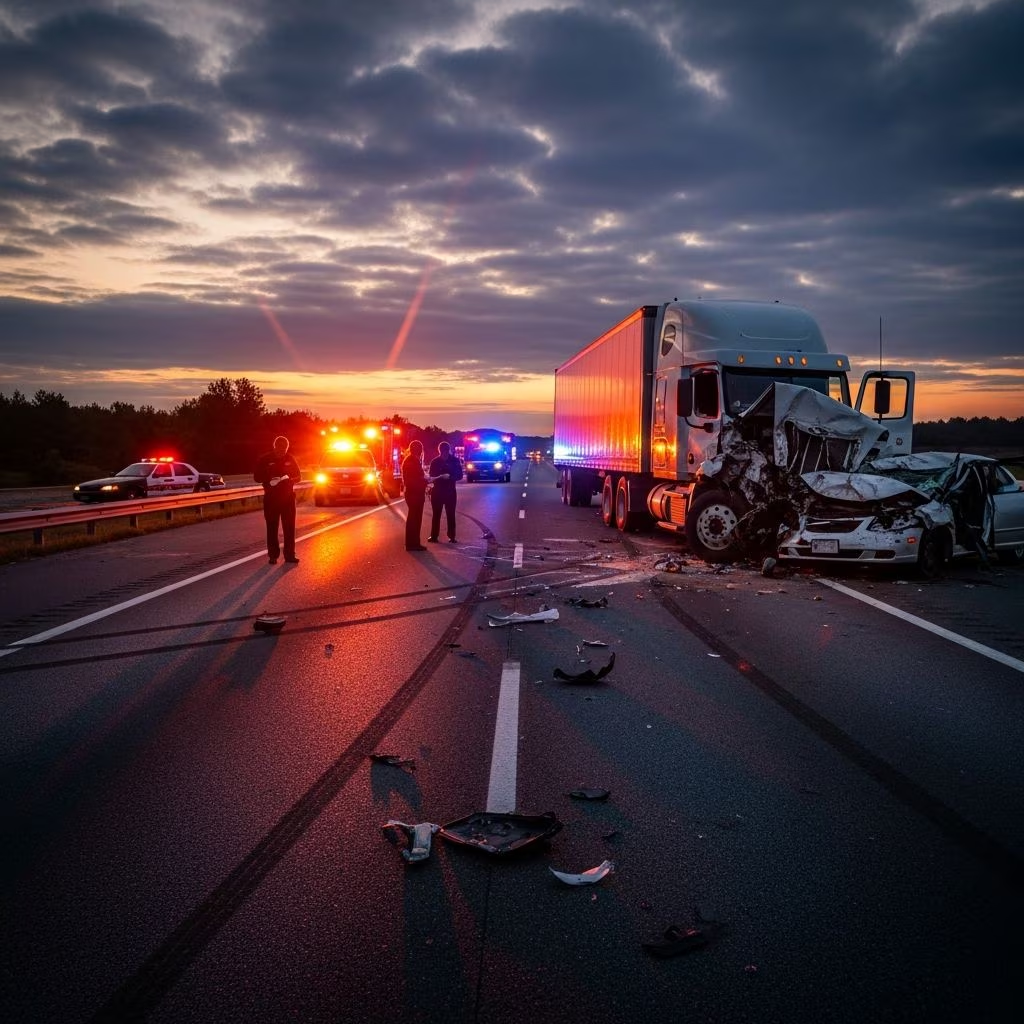
Collisions involving large commercial trucks are relatively uncommon compared with all motor vehicle crashes, but they are far more likely to cause catastrophic injuries and fatalities. When a crash involves an 18-wheeler, delivery truck, or other heavy commercial vehicle, the legal issues are typically more complex than in a standard car accident case.
This guide explains how truck accidents happen, who may be responsible, what makes these claims unique, and which steps can help protect your right to compensation after a serious collision.
Why Truck Crashes Are So Dangerous
Large trucks can weigh 20 to 30 times more than a typical passenger car and sit much higher off the ground, increasing the risk of severe or fatal outcomes in a collision. According to data compiled by the National Safety Council, thousands of people die in large-truck crashes in the United States each year, and most of the fatalities are occupants of other vehicles rather than the truck drivers themselves.
- High crash forces: A fully loaded truck requires a significantly longer distance to stop and can impart far greater impact forces during a collision.
- Underride risk: Smaller vehicles can slide under a truck’s trailer, concentrating force at window height and causing devastating injuries.
- Blind spots: Trucks have large no-zones along the sides and rear where smaller vehicles may not be visible in mirrors.
- Rollover potential: A high center of gravity and shifting cargo increase the risk of rollovers, particularly on curves or during sudden maneuvers.
Because of these dangers, commercial trucking is heavily regulated at the federal and state level, with specific rules governing driver qualifications, hours behind the wheel, vehicle maintenance, and cargo loading.
How Truck Accidents Commonly Occur
Truck accidents arise from a combination of human error, mechanical issues, and environmental conditions. Research by the Federal Motor Carrier Safety Administration (FMCSA) has found that driver-related factors are involved in a large share of serious truck crashes.
1. Driver-Related Causes
- Fatigue and hours-of-service violations
Long-haul truck drivers often work irregular schedules and travel long distances. When drivers exceed federal hours-of-service limits or fail to take required rest breaks, the risk of fatigue-related crashes rises substantially. Fatigue can impair reaction time and judgment in ways similar to alcohol intoxication. - Speeding and unsafe following distance
Due to their mass, trucks require much longer stopping distances than passenger vehicles. Speeding or tailgating severely limits a truck driver’s ability to react to sudden traffic changes, often leading to rear-end or multi-vehicle collisions. - Distracted driving
Distraction from electronics, dispatch devices, navigation systems, or eating while driving can cause a driver to drift from the lane, miss traffic signals, or react too slowly to hazards. - Impaired driving
Federal safety rules impose strict limits on alcohol and drug use for commercial drivers, and data show that large-truck drivers are generally less likely to be impaired than drivers of other vehicles. However, when impairment does occur, the consequences can be especially severe given the size of the vehicle.
2. Vehicle and Equipment Problems
Mechanical failures are a significant contributing factor in a portion of large-truck crashes. FMCSA data show that issues such as brake problems, tire failures, and inadequate maintenance frequently appear in crash investigations.
- Worn or defective brakes increasing stopping distances
- Blown tires causing loss of control or rollover
- Lighting or reflective device failures reducing truck visibility at night
- Steering and suspension defects affecting handling
3. Cargo and Loading Errors
Improperly loaded cargo can destabilize a truck or cause secondary hazards:
- Shifting loads that contribute to rollovers or jackknifes
- Overweight vehicles that strain brakes and tires
- Unsecured cargo or open trailers dropping debris onto the roadway
4. Roadway and Weather Conditions
Poor weather and infrastructure can also play a role. Rain, snow, ice, and fog all reduce traction and visibility. Potholes, inadequate signage, sharp curves, or work zones may increase crash risk if drivers do not adjust their driving accordingly.
Typical Injuries in Large-Truck Collisions
The size and weight of trucks often lead to high-energy impacts. Injuries can be extensive and may require long-term medical treatment, rehabilitation, and support.
| Injury Type | Common Examples | Potential Long-Term Effects |
|---|---|---|
| Head and Brain Injuries | Concussion, skull fractures, traumatic brain injury (TBI) | Cognitive impairment, memory issues, personality changes |
| Spine and Neck Injuries | Whiplash, herniated discs, spinal cord damage | Chronic pain, reduced mobility, partial or complete paralysis |
| Orthopedic Injuries | Fractures, crushed limbs, joint damage | Multiple surgeries, permanent disability, arthritis |
| Internal Injuries | Organ damage, internal bleeding, chest trauma | Organ dysfunction, long-term health complications |
| Burns and Lacerations | Thermal burns, chemical exposure, deep cuts | Scarring, infection risk, psychological trauma |
Families may also pursue claims for wrongful death when a loved one is killed in a truck crash, seeking compensation for funeral expenses, loss of financial support, and loss of companionship.
Who May Be Liable After a Truck Accident?
One key difference between truck accidents and typical car crashes is the number of potentially responsible parties. Commercial trucking frequently involves multiple companies, each with distinct legal duties. Identifying all sources of liability is critical to obtaining full compensation.
Possible Responsible Parties
- Truck driver – for careless or reckless driving, such as speeding, texting, driving while fatigued, or violating traffic laws.
- Motor carrier or trucking company – for unsafe company policies (for example, unrealistic delivery schedules), negligent hiring or supervision, or failure to enforce safety rules and maintenance standards.
- Cargo loader or shipper – for overloading, unbalanced cargo, or failing to secure freight properly.
- Vehicle or parts manufacturer – for defective brakes, tires, steering components, or other products that contribute to a crash.
- Maintenance or repair contractor – for incomplete or improper repairs that leave a truck in unsafe condition.
- Other motorists – car drivers sometimes cut off trucks, linger in blind spots, or make sudden maneuvers that help trigger a crash.
Direct Negligence vs. Vicarious Liability
Trucking companies must generally follow federal safety regulations and exercise reasonable care in their operations. They may be liable in two primary ways:
- Direct negligence: The company’s own conduct—such as poor training, ignoring hours-of-service limits, or failing to maintain trucks—directly contributes to the collision.
- Vicarious liability (respondeat superior): The company is legally responsible for the negligence of its employee driver while the driver is acting within the scope of employment.
Determining the nature of the driver’s relationship with the company (employee, contractor, or owner-operator) can be important for identifying which insurance policies apply.
Regulations That Influence Truck Accident Claims
Most interstate commercial trucking in the United States is governed by federal regulations enforced by the FMCSA. These rules can strongly affect how a truck accident case is investigated and argued.
Key Federal Safety Rules
- Hours-of-service (HOS) limits
These rules restrict how long a driver may operate a truck before taking required breaks and off-duty periods. Electronic logging devices (ELDs) are now widely used to automatically record driving time. - Driver qualification standards
Commercial drivers must hold a valid commercial driver’s license (CDL), meet medical fitness criteria, and pass periodic review of their driving records. - Vehicle inspection, repair, and maintenance
Carriers must systematically inspect and maintain their fleets and keep maintenance records. Drivers are also required to complete pre-trip and post-trip inspections. - Drug and alcohol testing
Employers must conduct pre-employment, random, post-accident, and reasonable-suspicion testing of drivers for controlled substances and alcohol. - Cargo securement rules
Regulations specify how cargo must be tied down or contained to prevent shifting or loss during transport.
Evidence that a company or driver violated these safety rules can be powerful support for a negligence claim.
Evidence Used in Truck Accident Cases
Truck crashes often involve more technical and documentary evidence than typical car accidents. Prompt investigation is important because some records may be overwritten or destroyed in the normal course of business.
Important Sources of Evidence
- Electronic logging device (ELD) data showing driving and rest times.
- Truck onboard systems (sometimes called event data recorders) that can record speed, braking, and other operational details before a collision.
- Driver logs, dispatch records, and GPS data that can reveal schedules, routes, and compliance with hours-of-service rules.
- Inspection and maintenance records documenting repairs, defects, and pre-trip inspections.
- Cargo documents, including bills of lading and loading checklists, to show weight and securement.
- Police reports and photographs from the scene.
- Witness statements from occupants, bystanders, or other drivers.
- Medical records detailing injuries, treatment, and prognosis.
In serious cases, experts such as accident reconstructionists, mechanical engineers, and medical professionals may analyze the evidence to explain how the crash occurred and how it affected the injured person.
Compensation Available in Truck Accident Claims
If a truck driver, company, or another party is at fault, injured individuals may seek compensation for a wide range of economic and non-economic harms. The exact categories and limits vary by state law.
- Medical expenses – including emergency care, hospitalization, surgery, medications, rehabilitation, and future medical needs.
- Lost income – wages or salary lost during recovery, and potential reduction in future earning capacity if injuries affect the ability to work.
- Property damage – repair or replacement of the vehicle and damaged personal items.
- Pain and suffering – physical pain, emotional distress, anxiety, depression, and loss of enjoyment of life.
- Disability and disfigurement – limitations on activities of daily living, permanent scarring, or loss of mobility.
- Wrongful death damages – funeral expenses, loss of financial support, and loss of companionship for surviving family members.
Because injuries from truck crashes are often severe, the total financial impact may be substantial and may exceed the policy limits common in standard auto insurance policies.
Insurance Issues in Commercial Truck Crashes
Commercial truck accidents frequently involve multiple insurance carriers. Federal law requires many interstate motor carriers to carry higher liability insurance limits than individual drivers, though required amounts depend on the type of cargo being carried.
Common insurance complications include:
- Determining which policies apply (primary vs. excess coverage).
- Disputes over whether drivers were acting within the scope of employment.
- Coverage questions involving leased vehicles or independent contractors.
- Efforts by insurers to shift blame to other vehicles or to the injured person.
Negotiating with multiple insurers while recovering from serious injuries can be challenging, which is one reason many people seek legal representation after a truck crash.
Practical Steps After a Truck Accident
Your health and safety come first, but the actions you take in the days and weeks after a collision can also affect a potential legal claim.
- Get immediate medical care, even if injuries are not obvious. Some serious conditions, including internal bleeding and concussions, may not show symptoms right away.
- Report the crash to law enforcement and obtain the police report number.
- Document what you can: photographs of vehicle damage and visible injuries, contact information for witnesses, and notes about what you remember.
- Preserve evidence by keeping damaged items and avoiding repairs until they can be documented.
- Be cautious with statements to insurance adjusters and avoid guessing about fault or minimizing your injuries.
- Consider speaking with a truck accident attorney who can explain your options, communicate with insurers, and help secure critical records from the trucking company.
Frequently Asked Questions About Truck Accidents
Q: How is a truck accident case different from a regular car accident?
A: Truck cases often involve more severe injuries, larger insurance policies, and multiple responsible parties. Federal regulations governing driver hours, training, and maintenance also play a major role, and specialized evidence such as electronic logging data may be crucial.
Q: What if I may have been partly at fault for the crash?
A: Many states use comparative fault rules, which allow injured people to recover compensation even if they share some responsibility, though their award may be reduced by their percentage of fault. The specific rule depends on state law.
Q: How long do I have to file a truck accident lawsuit?
A: Each state has a statute of limitations that sets a deadline for starting a personal injury or wrongful death lawsuit. In many states this period is between one and three years from the date of the crash, but you must check the rules where the accident occurred or consult a lawyer familiar with local law.
Q: What should I do if the trucking company’s insurer contacts me quickly with an offer?
A: Early settlement offers may not account for long-term medical needs, lost earning capacity, or pain and suffering. It is generally wise to understand the full extent of your injuries and legal rights before accepting any offer or signing a release.
Q: Do I need a lawyer for every truck accident?
A: In minor property-damage-only cases, some people negotiate directly with insurers. However, when a crash involves serious injuries, disputed liability, or complex corporate relationships, many victims find that legal representation helps them navigate regulations, evidence collection, and negotiations with multiple insurers.
References
- Large Trucks — National Safety Council, Injury Facts. 2024-06-01. https://injuryfacts.nsc.org/motor-vehicle/road-users/large-trucks/
- Large Truck and Bus Crash Facts — Federal Motor Carrier Safety Administration. 2024-04-15. https://www.fmcsa.dot.gov/safety/data-and-statistics/large-truck-and-bus-crash-facts
- Large Truck Crash Causation Study — U.S. Department of Transportation / NHTSA. 2006-04-01. https://www.nhtsa.gov/sites/nhtsa.gov/files/18esv-000252.pdf
- Traffic Safety Facts: 2021 Data – Large Trucks — National Highway Traffic Safety Administration. 2023-04-01. https://www.nhtsa.gov/road-safety/large-trucks
- Commercial Driver’s License Standards; Requirements and Penalties — Federal Motor Carrier Safety Regulations, Part 383. Current to 2024-01-01. https://www.ecfr.gov/current/title-49/subtitle-B/chapter-III/subchapter-B/part-383