
Understanding Trespassing: Rights, Risks, and Legal Options
Learn how trespassing laws protect property owners, what counts as unlawful entry, and how both owners and visitors can avoid legal trouble.
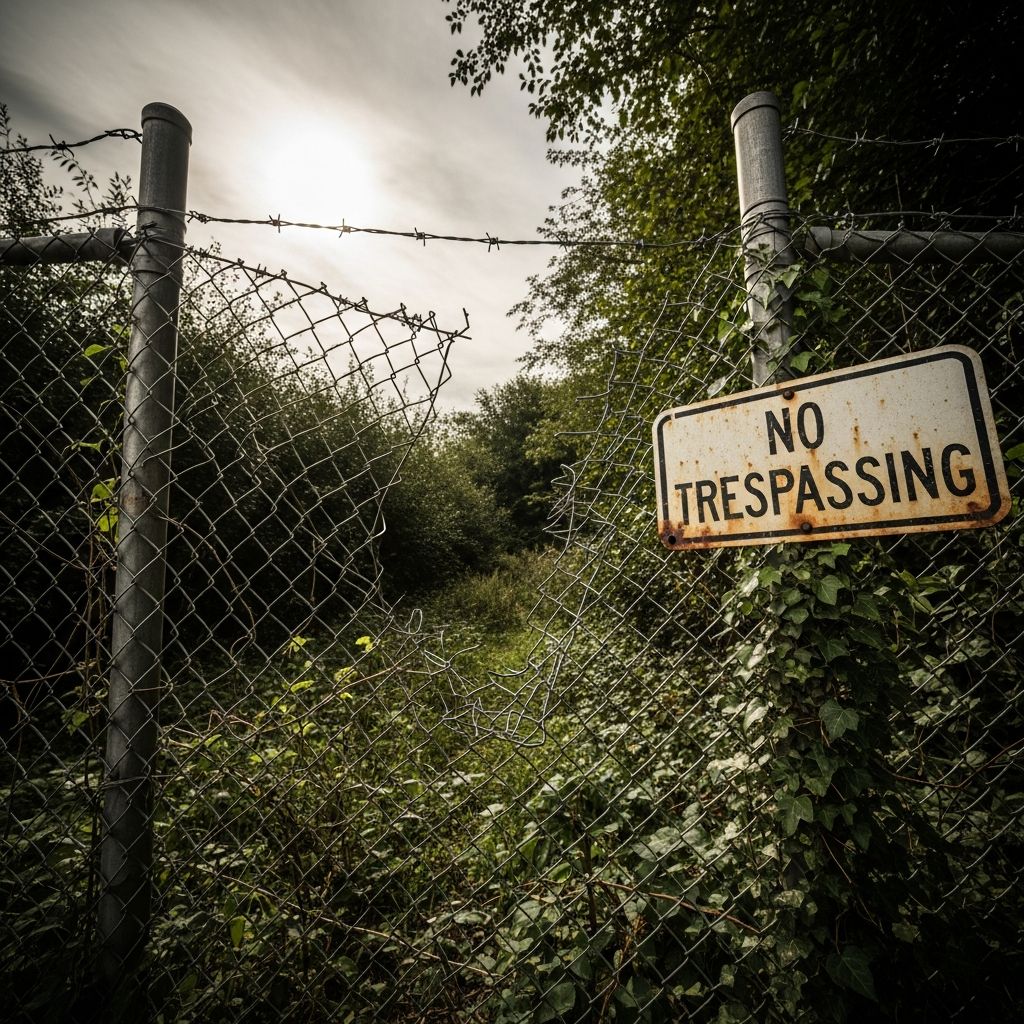
Trespassing law sits at the intersection of property rights, personal safety, and land use regulation. It affects homeowners, landlords, tenants, businesses, and even casual visitors who may unintentionally cross a boundary. Knowing how trespassing is defined, how it is enforced, and what remedies exist can help you protect your property and avoid criminal liability.
What Is Trespassing?
In general legal terms, trespass to land occurs when a person enters or remains on property without the owner’s consent or lawful authority. This can apply to:
- Walking or driving onto land without permission
- Remaining on property after being asked to leave
- Causing an object or another person to enter someone else’s land
Under U.S. law, trespass can arise in both the civil (tort) and criminal context.
- Civil trespass usually involves a lawsuit by the property owner seeking money damages or a court order to stop the intrusion.
- Criminal trespass involves prosecution by the state, with possible fines, probation, or jail time, depending on the statute and the circumstances.
Key Elements of Trespassing
While the exact wording varies by state, most trespass laws share several core elements.
| Element | Typical Legal Requirement | Illustrative Example |
|---|---|---|
| Unauthorized entry or remaining | Person goes onto land or stays there without legal right. | Walking into a fenced backyard after being told not to enter. |
| Ownership or lawful control | Another person has a possessory interest in the property. | A homeowner, tenant, or business leaseholder. |
| Lack of consent | No permission was given, or permission was revoked. | A store bans a customer and they return anyway. |
| Notice or posting (for some statutes) | Property is marked or the person is warned to stay away. | “No Trespassing” signs or verbal instruction to leave. |
Common Types of Trespassing Situations
Because land is used in many different ways, legislatures often create specific trespass rules for different contexts.
- Posted land trespass – Entering or remaining on land clearly marked by signs or specified paint markings indicating that access is prohibited.
- Trespass after notice – Coming onto property after being told directly (verbally or in writing) not to enter, or refusing to leave when instructed to do so.
- Vehicle-related trespass – Driving cars, off-road vehicles, or other motorized equipment on private land without consent or violating rules for public lands.
- Specialized locations – Entering restricted areas such as cultivated farmland, racetrack stables, or closed areas of public parks without authorization.
- Refusal to leave public buildings – Remaining in government buildings, schools, or similar facilities after hours or after being asked to leave may be treated as trespass under specific statutes.
How Property Owners Provide Notice
In many jurisdictions, criminal trespass laws require that the property owner provide clear notice that entry is not allowed before criminal penalties can be imposed.
Typical methods of notice
- Signs stating “No Trespassing” or similar language, placed where an ordinary person would see them when approaching the property.
- Paint markings or other prescribed markings, where state law authorizes specific colors or patterns as an alternative to printed signs.
- Verbal or written warnings delivered directly to an individual, such as telling a customer they are banned from a store or instructing a neighbor not to cross a particular boundary.
When proper posting or notice is missing or unclear, that can become an important defense in a criminal case because the accused may not have had fair warning that entry was prohibited.
Criminal Penalties for Trespassing
Criminal trespass is usually classified as a misdemeanor offense, but the exact penalties depend on the statute, prior convictions, and whether aggravating factors are present.
- Many statutes set a maximum jail term (for example, up to 90 days or more for a first conviction, with higher limits for repeat offenses).
- Fines may range from a few hundred to several thousand dollars, especially for multiple convictions.
- Courts may also impose probation, community service, or stay-away orders from particular properties.
Some states create more serious charges if trespass is combined with other conduct, such as:
- Entering with intent to commit another crime (e.g., theft or vandalism)
- Carrying weapons or firearms on another’s property without authorization
- Interfering with critical infrastructure or government facilities
Civil Trespass: Lawsuits and Damages
A property owner may bring a civil trespass claim even if the state chooses not to file criminal charges. In civil court, the focus is on compensating the owner rather than punishing the trespasser.
When civil trespass may arise
- Neighbors or contractors crossing boundaries during construction or landscaping
- Dumping trash, debris, or hazardous substances on another’s land
- Repeated unauthorized shortcuts across private property
- Utility companies or other entities exceeding the scope of an easement
In a civil trespass case, property owners may seek:
- Compensatory damages for harm such as damaged crops, destroyed landscaping, or reduced property value.
- Nominal damages when there is no substantial financial loss, recognizing the invasion of the owner’s rights.
- Injunctions or court orders to stop ongoing or repeated intrusions.
Intent and Mistakes: Does It Matter?
Courts and legislatures handle intent differently depending on whether the case is criminal or civil and how the specific law is written.
- For many civil trespass claims, it is enough that the person intended to go onto the land, even if they did not know it belonged to someone else or believed they were allowed to be there.
- Criminal trespass statutes may require proof that the person knew or had reason to know they were not allowed on the property (for example, because of visible signs or prior warnings).
A genuine, reasonable belief that you had permission to enter can sometimes serve as a defense in criminal cases, but it is fact-specific and varies by jurisdiction.
Typical Defenses to Trespass Allegations
People accused of trespassing may have several potential defenses, depending on the facts and the applicable statute.
- Lack of notice – Signs were absent, obscured, or not placed where they could reasonably be seen.
- Consent or implied consent – The owner, tenant, or person in control gave permission, or their conduct reasonably suggested that entry was allowed.
- Revocation not communicated – The defendant was never told that prior permission was withdrawn.
- Good-faith mistake – The person reasonably, though mistakenly, believed the land was public or that they had the right to be there.
- Emergency or necessity – Entry was necessary to prevent serious harm, such as seeking shelter or responding to an accident.
Because the details of each statute matter, legal advice from a qualified attorney is important when raising these defenses.
Trespassing and Other Property Law Issues
Trespass disputes often overlap with broader real estate and land use issues, including:
- Boundary and fence disputes – Unclear property lines may lead to repeated, unintentional entry. Surveys or quiet title actions may be necessary to clarify ownership.
- Easements and rights-of-way – Utility companies, neighbors, or the public may have limited legal rights to cross land for specific purposes, complicating trespass claims.
- Adverse possession – Long-term, open, and hostile use of land without permission in some states can eventually lead to a transfer of ownership, although specific legal requirements are strict and vary by jurisdiction.
- Landlord–tenant relationships – Questions can arise about who has authority to invite or exclude visitors and when a landlord’s entry into a rented unit is lawful.
How Property Owners Can Reduce Trespassing Problems
Owners cannot prevent every unwanted visitor, but they can lower risks and strengthen their legal position.
Practical steps for owners
- Use visible, well-maintained signs at entrances and along obvious access points.
- Consider using legally recognized paint markings or similar statutory methods where available.
- Maintain fences, gates, and locks where appropriate to clearly separate private and public areas.
- Document any warnings given to specific individuals, including dates, times, and what was said.
- Contact law enforcement when trespass involves threats, repeated harassment, or potential criminal activity.
- Consult a real estate or property lawyer if trespass is recurring, affects valuable improvements, or involves complex title or easement issues.
How Visitors and Neighbors Can Stay Within the Law
People often find themselves near property boundaries while hiking, driving, hunting, or visiting friends. Misunderstandings can still carry legal consequences.
- Observe all signs, fences, and markings that indicate private property or restricted areas.
- If uncertain about a boundary, ask permission before entering or crossing the land.
- Leave immediately if a property owner, tenant, or authorized security officer tells you to go.
- Avoid assumptions that unused or open land is public; much undeveloped land is privately owned.
- Keep in mind that a trespass conviction can create a criminal record, which may affect employment, housing, or licensing opportunities.
When to Consult a Lawyer
Both property owners and accused trespassers can benefit from legal advice in certain situations.
Owners may need counsel when:
- Trespass is repeated or escalating, especially if accompanied by threats or damage.
- There is significant financial loss, such as destroyed crops, structural damage, or contamination.
- Boundary lines are unclear or disputed, requiring surveys or court action.
- They are considering a civil lawsuit for damages or injunctive relief.
Accused individuals may need counsel when:
- They receive a criminal citation or arrest for trespass.
- They believe they had permission or a legal right to be on the property.
- The alleged trespass is linked to other potential charges, such as theft or vandalism.
- They are concerned about long-term impacts on their record, employment, or immigration status.
Frequently Asked Questions About Trespassing
Q1: Is it trespassing if I didn’t see any signs?
A: Whether it is trespassing without visible signs depends on state law and the circumstances. Many criminal trespass statutes require clear posting or notice before a person can be convicted, but civil liability may still exist even if the property was not marked, particularly if the land was clearly private or fenced.
Q2: Can a property owner sue me even if I caused no damage?
A: Yes. In civil trespass actions, courts may award nominal damages to recognize the violation of property rights even when there is no measurable financial loss.
Q3: Does it count as trespassing if a delivery driver or meter reader comes onto my property?
A: Generally, people performing ordinary tasks that society expects—such as postal carriers, delivery drivers, or utility workers—are treated as having implied consent to approach homes and buildings, unless the owner has clearly revoked permission or blocked access. The scope of that implied consent is limited and can vary by jurisdiction.
Q4: What if I cross a property line by mistake while hiking or hunting?
A: Honest mistakes about property boundaries are common. Some criminal trespass laws consider whether the person knew or should have known entry was prohibited, so a reasonable mistake may sometimes be a defense. However, you may still be asked to leave immediately, and repeated or reckless disregard for boundaries can increase legal risk.
Q5: Can police enter private property without it being trespass?
A: Law enforcement officers have certain powers to enter property under the U.S. Constitution and state laws—for example, with a valid warrant, in emergencies, or under recognized exceptions such as hot pursuit. Those entries are typically treated as authorized and do not constitute trespass when conducted lawfully.
References
- Maryland Criminal Law § 6-402: Trespass on Posted Property — Maryland General Assembly / Justia. 2024. https://law.justia.com/codes/maryland/criminal-law/title-6/subtitle-4/section-6-402/
- Maryland Criminal Law Title 6, Subtitle 4: Trespass — Maryland General Assembly / Justia. 2024. https://law.justia.com/codes/maryland/criminal-law/title-6/subtitle-4/
- Trespass (Wex Legal Dictionary) — Legal Information Institute, Cornell Law School. 2023-05-01. https://www.law.cornell.edu/wex/trespass
- Maryland Trespassing Laws: What You Need to Know — Southern Maryland Law (somdcriminaldefense.com). 2023-07-12. https://somdcriminaldefense.com/understanding-trespassing-laws-in-maryland/
- CR 6-403: Trespass Private Property — Maryland Trial Lawyer / Silverman, Thompson, Slutkin & White. 2022-11-03. https://www.mdtriallawyer.com/cr-6-403-trespass-private-property.html
- Comprehensive Guide to Trespass Laws in Maryland — FrizWoods LLC. 2023-09-15. https://frizwoods.com/blog/maryland-trespass-laws
Similar Articles








Read full bio of medha deb


