
Understanding Traffic Law: Rights, Duties, and Consequences
Learn how traffic laws, tickets, and violations work so you can protect your rights, stay safe, and avoid costly penalties.
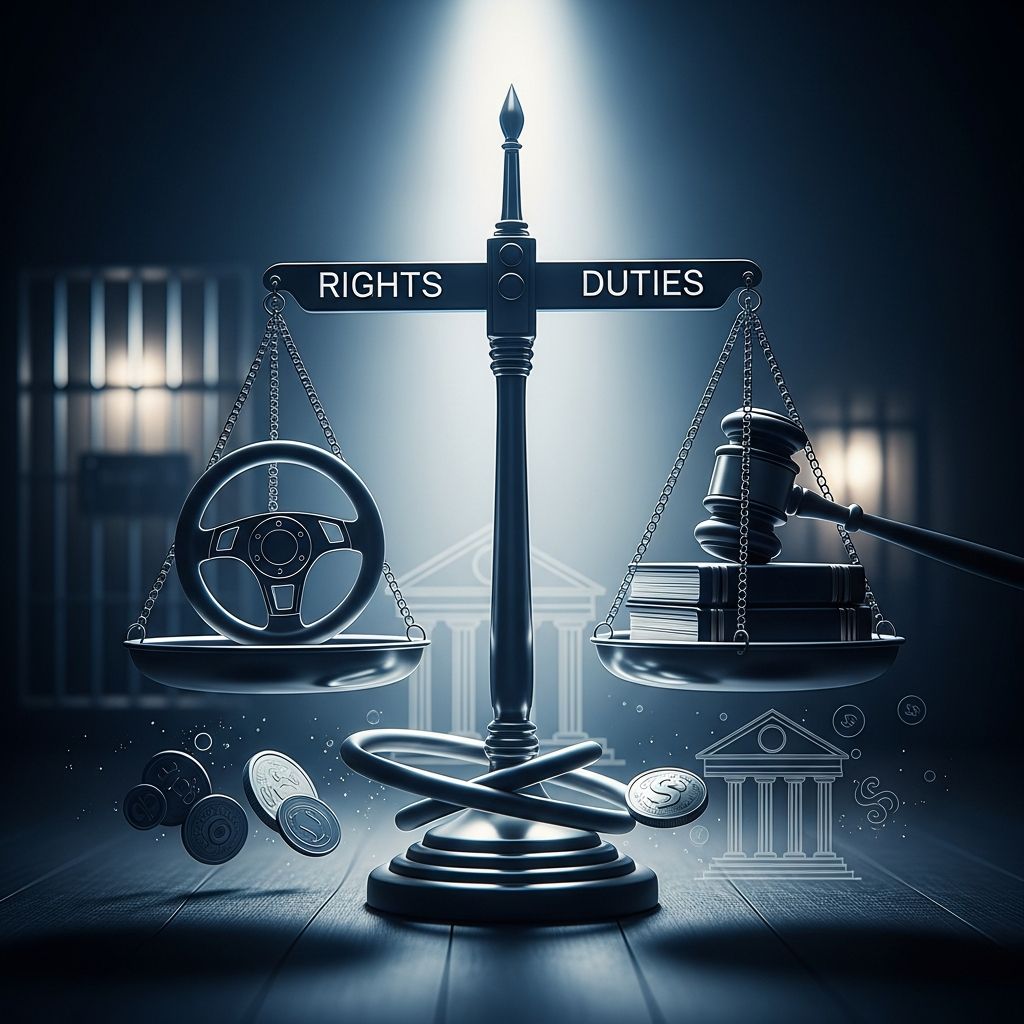
Traffic laws shape everything that happens on public roads, from how fast you may drive to what happens after a crash. Understanding these rules is essential not only for safety but also for protecting your legal rights and avoiding expensive penalties.
This guide explains how traffic laws work, the difference between types of violations, what happens when you get a ticket, and when it makes sense to speak with a lawyer.
1. Why Traffic Laws Exist and Who Creates Them
Traffic laws are designed to reduce crashes, protect road users, and keep traffic flowing efficiently. In the United States, most day-to-day driving rules are written and enforced by individual states, counties, and cities, not the federal government.
- State legislatures pass vehicle and traffic codes that govern licensing, speed limits, impaired driving, and many common rules of the road.
- Local governments may set additional rules for parking, local speed limits, and use of certain roads.
- Federal agencies, such as the National Highway Traffic Safety Administration (NHTSA), create nationwide safety standards for vehicles, equipment, and some commercial driving activities.
Because states control most road rules, the details differ, but the overall framework is similar across the country.
2. Core Rules Every Driver Is Expected to Know
Although each jurisdiction has its own code, many foundational rules are nearly universal in the United States.
2.1 Speed Limits and Safe Speed
Speed limits are set to balance safety with efficient travel. States and local governments set maximum speeds for each road, and these limits can vary widely from urban streets to rural highways.
- Driving faster than the posted limit is a violation in every state.
- Most states also require driving at a speed that is reasonable and prudent for conditions, even if you are below the posted limit (for example, in heavy rain or fog).
- Some states treat very high speeds as reckless driving, which is typically a criminal offense.
2.2 Right-of-Way and Intersections
Right-of-way rules determine who goes first at intersections and in merging situations. These rules prevent confusion and collisions when drivers, cyclists, and pedestrians meet.
- At many intersections, traffic signals or signs (stop, yield, four-way stops) dictate who must stop or yield.
- At uncontrolled intersections, many states require drivers to yield to traffic on the right.
- Drivers must also yield to pedestrians in crosswalks and to emergency vehicles using lights and sirens.
2.3 Lane Use, Passing, and Overtaking
Lane rules specify which side of the road you must use and when you may change lanes or pass another vehicle.
- Traffic generally keeps to the right-hand side in the United States.
- Most states expect slower traffic to keep right and use the left lane primarily for passing on multi-lane roads.
- Solid center lines usually mean no passing; broken lines often allow passing if it is safe and legal.
- Signaling before changing lanes or turning is required by law in all states.
2.4 Seat Belts, Child Restraints, and Vehicle Safety
Seat belt laws and child restraint rules are among the most important safety regulations and apply to drivers and passengers alike.
- Every state except one (New Hampshire, for adults) has some form of mandatory seat belt law.
- Most states treat failure to wear a seat belt as either a primary offense (you can be stopped solely for that) or a secondary offense (ticket only if stopped for something else).
- Child occupants are subject to detailed requirements based on age, height, and weight for car seats and booster seats, often referencing federal safety standards.
2.5 Impaired, Distracted, and Dangerous Driving
Dangerous behaviors behind the wheel are among the most heavily penalized violations.
- Driving under the influence (DUI) or driving while intoxicated (DWI) is illegal in every state, with blood alcohol concentration limits and drug-impairment rules codified in state law.
- Distracted driving laws, including bans or restrictions on handheld phone use, now exist in many states and continue to evolve.
- Reckless driving statutes address egregiously unsafe behavior such as extreme speeding, racing, or intentionally ignoring safety rules.
3. Types of Traffic Violations and Their Consequences
Not all traffic violations carry the same weight. The legal consequences depend on the classification of the offense, your driving history, and the harm caused.
| Type of Violation | Typical Examples | Common Consequences |
|---|---|---|
| Infractions | Minor speeding, stop-sign violations, non-moving offenses like expired registration | Fines, license points, traffic school, higher insurance premiums |
| Misdemeanors | DUI, reckless driving, hit-and-run with property damage | Higher fines, possible jail, probation, license suspension |
| Felonies | DUI causing serious injury or death, hit-and-run with serious injury, vehicular homicide | Substantial prison time, long-term or permanent license loss, heavy fines |
3.1 Moving vs. Non-Moving Violations
States often distinguish between violations that occur while the vehicle is moving and those that do not.
- Moving violations generally involve how you operate the vehicle (speeding, failing to yield, running red lights).
- Non-moving violations usually relate to paperwork or parking (expired registration, parking in a no-parking zone).
Moving violations are more likely to add points to your record and raise insurance costs, while non-moving violations tend to involve fines only.
3.2 Points on Your License and Insurance Impact
Many states use a point system to track driving behavior. Each qualifying violation adds a specific number of points to your driving record.
- Accumulating too many points within a set time period can lead to license suspension or other administrative penalties.
- Insurance companies frequently review your driving record and may increase premiums or decline coverage after serious or repeated violations.
- Points often remain on your record for a fixed number of years, depending on state law and the seriousness of the offense.
4. Traffic Stops, Tickets, and Your Rights
Being pulled over can be stressful, but understanding the process helps you make informed decisions and avoid making your legal situation worse.
4.1 What Happens During a Typical Traffic Stop
Officers usually initiate a stop when they believe a traffic law has been violated or there is another lawful reason to investigate.
- The officer signals you to pull over using lights or sirens.
- You are typically asked for your driver’s license, proof of insurance, and registration.
- The officer may explain the reason for the stop and decide whether to issue a warning or a citation.
In some situations, an officer may expand the stop, conduct field sobriety tests, or search your vehicle, but only under specific legal justifications that vary according to constitutional and state law.
4.2 Understanding a Traffic Ticket
A traffic ticket (citation) is a formal notice that the officer believes you violated a law and that you must respond by a certain deadline.
- The ticket will list the alleged violation, the relevant statute or code section, and the date, time, and place of the offense.
- It will also provide instructions for responding, such as paying, requesting a hearing, or appearing in court.
- Failing to respond can result in additional penalties, including warrants, default judgments, or license suspension, depending on state law.
4.3 Options After Receiving a Ticket
How you respond to a ticket can affect points, fines, and your insurance premiums.
- Plead guilty and pay: Fastest option, but usually results in a conviction on your record.
- Traffic school or diversion program: In some jurisdictions, completion of an approved course may reduce or eliminate points.
- Contest the ticket: You may plead not guilty and request a hearing, present evidence, and question the officer, subject to local rules.
- Negotiate a plea: In some courts, you or your attorney may be able to negotiate a reduced charge or lower penalty.
5. Special Topics: Crashes, Commercial Drivers, and Serious Offenses
Certain situations involve more complex legal rules and higher stakes, especially when injuries, commercial vehicles, or criminal conduct are involved.
5.1 After a Traffic Crash
Every state imposes duties on drivers involved in collisions, such as stopping at the scene and exchanging information.
- Leaving the scene of a crash involving injury or major property damage can lead to hit-and-run charges, often a criminal offense.
- Many states require police reports for crashes involving injury, death, or high property damage thresholds.
- Crash reports and citations can influence civil lawsuits and insurance claims that follow.
5.2 Commercial Drivers and Stricter Standards
Drivers of large trucks, buses, and other commercial vehicles are often subject to stricter rules and lower tolerance for violations.
- Commercial driver’s licenses (CDLs) are regulated in part by federal law, including disqualification rules for certain violations.
- DUI thresholds, hours-of-service rules, and inspection requirements may be more stringent than for non-commercial drivers.
- Violations can jeopardize a driver’s livelihood, not just their private driving privileges.
5.3 When Traffic Offenses Become Crimes
Some conduct on the road crosses the line from civil infractions into criminal offenses.
- Criminal DUI/DWI typically involves impairment above a statutory limit or refusal of lawful testing.
- Hit-and-run with injury or death is a serious crime in every jurisdiction.
- Vehicular homicide or manslaughter charges may apply when a driver’s unlawful or reckless conduct results in a fatality.
Because penalties for these offenses can include jail, long-term license loss, and permanent criminal records, prompt legal advice is especially important.
6. Practical Tips to Stay Compliant and Protect Yourself
Good habits can dramatically reduce the risk of traffic stops, crashes, and costly legal issues.
- Regularly check your documents (license, registration, insurance) to ensure they are valid and accessible.
- Follow posted speed limits and adjust speed for weather, visibility, and traffic conditions.
- Always wear a seat belt and secure children in appropriate car seats or boosters.
- Avoid phone use and other distractions; use hands-free options only where permitted.
- Never drive after excessive drinking or drug use; plan for a sober ride in advance.
- Consider defensive driving courses to refresh your knowledge and possibly qualify for insurance discounts.
Frequently Asked Questions About Traffic Law
Q1: Are traffic laws the same in every state?
No. Each state has its own vehicle and traffic code, so details like speed limits, point systems, and penalties vary. However, many core rules—such as keeping right, obeying signs, and prohibiting drunk driving—are broadly similar across the country.
Q2: Will a minor traffic ticket go on my criminal record?
Most routine traffic infractions are handled as civil or administrative matters, not crimes, and do not appear on a traditional criminal record. More serious offenses, such as DUI or reckless driving, are often misdemeanors or felonies and can become part of your criminal history, depending on state law.
Q3: How long do points from a violation stay on my license?
The time period depends on your state and the type of offense. Some states keep minor speeding points for a few years, while serious violations can have longer-lasting effects. Check your state’s driver licensing authority or vehicle code for specific rules.
Q4: Do I need a lawyer for a traffic ticket?
For minor infractions, many people choose to handle tickets themselves. If you face high fines, risk of license suspension, a commercial license issue, or any criminal charge (such as DUI or reckless driving), consulting a traffic or criminal defense lawyer can help you understand your options and potential defenses.
Q5: Can a traffic violation affect my insurance rates?
Yes. Many insurers review your driving record and may raise your premiums after moving violations, especially repeated speeding, at-fault crashes, or serious offenses. Completing a defensive driving course or going violation-free for a period may help over time, depending on your insurer’s policies.
References
- Traffic law in the United States — Various state sources summarized. 2023-06-01. https://en.wikipedia.org/wiki/Traffic_law_in_the_United_States
- Common traffic laws — Progressive Casualty Insurance Company. 2022-08-15. https://lifelanes.progressive.com/common-traffic-laws/
- Chapter 3. Traffic Laws and Regulations — Federal Highway Administration (FHWA). 2005-01-01. https://ops.fhwa.dot.gov/publications/fhwahop20013/ch3.htm
- NHTSA Statutes, Regulations, Authorities & FMVSS — National Highway Traffic Safety Administration (NHTSA). 2024-03-10. https://www.nhtsa.gov/laws-regulations
- Illinois Vehicle Code (625 ILCS 5/) — Illinois General Assembly. 2024-01-01. https://www.ilga.gov/legislation/ilcs/ilcs3.asp?ActID=1815&ChapterID=49
Similar Articles








Read full bio of Sneha Tete


