
DUI Arrest Process: What To Expect And Protect Your Rights Now
A detailed, plain‑language guide to what happens during and after a DUI arrest, from the traffic stop to court and license hearings.
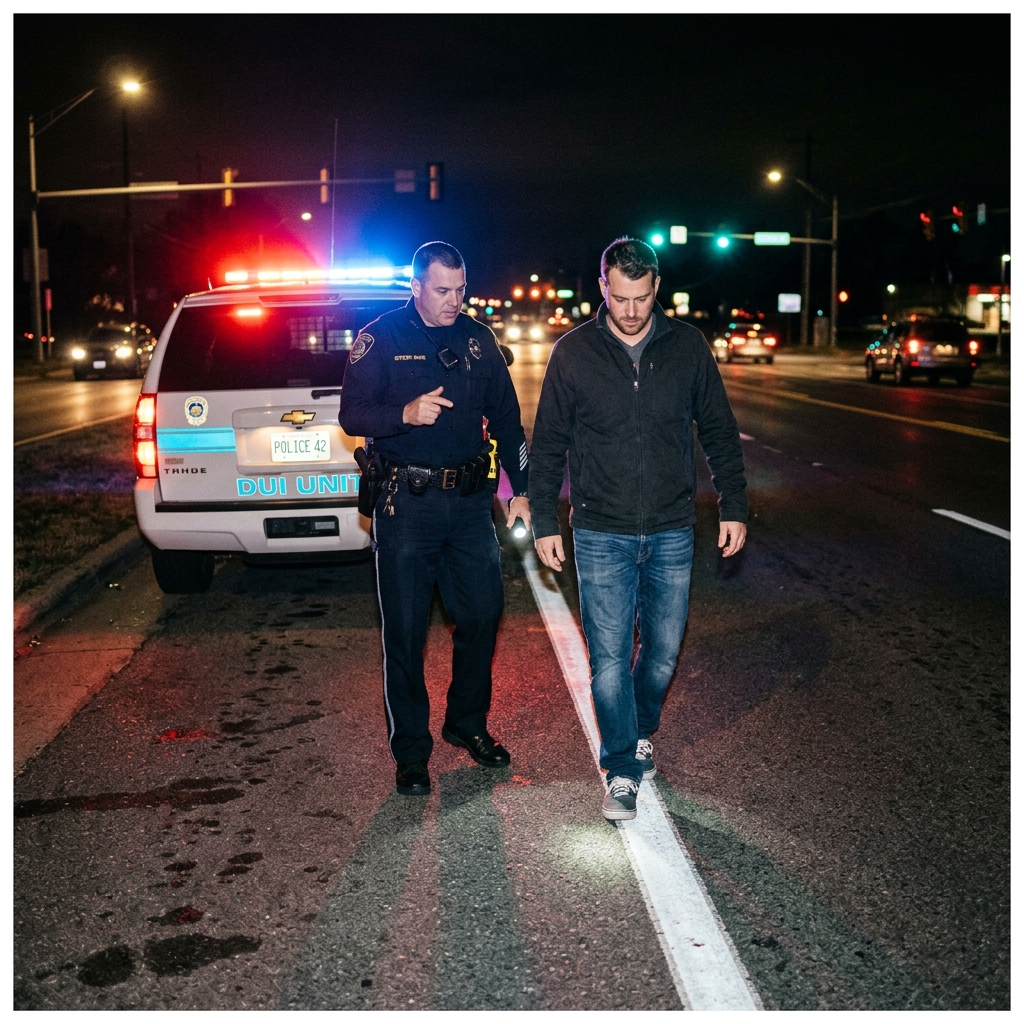
Being arrested for driving under the influence (DUI) or driving while intoxicated (DWI) is a serious event that triggers both criminal and administrative proceedings. This guide explains the typical stages of a DUI case, the decisions you may face, and the rights you need to understand to navigate the process more effectively.
1. The Traffic Stop: How a DUI Case Usually Begins
Most DUI cases begin when a law enforcement officer observes something that suggests a driver may be impaired or violating traffic laws. The officer needs at least a reasonable basis to conduct a traffic stop, and stronger evidence—called probable cause—to make an arrest.
1.1 Common Reasons Drivers Are Stopped
Officers watch for behavior and conditions that can indicate alcohol or drug impairment. Typical reasons for a stop include:
- Weaving within a lane or drifting across lane markers
- Driving significantly below or above the speed limit
- Failing to obey traffic signals or signs
- Sudden braking or abrupt turns without signaling
- Driving at night without headlights
Once the vehicle is stopped, the officer will approach and begin assessing the driver’s condition.
1.2 Initial Contact and Observations
During the first minutes of a stop, officers look for signs of intoxication or impairment, such as:
- Odor of alcohol or marijuana from the vehicle or driver
- Bloodshot, glassy, or droopy eyes
- Slurred or slow speech
- Difficulty producing license and registration
- Confusion about location, time, or recent events
These observations contribute to whether the officer has enough evidence to request further testing and, ultimately, to arrest a driver.
2. Field Sobriety and Preliminary Tests
If the officer suspects impairment, they may ask the driver to perform field sobriety tests and sometimes a preliminary breath test at the roadside.
2.1 Typical Field Sobriety Tests
Standardized field sobriety tests are designed to measure balance, coordination, and the ability to follow instructions. Common tests include:
- Walk-and-turn: walking heel-to-toe along a straight line, turning, and returning
- One-leg stand: standing on one leg while counting aloud
- Horizontal gaze nystagmus (HGN): tracking a moving object with the eyes to detect involuntary jerking
Performance on these tests becomes part of the officer’s probable cause determination and may later be used as evidence in court.
2.2 Preliminary Breath Testing
In many jurisdictions, officers may use a small roadside device to estimate a driver’s blood alcohol concentration (BAC). This preliminary test helps confirm whether alcohol is involved and whether the driver exceeds the legal limit.
In most states, the per se legal limit for adult drivers is 0.08% BAC, meaning that driving at or above this level can lead to automatic DUI charges regardless of apparent impairment.
2.3 Rights and Strategic Choices at the Roadside
Drivers do retain important rights during this stage. For example, they generally have the right to remain silent beyond providing basic identification information, such as license and registration. They may also decline optional field sobriety testing in some jurisdictions, although declining can have practical consequences and may be viewed negatively by the officer.
Because laws differ by state, understanding your local rules—and consulting a qualified lawyer after any arrest—is critical.
3. The Arrest Decision and Chemical Testing
Once an officer believes there is probable cause to think the driver is impaired, they can proceed with a DUI arrest. Probable cause typically stems from driving behavior, observed signs of intoxication, field test results, and preliminary BAC readings.
3.1 Chemical Tests: Breath, Blood, and Urine
After arrest or as part of the process, officers often request an official chemical test to measure BAC or the presence of drugs. Common tests include:
- Breath test: using a calibrated device at the station or in a police vehicle
- Blood test: drawing a sample at a hospital or clinic
- Urine test: less common, used primarily for certain drug investigations
Most states have “implied consent” laws, meaning drivers who operate a vehicle automatically agree to submit to chemical testing when lawfully arrested for DUI. Refusing can lead to automatic license suspension or other penalties, even if there is no criminal conviction.
3.2 Immediate License Consequences
In many jurisdictions, failing a chemical test or refusing to take one triggers swift administrative action against your driver’s license. For instance, some states impose an automatic suspension of up to a year if you refuse a test or register a BAC at or above 0.08%.
Drivers are usually given a short window—often 10 to 30 days—to request an administrative hearing to contest the license suspension. If no hearing is requested, the suspension often goes into effect automatically.
4. Booking, Detention, and Release
After a DUI arrest, the driver is typically transported to a local jail or police station for booking and processing.
4.1 What Happens During Booking
Booking formally records the arrest in law enforcement systems. Typical steps include:
- Recording personal information (name, date of birth, address)
- Taking fingerprints
- Capturing a booking photo (mugshot)
- Documenting the alleged offense and circumstances
These records become part of your criminal history and can be accessed by courts and, in many cases, by the public.
4.2 Detention, Bail, and Release Options
After booking, the driver may be held in custody until they are released on bail or on their own recognizance (a promise to appear in court). The decision depends on factors such as prior record, the severity of the allegations, and local policies.
In many areas, a bond amount is set and the person can arrange payment through a bail bond company or personal funds. For first-time, non-injury cases, release may occur relatively quickly, but more serious incidents can result in longer detention.
5. Administrative License Proceedings
DUI arrests often trigger a separate, civil process concerning your driving privileges, distinct from the criminal case in court. This is sometimes handled by a Department of Motor Vehicles (DMV) or a similar agency.
5.1 Requesting a License Suspension Hearing
When you are notified of an impending suspension, you typically must act quickly to preserve your rights. Many states require a written request for an administrative hearing within a specific deadline, such as 10, 30, or another set number of days after arrest.
At this hearing, the agency reviews whether the officer followed procedures and whether the test results or refusal justify suspension. Drivers may be represented by an attorney and can challenge the evidence.
5.2 Possible Outcomes for Your License
The administrative authority can uphold the suspension, reduce its length, or occasionally rescind it, depending on the circumstances and proof presented.
Even if a criminal court later dismisses or reduces the DUI charge, the administrative decision may remain in effect, because the two processes are legally separate.
6. The Criminal Court Process
The criminal side of a DUI case focuses on whether the state can prove you committed an offense beyond a reasonable doubt. This process typically includes an initial court appearance, pretrial motions, potential plea negotiations, and possibly a trial.
6.1 First Court Appearance: Arraignment
The arraignment is usually the first formal court hearing after a DUI arrest. The judge informs you of the charges, advises you of your rights, and asks how you plead.
Common plea options include:
- Guilty: admitting the offense, which can lead directly to sentencing
- No contest (nolo contendere): not contesting the charge, treated similarly to a guilty plea for sentencing
- Not guilty: disputing the allegations and continuing the case
Pleading not guilty typically leads to additional hearings, legal motions, and potential trial.
6.2 Pretrial Motions and Evidence Challenges
Before trial, defense attorneys often file motions contesting aspects of the case. Common issues include:
- Whether the traffic stop was lawful
- Whether field sobriety or chemical tests were conducted properly
- Whether statements were obtained in violation of constitutional rights
If the court agrees that evidence was obtained improperly, it may be excluded from trial, which can significantly affect the outcome.
6.3 Plea Negotiations
Many DUI cases resolve through negotiated pleas rather than trials. Prosecutors and defense attorneys may discuss reducing charges, recommending specific sentences, or amending the case in other ways.
In some instances, a DUI charge can be reduced to a lesser offense, such as reckless driving, depending on state law and case facts.
6.4 Trial and Burden of Proof
If no agreement is reached, the case can proceed to trial before a judge or jury. The prosecution must prove that you were driving under the influence of alcohol or drugs, or with a BAC at or above the legal limit, beyond a reasonable doubt.
The defense may question test results, challenge officer observations, present alternative explanations for behavior or appearance, or offer witnesses who contradict the state’s case. A verdict of not guilty ends the criminal case and avoids a conviction on that charge.
7. Penalties and Long-Term Impact
The consequences of a DUI conviction vary widely but commonly include fines, license restrictions, and potential jail time. Penalties often increase when there are prior DUI convictions, high BAC levels, or injuries.
7.1 Typical DUI Penalties
| Offense Level | Common Penalties (Example Range) |
|---|---|
| First DUI | Fines, short jail term or probation, mandatory education or treatment, license suspension, community service |
| Second DUI | Higher fines, longer suspension, longer jail terms, extended probation, stricter conditions (such as ignition interlock devices) |
| Third or more DUI | Substantial fines, lengthy suspension or revocation, significant jail or prison exposure, possible designation as a habitual offender |
Exact penalty ranges differ by jurisdiction and depend on additional factors, such as whether there was an accident, injury, or minor in the vehicle.
7.2 Collateral Consequences
Beyond criminal sentencing and license actions, a DUI can influence many aspects of life, including:
- Higher auto insurance premiums or loss of coverage
- Employment implications, especially for jobs requiring driving
- Professional licensing issues in regulated fields
- Travel restrictions in certain countries that consider criminal records
These indirect effects often last longer than the formal sentence and make understanding the process—and seeking advice—especially important.
8. Protecting Your Rights and Making Informed Decisions
Because DUI law combines complex rules about searches, testing, administrative hearings, and criminal court, people facing a DUI arrest benefit from taking early, informed steps.
8.1 Practical Actions After a DUI Arrest
While specific strategies depend on your jurisdiction and circumstances, common practical steps include:
- Carefully reading all paperwork, including citations and license suspension notices
- Marking deadlines for administrative hearings and court dates
- Consulting a qualified DUI or criminal defense attorney as soon as possible
- Preserving any evidence or contact information for potential witnesses
- Avoiding public discussion of the case, including on social media
Legal counsel can help you evaluate whether to challenge the stop, seek a plea negotiation, go to trial, or pursue other options.
8.2 Understanding Public Records and Privacy
DUI arrest records are often public, meaning they can be accessed by employers, landlords, and others. Importantly, an arrest record does not necessarily mean a conviction; it only shows that a person was arrested and processed.
In some jurisdictions, individuals may later be able to seek expungement or record sealing under specific conditions, though eligibility rules vary widely and may not apply to all DUI cases.
9. Frequently Asked Questions About DUI Arrests
9.1 Is a DUI always based on a 0.08% BAC?
No. While 0.08% BAC is a common per se limit for adult drivers, some states can charge drivers with lower BAC levels if they are considered “less safe” or impaired based on behavior and evidence. Additionally, stricter limits often apply to commercial drivers and drivers under the legal drinking age.
9.2 Can I refuse field sobriety tests?
In many states, field sobriety tests are voluntary; however, refusing them may prompt the officer to rely on other observations or request chemical testing. The consequences of refusal differ by jurisdiction, so it is important to understand local law and seek legal advice.
9.3 What happens if I refuse a breath or blood test?
Under implied consent laws, refusing a chemical test can lead to automatic license suspension for a specified period, even if you are never convicted of DUI. Some states also allow the refusal to be used as evidence in court. The exact penalties depend on state law and prior history.
9.4 Do I need a lawyer for a first-time DUI?
While you may have the option to self-represent, DUI law is complex and carries consequences that can extend beyond the immediate case. Consulting a lawyer experienced in DUI defense can help you understand your rights, evaluate evidence, and decide whether to negotiate or go to trial.
9.5 Will a DUI always result in jail time?
Not necessarily. Some first-time, non-injury DUI convictions may result in fines, probation, community service, or education programs instead of extended jail time. However, many states require at least a short period of incarceration, and penalties increase for repeat offenses or cases involving injuries.
References
- Impaired Driving — National Highway Traffic Safety Administration (NHTSA). 2024-03-01. https://www.nhtsa.gov/risky-driving/impaired-driving
- Alcohol and Drug-Impaired Driving — Centers for Disease Control and Prevention (CDC). 2023-10-05. https://www.cdc.gov/transportationsafety/impaired_driving/index.html
- Georgia DUI Laws and Penalties — Georgia Governor’s Office of Highway Safety. 2023-06-15. https://www.gahighwaysafety.org/georgia-dui-laws-and-penalties/
- The Legal Process After a DUI Arrest: What You Need to Know — Houlon, Berman & Karp, P.A. 2022-11-10. https://www.houlonberman.com/blog/the-legal-process-after-a-dui-arrest-what-you-need-to-know/
- Understanding the Georgia DUI Process — Hines Law. 2023-04-20. https://hineslaw.org/blog/understanding-the-georgia-dui-process/
- What Happens After a DUI Arrest in Georgia — Willis Law Firm. 2026-01-19. https://www.willislawga.com/2026/01/19/what-happens-after-a-dui-arrest-in-georgia/
- What is the DUI Process in Georgia? — DUI Hall County. 2023-02-14. https://www.duihallcounty.com/what-is-the-dui-process-in-georgia
Similar Articles








Read full bio of Sneha Tete




