
California Security Deposit Refund Rules
Understand how California handles deposit refunds, deductions, deadlines, and tenant remedies.
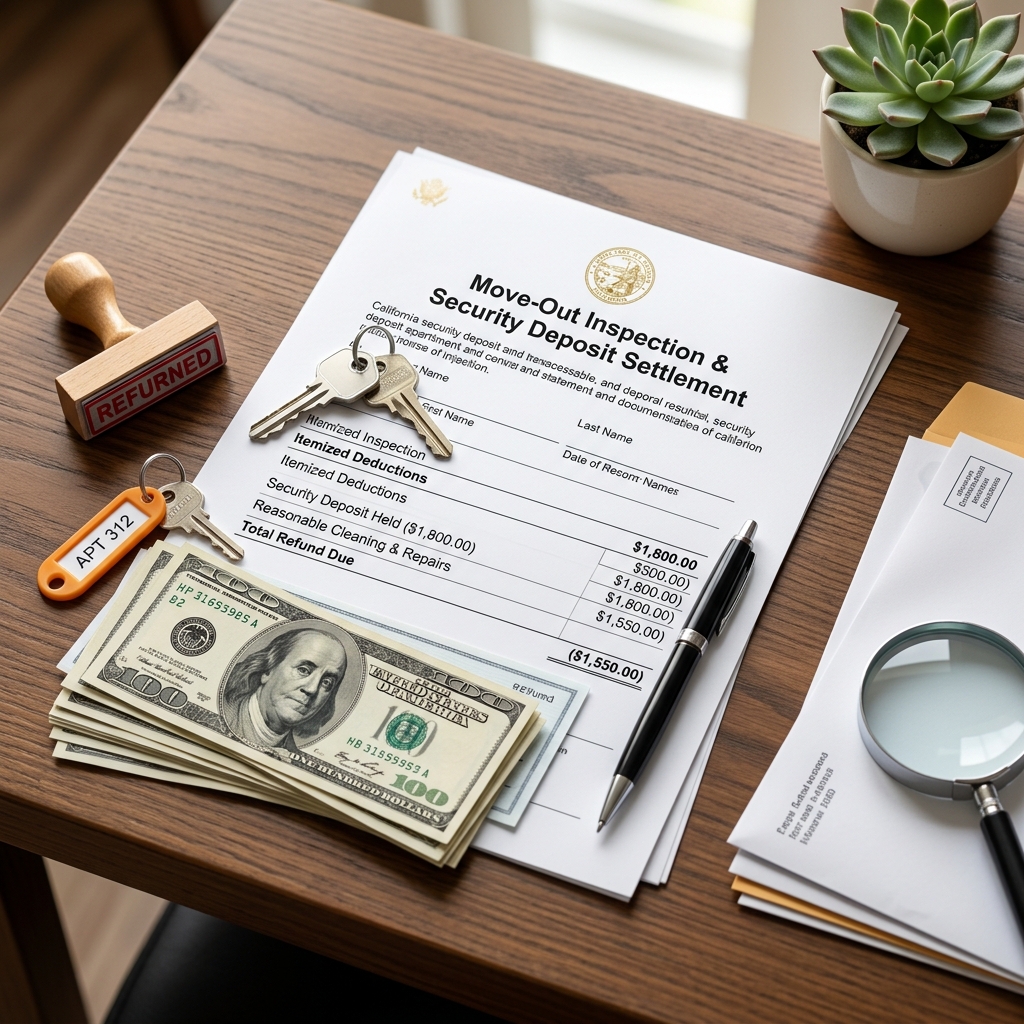
How California Handles Security Deposit Refunds
In California, a security deposit is not meant to be extra rent or a punishment fund. It is money held by the landlord to cover specific losses that may occur during a tenancy, such as unpaid rent, damage beyond ordinary wear and tear, or certain cleaning costs. When the tenancy ends, the landlord must either return the deposit or explain in writing why part of it is being kept.
The state’s rules are designed to create a clear end-of-tenancy process for both sides. Tenants are protected from vague deductions, while landlords are allowed to recover legitimate costs if they follow the legal steps and keep proper records.
When the Refund Deadline Starts
The refund clock generally begins after the tenant moves out and returns possession of the unit, including the keys. Once that happens, the landlord has a short period to either send the full deposit back or provide an itemized statement showing deductions.
That deadline is important because it applies to weekends and holidays as well. A landlord does not get extra time simply because the 21st day falls on a nonbusiness day.
| Event | Landlord’s deadline | What must happen |
|---|---|---|
| Tenant vacates and returns keys | Within 21 calendar days | Return the full deposit or send an itemized deduction statement |
| Repairs are still unfinished | Within 21 calendar days | Provide a good-faith estimate if allowed, then follow up with final receipts |
| Work is completed after the deadline | After completion | Send the final accounting and remaining balance promptly |
What a Landlord Can Legally Deduct
California law does not let a landlord keep a deposit for just any reason. Deductions must fit within recognized categories and must be tied to actual costs. The most common lawful deductions are unpaid rent, cleaning needed to return the unit to the same level of cleanliness it had at move-in, and repairs for damage caused by the tenant or guests beyond ordinary wear and tear.
Landlords may also deduct for replacing or restoring items such as furniture or other personal property if the rental agreement allowed the landlord to charge for those items and the loss was not caused by normal use. The key point is that the deduction must be connected to a real expense and not simply to the fact that the tenant moved out.
- Unpaid rent that remains due at move-out
- Cleaning necessary to restore the unit to its original move-in condition, minus ordinary wear
- Repairs for tenant-caused damage that goes beyond normal use
- Restoration or replacement of covered personal property when permitted by the lease
Documentation Landlords Must Provide
If any portion of the deposit is withheld, the landlord must give the tenant an itemized statement that identifies each deduction and explains the reason for it. For larger charges, the landlord must also include supporting invoices or receipts. In California, the threshold for attaching receipts is generally more than $125 for a particular repair or cleaning item.
If the repair work was done by the landlord or an employee rather than a vendor, the accounting should describe the work performed, the time spent, and the hourly rate charged. Those amounts must be reasonable. This requirement prevents landlords from inflating charges by using vague descriptions or unsupported labor estimates.
Good documentation is often the deciding factor in a deposit dispute. A landlord who cannot show what was done, who did it, and what it cost may have difficulty defending the deduction later.
How Move-In Records Affect Move-Out Disputes
Deposit disputes are easier to resolve when there is a clear comparison between the condition of the unit at the beginning and the end of the tenancy. Photos, inspection checklists, emails, and the lease itself may all help show whether a charge is fair. If the unit was already damaged or dirty when the tenant moved in, the landlord generally should not use the deposit to repair preexisting problems.
Tenants who keep records from move-in and move-out are often better positioned to challenge improper deductions. A landlord’s claims about damage are much stronger when they are backed by dated photos and written notes from both parties.
Forwarding Addresses and Delivery of the Refund
To receive the deposit and any required statement, a tenant should give the landlord a forwarding address in writing. Without an address, the landlord may not know where to send the final accounting or the remaining balance. A simple written notice is usually enough, but keeping a copy is important in case a dispute arises later.
California also allows electronic refund methods in some situations. Under newer rules, if rent or the original security deposit was paid electronically, the refund may need to be issued electronically unless both sides agree in writing to a different method. That change is meant to match the way the tenant originally paid and reduce delays in returning funds.
What Happens If the Landlord Misses the Deadline
When a landlord fails to send the refund or the itemized statement on time, the tenant may have a strong claim for the full deposit. Missing the deadline does not automatically guarantee extra damages in every case, but it can seriously weaken the landlord’s position, especially if the delay appears careless or unjustified.
If the landlord keeps money without a valid legal basis, the tenant can dispute the deductions and may sue to recover the amount wrongfully withheld. In some cases, bad-faith conduct can lead to additional statutory damages. The exact result depends on the facts, the evidence, and whether the landlord can prove the deductions were proper.
Steps a Tenant Can Take to Recover the Deposit
If the refund does not arrive, the first step is usually to write a clear demand letter. The letter should state the amount owed, reference the move-out date, explain why the deductions are disputed, and request immediate payment. A tenant should keep a copy of the letter and proof that it was sent.
If the landlord still does not resolve the issue, the tenant may consider small claims court or another dispute-resolution process. The best choice depends on the amount at stake and the evidence available. Tenants often benefit from bringing photos, the lease, inspection notes, receipts, and copies of all correspondence.
- Send a written demand for the deposit and keep a copy
- Gather move-in and move-out photos, texts, and inspection records
- Compare the lease terms with the landlord’s stated deductions
- Consider small claims court if the landlord refuses to pay
How Landlords Can Reduce Deposit Disputes
Landlords usually avoid conflict when they create a transparent process from the beginning. A careful move-in inspection, clear lease language, and prompt communication at move-out can prevent many disagreements. The strongest files include dated photos, signed checklists, vendor receipts, and timely written notices.
It also helps to separate normal wear and tear from actual damage. Faded paint, minor scuffs, or worn carpet from ordinary use are generally not the same as broken fixtures, large stains, holes, or missing items. A deposit should not become a catch-all reimbursement tool for normal aging of the property.
Common Misunderstandings About Security Deposits
One common misunderstanding is that a landlord can always keep part of the deposit for general cleaning. That is not true. Cleaning charges must be tied to restoring the unit to the same condition it was in at move-in, not to deep-cleaning a unit that was already reasonably clean when the tenant left.
Another frequent mistake is assuming that every repair can be charged to the tenant. California law distinguishes between damage caused by the tenant and ordinary wear and tear. The landlord bears the burden of showing why the deduction belongs on the tenant rather than being part of the property owner’s normal maintenance responsibility.
Frequently Asked Questions
How long does a landlord have to return a security deposit in California?
A landlord generally has 21 calendar days after the tenant moves out and returns the keys to return the deposit or provide a written itemized statement of deductions.
Can a landlord keep the deposit for painting?
Usually not unless the painting is needed because of tenant-caused damage or excessive deterioration beyond ordinary wear and tear. Routine repainting from normal use is typically part of the landlord’s regular upkeep.
Does the landlord need receipts?
Yes, for many deductions. California generally requires receipts or invoices for larger charges, and the landlord must give a detailed explanation of any deduction taken from the deposit.
What if the landlord says the cleaning cost was very high?
The charge still must be reasonable and supported by evidence. If the amount appears inflated or unsupported, the tenant can challenge it and ask for documentation.
Can the refund be sent electronically?
In some situations, yes. If the deposit or rent was originally paid electronically, California’s newer rules may require the refund to be returned electronically unless both parties agree in writing to another method.
Final Points to Remember
California security deposit rules are built around deadlines, documentation, and proof. Tenants are entitled to a timely accounting and to a refund of any amount not lawfully owed to the landlord. Landlords, in turn, are allowed to recover legitimate losses, but only if they follow the statute, keep records, and make deductions that are tied to actual, reasonable costs.
When both sides understand the rules before move-out, deposit disputes are easier to avoid and much easier to resolve if they do arise.
References
- Guide to security deposits in California — Judicial Branch of California. 2026-01-01. https://selfhelp.courts.ca.gov/guide-security-deposits-california
- Know Your Rights as a California Tenant: Security Deposits — California Department of Justice. 2024-07-01. https://oag.ca.gov/system/files/media/Know-Your-Rights-Security-Deposits-English.pdf
- California Security Deposit Return: 21-Day Rule & Tenant Rights — Castelblanco Law Group. 2026-01-01. https://castelblanco.com/california-security-deposit-timeline/
- AB 414 Explained: Electronic Security Deposit Refunds in CA — Zego. 2026-01-01. https://www.gozego.com/articles/electronic-security-deposit-refunds-california/
- Security Deposits | SF.gov — City and County of San Francisco. 2026-01-01. https://www.sf.gov/reports–security-deposits
Similar Articles








Read full bio of medha deb


