
Liability for Employee Injuries from Workplace Food or Drink
How the law treats employee injuries caused by food and beverages obtained at work, and what both workers and employers should know.
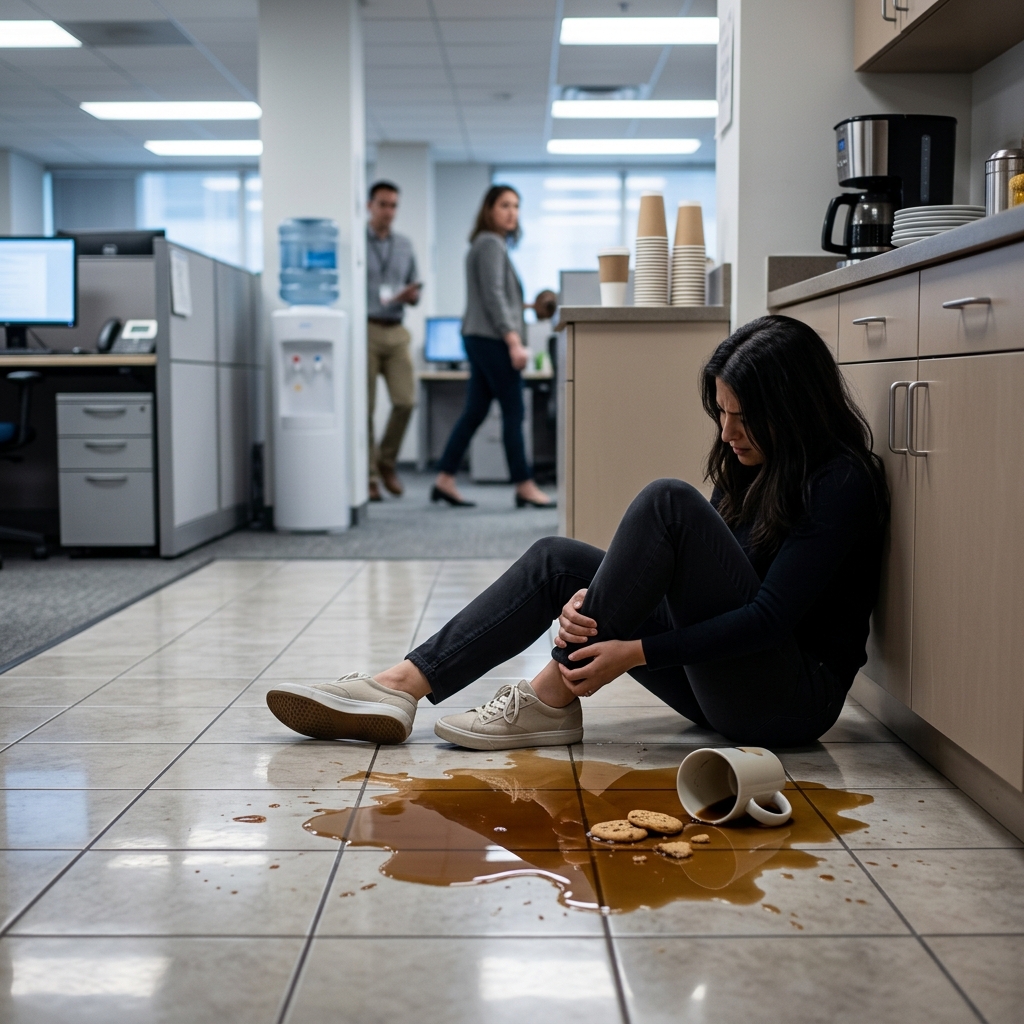
Food and beverages are a routine part of the workday, whether employees eat in a company cafeteria, grab snacks from office vending machines, or participate in employer-hosted lunches. When food or drink purchased at or provided by the company causes an employee to become ill or injured, complex questions arise about who is responsible and which legal remedies apply.
This article explains how the law typically treats injuries from workplace food or drink, how workers’ compensation, negligence, and product liability may intersect, and what practical steps injured workers and employers should take.
Understanding the Nature of the Injury
Not every discomfort after a meal is a compensable injury. To trigger legal rights, an employee generally must experience a personal injury that affects physical or mental health and leads to measurable losses, such as medical bills or lost wages.
- Physical injuries – illness from food poisoning, burns from hot liquids, allergic reactions, or choking incidents.
- Emotional or psychological harm – anxiety or trauma resulting from severe illness or near-death experiences, when recognized under applicable law.
- Economic impact – costs for medical treatment, time away from work, and long-term impairment.
Whether an injury is covered often turns on whether it is considered work-related and whether someone breached a legal duty of care.
When Workers’ Compensation May Apply
Workers’ compensation is usually the first system considered when an employee is hurt in connection with their job. This no-fault insurance scheme provides medical and wage benefits when the injury arises out of and in the course of employment.
However, food-related injuries are only covered in specific scenarios. Courts and agencies often examine how closely the food or drink is tied to the employment relationship.
Examples of Work-Related Food Injuries
- Employer-supplied meals as compensation – When food is provided as part of the employee’s compensation or as a benefit of the job, illness from that food may be treated as work-related for workers’ compensation purposes.
- Company-owned cafeterias for employees – If a workplace cafeteria operates primarily for employees and an injury occurs from food consumed there, many jurisdictions view this as arising from employment.
- Eating is part of job duties – Some employees must eat food as part of their job, such as quality testers or mystery shoppers. If consuming the food is required for the job and leads to injury, that injury is likely covered.
| Scenario | Likely Workers’ Comp Coverage? | Key Consideration |
|---|---|---|
| Free lunch provided by employer during mandatory training | Often covered | Meal closely tied to work activity and compensation |
| Employee buys food from public café near office on personal break | Often not covered | Food choice is personal, not employer-controlled |
| Meal eaten in company-run, employees-only cafeteria | Frequently covered | Cafeteria is part of workplace environment |
| Secret shopper required to eat at restaurant as part of evaluation | Usually covered | Eating is a job duty and benefits employer |
Reporting and Claim Process
For federal employees and many private workers, timely reporting is critical. Guidance for government workers, for example, instructs employees to report traumatic injuries using specific forms soon after the event.
- Immediate notification – Employees should promptly tell a supervisor about suspected food-related injury and seek medical care.
- Written details – Documentation including time, place, nature of food or drink consumed, symptoms, and witnesses strengthens the claim.
- Formal claim forms – Workers’ compensation forms often need to be submitted within strict deadlines to preserve benefits.
Supervisors are commonly expected to ensure injured workers receive care, gather statements from witnesses, and complete the employer’s portion of compensation paperwork accurately.
Negligence and Duty of Care in Food-Related Injuries
If workers’ compensation does not apply, or if a third party is responsible, negligence law may become central. A negligence claim rests on four elements: duty of care, breach, causation, and damages.
Duty of Care in the Workplace
Employers and food providers have a general obligation to avoid foreseeable harm to workers. Whether a duty of care exists typically depends on whether an ordinary person in the defendant’s position could reasonably predict that the type of injury suffered was likely if precautions were not taken.
- Foreseeability of harm – For instance, it is foreseeable that improperly stored food might cause foodborne illness, or that extremely hot beverages could cause burns.
- Control over conditions – Employers that run cafeterias, stock break-room refrigerators, or operate vending machines have varying levels of control and corresponding responsibilities.
When the answer to the foreseeability question is yes, the law generally recognizes a duty to act reasonably to prevent the injury.
Breach and Causation
A breach occurs when the party fails to meet the level of care that a reasonably prudent person would have used under similar circumstances.
- Serving spoiled food despite warning signs, such as foul odor or expired labels.
- Ignoring clean-up of spills that cause a fall while an employee carries food.
- Failing to maintain safe temperatures or hygienic preparation areas.
Causation requires linking the breach directly to the injury. In food poisoning cases, this is often difficult because it can be hard to prove exactly which meal caused the illness and to exclude other possible sources.
Product Liability for Defective Food or Drink
Sometimes the injury arises from a defect in the product itself rather than solely from employer conduct. In those cases, product liability principles may apply, and the manufacturer, distributor, or vendor of the food or drink may be legally responsible.
Defective food can involve:
- Contamination – harmful bacteria, foreign objects, or chemicals.
- Mislabeling – missing allergen warnings or incorrect ingredient lists.
- Manufacturing defects – mistakes during processing that make the product unsafe.
An employee may pursue a workers’ compensation claim against the employer while also asserting product liability claims against external companies, particularly when forms include sections asking whether a third party caused the injury.
Common Food-Related Workplace Injury Patterns
Food-related injuries at work cover more than food poisoning. Broad categories of harm often include both direct ingestion issues and incidental injuries that occur while preparing, serving, or consuming food.
- Foodborne illness – caused by pathogens such as Salmonella or norovirus, often requiring medical verification to tie the illness to a particular meal.
- Burns and scalds – common in kitchen and food-service environments where employees handle hot liquids and surfaces.
- Cuts and punctures – injuries from knives or broken glass during food preparation or service.
- Slip and fall accidents – spills of food or drink can create slippery surfaces, leading to sprains or fractures.
These patterns show that safety measures around food handling are just as important as the quality of the food itself.
Employer Responsibilities and Risk Management
Employers who provide or sell food on their premises can reduce legal exposure through proactive safety and clear procedures.
Health and Safety Practices
- Sanitation standards – Employ food-safety protocols for storage, preparation, and serving; follow applicable health codes.
- Temperature control – Maintain refrigeration and cooking temperatures to minimize risk of bacterial growth.
- Spill management – Promptly clean spilled food or drink and mark wet floors with visible signage to reduce slip hazards.
- Equipment maintenance – Ensure coffee machines, microwaves, and other appliances function properly and safely.
Incident Response and Documentation
When an employee is injured from workplace food or drink, the employer’s reaction can affect both outcomes for the worker and potential liability.
- Move the injured person to a safe area and contact emergency services if necessary.
- Provide access to first aid supplies and ensure staff know where they are located.
- Document the event in detail: date, time, food or drink involved, symptoms, and any witness statements.
- Complete all required workers’ compensation and internal incident reports quickly and accurately.
Employee Responsibilities and Best Practices
Employees also play an important role in protecting their health and legal rights when dealing with food-related injuries at work.
- Seek medical care promptly – Early diagnosis can help link the injury to the workplace meal and prevent further harm.
- Preserve evidence – If possible, retain food packaging or receipts, and note where and when the food was obtained.
- Report the incident – Notify supervisors or human resources within required time limits, and follow company procedures for injury reporting.
- Follow medical advice – Compliance with recommended treatment supports both recovery and documentation of damages.
Comparing Legal Avenues
Employees may have multiple potential claims depending on the facts. The table below highlights how different legal frameworks treat food-related workplace injuries.
| Legal Route | Main Focus | Typical Requirements | Possible Recovery |
|---|---|---|---|
| Workers’ Compensation | Work-related injury, no-fault system | Injury must arise out of and in the course of employment; timely reporting. | Medical expenses, partial wage replacement, disability benefits |
| Negligence Claim | Breach of duty of care by employer or vendor | Proof of duty, breach, causation, and damages. | Full economic damages, pain and suffering, sometimes punitive damages |
| Product Liability | Defective or contaminated food or drink | Defect in product, injury, and causal link; may involve strict liability. | Medical costs, lost wages, non-economic damages |
Frequently Asked Questions (FAQs)
Is every illness after eating at work covered by workers’ compensation?
No. Coverage generally requires showing that the food was sufficiently connected to the job—such as employer-provided meals, employees-only cafeterias, or eating as part of job duties—and that the illness arose out of and in the course of employment.
Can I sue the restaurant or vendor that supplied the food?
Possibly. If the injury results from a defect in the food or drink, a product liability or negligence claim against the manufacturer or vendor may be available in addition to any workers’ compensation benefits.
What should I do immediately after suspecting food poisoning at work?
Seek medical treatment, inform your supervisor or HR, document what you ate and when, and follow your employer’s procedure for reporting work-related injuries. Early reporting and documentation are crucial for workers’ compensation and any potential civil claim.
Does my employer always have a duty to prevent food-related injuries?
Employers have a duty to act reasonably to avoid foreseeable harm. If it is foreseeable that unsafe food, poor sanitation, or unaddressed spills could injure employees, a duty of care generally exists. Whether that duty was breached depends on the specific facts and safety measures in place.
Can mental distress from a severe food-related incident be part of my claim?
In many personal injury cases, emotional and psychological harms can be considered damages alongside physical injury, provided they are properly documented and recognized under applicable law.
References
- Employee Injuries Caused by Food or Drink Purchased at the Company — LegalMatch Law Library. 2024-01-15. https://www.legalmatch.com/law-library/article/employee-injuries-caused-by-food-or-drink-purchased-at-the-company.html
- Can I Receive Workers’ Compensation for Food Poisoning? — Dormer Harpring, LLC. 2017-08-09. https://www.damfirm.com/food-poisoning-workers-compensation/
- Four Common Injuries in the Food Industry — Carrillo Injury Law. 2021-03-05. https://www.carrilloinjurylaw.com/blog/four-common-injuries-food-industry
- When an Employee is Injured at Work: Guide for Food Truck Owners — Delivery Concepts. 2020-09-30. https://deliveryconcepts.com/what-to-do-when-an-employee-is-injured-at-work-a-guide-for-food-truck-owners/
- On-The-Job Injury and Illness Compensation Program – Revision 5 — U.S. Department of Agriculture, FSIS Directive 4810.1. 2018-01-02. http://www.fsis.usda.gov/policy/fsis-directives/4810.1
Similar Articles








Read full bio of medha deb




