
Workers’ Compensation and Illegal Conduct
How illegal acts, misconduct, and fraud can affect workplace injury claims and benefits.
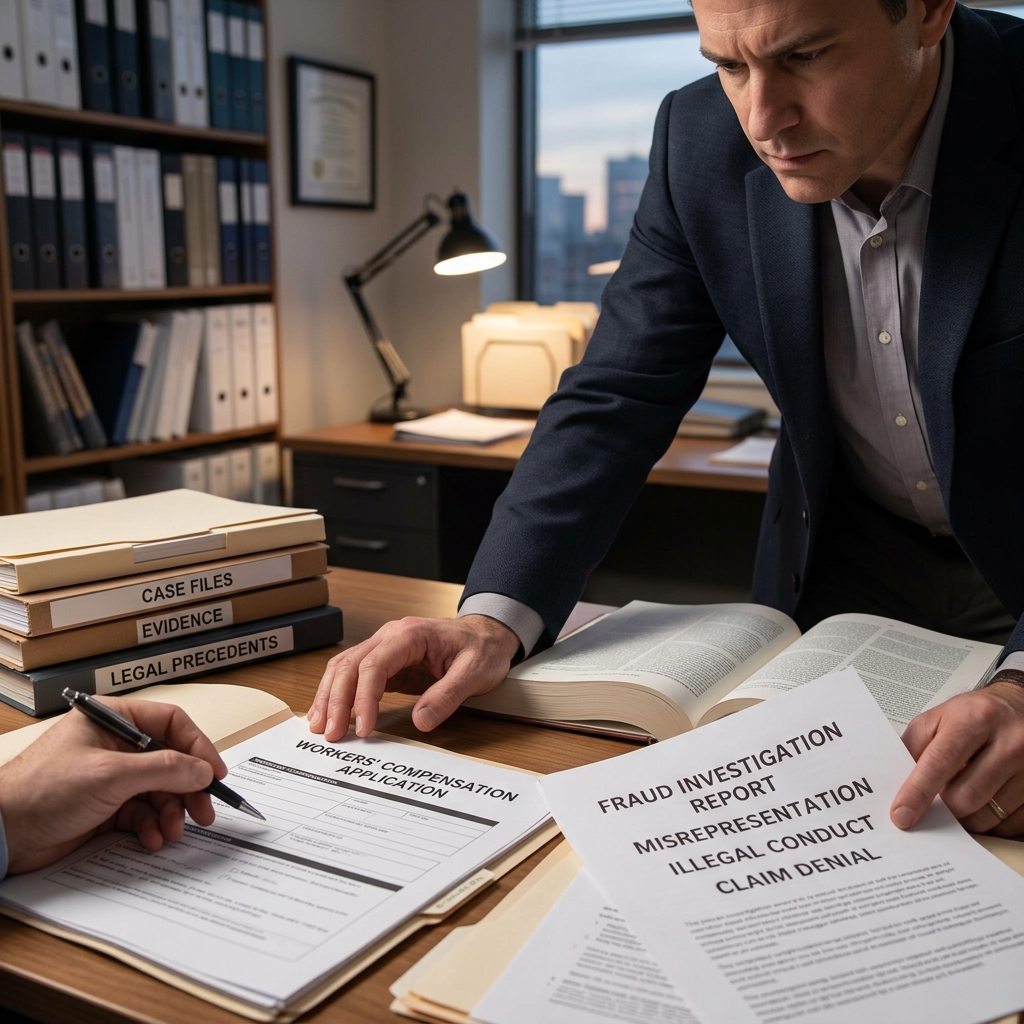
Workers’ compensation is designed to provide benefits when an employee is injured or becomes ill because of work. In most cases, the system does not require the worker to prove that the employer did anything wrong. The focus is usually on whether the injury or illness happened in the course of employment and whether the claim was filed properly. That general rule, however, does not mean every injury-related claim is automatically paid. Illegal conduct by the employee, the employer, or even a third party can affect whether benefits are available and how much the worker may recover.
This article explains the relationship between workers’ compensation and unlawful behavior. It covers employee fraud, intentional misconduct, workplace rule violations, employer failures to carry insurance, and the practical limits that can shape a claim. It also explains why state law matters and why timing is often just as important as the facts of the injury.
How workers’ compensation usually works
Workers’ compensation is a no-fault system. That means an injured worker generally does not need to prove that the employer was negligent in order to receive benefits. Instead, the worker must show that the injury or illness arose out of and in the course of employment. If the claim is accepted, benefits may include medical care, wage replacement, disability payments, and in some cases vocational rehabilitation.
The no-fault structure is one reason workers’ compensation is different from a personal injury lawsuit. A civil case often focuses on blame and damages, while workers’ compensation usually focuses on coverage, documentation, and eligibility. Even so, the system has rules that can bar or reduce benefits when the claim is connected to misconduct or criminal behavior.
When illegal conduct by the worker can jeopardize benefits
Illegal conduct does not automatically end every claim, but it can create serious problems for eligibility. The key issue is whether the injury happened during conduct that the law treats as outside the scope of employment or that breaks the legal rules of the compensation system.
- Fraudulent claims can lead to denial of benefits and further penalties.
- Intentional self-inflicted injuries are often excluded from coverage.
- Assaults or fights may make an injury noncompensable if the employee was the aggressor or acted outside job duties.
- Work performed after concealment of income or job activity may affect ongoing benefits.
These rules reflect a basic policy choice: workers’ compensation is intended to protect people injured by work, not to reward dishonest conduct or injuries that were deliberately caused. The exact outcome depends on state law and the facts of the case.
Fraud and false statements in a claim
One of the clearest forms of illegal conduct is workers’ compensation fraud. Fraud can involve exaggerating symptoms, inventing an injury, falsely claiming that the injury happened at work, hiding a preexisting condition, or misrepresenting work activity while receiving benefits. Because the system relies heavily on medical records, witness statements, and reporting timelines, false statements can quickly undermine a claim.
Fraud is serious for two reasons. First, it can lead to denial or termination of benefits. Second, it may trigger criminal prosecution, restitution, or administrative penalties. In many states, agencies and insurers investigate suspicious claims by comparing medical records, employment records, surveillance, prior claims, and witness testimony. A worker who makes an honest mistake is different from someone who intentionally lies, but any inconsistency can still create delays or disputes.
Intentional acts and injuries caused by misconduct
Injuries caused by intentional acts are often treated differently from accidental injuries. A worker who deliberately hurts themselves generally cannot rely on workers’ compensation for that harm. The same is often true when an employee is injured while engaging in conduct that is far removed from assigned duties, such as a fight started for personal reasons or a prank that creates unnecessary danger.
State laws vary, but many systems ask whether the conduct arose from the employment relationship or from a purely personal dispute. If the injury occurred during an unauthorized activity, or if the employee ignored safety rules in a way that amounts to intentional misconduct, the claim may be challenged. The analysis is usually fact-specific, which means small details can make a large difference in the result.
Illegal activity and injuries during workplace altercations
Not every injury that happens during a fight is automatically excluded, but illegal conduct can matter a great deal. If the worker was injured while committing an assault, participating in a personal fight, or engaging in other unlawful behavior unrelated to work, the insurer may argue that the injury did not arise out of employment. By contrast, if the worker was attacked by a customer, coworker, or stranger while performing job duties, the claim may still be compensable.
The difference often comes down to whether the injured employee was acting as part of the job or outside it. For example, a delivery driver injured during a robbery may have a stronger claim than an employee who starts a fight in a break room over a personal grudge. In these cases, state rules, workplace policies, and witness accounts become especially important.
Returning to work while collecting benefits
Another form of illegal conduct involves hiding work activity while receiving benefits. In many systems, a worker may be entitled to partial wage-loss payments if they can only earn less than before because of the injury. However, it is generally unlawful to conceal new employment, underreport wages, or fail to disclose that the worker has returned to work.
This issue matters because benefit levels often depend on the worker’s actual earnings. If a person is drawing wage-loss benefits while secretly working, the insurer may claim overpayment and may seek repayment. Depending on the state, dishonest reporting can also be treated as fraud. Clear and timely disclosure is therefore essential whenever a worker’s employment status changes.
Employer misconduct and illegal violations
Illegal conduct is not limited to workers. Employers can also violate workers’ compensation laws, and those violations can create separate legal consequences. One common example is failing to carry required workers’ compensation insurance. In many jurisdictions, employers must secure coverage for employees, and failure to do so can lead to fines, criminal penalties, or civil liability.
Employer wrongdoing can also include recordkeeping violations, misclassification of employees as independent contractors, and failure to report injuries properly. These issues do not always determine whether an injured worker is entitled to benefits, but they can complicate the claim and expose the employer to additional enforcement action. In some states, an uninsured employer may also lose important legal defenses if a worker files a claim or lawsuit.
State law controls the outcome
Workers’ compensation is governed primarily by state law, so the same conduct may have different consequences depending on where the injury happened. One state may take a strict view of fraud or horseplay, while another may focus more closely on whether the injury truly arose from work. Filing rules, deadlines, benefit amounts, and appeal procedures can also vary significantly.
That is why a worker should always review the law of the state where the injury occurred, not the state where the employee lives or where the employer is headquartered. The location of the work injury usually determines which rules apply. In multi-state employment situations, that detail can be decisive.
Deadlines, notices, and procedural rules
Even a valid claim can fail if it is filed too late. Workers’ compensation systems usually impose strict deadlines for notice to the employer and for filing the formal claim. These time limits can be short, and missing them may bar recovery unless an exception applies. Because of this, workers should report injuries as soon as possible and keep written proof of the report.
Documentation also matters when illegal conduct is involved. If an employer believes the worker committed fraud, altered records, or misrepresented the injury, the dispute may turn on paperwork, medical notes, and testimony from supervisors or coworkers. Early documentation often helps the most credible version of events stand out.
Practical signs a claim may be disputed
Some claims are more likely than others to be challenged. The following warning signs may prompt an insurer or employer to investigate further:
- The reported facts change over time.
- There are no witnesses to the incident.
- Medical records do not match the reported mechanism of injury.
- The worker returns to labor or another job without disclosure.
- The injury happened during a personal dispute or unauthorized activity.
None of these factors automatically defeats a claim, but they can create enough doubt to delay payment or trigger a denial. The more complete the evidence, the easier it is to resolve the issue fairly.
How workers can protect themselves
Workers can reduce the risk of disputes by being accurate, prompt, and consistent. They should report an injury immediately, follow medical instructions, and avoid guessing about facts they do not know. If the claim involves a questionable event, they should preserve texts, emails, incident reports, and names of witnesses. Transparency is especially important if the worker returns to any kind of employment or receives other income while benefits are pending.
If an employer accuses a worker of fraud or misconduct, the worker may need legal help to respond. A careful review of the record can reveal whether the employer has actual evidence or merely suspicion. In many cases, a claim can be defended by showing that the injury was real, the reporting was timely, and any discrepancy was accidental rather than intentional.
Comparison of common conduct issues
| Conduct issue | Possible effect on claim |
|---|---|
| False injury report | Denial of benefits, fraud investigation, possible penalties |
| Intentional self-harm | Usually excluded from coverage |
| Personal fight or assault | May be denied if outside employment duties |
| Unreported return to work | Overpayment claim, benefit reduction, possible fraud allegation |
| Employer has no insurance | Employer penalties and possible separate enforcement action |
When to get legal help
Legal help is often useful when a claim involves alleged illegal conduct, disputed facts, or a denial based on misconduct. A workers’ compensation lawyer can review the evidence, explain state deadlines, respond to fraud allegations, and identify whether the employer has complied with coverage and reporting rules. Legal guidance is especially important when the consequences could include repayment demands, criminal exposure, or a permanent loss of benefits.
A lawyer can also help determine whether the conduct at issue truly falls within an exclusion or whether the insurer is reading the facts too broadly. In workers’ compensation, small differences in wording and timing often decide the outcome. A focused legal strategy can make the difference between a denied claim and a successful recovery.
FAQs
Can a worker lose benefits for lying about an injury?
Yes. False statements, exaggeration, and staged injuries can lead to denial of benefits and may also create fraud penalties.
Does every injury during horseplay get denied?
No. The result depends on state law and on whether the conduct was closely tied to work or was purely personal and unauthorized.
Can a worker receive benefits and still work part time?
Sometimes yes, if the rules allow reduced earnings benefits and the worker reports all income accurately. Hiding work activity can cause serious problems.
What if the employer does not have workers’ compensation insurance?
That can create major penalties for the employer and may open the door to additional remedies, depending on state law.
Why do deadlines matter so much?
Because workers’ compensation systems usually have strict notice and filing rules. Missing a deadline can defeat an otherwise valid claim.
References
- Workers’ Compensation — U.S. Department of Labor. 2026-07-10. https://www.dol.gov/general/topic/workcomp
- Workers Compensation — California Department of Insurance. 2026-07-10. https://www.insurance.ca.gov/01-consumers/105-type/95-guides/09-comm/WorkersCompensation.cfm
- Workers’ Compensation | Wex — Legal Information Institute, Cornell Law School. 2026-07-10. https://www.law.cornell.edu/wex/workers_compensation
- Serious & Willful Misconduct in California Workers’ Compensation — Employees First Labor Law. 2026-07-10. https://employeesfirstlaborlaw.com/serious-willful-misconduct-in-california-workers-compensation/
- Violations of Workers’ Compensation Law (Liability and Penalties) — New York Workers’ Compensation Board. 2026-07-10. https://www.wcb.ny.gov/content/main/Employers/violations-wclaw.jsp
- Workers’ Compensation — New York City Bar Association. 2026-07-10. https://www2.nycbar.org/Publications/WorksCompensation.htm
Similar Articles








Read full bio of medha deb




