
Liability for Injuries from Defective Traffic Control Devices
Understanding how missing or malfunctioning traffic signals and signs can lead to crashes, injuries, and complex legal claims.
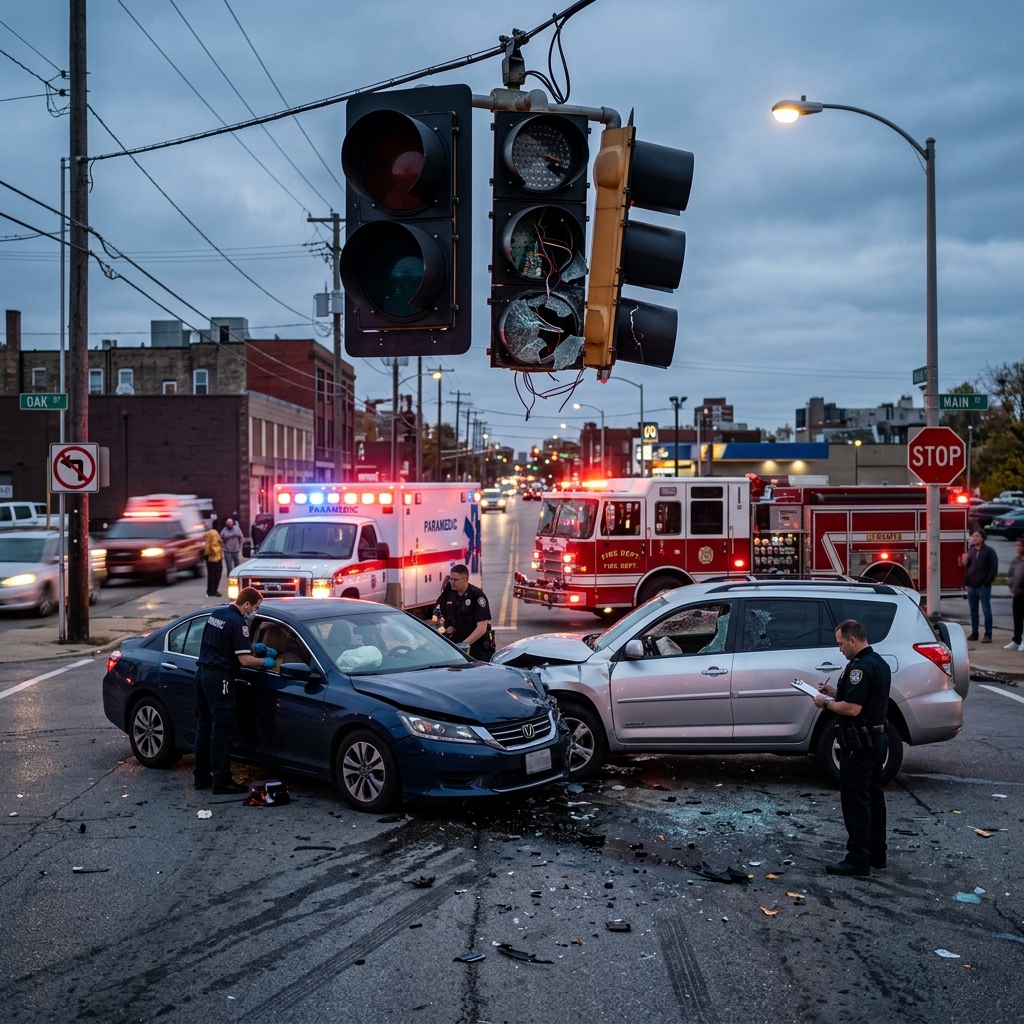
Traffic signals, stop signs, markings, and other control devices are designed to keep road users safe by organizing the flow of vehicles, bicycles, and pedestrians. When these devices are missing, obscured, improperly programmed, or simply not working, the result can be a serious crash leading to catastrophic injuries or death. Determining who is legally responsible in these situations involves a combination of traffic engineering standards, governmental duties, and personal injury law.
What Counts as a Traffic Control Device?
The term traffic control device refers to any official signal, sign, or marking placed on or near a roadway to guide, warn, or regulate traffic. These devices are typically adopted and maintained under state and local traffic laws and engineering manuals such as the Manual on Uniform Traffic Control Devices (MUTCD).
- Traffic signals: Red-yellow-green lights, flashing signals, pedestrian crossing signals, and coordinated signal systems.
- Regulatory signs: Stop signs, yield signs, speed limit signs, one-way indicators, and no-turn signs.
- Warning signs: Signs indicating curves, intersections, school zones, pedestrian crossings, or road work ahead.
- Pavement markings: Lane lines, crosswalks, arrows, stop lines, and bike lane markings.
- Other devices: Roadway reflectors, school zone flashers, railroad crossing lights and gates.
Most state vehicle codes require road users to obey official traffic control devices. When these devices are missing or defective, compliance becomes impossible or confusing, increasing the risk of crashes.
How Missing or Defective Devices Cause Crashes
In many intersection and roadway collisions, the primary cause is not just driver error, but a traffic control device that failed to operate as intended. Common scenarios include:
- Dark or dead signals at busy intersections, leaving drivers to guess right of way.
- Conflicting indications, such as a green light in two opposing directions due to a programming error.
- Obscured stop signs hidden by vegetation, parked vehicles, or construction equipment.
- Misplaced or removed signs where drivers reasonably expect a stop or yield but see none.
- Signals stuck on one phase, for example remaining green in one direction and never changing, causing cross-traffic or pedestrians to proceed unsafely.
These failures can contribute to a range of crashes:
- T-bone collisions in intersections when one driver believes they have the right of way due to a defective or unseen device.
- Rear-end crashes caused by sudden, unexpected stops when drivers notice a non-functioning signal late.
- Pedestrian and cyclist injuries where crosswalk signals fail, do not provide enough crossing time, or create conflicting movements.
Typical Legal Issues in Device-Related Accidents
When a crash is linked to a missing or defective traffic control device, the legal analysis usually focuses on whether a responsible party failed to exercise reasonable care in installing, programming, or maintaining the device. Three broad questions guide most cases:
- Duty: Did the government or contractor have a legal duty to install, maintain, or operate the device?
- Breach: Did they act unreasonably by allowing the device to be missing, defective, or improperly programmed?
- Causation: Did that failure directly contribute to the crash and resulting injuries?
Because many traffic control devices are under public control, these cases frequently involve additional hurdles such as governmental immunity statutes and strict notice deadlines.
Who May Be Legally Responsible?
Responsibility for a defective traffic control device often spans multiple entities. Identifying the correct defendant is critical for a successful claim.
Local and State Government Agencies
City, county, or state transportation departments typically decide where and how traffic control devices are installed and are responsible for maintaining them. Courts have held that once a public entity installs a device, it has a continuing duty to maintain that device in safe working condition.
- Design and placement decisions are often considered discretionary, and may be protected by immunity.
- Maintenance failures, such as ignoring known outages or not replacing missing signs within a reasonable time, are more likely to create liability.
However, suing a government entity usually requires compliance with special statutes, including notice-of-claim rules and damages limits.
Private Contractors and Signal Maintenance Firms
Government agencies frequently hire private firms to install or service traffic signals and other devices. If a contractor negligently wires, programs, or fails to repair a signal, and that negligence contributes to a crash, the contractor may share liability with the public agency.
- Improper programming that creates conflicting signals.
- Failure to respond to work orders or documented outage reports.
- Installing equipment that does not meet applicable safety or engineering standards.
Manufacturers and Designers of the Devices
In some cases, the traffic device itself may be defective due to poor design or manufacturing, rather than maintenance issues. This can give rise to product liability claims, especially where the device fails under normal conditions or does not meet recognized safety standards.
- Faulty controllers or hardware causing unpredictable signal behavior.
- Software errors in signal timing or coordination systems.
- Materials that deteriorate too quickly or fail in typical weather conditions.
Drivers and Road Users
Even when a traffic control device is defective, drivers still have a duty to operate their vehicles reasonably and pay attention to visible cues. Many states specify how drivers should respond when signals are dark or flashing.
| Signal Condition | Typical Driver Duty |
|---|---|
| Completely dark or non-functioning | Treat as a four-way stop; yield to earlier-arriving traffic and proceed only when safe. |
| Flashing red | Stop fully, then proceed as at a stop sign. |
| Flashing yellow | Proceed with caution and yield to cross-traffic and pedestrians. |
If a driver disregards these rules, they may be partially or fully responsible for the crash, even if a device was not working correctly.
Governmental Immunity and Special Rules
One of the most challenging aspects of defective device cases is dealing with sovereign or governmental immunity—laws that limit when and how public bodies can be sued. Many jurisdictions allow suits for negligence in maintaining existing traffic devices but protect discretionary planning decisions.
- Claims often must be filed within a shorter timeframe than typical personal injury cases.
- Victims may need to serve a written notice of claim on the agency with specific details of the accident.
- Damages may be capped or limited, especially in wrongful death cases.
Despite these obstacles, courts have recognized a nondelegable duty of some municipalities to maintain installed traffic controls; they remain responsible even if they hire contractors to do the work.
Building a Case: Proving the Device Was at Fault
Proving that a missing or defective traffic control device caused an accident requires careful evidence collection and often expert analysis.
Key Evidence in Device-Related Claims
- Photographs and video of the intersection or roadway showing the state of the device at or near the time of the crash.
- Traffic camera and surveillance footage indicating how the signal was operating and how vehicles reacted.
- Maintenance and inspection records from the agency or contractor, showing outages, complaints, or prior problems.
- Police and accident reports documenting witnesses’ descriptions of device malfunction.
- Witness statements from drivers, passengers, pedestrians, or nearby businesses.
Expert Testimony
Because signal timing and placement involve technical standards, expert witnesses are often crucial. Traffic engineers or signal specialists may analyze data logs, timing plans, and controller records to determine whether the device complied with accepted practices and whether any deviation contributed to the crash.
- Reviewing signal phasing and coordination for compliance with MUTCD and local standards.
- Evaluating whether known defects were reasonably foreseeable.
- Explaining complex technical issues to judges and juries in understandable terms.
Types of Claims: Injury, Wrongful Death, and Property Damage
When a defective traffic control device leads to a collision, injured parties may bring several types of legal claims depending on their losses.
- Personal injury claims for medical bills, lost wages, pain and suffering, and long-term disability.
- Wrongful death claims by surviving family members for lost income, funeral expenses, and loss of companionship.
- Property damage claims to recover costs of vehicle repair or replacement and damage to other property.
Even when liability seems clear, governmental procedures and complex fault apportionment can make these claims difficult without legal assistance.
Practical Steps for Victims After a Device-Related Crash
Anyone injured in a crash where a traffic signal or sign may have malfunctioned should take several practical steps to protect their health and legal rights.
- Seek immediate medical attention, even if injuries seem minor, to document harm and obtain necessary treatment.
- Report the crash to law enforcement and ensure the officer notes any device issues in the report.
- Photograph the scene, including the device, intersection, and any obscuring objects or evidence of malfunction.
- Identify witnesses who saw the crash or noticed problems with the device before the collision.
- Preserve records such as medical bills, repair invoices, and correspondence with insurers or agencies.
- Consult a qualified attorney experienced in claims against public entities and contractors.
Prevention and Policy Considerations
From a public safety standpoint, preventing crashes caused by defective traffic control devices requires proactive maintenance, robust monitoring systems, and clear reporting procedures.
- Routine inspections and performance checks for signals and signs.
- Modernization of older signal equipment, including backup power and remote monitoring.
- Rapid response protocols when outages or defects are reported.
- Public education campaigns on how drivers should respond to dark or flashing signals.
Effective policies not only reduce accidents but also minimize the likelihood of costly litigation against public agencies and contractors.
Frequently Asked Questions (FAQs)
1. Can I sue the city if a broken traffic light caused my accident?
In many jurisdictions, you may be able to sue a city or other public agency if it negligently failed to maintain an existing traffic signal and that failure contributed to your injuries. However, special rules like governmental immunity and notice-of-claim requirements apply, so it is important to speak with a lawyer promptly.
2. What if both drivers made mistakes and the signal was defective?
Cases often involve shared responsibility. Even if the signal malfunctioned, drivers may still be partly at fault for not following applicable rules for dark or flashing signals or for failing to drive cautiously. Many states use comparative fault systems, which allow recovery but reduce damages based on each party’s percentage of fault.
3. How long do I have to file a claim?
Time limits vary by state and by whether the defendant is a government entity or a private party. Claims against public agencies often have shorter deadlines and may require early written notice. Missing these deadlines can bar your claim, so prompt legal advice is critical.
4. Do I need an expert witness to prove a defective traffic signal?
While not always required, expert testimony from traffic engineers or signal specialists is frequently necessary to show that a device was defective or improperly maintained and that this defect contributed to the crash. Experts can interpret technical data and explain how the device should have functioned.
5. Are pedestrians and cyclists treated differently in these cases?
Pedestrians and cyclists can bring claims similar to drivers when injured due to defective signals or missing crosswalk controls. Their cases may focus more on crosswalk timing, visibility, and whether devices adequately protected vulnerable users, but the core negligence principles are similar.
References
- Injury or Death From Missing or Defective Traffic Control Device — LegalMatch Law Library. 2024-02-01. https://www.legalmatch.com/law-library/article/injury-or-death-from-missing-or-defective-traffic-control-device.html
- Accidents Caused By Defective Or Poorly Programmed Traffic Control Devices in DC — Gilman & Bedigian. 2023-06-15. https://www.gilmanbedigian.com/accidents-caused-by-defective-or-poorly-programmed-traffic-control-devices-in-dc/
- When Defective Traffic Signals or Devices Caused Your Crash: Navigating Liability and Claims — Meyers Injury Law. 2023-09-10. https://meyersinjurylaw.com/blog/when-defective-traffic-signals-or-devices-caused-your-crash-navigating-liability-and-claims/
- Who Is Liable for Accidents When Traffic Signals Are Not Working? — Rodriguez Law Firm. 2022-11-05. https://www.rodriguezlaw.net/who-is-liable-for-accidents-when-traffic-signals-are-not-working/
- City Liability For Car Accidents: Failure to Maintain Traffic Controls at an Intersection — Vrionedes Law. 2019-04-12. https://www.injuriesandaccidents.com/court-hears-question-of-liability-for-nycs-failure-to-maintain-traffic-controls-at-an-intersection/
- Vehicle and Traffic Law Article 24: Traffic Signs, Signals, Markings — New York State Laws (YPD Crime). 2020-01-01. https://ypdcrime.com/vt/article24.php
- Car Accidents from Defective Traffic Signals & Traffic Devices — San Diego Personal Injury Attorneys. 2022-07-20. https://www.sandiegopersonalinjuryattorneys.com/car-accidents-due-to-defective-traffic-signals-traffic-devices
Similar Articles








Read full bio of medha deb


