
When a Buyer or Seller Refuses to Close on a Building Contract
Understand what happens when one party walks away from a building or real estate closing, and what legal remedies may be available.
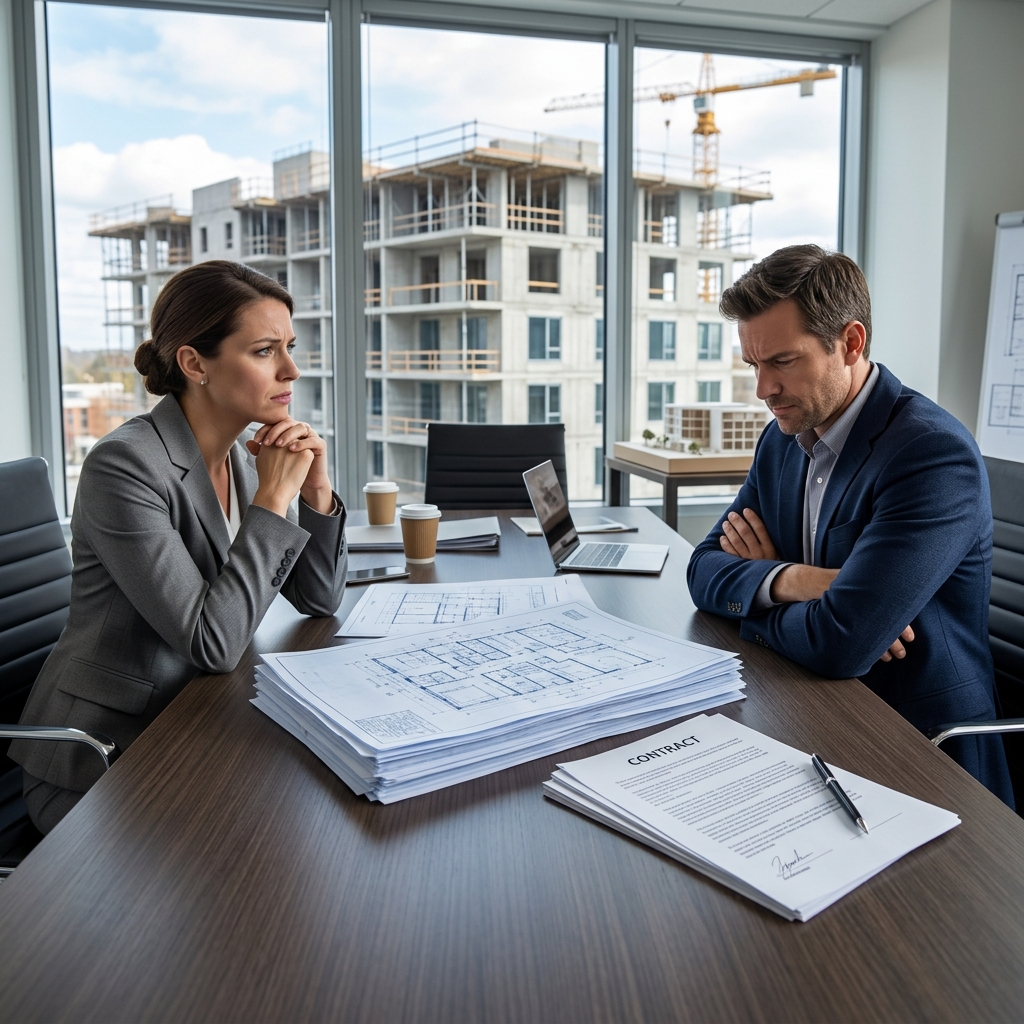
Buying, selling, or constructing a property usually ends with a formal closing — the moment when money, documents, and legal title all change hands. When one side suddenly refuses to show up or complete the paperwork, the entire deal can collapse and both parties face serious financial and legal consequences.
This article explains, in clear terms, what it means for a buyer or seller to refuse to close on a building or real estate contract, what may count as a legal default, and the main remedies and strategies available to both sides.
1. Understanding the Closing in a Building or Real Estate Transaction
The closing is the finish line of a building or real estate contract. It is typically a scheduled meeting (in person or through electronic signatures) where the parties complete the last required steps under the contract.
1.1 Core elements of a typical closing
- Signing the final purchase or building documents (such as the deed, settlement statement, and lender forms).
- Payment of the purchase price or final construction draws by the buyer or owner.
- Payment of closing costs, including any transfer taxes, recording fees, and professional charges.
- Transfer of legal title from seller to buyer through a deed or similar instrument.
- Issuance of title insurance and disbursement of funds by an escrow agent or closing attorney.
In a building contract (for example, a contract to construct a home or commercial building), the final closing may occur when construction is substantially complete, inspections have been passed, and the owner is ready to pay the final installment.
1.2 Why the closing date matters
Closing dates are more than administrative details. In many contracts, time is expressly stated to be “of the essence,” meaning that failing to close on the agreed date can be treated as a material breach. Even when that phrase is not used, an unjustified refusal to close on the scheduled date is often considered a serious default under contract law.
2. What Counts as a Refusal or Default at Closing?
Not every delay or hiccup at the end of a real estate or building deal is a legal breach. The law usually distinguishes between good‑faith problems and outright refusal to perform.
2.1 Common examples of refusal to close
A party may be treated as refusing or defaulting when they:
- Fail to appear at the scheduled closing without valid contractual excuse.
- Appear at closing but refuse to sign required documents or deliver funds.
- Send written notice that they will not complete the transaction, sometimes called anticipatory repudiation.
- Attempt to cancel solely because they received a better offer or changed their mind.
By contrast, a short delay due to banking issues, documentation errors, or temporary title problems may not be treated as a default if the party acts in good faith and cures the issue promptly.
2.2 Reasons that may justify not closing
Some reasons can provide legal justification for postponing or refusing to close, depending on the contract terms and local law. These may include:
- Unfulfilled contingencies, such as financing, inspection, or sale-of-other-property conditions.
- Newly discovered title defects that the seller cannot or will not cure.
- Serious inaccuracies in required disclosures that materially affect the property’s value or safety.
- Significant damage to the property before closing (e.g., fire, flood) that is not remedied as required by the contract.
Whether any of these allows a party to walk away without penalty depends heavily on the wording of the contract and state law. A court will generally ask: did the party have a contractual right or legal necessity to refuse to close?
3. If the Buyer Refuses to Close
Buyer default is common when financing falls through, when the buyer gets cold feet, or when the market changes and the buyer no longer wants the property.
3.1 Typical consequences for the buyer
When a buyer refuses to close without a valid reason allowed by the contract, the seller may treat the buyer as being in breach and pursue several remedies.
- Forfeiture of earnest money or deposit – Most purchase agreements allow the seller to keep the buyer’s deposit as liquidated damages if the buyer defaults.
- Lawsuit for money damages – The seller may sue for losses beyond the deposit, such as the difference between the contract price and a lower resale price, additional carrying costs, and marketing expenses.
- Specific performance (in some cases) – Although more common for buyers, some courts allow sellers to seek a judgment requiring the buyer to complete the purchase if monetary damages are inadequate.
In many jurisdictions, a seller’s primary remedy against a defaulting buyer is to keep the deposit and pursue additional damages only if the contract specifically authorizes them or if the deposit does not reasonably cover the loss.
3.2 How buyers can reduce the risk of default
Buyers can lessen the risk of being treated as refusing to close by:
- Obtaining solid loan pre‑approval early and monitoring conditions through closing.
- Complying with deadlines for inspections, appraisals, and document submissions.
- Requesting extensions in writing if delays arise, rather than simply failing to appear.
- Carefully reviewing contingency clauses and ensuring they are properly invoked when problems occur.
4. If the Seller Refuses to Close
Seller refusal to close often arises from seller’s remorse, a higher competing offer, or a dispute over repairs or contract interpretation.
4.1 Legal impact of a seller’s refusal
In many states, when a seller who has signed a binding contract simply refuses to close, they commit a breach of contract. Unlike buyers, sellers usually do not have a general right to cancel after signing unless a specific termination clause exists.
Importantly, the contract does not automatically disappear when a seller refuses to close. The buyer retains the right to enforce the agreement or to treat it as terminated and pursue remedies.
4.2 Buyer’s remedies when seller refuses
Because each piece of real property is considered legally unique, buyers often have powerful options against a seller who refuses to close.
| Remedy | What it involves | When it is commonly used |
|---|---|---|
| Specific performance | Court order requiring the seller to complete the sale and transfer title as agreed. | When the buyer still wants the property and money damages would not fully compensate. |
| Monetary damages | Compensation for out‑of‑pocket costs (inspections, appraisal, temporary housing) and other financial losses caused by the breach. | When the buyer prefers not to force the sale or specific performance is not practical. |
| Cancellation & refund | Termination of the contract with a return of the earnest money and other funds paid, sometimes plus additional compensation. | When the buyer wants to walk away and minimize further conflict. |
Procedurally, buyers pursuing specific performance often need to file a civil lawsuit and may record a lis pendens (notice of pending legal action) to prevent the seller from transferring the property to someone else during the dispute.
5. Remedies in Building Contract Closings
Building contracts, such as agreements for new construction or major renovation, usually include staged payments and a final closing when the work is substantially complete. Refusal to close can occur on either side:
- The owner refuses to pay the final installment or sign completion documents.
- The contractor refuses to finish punch‑list items or provide required warranties or lien waivers.
The underlying legal principles are similar to those in standard real estate sales: a party who unjustifiably refuses to perform at the final stage may be in breach and subject to damages, specific performance (in appropriate cases), or other remedies allowed by the contract and state law.
5.1 Typical owner remedies against a defaulting contractor
- Demand for completion under the contract, potentially backed by a lawsuit for specific performance or an order to complete particular work.
- Monetary damages for cost to complete or correct defective work, plus delay damages where allowed.
- Claims against performance bonds if the project is bonded.
5.2 Typical contractor remedies against a defaulting owner
- Payment claims for work completed, sometimes pursued via mechanic’s liens or similar security interests.
- Damages for wrongful termination of the contract if the owner refuses to close or pay without valid cause.
- In limited cases, claims for lost profit on unperformed work, where contract and law permit.
6. Proving Your Case: Key Legal Requirements
Whether you are a buyer, seller, owner, or contractor, you generally cannot obtain court‑ordered remedies without satisfying several fundamental requirements. Real estate disputes are typically governed by contract law and specific property statutes.
6.1 Existence of a valid written contract
Most jurisdictions require contracts for the sale of real property to be in writing and signed, under the Statute of Frauds. Courts typically look for:
- Clear identification of the property.
- The agreed price or method for determining price.
- Identification of the parties.
- Signatures of the party or parties to be bound.
Handshake agreements or unsigned drafts rarely support a lawsuit for specific performance of a real estate sale.
6.2 Performance or readiness to perform by the non‑breaching party
A party asking a court to enforce the contract usually must prove that they either:
- Performed all of their own obligations; or
- Were ready, willing, and able to perform at closing.
For a buyer, this may require evidence of loan approval, available funds, deposits delivered on time, and compliance with contract deadlines. For a seller, it may involve showing that the title was marketable and that necessary documents were prepared.
7. Practical Steps to Take After a Refusal to Close
If the other party refuses to close, immediate, organized action can protect your rights and strengthen your position in any later dispute.
7.1 Document everything
- Save emails, text messages, and written notices relating to the dispute.
- Keep copies of the signed contract, addenda, inspection reports, and correspondence with lenders or escrow agents.
- Ask your real estate agent, attorney, or escrow officer to provide written summaries of events where appropriate.
7.2 Attempt resolution before litigation
Before filing a lawsuit, many parties try less adversarial options, which may also be required by the contract.
- Negotiation – Direct discussions or attorney‑to‑attorney communications can sometimes solve misunderstandings about repairs, deadlines, or documentation.
- Mediation – A neutral mediator helps the parties explore settlement without deciding who is right or wrong.
- Arbitration – If required by the contract, a private arbitrator may issue a binding decision instead of a court.
These methods can be less expensive and faster than court, though each has trade‑offs that you should discuss with legal counsel.
7.3 When to involve a real estate attorney
You should strongly consider speaking with an experienced real estate or construction attorney when:
- The property is high‑value or unique, making specific performance especially important.
- The other party has clearly stated they will not close, or has already failed to appear.
- You have incurred significant costs (temporary housing, inspections, design fees, or interest‑rate changes) due to the delay.
- You are unsure whether you have the right to cancel or are being pressured to sign amendments you do not fully understand.
A lawyer can review your contract, explain local laws, and recommend whether to negotiate, mediate, arbitrate, or file suit.
8. Preventing Closing Disputes When Drafting Contracts
Many closing disputes can be avoided by careful contract drafting and thorough planning early in the transaction.
8.1 Protective clauses for buyers and owners
- Clear contingencies for financing, inspections, and appraisal, with realistic deadlines.
- Detailed provisions on what happens if defects or title problems are discovered.
- Requirements that the seller or contractor cure specified issues before closing or provide credits.
- Mechanisms for extensions in the event of lender delays or events beyond the parties’ control.
8.2 Protective clauses for sellers and contractors
- Meaningful deposits or progress payments to deter frivolous cancellations.
- Defined consequences for buyer or owner default, including liquidated damages within legal limits.
- Clauses specifying mediation or arbitration before litigation to control costs.
- Time‑is‑of‑the‑essence language to emphasize the importance of closing deadlines.
9. FAQs About Refusal to Close on a Building or Real Estate Contract
9.1 Can a seller simply change their mind after signing?
Generally, no. Once a seller signs a binding real estate contract, they usually cannot cancel just because they received a better offer or got cold feet, unless the contract provides a specific termination right. A refusal to close in that situation is typically a breach that may expose the seller to a lawsuit for specific performance or damages.
9.2 What if my financing falls through right before closing?
If your contract includes a financing contingency and you follow its terms, you may be able to terminate without penalty. However, if you miss contingency deadlines or waive them, a last‑minute financing failure can be treated as a buyer default, potentially costing you your deposit and exposing you to damages claims.
9.3 How long does a specific performance lawsuit take?
Time frames vary widely by jurisdiction and court workload. Specific performance lawsuits can take months or longer, especially if there are factual disputes requiring discovery and trial. Some buyers choose damages or settlement if delay would make the property less desirable or financing more expensive.
9.4 Do I always need a lawyer for a refusal‑to‑close dispute?
While the law does not always require you to have a lawyer, real estate and building contracts involve high stakes and complex rules. Because the outcome can affect title to property and large sums of money, consulting a qualified attorney is strongly recommended before taking major steps such as cancelling, suing, or signing new agreements.
9.5 Is this article legal advice?
No. This article provides general educational information about what often happens when a buyer or seller refuses to close on a building or real estate contract. Laws differ by state and country, and small factual differences can change the outcome of a dispute. For advice tailored to your situation, consult a licensed attorney in your jurisdiction.
References
- Refusal By Buyer Or Seller To Close on a Building Contract — LegalMatch. 2023-06-15. https://www.legalmatch.com/law-library/article/refusal-by-buyer-or-seller-to-close-on-a-building-contract.html
- Refusal To Close In A Real Estate Transaction — KM Wasche, P.C. 2022-04-10. https://kmwasche.com/blog/refusal-to-close-in-a-real-estate-transaction/
- What Happens If A Seller Refuses To Close On A Property? — Volpe Law LLC. 2023-03-01. https://www.volpelawllc.com/what-happens-if-a-seller-refuses-to-close-on-a-property/
- Seller Refuses to Close Pennsylvania | Buyer Remedies — Lebovitz Law LLC. 2023-09-12. https://lebovitzlaw.com/real-estate-issues/seller-refuses-to-close-pennsylvania/
- Can a Seller Back Out of a Contract in California? — Schorr Law. 2022-11-05. https://schorr-law.com/can-a-seller-back-out-of-a-contract-in-california/
- Seller Refusing to Close Escrow? Your Legal Rights and Remedies — Law Offices of Bradley R. Corbett. 2023-05-20. https://law.mykajabi.com/blog/seller-refusing-to-close-escrow-your-legal-rights-and-remedies
- What Happens if the Seller Backs Out of a Real Estate Contract? — Lulich & Attorneys. 2022-08-16. https://www.lulich.com/what-happens-if-the-seller-backs-out-of-a-real-estate-contract/
Similar Articles








Read full bio of medha deb


