
When Restaurants Are Liable for Patron-on-Patron Assaults
Understanding when a restaurant or bar must answer in court for violent assaults and fights between patrons on its premises.
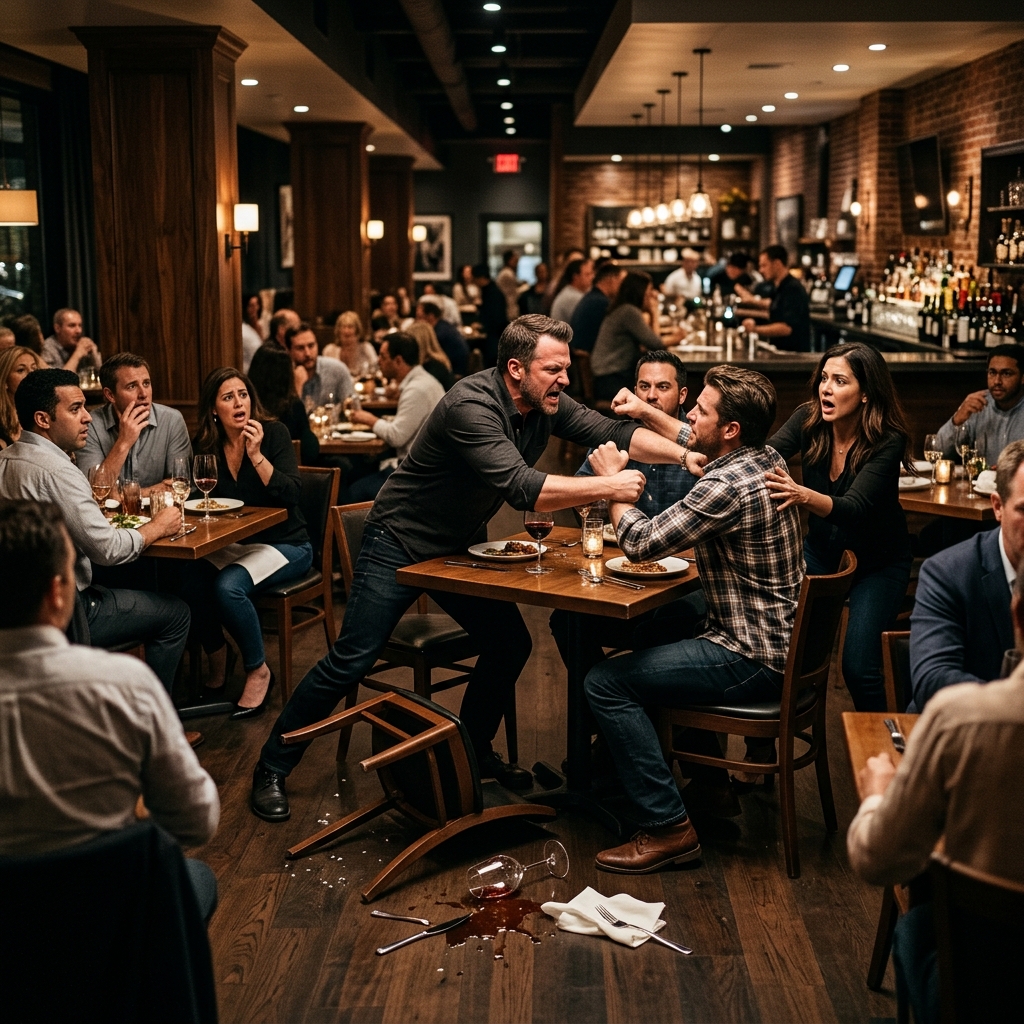
Violent incidents in restaurants, bars, and clubs are unfortunately not rare. A heated argument can turn into a physical fight, or an intoxicated customer may attack another patron without warning. In many cases, the first question victims ask is whether they can sue the restaurant or bar, not just the person who assaulted them. This article explains when a restaurant may be legally responsible for assault injuries caused by another patron, how courts analyze negligence and alcohol service, and what practical steps injured customers should take.
Core Legal Concepts Behind Restaurant Liability
Liability for assaults between patrons typically falls under two broad areas of law: premises liability and dram shop liability (alcohol overservice laws). Premises liability focuses on the business’s duty to maintain reasonably safe premises, while dram shop liability examines whether the restaurant unlawfully served alcohol to someone who was visibly intoxicated or to a minor.
- Premises liability: A legal framework that holds property owners responsible when unsafe conditions on their property cause injury.
- Dram shop liability: Statutes that impose responsibility on businesses that serve alcohol to intoxicated customers who later injure others.
- Negligence: Failure to use reasonable care under the circumstances, such as not responding to obvious risks of violence.
- Foreseeability: Whether the assault was reasonably predictable based on what the restaurant knew or should have known.
These concepts interact in different ways depending on the facts: the history of prior incidents, how staff handled the situation, whether alcohol service violated state law, and where the assault occurred in relation to the property.
The Restaurant’s Duty to Provide a Reasonably Safe Environment
Restaurants and bars are not insurers of their patrons’ safety; they are not automatically liable every time a fight breaks out. However, courts generally recognize that businesses open to the public owe customers a duty to take reasonable steps to protect them from foreseeable harm, including criminal acts like assaults.
Key elements of this duty include:
- Maintaining adequate lighting and visibility throughout the premises.
- Monitoring for escalating disputes and obvious signs of danger.
- Implementing and following written policies for handling fights or aggressive behavior.
- Ensuring staff can contact law enforcement quickly when needed.
To succeed in a civil claim, injured patrons generally must show that the restaurant:
- Had a duty to provide reasonably safe premises.
- Breached that duty by failing to take reasonable precautions.
- The breach made the assault reasonably foreseeable.
- The breach directly caused or significantly contributed to the injuries.
Premises Liability: When an Assault Is “Foreseeable”
Foreseeability is often the central issue. A restaurant might be liable if there were warning signs that violence was likely and the business failed to act. Courts examine the sequence of events and prior history at the establishment to decide whether the assault was foreseeable.
Indicators That an Assault Might Be Foreseeable
- Repeated prior fights, assaults, or serious disturbances at the same location.
- Obvious verbal threats, aggressive behavior, or a heated confrontation that staff observed.
- Overcrowding that increases tension or makes it difficult to manage patrons.
- Lack of trained security despite a known history of problems.
- Serving large quantities of alcohol to groups known for aggressive behavior without supervision.
Where an establishment has a documented history of fights, courts may expect stronger measures, such as hiring security staff, enforcing occupancy limits, and promptly removing disruptive patrons.
Examples of Potential Negligence in Assault Cases
Negligence usually involves a failure to take steps that a reasonably careful restaurant would take under similar circumstances. Common allegations include:
- Failing to call police when signs of a brewing fight were apparent.
- Inadequate security despite knowledge of prior violent incidents.
- Allowing visibly intoxicated patrons to remain on the premises without supervision.
- Ignoring occupancy limits or crowd control policies that could reduce tension.
- No staff training on de-escalation or emergency response.
In many jurisdictions, an assault is more likely to be considered foreseeable when the business had actual or constructive notice of risks, such as earlier fights, police calls, or reported threats.
Location Matters: On-Premises vs. Off-Premises Incidents
Another crucial factor is where the assault occurred. Many states limit liability to incidents that happen on the property or in areas under the business’s control.
| Location of Assault | Typical Liability Approach |
|---|---|
| Inside the restaurant or bar (dining room, bar area, restroom) | Often within the scope of premises liability; business may be liable if the assault was foreseeable and reasonable steps were not taken. |
| Parking lot or outdoor area controlled by the business | Frequently treated as part of the premises; liability may exist if the area is under the restaurant’s control and risks were foreseeable. |
| Adjacent sidewalk or immediately surrounding area | Some courts may consider limited liability where the business has significant control or the incident is directly tied to its operations. |
| Off-premises, away from the restaurant’s property | Businesses are generally not liable, as they are not responsible for incidents beyond their control. |
In practice, an assault in a parking lot owned or managed by the restaurant is more likely to give rise to liability than an altercation several blocks away, even if the parties first met inside the establishment.
Alcohol Overservice and Dram Shop Liability
Assaults in restaurants and bars frequently involve intoxicated patrons. Many states have dram shop laws that create civil liability when an establishment serves alcohol to someone who is visibly intoxicated or to a minor, and that person later causes injury.
For example, under Connecticut’s dram shop statute, a bar or restaurant may be liable for injuries if it sells alcohol to a visibly intoxicated person who then causes harm as a result of intoxication, subject to statutory damage caps and notice requirements. Similar laws exist in other states, often with their own conditions and limits.
Typical Elements of Dram Shop Claims
- The patron was visibly or obviously intoxicated at the time alcohol was served.
- The restaurant or bar continued serving alcohol despite clear signs of intoxication.
- The intoxicated patron later caused an incident, such as an assault or accident, resulting in injury.
- The patron’s intoxication was a primary cause of the injuries.
Visible signs of intoxication commonly include slurred speech, unsteady gait, glassy or bloodshot eyes, difficulty standing, and aggressive or disinhibited behavior. Staff members are expected to recognize these indicators and stop service when required by law.
Relationship Between Dram Shop and Premises Liability
A single incident can involve both theories. For instance, a lawsuit may claim that a restaurant negligently failed to control an aggressive patron and also violated dram shop laws by overserving that person. In such cases, plaintiffs may rely on different statutes and common-law principles to show that the business had multiple opportunities to prevent the assault but failed to act.
Assaults by Employees vs. Assaults by Other Patrons
Liability analysis differs when the person committing the assault works for the establishment. Under general principles of employer liability, businesses may be responsible for wrongful acts by employees committed within the scope of their employment. By contrast, assaults by other patrons require proof of negligence or dram shop violations, rather than direct vicarious liability.
Employee Assaults
When an employee assaults a customer, courts typically ask whether the employee’s conduct occurred during work duties and on the premises. If so, the employer may be liable for failing to supervise or for hiring and retaining a dangerous employee.
- Employee acted during working hours and on the premises.
- Conduct was related to job duties (e.g., security or bouncer activity).
- Business had a duty to protect patrons from harm and breached that duty.
Patron-on-Patron Assaults
With assaults between patrons, the restaurant is not automatically liable because it did not directly commit the wrongful act. Instead, victims must show that the business failed to use reasonable care to prevent foreseeable harm, or violated liquor service laws that contributed to the incident.
Proving a Case Against a Restaurant
Successfully suing a restaurant for a patron-on-patron assault requires gathering evidence and building a clear narrative of what happened and what the business did—or failed to do. Courts look for concrete facts, not speculation.
Important Types of Evidence
- Police reports documenting the incident and any arrests or charges.
- Surveillance video from inside the restaurant, the bar area, parking lot, or nearby businesses.
- Witness statements from patrons, staff, and security personnel.
- Incident reports created by the restaurant or corporate office.
- Prior complaint records or evidence of earlier assaults or disturbances on the premises.
- Receipts and bar tabs showing how much alcohol was served and when.
In dram shop cases, detailed timing and quantity of alcohol service are especially important. Evidence that the assaulting patron was served while exhibiting obvious signs of intoxication may be critical to establishing liability.
Common Legal Theories Used in Patron Assault Cases
- Negligent failure to protect patrons: Claiming the restaurant did not act reasonably to prevent foreseeable violence.
- Negligent security: Alleging inadequate staffing, lack of security personnel, or poor training.
- Negligent hiring or retention: In cases involving employee misconduct.
- Dram shop violations: Asserting that alcohol was unlawfully served to intoxicated patrons or minors.
Steps Injured Patrons Should Take After an Assault
If you are assaulted at a restaurant or bar, your immediate priority is safety and medical care. Once the emergency passes, you can begin protecting your legal rights.
- Seek medical attention promptly for any injuries, even if they seem minor at first.
- Call the police and file an official report so there is a clear record of the incident.
- Document the scene with photos or video, including injuries, visible intoxication, and any damage.
- Gather contact information for witnesses, including other patrons and staff.
- Request preservation of surveillance footage from the restaurant and, if possible, neighboring businesses.
- Consult a personal injury attorney experienced in premises and dram shop cases to evaluate potential claims.
Some state dram shop laws require injured parties to notify the establishment within a limited time frame and impose strict filing deadlines and damage caps. A lawyer familiar with local law can help ensure these procedural requirements are met.
Limitations on Restaurant Liability
Even when an assault occurs on the premises, liability is far from automatic. Courts often emphasize that restaurants cannot always prevent sudden, unforeseeable criminal acts. The business may avoid liability if it can show that the incident unfolded without warning or that it took reasonable steps given what was known at the time.
Limitations may include:
- Assaults that occur without any prior warning signs or history of violence.
- Situations where staff promptly called law enforcement and attempted reasonable intervention.
- Jurisdictional rules that strictly limit dram shop liability or cap damages.
- Off-premises incidents beyond the restaurant’s control.
Additionally, many states place responsibility for criminal acts primarily on the perpetrator. Victims typically can sue both the assailant and, where the evidence supports it, the establishment that contributed to the risk through negligence or illegal alcohol service.
Frequently Asked Questions
Can I always sue the restaurant if I am assaulted by another patron?
No. You may sue the assailant in nearly all cases, but suing the restaurant successfully requires proof that the business was negligent or violated dram shop laws. Courts look for foreseeability and a failure to take reasonable precautions, not mere presence of an assault.
What if the restaurant over-served the person who attacked me?
If the attacker was visibly intoxicated and the restaurant continued to serve alcohol, you may have a dram shop claim, depending on your state’s statute. You must usually show that the overservice was unlawful and that the intoxication directly caused your injuries.
Does it matter if the assault happened in the parking lot?
Yes. Many courts treat the parking lot and outdoor areas under the business’s control as part of the premises. If the restaurant owns or controls the parking lot and the assault was foreseeable, liability may still be possible.
What if an employee assaulted me instead of another patron?
Employee assaults are often analyzed under employer liability principles. If the employee acted within the scope of employment and the assault occurred on the premises, the establishment may be responsible for damages.
Should I talk to the restaurant’s insurance company?
Insurance adjusters represent the restaurant’s interests, not yours. Before providing detailed statements or signing any documents, it is wise to consult your own attorney to avoid harming your claim.
References
- When Is a Restaurant Responsible for a Patron’s Injury? — Carlson & Dumeer, LLC. 2016-09-01. https://www.carlsondumeer.com/firm-blog/2016/september/when-is-a-restaurant-responsible-for-a-patrons-i/
- Pennsylvania Law: Restaurant Liability for Alcohol Related Assaults & Fights — Laffey, Bucci & Sutton. 2018-05-10. https://laffeybucci.com/pennsylvania-law-restaurant-liability-alcohol-assaults-fights/
- Connecticut Dram Shop Laws: When Bars Are Liable for Injuries — Moynahan & Minnella, LLC. 2023-06-01. https://mojylaw.com/connecticut-dram-shop-laws-when-can-you-hold-a-restaurant-or-bar-accountable-for-overserving/
- Dallas Assault by Establishment Employees Lawyer — McCraw Law Group. 2022-04-15. https://www.mr.law/personal-injury/premises-liability/assault-by-establishment-employees/
- Nightclubs and Restaurant Assault Lawyers — Sivin & Miller, LLP. 2021-09-20. https://www.sivinandmiller.com/personal-injury/nightclubs-and-restaurant-assault/
- Connecticut General Statutes § 30-102 (Dram Shop Act) — State of Connecticut. 2022-01-01. https://www.cga.ct.gov/current/pub/chap_545.htm#sec_30-102
Similar Articles








Read full bio of medha deb




