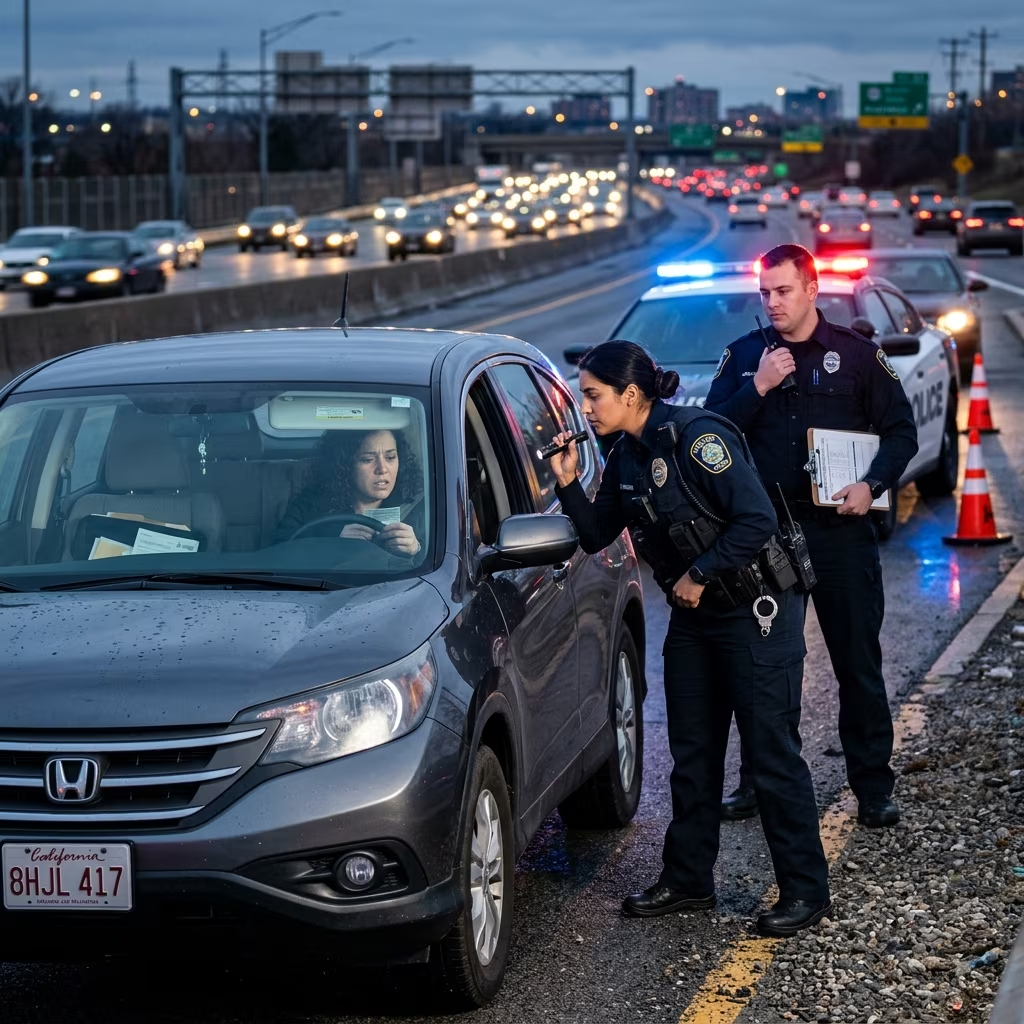
Being pulled over for a traffic violation is one of the most common ways people encounter law enforcement. What begins as a simple stop for speeding or a broken taillight can evolve into a broader police investigation involving searches, questioning, or even arrest. This article explains how and when that escalation can lawfully occur, what limits the Constitution places on officers, and how drivers can respond when a routine stop suddenly feels like a criminal investigation.
From Traffic Violation to Police Investigation: How It Begins
Most encounters start with a traffic stop based on a clear traffic infraction or a reasonable suspicion that a law has been violated. Under the Fourth Amendment, an officer must have at least a reasonable, articulable basis to stop a vehicle; they cannot pull drivers over at random without an approved program such as a properly conducted sobriety checkpoint.
Common lawful reasons for stopping a vehicle include:
- Speeding or driving too fast for road conditions
- Ignoring traffic signals or stop signs
- Failing to yield, signal, or maintain a lane
- Expired registration or missing license plates
- Driving under the influence or apparent impairment
- Participation in a lawful sobriety checkpoint program
Once the vehicle is stopped, the officer’s initial tasks are typically limited to identifying the driver, confirming licensing and insurance, and addressing the specific traffic infraction. At this stage, the encounter is essentially a traffic enforcement action rather than a full criminal investigation.
Constitutional Foundations: Searches, Seizures, and Reasonable Suspicion
The scope of any police investigation during a traffic stop is governed primarily by the Fourth Amendment to the U.S. Constitution, which protects individuals against unreasonable searches and seizures. A traffic stop itself is legally considered a “seizure” of the driver and sometimes the passengers, meaning constitutional protections immediately apply.
Key constitutional concepts that control police conduct at traffic stops include:
- Reasonable suspicion – A specific, articulable basis to believe a person may be involved in criminal activity or has violated a traffic law.
- Probable cause – A stronger standard requiring facts that would lead a reasonable person to believe a crime has been or is being committed.
- Reasonableness of the stop’s duration – Officers generally cannot prolong a stop beyond the time reasonably needed to address the traffic violation unless new facts justify further investigation.
These principles limit how far an officer can go during a traffic stop. Brief questioning and requesting documents are usually permissible; extensive probing unrelated to the original violation may require additional justification.
Basic Rights and Obligations During a Traffic Stop
Drivers and passengers have rights, but also certain legal obligations during a traffic encounter. Understanding both helps prevent misunderstandings and protects you if the situation later leads to charges or litigation.
| Aspect | Driver Obligations | Driver Rights |
|---|---|---|
| Identification | Provide driver’s license, vehicle registration, and proof of insurance when lawfully requested. | Can ask why you were stopped and clarify the alleged violation. |
| Vehicle Position | Pull over safely when signaled by lights or sirens; remain stopped until released. | May choose a safe location to stop, such as a well-lit area, when practical. |
| Exiting the Vehicle | Comply if the officer lawfully instructs you to step out; courts have generally upheld this authority. | May calmly ask if you are free to leave once the officer finishes addressing the violation. |
| Questioning | Answer basic identity questions as required by state law. | Have the right to remain silent regarding potentially incriminating questions and to decline consent-based searches. |
Remaining calm, following instructions, and avoiding sudden movements are strongly recommended both for legal and safety reasons, particularly at night or in high-traffic areas.
When a Routine Stop Turns Into an Investigation
An officer may shift from routine traffic enforcement to a broader criminal investigation if new facts appear during the stop. This might happen because of something the officer observes, something the driver says, or information discovered through records checks.
Common factors that escalate a traffic stop into a more intensive investigation include:
- Contraband or illegal items visible in the vehicle (for example, open containers of alcohol or suspected drugs in plain view)
- Signs of impairment such as slurred speech, odor of alcohol, or failed field sobriety tests
- Outstanding warrants discovered through computer checks
- Evidence suggesting the vehicle is stolen or linked to a crime
- Statements that raise suspicion of ongoing criminal activity
Once probable cause exists, officers may lawfully expand the investigation to include searches, arrests, or seizure of evidence, subject to constitutional and statutory limits.
Vehicle Searches: Consent, Probable Cause, and Checkpoint Exceptions
One of the most contentious issues at traffic stops is whether police can search the vehicle. Generally, officers may not conduct a full search of a car during a simple traffic stop without an exception to the warrant requirement. Common exceptions include:
- Consent
If a driver voluntarily agrees to a search, officers may inspect the areas covered by the consent. Consent must be given freely; you are allowed to refuse. - Plain view doctrine
If contraband or evidence of a crime is clearly visible from a lawful vantage point, officers may seize it and use it to justify further investigation. - Probable cause related to a crime
When facts indicate the vehicle likely contains evidence of a crime, officers can often search without a warrant under the vehicle exception to the Fourth Amendment. - Search incident to arrest and inventory
If the driver is arrested, the vehicle may be impounded. Police can then perform an inventory search to document contents and secure property. - Canine sniffs and checkpoints
At properly authorized sobriety checkpoints, or when a trained dog briefly sniffs the exterior of a vehicle, courts have allowed some investigative actions without treating them as full searches, as long as they do not prolong the stop unjustifiably.
Importantly, a routine traffic infraction alone usually does not justify searching the driver’s home or unrelated property. Traffic enforcement powers are significantly narrower than those used in broader criminal investigations.
Traffic Crashes and Follow-Up Investigations
Traffic crashes frequently trigger separate or extended investigations that go beyond the scene. Many police departments have detailed policies directing officers to investigate and report on crashes, especially when injuries or fatalities are involved.
Typical investigative steps after a crash include:
- Securing the scene and ensuring medical care for injured parties
- Collecting driver information and vehicle details for all involved parties
- Interviewing drivers and witnesses, often separately, to obtain statements about what occurred
- Documenting physical evidence such as skid marks, damage patterns, and road conditions
- Obtaining photographs or camera footage, including nearby surveillance or dash cameras
In some jurisdictions, officers must complete formal crash reports whenever injuries occur, a serious traffic offense is suspected, or the vehicle appears to have been involved in a crime. These reports can later support criminal charges or civil liability claims.
Importantly, citations or charges do not always appear immediately. It may take days or even weeks for law enforcement to finish reviewing evidence and determine whether a traffic law violation contributed to the crash, which can result in delayed tickets or criminal charges.
Serious Violations, Arrests, and Criminal Charges
While many traffic stops end with a warning or minor citation, certain conduct can transform a stop into a basis for arrest or significant criminal prosecution. Serious traffic-related offenses often include:
- Driving under the influence of alcohol or drugs
- Reckless driving or excessive speeding
- Leaving the scene of a crash involving injury or property damage
- Driving on a suspended or revoked license
- Operating an unregistered or uninsured vehicle in violation of state law
In many departments, specialized traffic units investigate crashes that involve fatalities or serious bodily injuries, and these investigations are treated similarly to other major criminal cases, with extensive evidence gathering and potential involvement of accident reconstruction experts.
Challenging Illegal Stops, Searches, or Citations
Drivers who believe they were victims of an improper traffic stop or unlawful search can challenge the encounter in court. If a court finds the stop or search violated constitutional standards, evidence obtained may be suppressed, and charges or citations can be dismissed.
Common legal arguments used to contest traffic-based investigations include:
- The officer lacked reasonable suspicion or probable cause to initiate the stop.
- The stop was prolonged beyond the time needed to handle the original violation without new justification.
- The search was conducted without valid consent or any recognized exception to the warrant requirement.
- The traffic checkpoint did not comply with legal rules for neutrality and advance planning.
Successfully raising these arguments often requires detailed knowledge of state and federal law, as well as the specific facts of the encounter. Many individuals therefore consult traffic or criminal defense attorneys when they believe their rights were violated.
Practical Tips for Drivers During a Traffic Stop
In addition to understanding the legal framework, practical behavior at a stop can reduce the likelihood of escalation and help preserve your rights if an investigation occurs later.
Recommended steps include:
- Pull over promptly in a safe location when you see red or blue lights or hear a siren.
- Remain inside the vehicle unless the officer instructs you otherwise.
- Keep your hands visible, ideally on the steering wheel, and avoid sudden movements.
- Provide your license, registration, and proof of insurance when requested.
- Stay calm and polite, even if you disagree with the officer’s assessment.
- If you do not wish to consent to a search, clearly but respectfully say that you do not agree to the search.
- After the encounter, write down everything you remember, including times, names, and any statements made.
These steps not only reduce tension but also create a useful record if you later need to challenge a ticket or raise concerns about officer conduct.
Frequently Asked Questions About Traffic-Related Police Investigations
Can police search my car during a traffic stop without my consent?
Officers generally need either your consent, probable cause that the vehicle contains evidence of a crime, or another recognized exception such as a search incident to arrest or an inventory search of an impounded vehicle. A routine traffic violation alone normally does not justify a full search.
Do I have to answer all the officer’s questions?
You are typically required to identify yourself and produce lawfully requested documents like your driver’s license and registration. Beyond that, you have the right to decline to answer questions that might incriminate you, although remaining courteous and non-confrontational is advisable.
Can I receive a ticket days after a traffic accident?
Yes. In many states, officers and investigators review crash evidence after the scene is cleared, and may issue citations days or even weeks later if they conclude a driver violated traffic laws that contributed to the collision.
What should I do if I think the stop was illegal?
Do not argue roadside; instead, comply with lawful instructions and avoid escalating the situation. Afterward, consider consulting an attorney, documenting the incident, and challenging any citations or charges in court based on constitutional or statutory violations.
Are sobriety checkpoints legal?
In many jurisdictions, sobriety checkpoints are allowed if they follow strict legal rules, such as neutral selection of vehicles and pre-established procedures. Even at checkpoints, officers must respect constitutional protections and cannot conduct broad searches without appropriate justification.
References
- Police Investigations after a Traffic Violation Stop — LegalMatch Law Library. 2024-01-15. https://www.legalmatch.com/law-library/article/police-investigations-stemming-from-traffic-violations.html
- Traffic Enforcement and Safety — City and County of Denver Police Department. 2023-06-01. https://www.denvergov.org/Government/Agencies-Departments-Offices-Directory/Police-Department/Traffic-Enforcement-and-Safety
- 13.1 Traffic Crashes — Metropolitan Police Department of the District of Columbia. 2022-05-10. https://mpdc.dc.gov/sites/default/files/dc/sites/mpdc/publication/attachments/13.1%20Traffic%20Crashes_FINAL.pdf
- Can You Get a Ticket Days After an Accident? — Morris Bart, LLC. 2023-02-20. https://www.morrisbart.com/faqs/can-you-get-a-ticket-days-after-an-accident/
- Traffic Enforcement Unit — San Jose Police Department. 2022-11-30. https://www.sjpd.org/about-us/bureau-of-field-operations/traffic-enforcement-unit