Being pulled over on suspicion of driving under the influence (DUI) is one of the most stressful encounters a driver can experience. Yet much of what happens during a DUI traffic stop follows predictable legal rules and investigative steps. Understanding these rules can help you stay calm, make informed decisions, and better protect your rights if you ever face this situation.
This guide explains how DUI investigative stops work, what police look for during the encounter, what tests they may use, and which rights you can safely assert without escalating the situation or worsening your legal position.
1. How and Why DUI Traffic Stops Begin
Police cannot stop vehicles at random; they must have a lawful basis under the Fourth Amendment, which protects against unreasonable searches and seizures. For DUI and other investigative traffic stops, the standard is usually reasonable suspicion, not full probable cause.
1.1 Reasonable Suspicion vs. Probable Cause
Reasonable suspicion means the officer has specific, articulable facts suggesting you may have broken a traffic law or committed a crime, viewed under the totality of the circumstances. It is a lower standard than probable cause, but it must be based on more than a mere hunch.
- Reasonable suspicion: Justifies a brief, investigative stop to gather more information.
- Probable cause: Required to make an arrest or conduct certain searches.
Courts have confirmed that reasonable suspicion is enough to justify an investigatory traffic stop related to suspected impaired driving.
1.2 Common Reasons for DUI-Related Stops
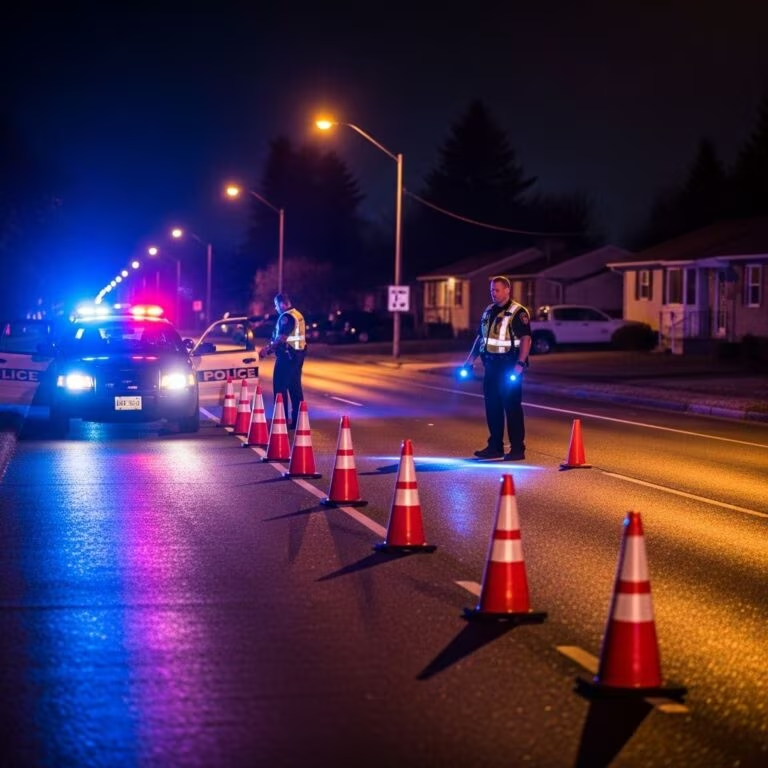
Officers may initiate a DUI stop after directly observing behavior or receiving information suggesting impairment. Typical triggers include:
- Visible traffic violations: speeding, drifting between lanes, running a red light, failing to signal.
- Driving patterns: erratic braking, sudden lane changes, unusually slow driving, or almost hitting objects or other vehicles.
- Equipment issues: broken lights, expired registration, obstructed license plate, which can justify a stop that becomes a DUI investigation if impairment signs appear.
- Information from others: 911 calls or reports about a potentially impaired driver, which can support reasonable suspicion when corroborated.
Once a lawful stop is made, the officer transitions from simply enforcing the traffic code to conducting an investigative encounter if they begin to suspect impairment.
2. The Typical Three-Phase DUI Investigation
Modern DUI and driving while intoxicated (DWI) investigations often follow a three-phase structure: observing the vehicle, interacting with the driver, and conducting pre-arrest screening.
| Phase | What Officers Do | Main Objective |
|---|---|---|
| Vehicle in Motion | Observe driving behavior before and during the stop. | Identify clues suggesting possible impairment. |
| Personal Contact | Interact with the driver at the window, ask questions, watch movements. | Look for signs of intoxication or drug use. |
| Pre-Arrest Screening | Administer field sobriety tests and preliminary chemical tests. | Decide whether probable cause exists to arrest. |
2.1 Phase One: Vehicle in Motion
Before the stop, officers watch how the vehicle is being driven. Certain behaviors are associated with impairment, such as weaving, wide turns, or repeatedly drifting over lane lines. These observations form part of the basis for reasonable suspicion and may later be described in police reports as evidence of impairment.
2.2 Phase Two: Personal Contact at the Window
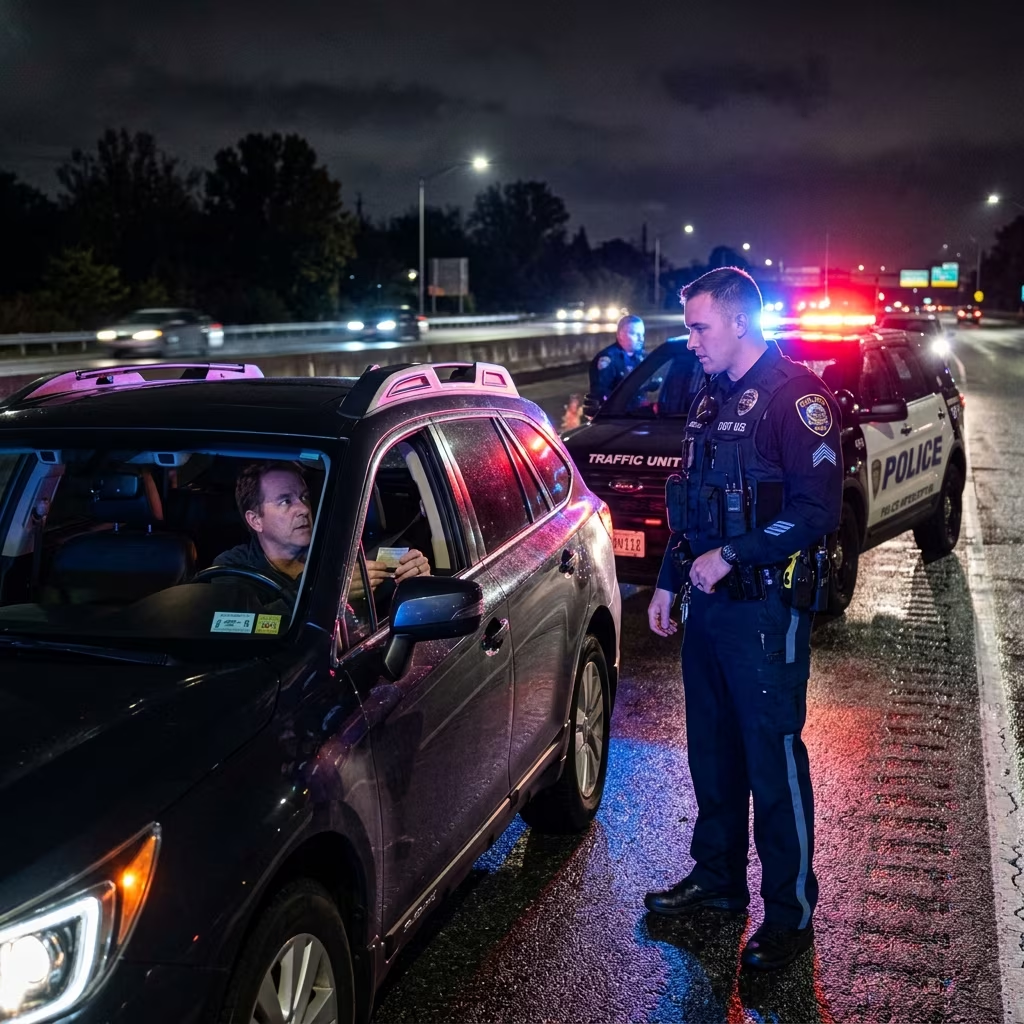
After you pull over, the officer approaches your vehicle and begins to interact with you. This is a critical phase, because the officer is gathering information and looking for signs of impairment while asking routine questions.
Common indicators officers document at this stage include:
- Difficulty coordinating simple movements, such as retrieving your license and registration.
- Fumbling with documents or dropping items.
- Strong odor of alcohol or marijuana from your breath or the vehicle.
- Slurred speech, slow responses, or confusion.
- Bloodshot or watery eyes.
- Open containers or drug paraphernalia visible inside the car.
Based on these observations, the officer decides whether to escalate the encounter by asking you to exit the vehicle for further screening.
2.3 Phase Three: Pre-Arrest Screening
If the officer believes there are enough signs of impairment, they may begin formal screening. This usually involves standardized field sobriety tests and, in some jurisdictions, preliminary breath testing or oral fluid testing.
The purpose is to determine whether there is probable cause to arrest you for DUI or a related offense.
3. Field Sobriety Tests: What They Are and How They Work
Field sobriety tests (FSTs) are physical and cognitive assessments conducted roadside to look for clues of impairment. Many jurisdictions use three standardized tests endorsed by traffic safety agencies and law enforcement training programs.
3.1 The Three Common Standardized Tests
- Horizontal Gaze Nystagmus (HGN) – The officer tracks your eye movements as you follow a stimulus (like a pen). They look for involuntary jerking of the eyes, which may be more pronounced at certain blood alcohol levels.
- Walk-and-Turn – You are instructed to walk a specific number of steps heel-to-toe along a line, turn in a prescribed manner, and return in the same way. The officer notes balance problems, inability to follow instructions, or stepping off the line.
- One-Leg Stand – You must stand on one leg for a set time while counting as directed. The officer observes swaying, putting the foot down, using arms for balance, or hopping.
These tests are intended to be administered in a standardized manner. Deviations from the protocol or poor testing conditions (uneven surfaces, high stress, health issues) can affect performance.
3.2 Are Field Sobriety Tests Mandatory?
In many states, field sobriety tests are voluntary. Drivers are often legally allowed to decline them, although refusing may increase the officer’s suspicion and could be noted in the report. Whether refusal has additional consequences depends on local law.
Key points to consider:
- You typically must provide license, registration, and proof of insurance when requested.
- Outside of ID and required documents, you may have the right to refuse field sobriety tests.
- Politely asserting your rights is usually better than arguing or becoming confrontational.
4. Chemical Testing: Breath, Blood, and Urine
When officers believe probable cause exists for a DUI arrest, they may request a chemical test to measure your blood alcohol concentration (BAC) or detect drugs. Common methods include evidential breath tests, blood draws, and sometimes urine tests.
4.1 Preliminary vs. Evidential Breath Tests
There are two broad categories of breath testing:
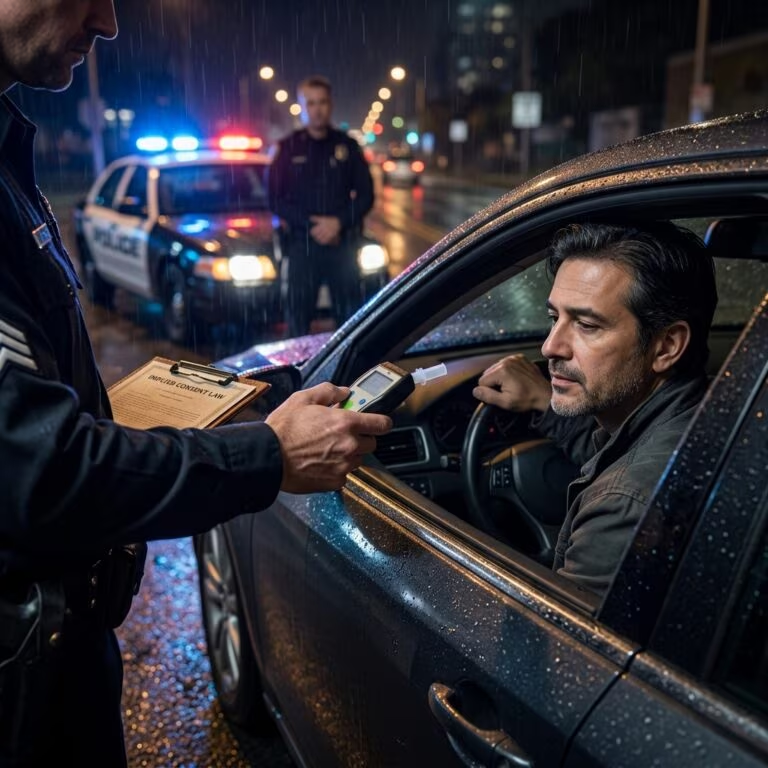
- Preliminary Alcohol Screening (PAS) – Usually a handheld device used roadside to estimate BAC before arrest. In some jurisdictions, this test is voluntary unless you’re underage or on DUI probation.
- Evidential Breath Test – Conducted at a station or certified facility using calibrated equipment. These results are typically used as primary evidence in court.
4.2 Blood and Urine Tests
Blood tests can provide more precise BAC measurements and detect a wider range of substances, including many drugs. Because blood draws are invasive, recent Supreme Court decisions generally require officers to obtain a warrant or valid consent before drawing blood, except in limited circumstances where recognized exceptions apply.
Urine testing may be used in specific situations, especially where drug use is suspected, though it is less common as a primary evidence source compared to breath and blood.
4.3 Implied Consent Laws
Most states have implied consent statutes. These laws provide that by driving on public roads, you agree in advance to submit to a chemical test if you are lawfully arrested for DUI. Refusing a lawful chemical test can trigger administrative penalties such as license suspension, separate from any criminal case.
However, implied consent laws do not usually apply to pre-arrest, voluntary screening such as PAS devices, unless specific exceptions (like underage driving) are involved.
5. Your Core Rights During a DUI Traffic Stop
Even during a DUI investigation, you retain constitutional rights. Knowing them can help you navigate the encounter strategically and minimize unnecessary self-incrimination.
5.1 The Right to Remain Silent
You generally have the right to remain silent about questions that could incriminate you, such as whether you have been drinking, where you are coming from, or how much you consumed.
- You should still provide required documents: license, registration, proof of insurance.
- For other questions, you can calmly say something like, “I choose to remain silent and speak with my attorney.”
5.2 The Right to Decline Certain Tests
Depending on your jurisdiction, you may have the right to decline:
- Field sobriety tests, such as walking a line or standing on one leg.
- Preliminary roadside breath tests (PAS) if you are not underage or on DUI probation.
Remember that refusing a formal, post-arrest chemical test (not preliminary screening) can carry separate civil or administrative penalties under implied consent rules.
5.3 The Right to Know Why You Were Stopped
You can ask the officer the reason for the stop. They must be able to articulate a lawful basis, such as a specific traffic violation or observed behavior that contributed to reasonable suspicion.
5.4 The Right to Refuse Vehicle Searches
Officers generally need consent, probable cause, or a warrant to search your vehicle, subject to certain recognized exceptions. You may decline consent to a search, though if you are arrested, the car may later be impounded and searched under established procedures.
5.5 The Right to Legal Counsel
If you are arrested, you have the right to consult with an attorney and the right against self-incrimination. Once you clearly request a lawyer and state that you do not wish to answer further questions, investigative questioning about the incident should generally stop.
5.6 The Right to Record the Encounter
In many jurisdictions, you may lawfully record your interaction with law enforcement as long as you do not interfere with their duties. Recording can preserve valuable evidence about what was said and how the stop was conducted.
6. Practical Tips for Safely Managing a DUI Stop
Legal rights are important, but how you exercise them in the moment also matters. The way you behave can affect the officer’s perception and sometimes the outcome of your case.
6.1 Immediate Steps When You See Flashing Lights
- Safely pull over as soon as possible, using your turn signal.
- Place the vehicle in park and keep both hands visible on the steering wheel.
- At night, turning on the interior light can help the officer see you clearly.
6.2 During the Initial Interaction
- Remain calm and be courteous. Avoid arguing on the roadside, even if you believe the stop is unjustified.
- Provide requested identification and documents promptly.
- Do not admit to drinking or drug use; you are not required to answer those questions.
- If you are unsure whether you are free to leave, you may respectfully ask, “Am I being detained, or am I free to go?”
6.3 If Testing or Arrest Occurs
- Listen carefully to instructions for any field sobriety or chemical tests if you agree to perform them.
- If arrested, assert your desire to speak with an attorney and avoid making detailed statements about the incident.
- After release, write down your recollection of the stop while it is fresh and consult a qualified lawyer as soon as possible.
7. Frequently Asked Questions (FAQs)
Q1: Can police stop me just to check my license or registration?
Random stops without any basis are generally considered unreasonable seizures under the Fourth Amendment, and courts have ruled such stops unconstitutional in many circumstances. Officers usually need reasonable suspicion of a traffic or criminal violation to initiate a stop.
Q2: If I refuse field sobriety tests, will I automatically be arrested?
Refusing field sobriety tests does not automatically require arrest, but it may contribute to the officer’s decision if other evidence suggests impairment. Whether refusal is advantageous depends on the specific facts and local laws; consulting a DUI lawyer about your jurisdiction’s approach can be helpful.
Q3: What happens if I refuse a chemical test after arrest?
Under implied consent laws, refusing a lawful post-arrest breath, blood, or urine test can lead to administrative penalties such as license suspension, often separate from any criminal DUI charge. Some states may also impose enhanced consequences or use refusal as evidence in court.
Q4: Do officers need a warrant for blood tests?
Because blood draws are invasive, recent Supreme Court decisions generally require officers to obtain a warrant unless you give informed consent or a recognized exception applies. Breath tests are often treated differently, with courts allowing warrantless testing in certain circumstances because they are less intrusive.
Q5: Should I talk to a lawyer after any DUI stop, even if I am not charged?
Consulting a lawyer is often wise if you were subjected to extensive questioning, testing, or detention, even if charges were not immediately filed. They can assess whether your rights were respected and advise you if further legal issues are likely.
References
- Supreme court: ‘reasonable suspicion’ enough for traffic stop — Illinois State Bar Association. 2012-10-01. https://www.isba.org/ibj/2012/10/lawpulse/supremecourtreasonablesuspicionenou
- Drunk Driving: It All Begins with the Stop! — Indiana Court Times. 2020-09-14. https://times.courts.in.gov/2020/09/14/drunk-driving-it-all-begins-with-the-stop/
- Understanding DWI Investigations — American Bar Association. 2019-01-01. https://www.americanbar.org/groups/judicial/resources/highway-justice/understanding-dwi-investigations/
- Phase 1: Cops and Traffic Stops — Responsibility.org. 2021-06-01. https://www.responsibility.org/high-risk-impaired-driving/high-risk-impaired-driving-phase1/
- Columbia DUI Stops — South Carolina Criminal Law. 2018-05-01. https://sccriminallaws.com/columbia-criminal/dui-lawyer/stops/
- What Qualifies as Reasonable Suspicion for a DUI? — Rodrick Rouse Attorney at Law. 2023-03-01. https://rodrickrouseattorneyatlaw.com/blog/what-qualifies-as-reasonable-suspicion-for-a-dui/
- What Are Your Rights During a DUI Traffic Stop? — David Hunter Law Firm. 2022-04-01. https://www.davidhunterlawfirm.com/blog/rights-during-dui-traffic-stop/