
Police Dog Injuries: Rights, Risks, and Claims
Understand how police dog bites can cause serious harm and what legal options may follow.
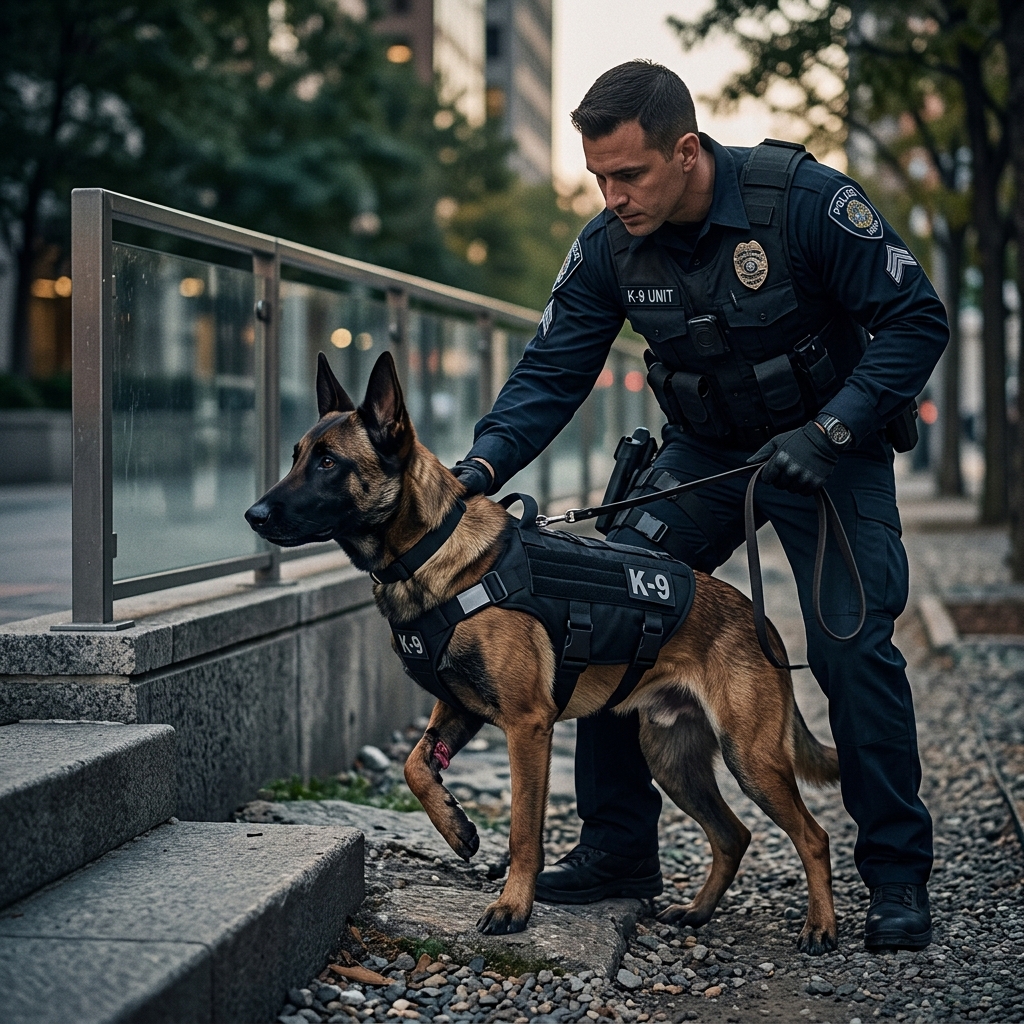
Police dogs are often presented as controlled tools of law enforcement, but their use can lead to severe wounds, long recovery times, and lasting emotional harm. Medical research and civil rights investigations show that dog bites from law enforcement K-9 units can produce deep tissue injuries, infection, nerve damage, fractures, and hospitalization, and that some victims suffer permanent disability or disfigurement.
When a police dog bite occurs, the legal questions usually turn on whether the force was reasonable, whether officers followed department policy, and whether the injured person may seek compensation through a civil rights or personal injury claim. The answer depends on the facts of the encounter, including the nature of the suspected offense, the threat level, whether warnings were given, and whether the handler could have controlled the dog more safely.
How police dog injuries happen
Police dogs are trained differently from household pets. In many departments, they are used as apprehension tools, meaning the dog is directed to bite and hold a person until officers can make contact. That training can make the bite force intense enough to break skin, tear muscle, and cause repeated punctures rather than a single wound.
Injuries may happen during a chase, after a suspect has already been located, or when an officer deploys the dog in a crowd or during another fast-moving situation. Reports from civil rights groups and journalists describe victims who were not violent, who were suspected of low-level offenses, or who were bitten while complying or attempting to surrender.
- Dogs may bite during an arrest or search when an officer believes a person is hiding or resisting.
- Some victims are bystanders or people who were mistakenly identified as suspects.
- Injuries can worsen if the dog is not called off quickly or if officers struggle to restrain it.
Common physical harm after a K-9 bite
The medical impact of a police dog attack can be broader than the visible puncture wounds. A clinical review of law enforcement K-9 bites found significant rates of complications, including vascular injury, infection, fractures, cortical violation, tendon injury, and nerve injury, with nearly half of patients hospitalized in the study sample.
Public-health and civil-rights sources also describe long-term consequences such as disfigurement, loss of function in limbs, chronic pain, and mobility problems. In some cases, injuries require surgery, repeated wound care, and specialist treatment that continues well after the initial arrest or incident.
| Type of harm | What it can look like | Possible consequence |
|---|---|---|
| Soft-tissue trauma | Deep punctures, tearing, bruising | Scarring, infection, surgery |
| Nerve or tendon damage | Loss of sensation, weakness, limited movement | Reduced function, chronic pain |
| Vascular injury | Heavy bleeding or damaged blood vessels | Emergency treatment, hospitalization |
| Bone-related trauma | Fracture or cortical violation | Immobilization, longer recovery |
| Infection | Swelling, fever, drainage, worsening pain | Antibiotics, follow-up care, complications |
Emotional and psychological effects
Police dog attacks can also create lasting mental health harms. Medical experts have documented psychological trauma, including post-traumatic stress symptoms, after serious bites and violent arrests involving K-9 units. Fear of law enforcement, panic attacks, sleep disruption, and distress triggered by reminders of the event may continue long after the wounds heal.
These nonphysical injuries matter in legal claims because a civil case may seek compensation not only for medical bills, but also for pain, suffering, emotional distress, and reduced quality of life. Where a victim needs counseling, psychiatric care, or medication, those expenses may also become part of the claim.
When a police dog bite may be unlawful
The use of force by police, including the use of a dog, is measured under the Fourth Amendment’s reasonableness standard. The key question is not whether officers believed force was useful, but whether the amount of force used was objectively reasonable under the circumstances.
A police dog deployment may be challenged when it appears excessive in light of the situation. Courts and civil-rights advocates commonly focus on whether the person posed an immediate threat, whether the person was fleeing, whether less forceful methods were available, and whether the handler maintained control of the animal.
- Using a dog against a non-threatening person may support a claim of excessive force.
- Failing to warn before deployment can be relevant, especially if a warning could have reduced harm.
- Allowing the dog to keep biting after the person is subdued may strengthen the case for liability.
Who may be responsible for the injury
Liability in a police-dog case is not limited to the dog itself or the handler in the moment. Depending on the facts, responsibility may extend to the individual officers involved, supervising personnel, or the public agency that trained or authorized the dog’s use.
In many civil rights claims, the injured person alleges that an officer used excessive force, failed to intervene, or allowed the dog to continue biting after the threat ended. In some cases, a broader claim may focus on inadequate training, unsafe policies, or an official practice that routinely encouraged unnecessary bites.
- Handler liability: for deploying or failing to control the dog.
- Officer liability: for participating in or failing to stop the attack.
- Agency liability: for policies, training, or supervision that contributed to the injury.
What victims may need to prove
A successful claim usually depends on records and details that show what happened before, during, and after the bite. Video footage, witness statements, medical records, photographs of the wounds, and incident reports can all help establish whether the force was justified and how serious the harm was.
In addition to proving the bite occurred, an injured person generally needs to connect the conduct of the officers or agency to the damages suffered. That may include emergency treatment, surgery, rehabilitation, time away from work, and the emotional consequences of the attack. Medical literature showing that K-9 bites often cause complications can help explain why even an apparently short encounter may lead to substantial losses.
- Photographs of wounds and recovery progress
- Emergency room and follow-up medical records
- Witness accounts and body-camera footage
- Proof of missed work or reduced earning ability
Possible damages in a legal claim
Compensation in a police-dog case may include economic damages, such as medical bills and lost income, as well as non-economic damages, such as pain and suffering. In severe cases, victims may also seek payment for future treatment if the injury leaves permanent impairment or requires ongoing care.
Because some bites lead to scarring, limited mobility, and psychological trauma, the value of a claim can rise well beyond the initial hospital visit. A victim who needs surgery, physical therapy, or long-term mental health treatment may have a claim that reflects both immediate and future losses.
| Damage category | Examples |
|---|---|
| Medical costs | Emergency care, surgery, medication, follow-up appointments |
| Income losses | Time off work, reduced earning capacity |
| Physical harm | Scarring, disability, limited movement, chronic pain |
| Emotional harm | Fear, anxiety, trauma, sleep disruption |
Why policy and training matter
Research suggests that policy changes can affect both the frequency and severity of K-9 injuries. A medical study found that after changes in law-enforcement K-9 policy, the number of bitten individuals, the number of injuries, and the share of hospitalized patients all declined. That finding supports the view that deployment rules and training practices can have a direct impact on public safety.
Advocacy organizations have also argued for tighter limits on police canine use, pointing to cases involving severe injuries and uneven enforcement. These concerns are especially important where dogs are used in minor offenses, crowd situations, or circumstances in which the risk to the public may outweigh the benefit of canine apprehension.
What to do after a police dog bite
Immediate medical attention should come first because puncture wounds can hide deeper injuries and infection risk. After that, preserving evidence can be critical for any legal review. The sooner a victim documents the injury, the easier it may be to connect the wound to the incident and show the extent of the harm.
- Seek prompt medical care, even if the wounds appear minor.
- Take clear photos of the injuries and any torn clothing or bloodied items.
- Request copies of medical records and incident reports.
- Write down the names of officers, witnesses, and any nearby agencies.
- Preserve video, messages, or other evidence related to the event.
Frequently asked questions
Can a police dog bite be considered excessive force?
Yes. A police dog is a form of force, and the deployment may be unlawful if it was not objectively reasonable under the circumstances.
Are police dog bites usually serious?
They can be. Research has documented hospitalization, infection, vascular injury, nerve damage, fracture, and other complications after K-9 bites.
Can someone recover compensation for scarring or trauma?
Yes. Civil claims may include both physical and emotional harm, including scarring, pain, disfigurement, and psychological distress.
Does it matter if the person was suspected of a minor offense?
It can matter a great deal. Reports indicate that some police dogs have been used in low-level cases or in situations where the force may have been disproportionate to the suspicion involved.
References
- California Police Attack Dogs Cause Permanent Injuries, Disfigurement, and Death — Physicians for Human Rights. 2023-11-16. https://phr.org/news/california-police-attack-dogs-cause-permanent-injuries-disfigurement-and-death-phr-expert-medical-opinion/
- ACLU Report Finds Police Attack Dogs Have Severely and Permanently Injured Hundreds — ACLU of Southern California. 2023-10-12. https://www.aclusocal.org/press-releases/aclu-report-finds-police-attack-dogs-have-severely-and-permanently-injured-hundreds/
- Police Brutality Involving Police Dogs — Civil rights legal analysis. 2024-01-01. https://www.piccutalaw.com/practice-areas/civil-rights-violations-workplace-lawsuits/police-brutality-excessive-force/police-brutality-involving-police-dogs/
- We Spent a Year Investigating Police Dogs. Here Are Six Takeaways. — The Marshall Project. 2020-10-02. https://www.themarshallproject.org/2020/10/02/we-spent-a-year-investigating-police-dogs-here-are-six-takeaways
- Law enforcement K-9 dog bites: injuries, complications, and trends — PubMed / Journal article. 1996-01-01. https://pubmed.ncbi.nlm.nih.gov/9140249/
- Mauled: When Police Dogs Are Weapons — Invisible Institute. 2020-01-01. https://invisible.institute/mauled
Similar Articles








Read full bio of Sneha Tete




