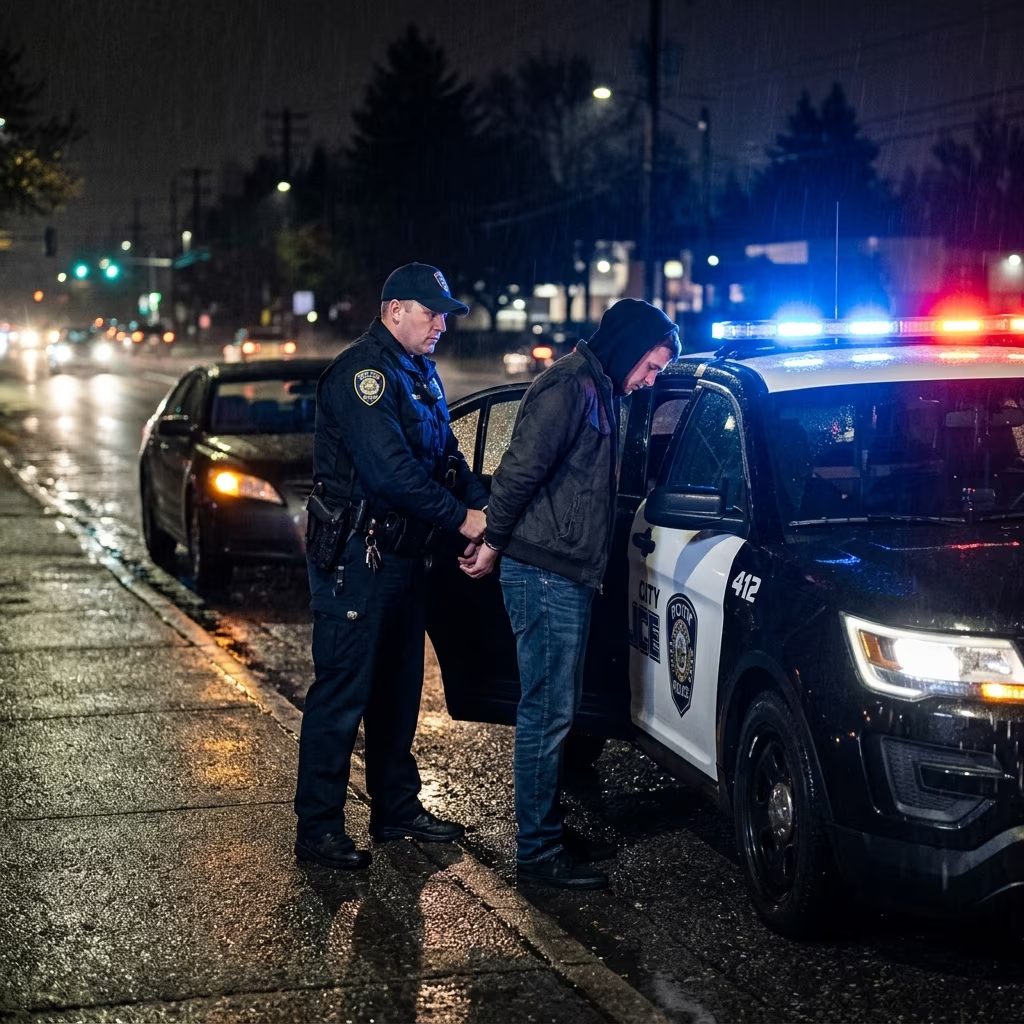
A minor traffic violation usually results in a citation, not handcuffs. But under certain legal conditions, an ordinary stop can escalate into an arrest, especially when identity cannot be verified, a driver refuses to sign a court promise, or there is suspicion of impaired driving.1
Understanding why this happens matters because the difference between a ticket and an arrest often turns on a few specific decisions made during the stop. Knowing what officers may ask, what documents you must provide, and when you should stay silent can help you respond more effectively.
When a simple traffic ticket becomes more serious
Traffic laws are designed to handle most routine violations through notices to appear in court rather than jail time. However, some jurisdictions allow officers to arrest a driver for certain traffic-related offenses or for conduct during the stop that prevents the citation process from moving forward.1
In practical terms, an arrest may happen when:
- the violation involves suspected intoxication or drug impairment;
- the driver cannot prove identity;
- the driver refuses to promise to appear in court;
- the driver insists on seeing a magistrate immediately;
- the officer discovers another offense, such as a suspended license or contraband;
- the stop reveals behavior that creates safety concerns or probable cause for a separate crime.13
The key point is that the original issue may be minor, but the legal response can become much more serious once the officer concludes that the citation process is not enough.
Why officers can arrest in some traffic cases
Traffic enforcement is not limited to issuing tickets. Under certain statutes, officers have authority to arrest a motorist when the person’s identity is unclear or when the person will not cooperate with the required citation procedure.1
One common reason is identification. If a driver cannot present a valid license or other acceptable proof of identity, an officer may be permitted to take the person before a magistrate rather than release them with a citation.1
Another common reason is refusal to sign the notice to appear. In many states, a citation is a written promise that the driver will appear in court or otherwise handle the case as directed. Refusing to make that promise can convert the stop into an arrest situation.1
A third reason involves suspected DUI. When the stop concerns alcohol or drugs, the law often gives officers broader authority to investigate, detain, arrest, and request additional testing.13
Common situations that can trigger arrest
Although each state has its own rules, several patterns appear repeatedly in traffic arrest cases.
| Situation | Why it matters | Possible result |
|---|---|---|
| Failure to show ID | Officers need to confirm identity before issuing a citation | Arrest or transport to a magistrate |
| Refusal to sign citation | The citation process relies on a promise to appear | Custodial arrest in some jurisdictions |
| Suspected DUI | Impairment can be a criminal offense, not just a traffic matter | Field investigation, arrest, testing |
| Outstanding warrants or suspended license | Separate legal issues may exist beyond the traffic stop | Arrest, citation, or vehicle impoundment |
| Contraband or weapons in the car | New evidence may support criminal charges | Search, detention, arrest |
These categories are not identical in every state, but they illustrate why “minor traffic violation” does not always mean “minor legal consequences.”13
What drivers are usually required to provide
During a lawful stop, a driver generally must identify themselves and provide required documents such as a driver’s license, vehicle registration, and proof of insurance when applicable. Failure to provide basic information can escalate the encounter, especially if the officer cannot verify who you are.23
That said, you do not have to volunteer extra information beyond what the law requires. In many traffic situations, the safest approach is to remain calm, answer only the necessary questions, and avoid making statements that could be misunderstood or used against you later.2
Your most important rights during the stop
A traffic stop is considered a seizure under constitutional law, so it must be justified. Once the stop begins, a driver still has several important protections.2
- Right to remain silent: beyond identifying yourself and providing required papers, you generally do not have to explain where you were going or whether you have been drinking.2
- Right to decline a search: if an officer asks to search your vehicle, you may clearly state that you do not consent.2
- Right to ask whether you are free to leave: this can help clarify whether the officer is still conducting a detention or has ended the stop.2
- Right to counsel after arrest: once custody begins, you may ask for a lawyer and should stop answering substantive questions.2
These rights do not allow a driver to obstruct the stop or physically resist. The best response is usually calm, brief, and respectful.
What happens after an arrest for a traffic-related offense
If the officer decides to arrest you, you may be taken to a station, jail, or magistrate depending on the local procedure. The next steps often include booking, fingerprinting, paperwork, and a determination about release.13
For some traffic-related arrests, especially DUI cases, the arrest can affect your driving privilege even before the court case is finished. In California, for example, failing to appear on a ticket can lead to license suspension, and certain alcohol- or drug-related offenses can trigger DMV action.4
This means a traffic arrest may create two tracks at once: the criminal or infraction case in court and an administrative process involving your license.
How a license can be affected
One of the most overlooked consequences of traffic enforcement is the effect on driving privileges. Even when the case does not lead to jail, an unresolved ticket or conviction can affect your ability to drive legally.4
Depending on the offense and your state’s laws, consequences may include:
- license suspension for failing to appear in court;
- probationary limits on driving;
- point accumulation on your record;
- higher insurance costs;
- mandatory classes or treatment after certain convictions.4
Because these outcomes can continue long after the roadside stop, it is important not to treat a citation as a trivial matter.
Why cooperation matters, but so does caution
Drivers sometimes assume that explaining themselves in detail will smooth things over. In reality, too much talking can create unnecessary risk. A better strategy is to be polite, keep your hands visible, provide the required documents, and avoid arguing at the roadside.23
At the same time, cooperation does not mean surrendering your rights. You can comply with lawful instructions while still declining consent to search and choosing not to answer investigative questions. That balance is often the safest legal position.
How to protect yourself after the stop
If a traffic stop ends in a citation or arrest, your next steps can affect the final outcome.
- Write down the details: note the time, place, officer name, badge number, and what was said.
- Preserve any video: dashcam or phone footage may be important later.
- Check your court paperwork: confirm the charge, deadline, and court location.
- Do not ignore notices: missed deadlines can lead to added penalties or suspension.
- Consult a lawyer quickly: especially if you were arrested, cited for DUI, or accused of driving with a suspended license.34
These steps are practical, not dramatic. They help preserve information that may matter if you later challenge the stop, the arrest, or the resulting penalties.
When a lawyer may be especially helpful
Legal help is valuable whenever the stop involves more than a routine citation. That includes suspected impaired driving, refusal allegations, license suspension issues, warrant concerns, or any case where the officer claims you were uncooperative.13
A lawyer can review whether the officer had a lawful basis for the stop, whether the arrest complied with local procedure, and whether your statements or the officer’s observations can be challenged. In some cases, the best defense may involve suppressing evidence gathered during an unlawful stop or proving that the facts do not support the charge.
Frequently asked questions
Can you be arrested for a speeding ticket? Most speeding tickets do not lead to arrest by themselves, but speeding combined with other factors, such as reckless driving, a suspended license, or refusal to cooperate, can increase the chance of arrest.3
Do you have to answer every question during a traffic stop? No. You generally must provide required identification and documents, but you do not have to give broad explanations or discuss alcohol, drugs, or where you are going.2
What if the officer asks to search my car? You may decline consent unless the officer has another lawful basis to search. Say clearly that you do not consent and remain calm.2
Can a missed court date make the situation worse? Yes. Failing to appear can result in additional penalties, license consequences, or a warrant in some jurisdictions.4
Is an arrest the same as a conviction? No. An arrest means law enforcement took you into custody; a conviction only happens if the case is proven or resolved against you in court.
Bottom line for drivers
A minor traffic violation is not usually an arrestable event on its own, but it can become one when identity cannot be verified, a citation is refused, impairment is suspected, or another offense is discovered.13
The safest course is to stay calm, give required documents, avoid unnecessary discussion, and respond promptly if you later receive court paperwork or a license notice.
References
- Arrests for Traffic Violations | Vehicle Code 40302 VC — EG Attorneys. 2026-01-01. https://www.egattorneys.com/california-vehicle-code-40302
- Your Rights During a California Traffic Stop: What to Know — Gabriela Guraiib Law. 2026-01-01. https://gabrielaguraiiblaw.com/your-rights-california-traffic-stop/
- Traffic Arrest FAQ — FindLaw. 2025-01-01. https://www.findlaw.com/traffic/traffic-stops/traffic-arrest-faq.html
- Section 7: Laws and Rules of the Road (Continued) — California Department of Motor Vehicles. 2025-01-01. https://www.dmv.ca.gov/portal/handbook/california-driver-handbook/laws-and-rules-of-the-road-cont2/