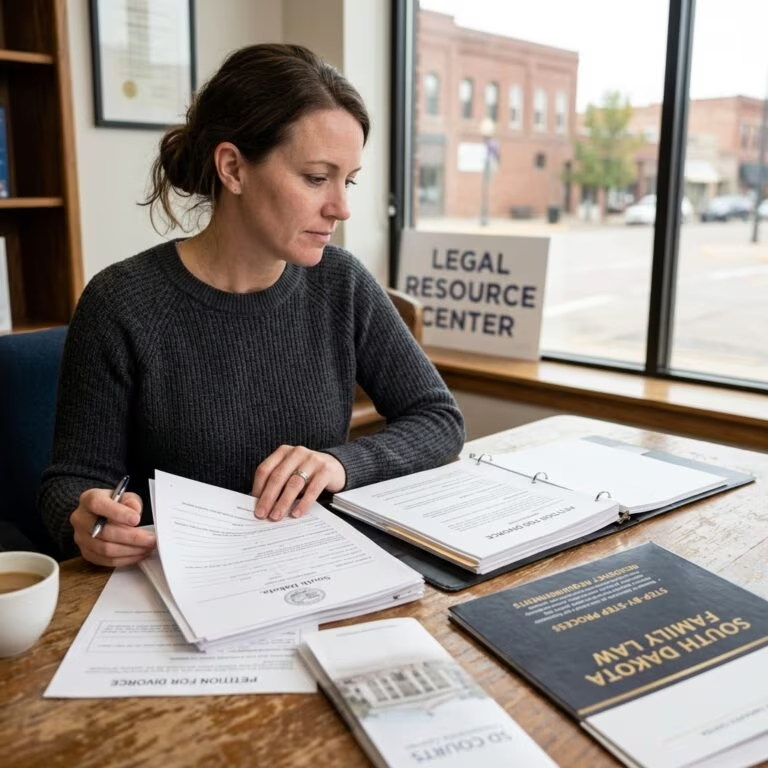
Alimony, also called spousal support, is based on each spouse’s financial situation at the time of divorce. Those circumstances rarely stay the same. Job losses, health problems, rising costs of living, or changes in income can make the original support order unfair or unworkable. In many cases, courts allow an increase in alimony when a spouse can show a significant and continuing change in circumstances since the order was issued.
This guide explains when an increase in alimony may be possible, what counts as a meaningful change in circumstances, how the legal process usually works, and what kind of evidence judges look for when deciding whether to raise support payments.
Core Idea: Alimony Can Be Modified, But Not Lightly
Most jurisdictions permit alimony to be modified if one party proves a substantial change in circumstances after the original order. However, courts generally apply several limiting principles:
- The change must be significant, not minor. Small shifts in income or routine cost-of-living differences rarely justify a modification.
- The change must arise after the original order. Facts that were known or reasonably foreseeable at the time of divorce usually cannot be the basis for a later modification.
- The change should be long-term or permanent. Temporary hardship, such as a short-term reduction in hours or seasonal income variation, often is not enough.
- Courts look at both spouses’ full financial picture. Judges balance the needs of the recipient and the ability of the paying spouse to contribute more.
Before seeking an increase in alimony, it is essential to understand whether your situation meets these thresholds and whether the original divorce judgment allows modification at all.
Common Reasons Courts Approve Higher Alimony
While details vary by state, certain recurring scenarios frequently form the basis for requests to increase spousal support.
1. Serious Decline in the Recipient’s Income or Earning Capacity
When the spouse receiving alimony experiences a significant, involuntary drop in income, courts may consider increasing support if the existing order no longer covers reasonable needs.
- Long-term job loss or layoff
- Industry-wide downturn reducing job prospects
- Substantial wage cuts or demotions
- Closing of a business or professional practice
Judges generally examine whether the change was beyond the recipient’s control and whether the spouse has made sincere efforts to regain employment or restore income.
2. Increased Expenses or Financial Needs
Sometimes income remains stable but necessary expenses rise sharply. Courts may increase alimony if new, reasonable costs make the original order inadequate.
- Major new medical or mental health expenses
- Higher housing costs following a move necessary for work, safety, or health
- Inflation or cost-of-living increases that substantially outpace prior assumptions
- Additional caregiving responsibilities, such as supporting a disabled child or elderly parent
Judges distinguish between essential needs and lifestyle upgrades. Increased support is more likely when expenses relate to health, safety, or basic living needs.
3. Significant Increase in the Paying Spouse’s Income
If the spouse paying alimony experiences a major income increase, the recipient may seek higher support—especially when their own need remains high and the previous order was constrained by limited resources.
- Promotion or new position with substantially higher salary
- Profitable business expansion
- Unexpected windfalls, such as bonuses or stock options
- Repeated raises over time yielding much higher earnings than at divorce
Courts focus on whether the higher income represents a stable, ongoing change, rather than a one-time bonus, and whether an increase in support is equitable given both parties’ current financial situations.
4. Health Problems or Disability Affecting Work
Serious illness or disability can reduce a recipient’s ability to work or increase their medical expenses. Many statutes expressly treat health-related changes as grounds for modifying alimony.
- New diagnosis that limits employment
- Progression of a chronic condition
- Permanent injury or disability
- Long-term rehabilitation or treatment needs
Medical records, physician reports, and documentation of reduced hours or job loss are central to making this case.
Legal Standards: What Counts as a “Substantial Change”?
Different states articulate the test slightly differently, but most follow a similar two-part approach:
| Step | Question Courts Ask | Illustrative Factors |
|---|---|---|
| 1. Change in circumstances | Has there been a significant, continuing change affecting either spouse’s finances? | Income shift, job loss, illness, new expenses, remarriage or cohabitation, long-term cost-of-living changes |
| 2. Effect on support and lifestyle | Does the change make the existing order unfair or insufficient to meet reasonable needs? | Ability to maintain marital standard of living, adequacy of current payments, paying spouse’s ability to contribute more |
Courts typically consider:
- Income and assets of both parties
- Recipient’s efforts to be self-supporting
- Changes in living expenses or obligations
- Reasons for the change (voluntary vs. involuntary, good faith vs. bad faith)
- Any other relevant factor, including changes in health, caregiving responsibilities, or economic conditions
Importantly, courts often refuse to reward a party who intentionally reduces or manipulates income to influence alimony. Voluntary underemployment or strategic job changes are scrutinized carefully.
When Alimony Cannot Be Increased
Even if circumstances have changed, some orders cannot be modified or only allow changes in limited situations.
- Non-modifiable agreements. Some divorce settlements explicitly state that alimony is fixed and cannot be changed by the court.
- Orders with a fixed duration. Certain spousal support orders end after a specified period and cannot be extended or increased once that term expires.
- Lack of substantial change. If a judge finds the change minor, temporary, or anticipated at divorce, the court may deny modification.
- Insufficient evidence. A request without solid documentation—such as tax returns, pay stubs, medical records, or bills—often fails.
Before filing, review your divorce decree carefully or consult a family law attorney to confirm that your order is legally modifiable.
How to Request an Increase in Alimony
While procedures differ by jurisdiction, the process to seek higher alimony usually follows a predictable pattern.
1. Evaluate Your Case
- Confirm that your alimony order allows modification and has not expired.
- Identify the specific change in circumstances and when it occurred.
- Assess whether the change is likely to be long-term rather than temporary.
- Estimate how much additional support you need to cover reasonable expenses.
Some individuals begin by negotiating directly with their former spouse. If both parties agree on a new amount, they may submit a written agreement to the court for approval, which often simplifies the process.
2. Gather Documentation
Courts rely heavily on documents to verify claims. Typical evidence includes:
- Recent pay stubs and employment records
- Tax returns and profit-and-loss statements for self-employed individuals
- Bank statements showing current balances and transactions
- Medical records and physician letters regarding health issues or disability
- Invoices for recurring expenses (rent, utilities, insurance, childcare, tuition)
- Any written notice of job loss, reduced hours, or termination
In some jurisdictions, an income and expense declaration or similar sworn financial statement is required, often accompanied by supporting documents.
3. File a Motion or Petition With the Court
The spouse seeking modification typically files a formal request with the court that issued the original divorce order.
- Complete the required forms explaining what change you are requesting and why.
- Attach your financial declaration and supporting documents.
- Submit the forms to the court clerk and pay any filing fees.
- Obtain a hearing date from the court, if one will be scheduled.
In some states, self-help resources or family law facilitators can review documents before filing to ensure they are complete and accurate.
4. Serve Your Former Spouse
Due process requires that the other party receive formal notice of the request.
- Arrange for proper service of the motion and supporting paperwork, usually through personal service, mail with specific conditions, or a professional process server.
- File proof of service with the court so the judge knows the other party was notified.
Once served, the paying spouse may file a written response, present their own evidence, and argue against increasing support.
5. Attend the Hearing and Present Evidence
At the hearing, both sides have an opportunity to explain their positions and submit evidence.
- Be prepared to testify about your financial situation, health, and efforts to work.
- Organize your documents in a clear, logical order to help the judge follow your argument.
- Explain why the change is substantial and why the existing order no longer meets reasonable needs.
- Be ready to respond to the other party’s claims about their ability to pay and their own financial obligations.
The judge will review both sets of evidence, consider statutory factors, and then decide whether to grant an increase, leave the order unchanged, or modify it in some other way.
Practical Tips to Strengthen Your Request
- Act promptly. In some jurisdictions, courts can only adjust support back to the date you filed your request, not to the date your circumstances changed.
- Be realistic about the amount requested. Asking for more than the paying spouse can reasonably afford may undermine your credibility.
- Show good faith efforts to be self-supporting. Document job searches, training, or attempts to increase income where appropriate.
- Avoid unnecessary conflict. Where possible, explore negotiation or mediation to reach a mutually acceptable figure before going to court.
- Consult legal counsel in complex cases. Significant health issues, business income, or interstate moves can raise complicated legal questions best addressed with professional advice.
Frequently Asked Questions (FAQs)
Can I increase alimony if I lose my job?
Possibly. Courts often treat long-term, involuntary job loss as a substantial change in circumstances, especially if you have made reasonable efforts to find new work. You will need to document the job loss, your income before and after, your efforts to seek employment, and how the loss affects your ability to meet basic expenses.
What if my ex-spouse now earns much more than at divorce?
If the paying spouse’s income has increased substantially and sustainably, the recipient may request an upward modification of alimony. Judges balance this higher earning capacity against your current needs and the original purpose of the support. A raise alone does not guarantee an increase, but it can be an important factor.
Is every change in my finances enough to modify alimony?
No. Courts generally insist on a significant, material change that truly alters your financial situation or ability to maintain a reasonable standard of living. Minor income fluctuations, predictable cost-of-living adjustments, or temporary setbacks often do not justify altering the order.
Can alimony be increased if my health worsens?
Yes, in many cases. Serious illness or disability that affects your earning capacity or creates substantial medical expenses can support a request for higher alimony. Detailed medical records and documentation of new costs help the court understand the impact on your finances.
What happens if my divorce agreement says alimony cannot be changed?
If your settlement or judgment clearly states that alimony is non-modifiable, courts in many jurisdictions will enforce that language and decline to change the amount. In that situation, options may be very limited, and obtaining legal advice is especially important.
Do I need a lawyer to ask for more alimony?
You are generally allowed to file a modification request without a lawyer, and many courts provide self-help forms and guidance. However, because alimony cases often involve complex financial and legal issues, many people benefit from at least consulting a family law attorney before filing.
References
- Ask to change your long-term spousal support order — Judicial Council of California. 2024-03-01. https://selfhelp.courts.ca.gov/spousal-support/change-order
- Modifying Alimony: What You Need to Know — Weiner Law Group LLP. 2023-09-15. https://www.weiner.law/nj-law-blog/modify-alimony/
- How Do Changes in Financial Circumstances Affect Existing Alimony Agreements? — O. Kennedy Law. 2023-06-10. https://okennedylaw.com/how-do-changes-in-financial-circumstances-affect-existing-alimony-agreements/
- New York Alimony Modifications — Law Offices of Stephen Bilkis & Associates. 2022-11-01. https://familylawyer.1800nynylaw.com/new-york-alimony-modifications-lawyer.html
- Modifying Spousal Support: What Factors Are Considered? — Ward Family Law Group. 2023-04-20. https://www.wardfamilylawgroup.com/blog/modifying-spousal-support-what-factors-are-considered/
- Alimony Modifications in Massachusetts — Miller Law Group, P.C. 2023-02-01. https://www.apmillerlawgroup.com/family-law/modifications/alimony-modifications/
- Understanding Alimony Modification in Connecticut: Key Insights — Rich Rochlin Law Group. 2024-10-05. https://www.gwhslaw.com/blog/2025/october/top-reasons-courts-approve-spousal-support-modif/