
Are Prisons Liable For Inmate Attacks: 5 Steps To Take In 2025
How and when prisons can be held legally responsible for violence between inmates and what injured prisoners need to know.
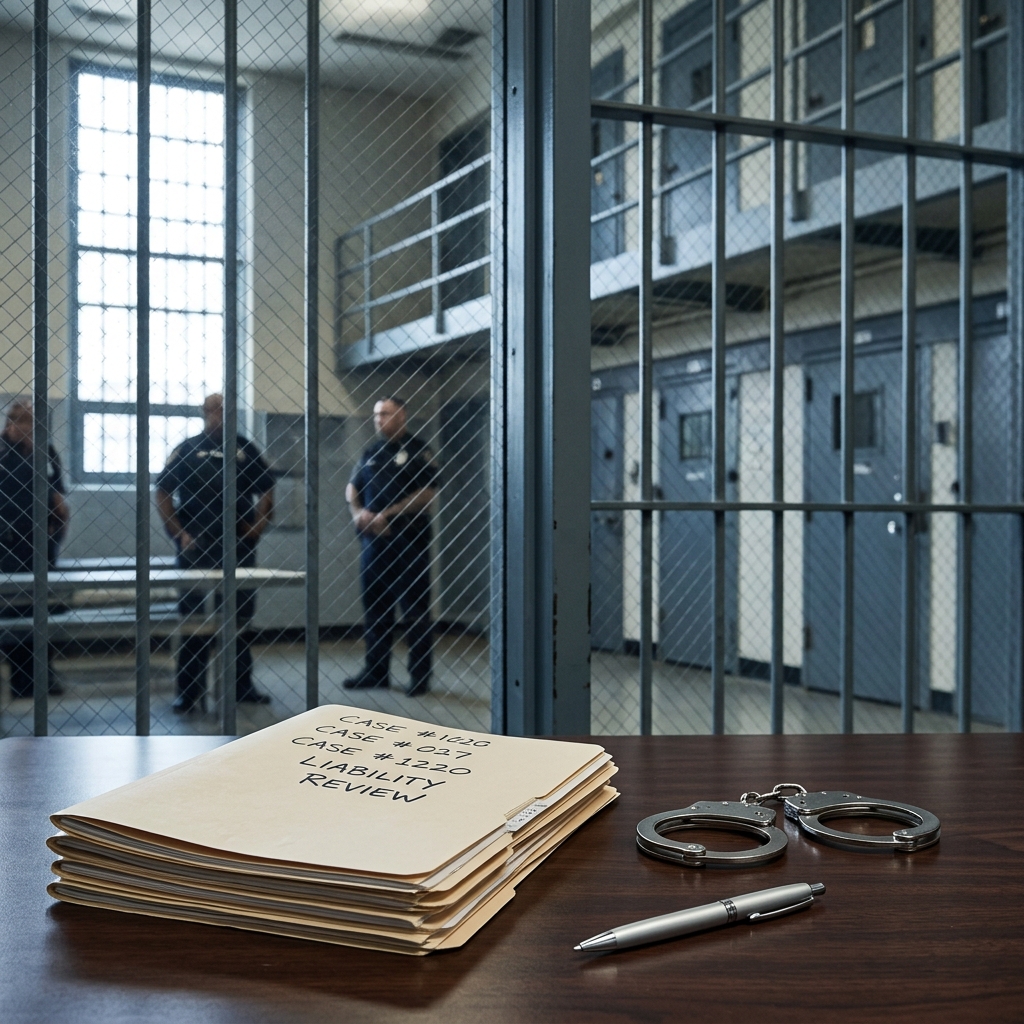
Violence between inmates is a serious and recurring problem in correctional facilities. When a prisoner is attacked, a central legal question arises: can the prison or jail be held responsible for failing to prevent the assault or respond appropriately? This article explains when liability may exist, what legal standards apply, and how injured inmates can protect their rights.
Understanding the Legal Framework for Prison Liability
Prison liability for inmate attacks sits at the intersection of constitutional law, personal injury law, and civil rights statutes. In the United States, the analysis depends on whether the person is a pretrial detainee or a convicted prisoner, and whether the claim is brought under state tort law, federal civil rights law, or both.
- Pretrial detainees (people held before conviction) generally rely on due process protections under the Fifth and Fourteenth Amendments.
- Convicted prisoners are primarily protected by the Eighth Amendment, which prohibits cruel and unusual punishment.
- Claims can be framed as negligence under state law or as constitutional violations based on deliberate indifference or excessive force.
Because prisons exercise near-total control over inmates’ environment and safety, courts recognize that officials have a duty to take reasonable steps to protect prisoners from known risks of serious harm, including assault by other inmates.
Duty of Care: What Prisons Owe to Inmates
Correctional facilities are not insurers of inmate safety, but they do owe a legally enforceable duty of care. The scope of that duty changes with the type of claim:
State-Law Negligence Duties
In many states, an inmate may bring a personal injury claim for negligence if officials fail to act with reasonable care to prevent foreseeable harm.
- Negligence is generally defined as failing to exercise the care that a reasonably prudent person would use under similar circumstances.
- In the prison context, this can include ignoring repeated threats, failing to separate known enemies, or not intervening promptly during an ongoing attack.
- Some jurisdictions impose specific statutory duties on prisons to protect inmates from violence, which may influence negligence claims.
Constitutional Duty to Protect
Under the Eighth Amendment, prison officials must not subject prisoners to conditions that pose a substantial risk of serious harm, and they cannot be deliberately indifferent to that risk. Courts have explained that officials may be liable if:
- There is an objectively serious risk of harm, such as credible threats of violence or a pattern of assaults.
- Officials know about the risk and consciously disregard it by failing to take reasonable measures to prevent harm.
This higher constitutional threshold means that not every attack creates liability. Negligence alone, without deliberate indifference, is often insufficient for a constitutional claim.
Common Legal Theories in Inmate Attack Cases
Inmate-on-inmate assault cases typically rely on a mix of legal theories. Understanding these theories helps clarify what an injured prisoner must prove.
1. Negligence
A negligence claim focuses on whether the prison or its staff failed to act reasonably under the circumstances. To succeed, the inmate generally must show:
- Duty: The prison had a duty to take reasonable steps to protect inmates.
- Breach: Officials did not meet that duty (for example, they ignored reports of threats or failed to supervise dangerous areas).
- Causation: The breach contributed directly to the attack.
- Damages: The inmate suffered physical, emotional, or other legally recognized harms.
Negligence claims are often brought under state law and may be subject to special rules, such as damage caps or notice requirements, when asserted against government entities.
2. Deliberate Indifference (Eighth Amendment)
For convicted prisoners, many inmate attack claims focus on deliberate indifference. Under this standard, the inmate must show:
- He or she faced a substantial risk of serious harm (for example, credible threats of being attacked).
- Officials actually knew about the risk and chose not to take reasonable steps to reduce or eliminate it.
Legal materials emphasize that mere overcrowding or general dangerous conditions are usually insufficient; the inmate must tie the attack to specific risks that officials knew about and disregarded.
3. Civil Rights Claims Under Federal Law
Prisoners may pursue federal civil rights claims against state officials under 42 U.S.C. § 1983. These claims allege that state actors violated constitutional rights, such as the right to be free from cruel and unusual punishment.
- Inmate-on-inmate assault cases often argue that officials’ failure to protect prisoners from known threats amounts to a constitutional violation.
- Supervisory officials may be liable when their policies or customs create or perpetuate conditions that make assaults more likely.
For federal prisoners, certain claims may proceed under Bivens-type litigation, though courts limit these actions and apply strict standards.
Key Factors Courts Consider in Failure-to-Protect Cases
Civil liability does not arise from every prison fight. Judges look closely at the facts to determine whether standards for negligence or deliberate indifference have been met.
| Factor | Questions Courts Ask |
|---|---|
| Foreseeability of harm | Did officials have reason to anticipate the attack based on prior incidents, threats, or known conflicts? |
| Knowledge of specific risks | Were threats reported? Were attackers known to be particularly dangerous to the victim? |
| Policies and training | Did institutional policies encourage dangerous practices or fail to address known safety problems? |
| Response to warnings | Did staff respond promptly and reasonably when informed of danger, or did they ignore or minimize complaints? |
| Actions during the attack | Did officers intervene to stop the assault as soon as practicable, or did they stand by without justification? |
Differences Between Public and Private Facilities
The type of facility housing the inmate can affect available legal remedies.
- Public prisons and jails: Claims are often brought against state or local governments and their officials. Liability is framed through constitutional law (e.g., § 1983) and state tort law.
- Private prisons: Federal constitutional claims are more limited; prisoners may rely on contract-based theories or state tort claims, as private companies are not typically directly bound by certain constitutional provisions in the same manner as state agencies.
Regardless of facility type, legal barriers such as sovereign immunity, damage caps, and procedural requirements can affect the outcome and strategy of a case.
Practical Steps for Prisoners After an Attack
When an inmate suffers an assault, swift action can be crucial both for personal safety and for preserving legal claims.
1. Seek Immediate Medical Attention
Injured prisoners should request prompt medical care, which serves two important purposes:
- Protecting health and preventing complications from untreated injuries.
- Creating a documented record of the assault and its consequences, which may be critical evidence in a future claim.
2. Use the Grievance System
Most prisons and jails have formal grievance procedures that allow inmates to file written complaints about threats, assaults, and staff misconduct. Legal guidance stresses the importance of using this system:
- Grievances help alert administrators to ongoing safety problems and may lead to protective measures.
- Many courts require prisoners to exhaust available administrative remedies (such as grievances and appeals) before filing federal lawsuits.
- Grievance forms and responses become part of the official record, supporting claims of prior notice and institutional knowledge of danger.
3. Document the Incident
To strengthen future claims, inmates should carefully record details of the attack and prior threats when possible.
- Note dates, times, and locations of the incident.
- Identify the assailants and any witnesses.
- Describe any prior warnings to staff, such as requests to be moved or reports of threats.
4. Request Protective Measures
After an attack or credible threat, prisoners should ask for reasonable steps to reduce future risk, such as:
- Housing changes (different cell, unit, or facility).
- Separation from specific inmates.
- Increased supervision or placement in protective custody when appropriate.
Officials’ responses to these requests may later help demonstrate whether they acted reasonably or negligently.
5. Consult an Attorney
Experienced personal injury or civil rights lawyers can assist with evaluating potential claims, complying with deadlines, and navigating complex immunity rules.
- Legal counsel can explain whether a case is best pursued as a negligence claim, a § 1983 civil rights claim, or both.
- Attorneys may help obtain records, surveillance footage, and witness statements.
- They can also advise family members regarding potential wrongful death actions when attacks are fatal.
Challenges and Limitations in Suing Prisons
Even when an inmate has suffered serious injuries, recovering compensation from a prison is not straightforward. Several obstacles commonly arise:
- Immunity doctrines: Government entities often enjoy sovereign or qualified immunity, limiting when they can be sued and for what.
- High constitutional thresholds: Deliberate indifference is intentionally difficult to prove; simple negligence or misjudgment may not be enough for a federal claim.
- Procedural requirements: Lawsuits against public entities may require timely notice, filing within strict limitation periods, and exhaustion of administrative remedies.
- Evidence and credibility issues: Prisons are controlled environments; inmates may struggle to obtain documentation or witness testimony supporting their version of events.
Despite these barriers, courts and legal scholars recognize that civil liability plays an important role in deterring unsafe conditions and promoting accountability for failure to protect inmates.
When Prisons Are Most Likely to Be Found Liable
Case law and legal analysis highlight situations where prisons are more likely to face liability for inmate attacks. These generally involve clear notice and inadequate responses.
- Officials knew of specific threats against a prisoner and ignored them.
- The prison maintained policies or customs that systematically exposed inmates to excessive risk of violence.
- Staff failed to intervene during an ongoing assault without a valid safety or security justification.
- The facility was aware of a pattern of similar attacks but did not adopt reasonable corrective measures.
By contrast, one-off attacks that occur without prior warning and are immediately addressed by staff are much less likely to result in liability.
Frequently Asked Questions (FAQs)
Are prisons automatically liable whenever an inmate is attacked?
No. Courts consistently state that prisons are not guarantors of inmate safety. Liability usually requires proof that officials had a duty to protect, knew or should have known of a substantial risk of harm, and failed to act reasonably to prevent or stop the attack.
What is the difference between negligence and deliberate indifference?
Negligence involves careless or unreasonable behavior that causes harm. Deliberate indifference is a higher standard, requiring proof that officials actually knew about a serious risk and consciously disregarded it. Deliberate indifference is required for most Eighth Amendment claims.
Can I sue if I am a pretrial detainee rather than a convicted prisoner?
Yes, in many situations. Pretrial detainees rely on due process protections, and courts may apply somewhat different standards than the Eighth Amendment, sometimes allowing liability for conduct that would be considered negligent rather than deliberately indifferent.
Do I have to file prison grievances before suing?
In many jurisdictions, particularly for federal civil rights claims, prisoners are required to exhaust available administrative remedies, such as the grievance system, before filing suit. Failing to do so can result in dismissal of a case.
What role do prison policies play in liability?
Policies and customs can be central to liability. If a supervisor or institution adopts or tolerates policies that expose inmates to known risks—such as inadequate classification or supervision—courts may find that those policies contributed to constitutional violations.
References
- Are Prisons Liable for Inmate Attacks? — FindLaw. 2019-03-01. https://www.findlaw.com/legalblogs/criminal-defense/are-prisons-liable-for-inmate-attacks/
- Civil Liability for Prisoner Assault by Inmates — Americans for Effective Law Enforcement (AELE). 2007-05-01. https://www.aele.org/law/2007JBMAY/2007-05MLJ301.pdf
- Your Right to Be Free From Assault — Columbia Jailhouse Lawyer’s Manual, Columbia Law School. 2017-05-01. https://jlm.law.columbia.edu/files/2017/05/36.-Ch.-24.pdf
- Are Jails Liable for Negligence When Prisoners Get Hurt? — Law Stack Exchange. 2021-06-01. https://law.stackexchange.com/questions/107161/are-jails-liable-for-negligence-when-prisoners-get-hurt
- Steps To Take if You Have Been Attacked in Jail — Attorneys Serving South Carolina. 2022-04-15. https://attorneyssc.com/blog/steps-to-take-if-you-have-been-attacked-in-jail/
- Failure to Protect Prisoner Rights — Hale Law. 2020-08-10. https://ahalelaw.com/practice-areas/civil-rights/failure-to-protect-prisoner-rights/
- Civil Liability Against Prison Officials for Inmate-On-Inmate Assault — The Prison Journal, SAGE Publications. 1995-01-01. https://journals.sagepub.com/doi/10.1177/0032855595075001004
Similar Articles








Read full bio of medha deb




