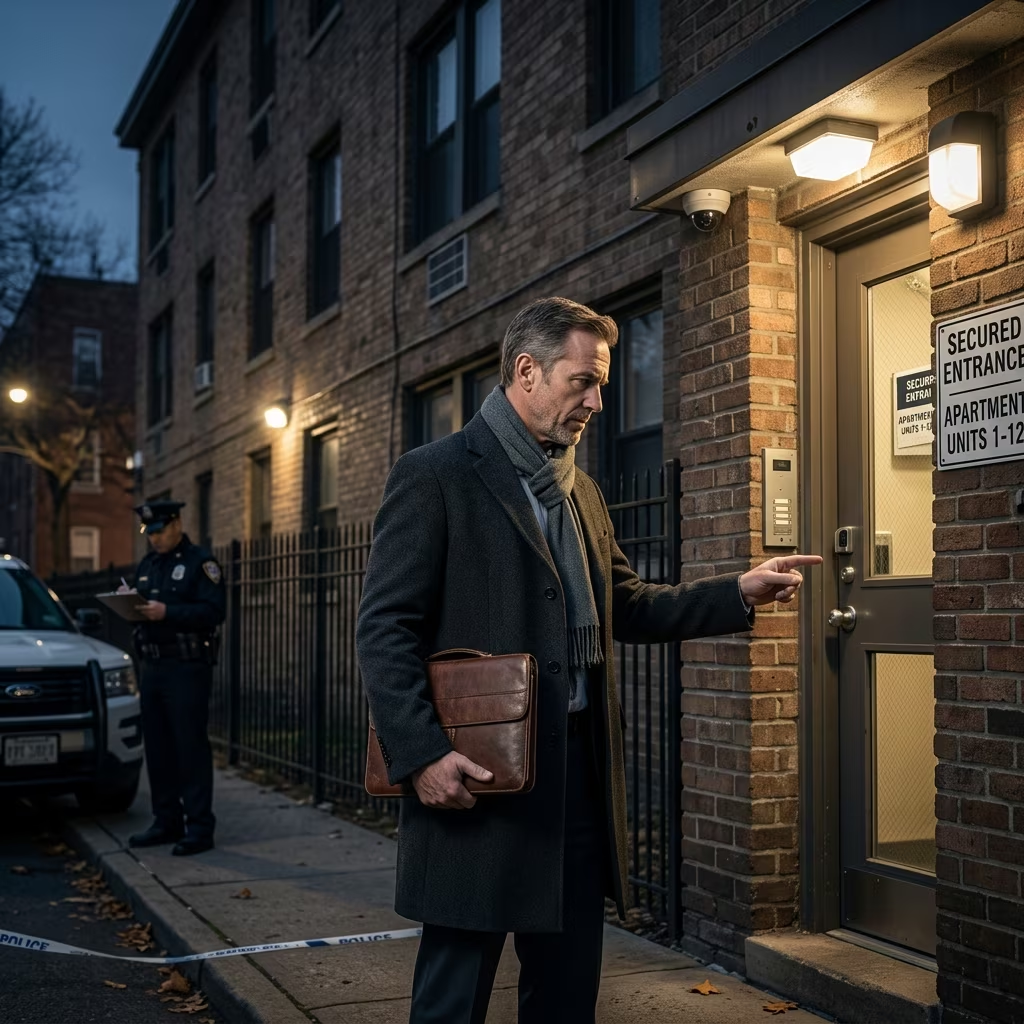
Landlords are not automatically responsible for every crime that happens on their property, but in many situations they can be held liable when their own negligence contributes to a tenant’s injury or loss. Modern premises liability law expects landlords to take reasonable steps to protect tenants from foreseeable criminal acts and to maintain a property that does not invite or enable crime.
This article explains how liability for criminal activity arises, the legal concepts courts use to decide these cases, and practical measures landlords can take to reduce both risk of crime and risk of lawsuits.
Basic Legal Principle: No Absolute Duty, But Duties Do Exist
Historically, landlords were viewed as having very limited obligations regarding crimes committed by third parties on their property. Today, courts in most states recognize that landlords have a duty to use reasonable care to protect tenants from foreseeable criminal acts in and around the rental premises. This duty does not make the landlord an insurer of safety, but it does require them to address known or reasonably predictable dangers.
- No blanket responsibility: Landlords are generally not liable for every random or unforeseeable crime that occurs.
- Duty of reasonable care: Liability can arise when landlords fail to take reasonable precautions against crimes that were foreseeable and preventable.
- Premises liability framework: Claims are usually brought under premises liability or negligent security law, which focuses on the condition of the property and the owner’s conduct.
In many states, this duty is grounded in concepts such as the implied warranty of habitability, specific security statutes, and the special relationship between landlords and tenants.
Key Elements of Landlord Liability in Criminal Cases
To hold a landlord legally responsible for injuries caused by criminal activity, a tenant or visitor typically must prove negligence, using elements that are common across civil law:
| Element | What the Tenant Must Show |
|---|---|
| Duty | The landlord owed a duty to provide reasonably safe premises and to take reasonable steps to deter foreseeable criminal acts. |
| Breach | The landlord failed to meet that duty, for example by ignoring known risks or failing to maintain basic security measures. |
| Causation | The landlord’s breach was a substantial factor in allowing the crime to occur or in making its consequences worse. |
| Damages | The tenant or visitor suffered actual harm, such as physical injury, emotional distress, or property loss. |
Courts focus heavily on whether the crime was foreseeable and whether reasonable steps by the landlord could have reduced the risk or severity of the harm.
Foreseeability: The Heart of Most Liability Disputes
Foreseeability is a central concept in premises liability. It asks whether a landlord knew or should have known about a significant risk of criminal activity and failed to respond appropriately.
Common Indicators of Foreseeable Crime
- Prior incidents on the property: A history of assaults, robberies, break-ins, or drug-related activity makes future similar crimes more predictable.
- Crime in the immediate area: Repeated criminal incidents in surrounding streets, parking lots, or neighboring buildings can signal a need for heightened security.
- Specific warnings or complaints: Tenant reports about threats, stalking, drug dealing, or dangerous loitering are direct evidence that the landlord was on notice.
- Obvious physical conditions: Poor lighting, broken locks, or open access to restricted areas can make certain crimes highly foreseeable.
When these indicators are present and unaddressed, courts are more likely to find that the landlord had a duty to act and may impose liability if they did not do so.
Special Theories That Increase Landlord Responsibility
Landlord liability for criminal activity is often analyzed through several specific legal theories that expand or clarify the duty to protect tenants:
1. Negligent Security
Negligent security claims argue that the landlord failed to provide basic safety measures that a reasonable property owner would have implemented under similar circumstances.
- Inadequate lighting in parking areas, hallways, and stairwells.
- Broken or missing locks on doors, gates, and windows.
- Unsecured entry points that allow unauthorized access.
- Failure to respond to repeated trespassing or loitering.
If minimal, cost-effective security measures could have deterred the crime, tenants may have a strong negligent security claim.
2. Voluntary Assumption of Security Duties
When a landlord chooses to provide specific security measures—such as guards, camera systems, or controlled access—they must do so with reasonable care. Courts may find liability if the landlord’s negligent performance of self-imposed security promises contributes to a criminal incident.
- Advertising a property as having 24/7 security but failing to staff it adequately.
- Installing cameras but not maintaining them or monitoring footage.
- Providing a gate or key-fob access system but allowing it to remain non-functional for extended periods.
Under this theory, the landlord’s own promises become part of the standard of care they are expected to meet.
3. Public Nuisance and Ongoing Criminal Operations
Landlords also face risk when criminal enterprises operate openly on their property—for example, long-term drug dealing, illegal gambling, or prostitution. If the owner fails to take reasonable steps to stop known criminal activity, they may be sued for maintaining a public nuisance or enabling crime.
- Ignoring tenant complaints about open drug use or sales.
- Failing to contact law enforcement when serious offenses are reported.
- Continuing to rent to tenants running illegal businesses without investigation or enforcement.
In these scenarios, liability may arise not only from harm to individual tenants but also from broader community impacts.
Types of Criminal Activity That Can Trigger Landlord Liability
Almost any crime on or closely connected to rental property has the potential to lead to a claim against the landlord if negligence and foreseeability can be shown. Examples commonly seen in case law and legal commentary include:
- Violent crimes: Assaults, robberies, shootings, sexual assaults in common areas, parking lots, or hallways.
- Property crimes: Burglaries facilitated by broken locks, poorly secured windows, or malfunctioning entrances.
- Domestic violence spillover: Incidents where the landlord was aware of ongoing, serious threats and failed to respond in any meaningful way.
- Drug-related activity: Distribution or manufacturing on the premises that the landlord knew about but did not address.
- Harassment and stalking: Persistent threats or aggressive behavior that tenants repeatedly report to management.
Whether a landlord is liable in any specific case depends on the details: What did they know? What steps did they take? What security measures would a reasonable landlord have implemented in the same situation?
Practical Steps Landlords Can Take to Reduce Liability
While the legal framework can appear complex, many risk-reduction measures are straightforward. Courts consistently expect landlords to take reasonable, not extreme precautions to protect tenants.
Core Safety and Security Practices
- Maintain physical security features: Regularly inspect and promptly repair locks, doors, windows, gates, intercom systems, and lighting.
- Follow local building and safety codes: Comply with statutes and ordinances that mandate specific security measures for multi-unit dwellings.
- Document your efforts: Keep records of maintenance, security upgrades, tenant complaints, and responses. This documentation can be critical evidence if a dispute arises.
- Respond quickly to complaints: Create a clear procedure for reporting safety concerns and make sure staff are trained to act promptly.
- Consider reasonable enhancements: In higher-crime areas, evaluate options such as improved lighting, access control, camera systems, or security patrols.
Lease Provisions and Policies
Written policies and lease terms can help landlords manage tenant behavior and show that they take safety seriously.
- Include clauses prohibiting criminal activity, drug use, and violent behavior on the premises.
- Specify that serious violations may result in immediate or expedited eviction, consistent with state law.
- Outline procedures for reporting threats, harassment, and suspected criminal activity.
- Clarify any security measures the landlord provides, avoiding exaggerated promises that cannot be consistently met.
Working with Law Enforcement and Community Resources
Landlords are not expected to act as private police, but they are expected to cooperate with public authorities when serious crime is involved.
- Report significant criminal incidents to law enforcement when you become aware of them.
- Consider trespass notices or other lawful measures to address unauthorized individuals creating safety risks.
- Participate in local crime-prevention programs or community policing initiatives where available.
Evidence Used in Criminal-Activity Liability Cases
When a tenant or visitor sues a landlord for injuries caused by criminal acts, both sides rely on specific types of evidence to support their claims about foreseeability, negligence, and causation.
- Police reports: Show prior incidents on or near the property and document complaints and official responses.
- Maintenance records: Demonstrate how consistently the landlord repaired locks, lighting, and other security features.
- Incident and complaint logs: Record tenant reports of threats, suspicious activity, or dangerous conditions and management’s actions.
- Photographs and video: Provide visual evidence of property conditions or security failures at relevant times.
- Witness statements: Offer testimony from tenants, staff, neighbors, or visitors about the environment and events leading up to the crime.
Courts use this evidence to determine whether a landlord was reasonably diligent or whether their inaction contributed to a climate where crime was more likely to occur.
Insurance and Financial Risk Management
Liability for criminal activity can result in substantial financial exposure for landlords: medical costs, property loss, pain and suffering, and sometimes punitive damages in extreme cases. Appropriate insurance coverage is an important part of a comprehensive risk-management strategy.
- Landlord insurance policies: Dedicated landlord coverage often includes liability protection for injuries and property damage related to conditions on the premises.
- Review policy exclusions: Understand what types of incidents are covered and which are excluded, especially regarding criminal acts by third parties.
- Risk assessment: Work with insurance providers or legal counsel to evaluate the property’s specific risk profile and adjust coverage accordingly.
Insurance does not replace the need for reasonable security measures, but it can mitigate financial consequences when serious incidents occur despite those measures.
Frequently Asked Questions (FAQs)
Are landlords always responsible for crimes on their property?
No. Landlords are generally not automatically liable for criminal acts committed on the premises. Liability usually arises only when a crime was foreseeable and the landlord failed to take reasonable steps to prevent or reduce the risk.
What makes a crime “foreseeable” to a landlord?
A crime is considered foreseeable when a reasonable landlord, based on prior incidents, tenant complaints, neighborhood conditions, or obvious security weaknesses, would recognize a significant risk and take steps to address it.
Can a landlord be liable for criminal acts committed by one tenant against another?
Yes, in some cases. Courts may impose liability if the landlord had reason to anticipate serious harm—for example, due to prior threats or violence—and failed to act with reasonable care, such as by improving security or addressing the dangerous tenant.
Does promising security features increase a landlord’s liability?
It can. If a landlord advertises or writes into the lease that certain security measures will be provided, they must implement and maintain those measures with reasonable care. Failure to do so can form the basis of a negligent security claim if the absence of promised protections contributes to a crime.
What should tenants do if they feel unsafe due to crime risk?
Tenants should promptly notify the landlord or property manager in writing, describe specific concerns or incidents, and request reasonable security measures. They may also contact local law enforcement about immediate threats. Documenting complaints can be important if legal issues later arise.
References
- FAQ – Landlord Responsibilities: Criminal Activities — FindLaw. 2023-05-01. https://www.findlaw.com/realestate/landlord-tenant-law/faq-landlord-responsibilities-criminal-activities.html
- Providing Property Security as a Landlord & Avoiding Legal Liability — Justia. 2022-09-15. https://www.justia.com/real-estate/landlord-tenant/information-for-landlords/liability-for-criminal-activity/
- When Is a Chicago Landlord Liable for Criminal Acts on Their Property? — Smoler Law Office. 2021-08-10. https://smolerlaw.com/when-is-a-chicago-landlord-liable-for-criminal-acts-on-their-property/
- Are Landlords Liable for Criminal Acts at Apartment Buildings? — Isenberg & Hewitt. 2020-11-05. https://isenberg-hewitt.com/are-landlords-liable-for-criminal-acts-at-apartment-buildings/
- The Landlord’s Liability for Criminal Injuries—The Duty to Protect — Tulsa Law Review. 1980-01-01. https://digitalcommons.law.utulsa.edu/cgi/viewcontent.cgi?article=1839&context=tlr
- Chapter 12: Landlord’s Liability for Criminal Activity — Nolo (via vLex). 2017-01-01. https://law-journals-books.vlex.com/vid/chapter-12-landlord-s-1037060895
- Can a Property Manager be Liable for the Criminal Act of a Tenant? — NC REALTORS® Legal Bulletin. 2023-10-31. https://www.ncrealtors.org/wp-content/uploads/103123pmd-03.pdf