
Understanding Student Codes of Conduct in Schools
Explore how student conduct codes shape safe, fair, and educational school communities from K–12 through higher education.
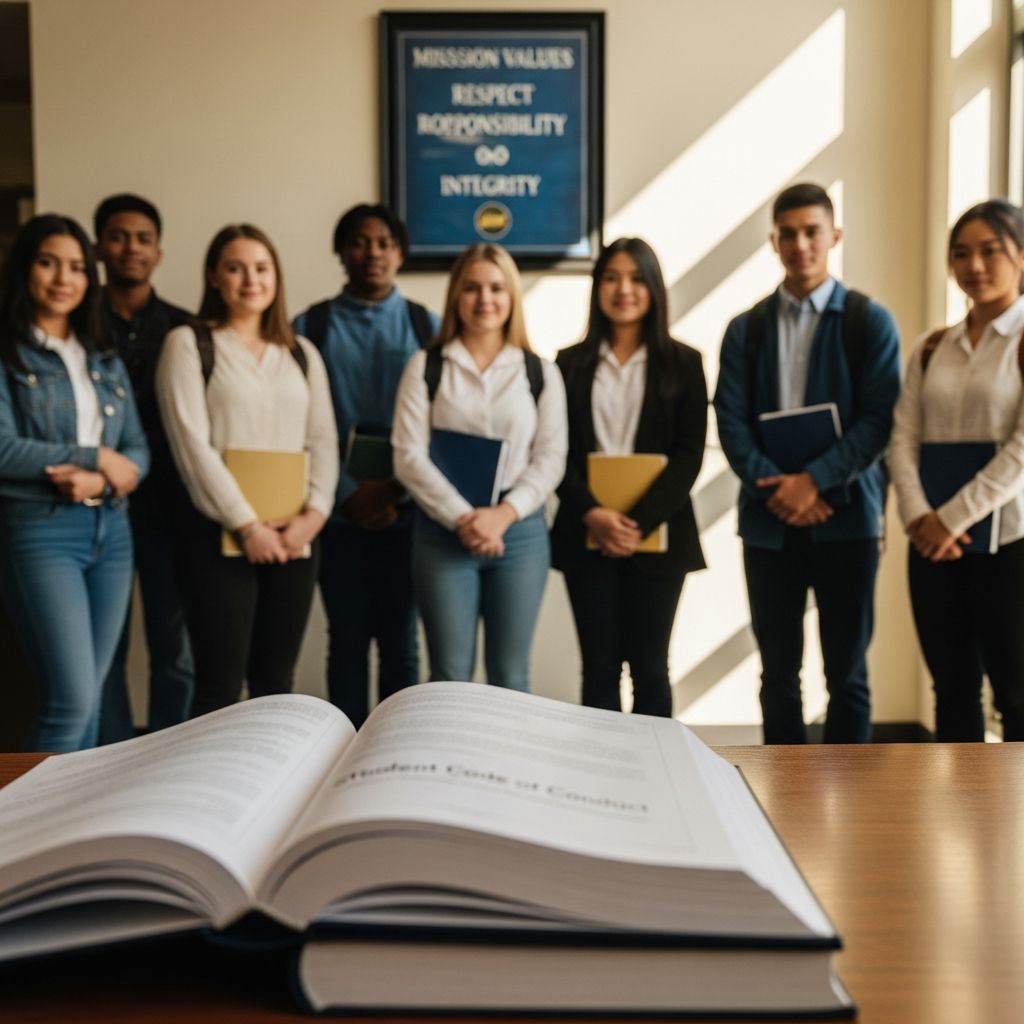
Every modern school, from elementary campuses to large universities, relies on a written student code of conduct to explain what behavior is expected, what is prohibited, and how the institution will respond when rules are broken. These documents sit at the intersection of education, safety, and law, shaping daily school life and defining the rights and responsibilities of students.
This guide explains how student conduct codes work, why they exist, how they are enforced, and what protections students can expect during the discipline process.
1. What Is a Student Code of Conduct?
A student code of conduct is a set of written standards that describe acceptable and unacceptable behavior in a school community. Colleges and universities generally adopt these codes as institutional policies, while public K–12 schools also operate under state statutes, school board regulations, and constitutional limits.
Across institutions, conduct codes usually aim to:
- Promote a safe and orderly environment that supports learning.
- Articulate the values and expectations of the school, such as integrity, respect, and responsibility.
- Provide notice of prohibited behavior so students know what may lead to discipline.
- Outline procedures and sanctions for responding to violations.
In higher education, codes typically apply to all enrolled students, whether full-time or part-time, and sometimes to students on internships, study abroad, or temporary leave, whenever they are still part of the academic community.
2. Why Schools Rely on Codes of Conduct
Student conduct rules serve both educational and legal purposes. When thoughtfully written and fairly enforced, they can help prevent harm while teaching students about responsibility and community life.
2.1 Educational Purpose
- Foster an atmosphere that supports intellectual and personal development, rather than just punishing missteps.
- Encourage students to reflect on how their behavior affects others and the campus climate.
- Use sanctions as tools for growth, learning, and ethical decision-making, not only as deterrents.
2.2 Safety and Community Protection
- Address conduct that threatens health or safety, such as violence, harassment, or substance abuse.
- Provide mechanisms to respond quickly to behavior that undermines the educational mission or others’ rights.
- Reassure students, staff, and families that the institution has clear processes to handle misconduct.
2.3 Legal and Governance Role
- Demonstrate that the school has taken reasonable steps to prevent foreseeable harm on its premises.
- Show that students received notice of expectations, an important element in discipline disputes and lawsuits.
- Implement state laws, systemwide rules, or governing board policies that require written standards of student behavior.
3. Scope: Where and When the Code Applies
Modern codes of conduct often extend beyond the classroom and sometimes beyond the physical boundaries of campus.
| Context | Common Application of the Code |
|---|---|
| On campus | Applies to all behavior on school property, including classrooms, residence halls, libraries, and athletic facilities. |
| School-sponsored events | Covers activities like field trips, sporting events, student organization events, and academic conferences. |
| Off-campus conduct | May apply when behavior significantly affects safety, the rights of others, or the institution’s interests, even away from campus. |
| Online and digital spaces | Increasingly includes cyberbullying, threats, academic dishonesty, and misuse of school technology, regardless of location. |
Many colleges define off-campus jurisdiction in terms of a “substantial institutional interest,” such as situations involving threats to safety, serious crimes, or conduct that severely disrupts the educational environment.
4. Typical Content of a Student Conduct Code
Although each institution uses its own language, many codes include comparable sections. Understanding these common elements helps students know what to look for in their school’s policy.
4.1 Statement of Values and Principles
Many codes open with a statement of the school’s guiding values—such as integrity, respect, accountability, and inclusion—and then link expected behavior to those principles.
Common themes include:
- Academic honesty and avoidance of cheating or plagiarism.
- Respect for the dignity and rights of each person, including non-discrimination and anti-harassment norms.
- Responsibility for one’s actions and their impact on the community.
4.2 Definitions and Key Terms
Codes often define important terms such as “student,” “university property,” “organization,” or specific types of misconduct. For example, some universities specify that “student” includes individuals enrolled in any program, whether undergraduate, graduate, or professional, and may even include students on approved leave.
4.3 Prohibited Conduct
While there is substantial variation, most codes address:
- Academic misconduct: cheating, plagiarism, improper collaboration, or falsification of data.
- Violence or threats: physical harm, intimidation, or credible threats of harm.
- Harassment and discrimination: targeting individuals based on protected characteristics (such as race, sex, religion, disability, or national origin).
- Substance-related violations: unlawful possession, distribution, or misuse of alcohol or drugs.
- Property and technology misuse: vandalism, theft, unauthorized access to systems, or misuse of school resources.
- Disruption: conduct that substantially interferes with teaching, research, or other institutional activities.
In public schools and public colleges, some rules may also intersect with constitutional protections, especially regarding speech, association, and privacy, which influences how broadly misconduct definitions can be interpreted.
4.4 Disciplinary Sanctions
Codes usually describe the range of possible responses if a student is found responsible for violating the rules. Sanctions are often designed to be progressive, meaning more serious or repeated misconduct may lead to stronger consequences.
Typical sanctions include:
- Educational measures: reflection papers, workshops, apology letters, or counseling referrals.
- Restrictions: loss of certain privileges, removal from housing, or limitations on campus access.
- Disciplinary probation: a formal warning that further violations may result in suspension or expulsion.
- Suspension: temporary separation from the institution.
- Expulsion or dismissal: permanent separation from the institution.
Many colleges explicitly state that the goal of sanctions is to educate and protect the community, not simply to punish.
5. Student Rights and Due Process in Discipline
Because discipline can affect a student’s education and future, schools must apply codes of conduct in ways that are fair and consistent. Public institutions, in particular, must also comply with constitutional due process requirements.
5.1 Notice and Clarity
- Codes are typically written to give general notice of prohibited conduct, rather than an exhaustive criminal-style list.
- Schools are expected to make the code easily available, often online and in student handbooks.
- Students are usually held responsible for knowing and following the code once they enroll.
5.2 Basic Procedural Protections
The details of conduct procedures vary, but many schools provide:
- Written notice of the alleged violation and the policies involved.
- An opportunity to share the student’s account of what happened, either in a meeting or hearing.
- A decision by an official or panel trained to handle student conduct matters.
- Information about appeals or how to contest a decision.
In higher education, student conduct systems are generally considered educational and administrative, not criminal, which means they use different standards, timelines, and evidentiary rules than courts.
5.3 Special Legal Protections in K–12 and Public Institutions
Supreme Court decisions and federal laws shape how public schools may discipline students:
- Due process for suspensions: Public school students facing short-term suspension must receive basic notice of the charges and a chance to respond, and more formal procedures may be required for longer exclusions.
- Free speech: Student expression in public schools and colleges is protected by the First Amendment, subject to limits for substantial disruption, threats, or rights violations.
- Students with disabilities: Federal special education laws, such as the IDEA, provide added safeguards when schools discipline students whose behavior may be related to a disability.
6. Balancing Educational Goals and Discipline
Schools increasingly view conduct processes not only as mechanisms for control but also as opportunities to teach conflict resolution, empathy, and accountability.
6.1 Educational and Developmental Approaches
- Many codes reference a commitment to student development and learning through the conduct process.
- Some institutions integrate restorative practices, encouraging students who caused harm to understand its impact and repair relationships when appropriate.
- Sanctions such as workshops or reflection assignments are designed to support growth and behavior change, especially for first-time or lower-level violations.
6.2 When Separation May Be Necessary
Despite these educational aims, there are situations in which the institution may determine that a student should no longer participate in the community.
- Persistent or severe conduct that endangers others or repeatedly undermines the learning environment may lead to suspension or dismissal.
- Codes often emphasize that enrollment is a privilege, and students may lose that privilege if they cannot or will not meet community expectations.
7. Practical Tips for Students and Families
Students and parents often encounter conduct codes only when a problem arises. Proactively understanding these documents can help prevent misunderstandings and support better outcomes.
7.1 Before Problems Arise
- Read the code early in the school year or before arriving on campus, including sections on jurisdiction, prohibited conduct, and sanctions.
- Pay attention to how the school describes its values and decision-making, which can signal how strictly policies are enforced.
- Ask questions about gray areas, such as off-campus events, social media, or student organization responsibilities.
7.2 If You Face a Conduct Allegation
- Review the written notice and identify which policies are allegedly violated.
- Request and read any procedural guidelines or student handbook sections that describe hearings and appeals.
- Prepare to explain your perspective clearly and respectfully, including any relevant documents or messages.
- Consider seeking guidance from a trusted advisor, which may be a parent, advocate, or campus resource, depending on the institution’s rules.
8. Frequently Asked Questions (FAQs)
Q1: Is a student code of conduct the same as criminal law?
No. A student code of conduct is an institutional policy, not a criminal statute. It usually defines misconduct more broadly, focuses on community standards, and uses educational sanctions rather than criminal penalties. However, some behavior may violate both the code and the law, which can lead to separate school and criminal processes.
Q2: Can schools discipline students for off-campus behavior?
Often yes, especially in higher education. Many institutions assert jurisdiction over off-campus conduct that presents a threat to safety, significantly interferes with others’ rights, or undermines the school’s educational mission. Public schools and colleges must exercise this authority consistently with constitutional rights and applicable state law.
Q3: Do students have to be told about the rules before being disciplined?
Generally, yes. Written codes are designed to provide notice of prohibited conduct, and public institutions must also give students notice of the specific allegations before imposing significant discipline. Schools typically publish codes online or in handbooks and treat enrollment as agreement to follow them.
Q4: Are student conduct hearings like court trials?
No. Conduct hearings are usually administrative and educational, with less formal procedures and different evidentiary standards. The goal is to decide whether institutional rules were violated and what response best supports the community and the student’s development, not to determine criminal guilt.
Q5: Can a student appeal a disciplinary decision?
Most institutions provide some form of appeal, often limited to specific grounds such as procedural error, new evidence, or disproportionate sanctions. The details depend on the school’s written procedures, so students should review the code and any separate conduct guidelines carefully.
References
- Purpose of Student Conduct — Roger Williams University. 2023-08-01. https://www.rwu.edu/life-at-rwu/student-resources/student-handbook/purpose-student-conduct
- Student Code of Conduct — Waukesha County Technical College. 2023-07-10. https://www.wctc.edu/WCTC/About-WCTC/Campus-and-Academic-Policies/Student-Code-of-Conduct
- Student Code of Conduct — Arizona State University. 2022-09-15. https://eoss.asu.edu/dos/srr/codeofconduct
- Student Code of Conduct — University of North Florida. 2024-01-05. https://www.unf.edu/deanofstudents/code-of-conduct.html
- The Student Code of Conduct — The Pennsylvania State University. 2023-06-12. https://studentaffairs.psu.edu/student-accountability/code-procedures/student-code-conduct
- Section I: Purpose | Student Code of Conduct — University of Nevada, Reno. 2022-08-30. https://www.unr.edu/student-conduct/student-code-of-conduct/section-i
Similar Articles








Read full bio of Sneha Tete


