
Understanding Stop and Frisk Under the Fourth Amendment
Learn how stop and frisk works, what the Constitution allows, and how to protect your rights during brief police encounters.
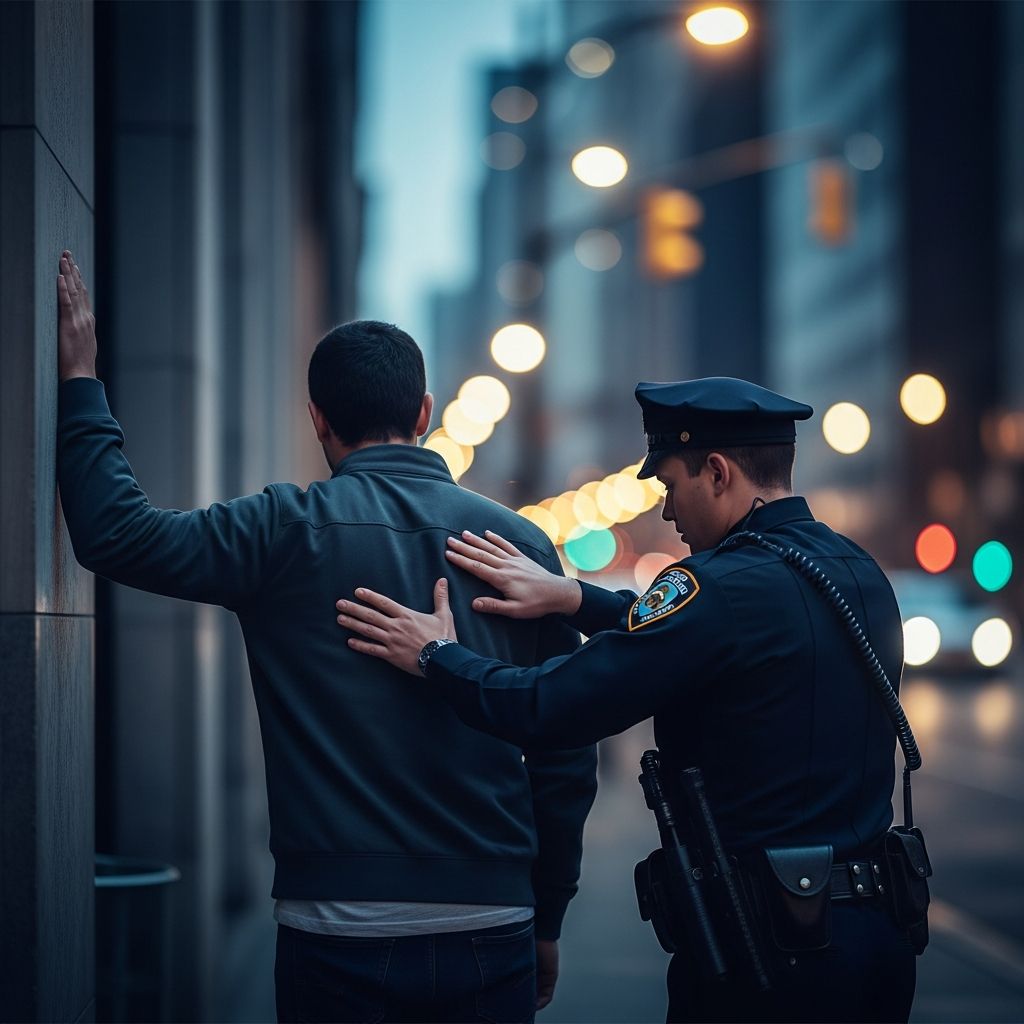
“Stop and frisk” is one of the most common ways people encounter law enforcement in the United States. It involves a brief detention, usually on the street, and a quick pat-down of a person’s outer clothing for weapons when certain legal conditions are met. Understanding how this practice works, when it is lawful, and what your rights are can help you make informed decisions in a stressful situation.
Foundations: The Fourth Amendment and Police Encounters
The U.S. Constitution’s Fourth Amendment protects people from unreasonable searches and seizures by the government. A “seizure” includes being stopped by the police, and a “search” includes a pat-down of your body or your belongings.
Historically, most searches and seizures required either:
- Probable cause that a crime was committed and that evidence is likely to be found, often plus a warrant; or
- A recognized exception to the warrant requirement (such as consent, exigent circumstances, or lawful arrest).
In Terry v. Ohio (1968), the U.S. Supreme Court created a specific exception for brief stops and limited pat-downs based on a lower standard called reasonable suspicion.
What Is Stop and Frisk?
A stop and frisk is a two-step encounter:
- The stop: an officer briefly detains a person who is not free to leave, based on reasonable suspicion of criminal activity.
- The frisk: if the officer also reasonably believes the person is armed and dangerous, they may conduct a limited pat-down of outer clothing for weapons.
This is sometimes called a Terry stop, referring to the Supreme Court case that authorized it.
Key Legal Standards Compared
| Standard | Used For | What It Requires | Typical Example |
|---|---|---|---|
| Reasonable Suspicion | Stop; frisk (if armed and dangerous) | Specific, articulable facts suggesting a crime may be occurring or about to occur. | Officer sees someone repeatedly peering into car windows late at night. |
| Probable Cause | Arrest; full search | More concrete evidence making it likely a crime has been committed. | Officer sees drugs in plain view during a traffic stop. |
How Courts Define a Lawful Stop
To legally stop someone, an officer must be able to point to specific facts and reasonable inferences that criminal activity is afoot. Vague hunches or generalized suspicion are not enough.
Examples of factors that may contribute to reasonable suspicion (depending on context) include:
- Matching a detailed description from a recent crime report;
- Engaging in behavior that looks like casing a store or vehicle;
- Furtive movements toward a waistband or pocket where a weapon might be kept;
- Presence in a high-crime area plus other suspicious conduct.
The Supreme Court has emphasized that officers must be able to articulate why they believed criminal activity might be occurring, based on the totality of the circumstances.
When a Frisk Is Allowed
A stop does not automatically authorize a frisk. The officer needs an additional, separate basis to believe the person is armed and dangerous.
The frisk must be:
- Limited in scope: a pat-down of outer clothing to check for weapons, not a full search for evidence;
- Justified by safety concerns: aimed at protecting the officer and bystanders;
- Reasonable in duration: not unnecessarily prolonged.
If, during the pat-down, the officer feels an object whose identity as contraband is immediately apparent (for example, a firearm), courts may allow its seizure under the so-called “plain feel” doctrine, but the search must still remain within the narrow limits of a frisk.
Time Limits and Scope of a Stop
Even when a stop is lawful at the beginning, it can become unconstitutional if it is prolonged beyond what is reasonably needed to address the basis for the stop. In a traffic case, the Supreme Court has held that a stop that exceeds the time necessary to handle the observed violation violates the Fourth Amendment if it is extended without independent justification.
Applied to street encounters, this means:
- The officer must pursue tasks reasonably related to confirming or dispelling their suspicions;
- Unnecessary delay or unrelated investigations usually require additional legal justification;
- A temporary detention should not turn into a de facto arrest without probable cause.
Important Supreme Court Cases on Stop and Frisk
Terry v. Ohio (1968)
In Terry v. Ohio, an officer observed men repeatedly pacing, peering into a store window, and conferring, which he interpreted as preparation for a robbery. The Court held:
- An officer may briefly detain a person based on reasonable suspicion of criminal activity;
- If the officer reasonably believes the person is armed and dangerous, they may conduct a limited pat-down for weapons;
- The intrusion must be narrowly tailored to the goals of investigation and safety.
Rodriguez v. United States (2015)
Although Rodriguez involved a traffic stop rather than a street frisk, it clarified an important principle: police may not prolong a stop beyond the time needed to address its original purpose, unless they have new, independent justification.
Utah v. Strieff (2016)
In Utah v. Strieff, the Court considered evidence obtained after an unlawful stop where a subsequent check revealed an outstanding arrest warrant. The Court held that, if the warrant is valid and pre-existing, evidence found incident to the arrest may still be admissible, even though the initial stop violated the Fourth Amendment.
This decision illustrates how courts sometimes allow evidence to be used despite earlier police errors, under the “attenuation” doctrine.
Your Rights During a Stop and Frisk
Even in a brief encounter, you retain important constitutional rights. Civil liberties organizations and legal experts often recommend that individuals keep the following principles in mind (these are general informational points, not legal advice):
1. Right to Remain Silent
- In most situations, you have the right not to answer questions beyond providing your name if required by state law.
- You can say calmly: “I choose to remain silent.”
2. Right to Be Free from Unreasonable Searches
- You do not have to give consent to a search of your body, bag, or phone.
- If you wish to refuse consent, do so clearly and politely: “I do not consent to a search.”
- Even if you state this, an officer may still frisk you if they believe they have legal grounds; your objection helps preserve your rights for later legal review.
3. Right to Ask if You Are Free to Leave
- You can ask: “Am I free to leave?”
- If the officer says yes, you may calmly walk away.
- If the officer says no or does not clearly allow you to leave, you are being detained.
4. Right to an Attorney (After Arrest)
- If a stop and frisk leads to an arrest, you have the right to speak with a lawyer before answering questions.
- You can say: “I want to speak to an attorney.”
Common Disputes and Controversies
While stop and frisk is lawful under certain conditions, it has generated extensive debate and litigation, particularly around claims of racial bias, overuse, and insufficient suspicion.
Concerns include:
- Racial and ethnic disparities in who is stopped and frisked;
- Mass use of stops in some cities that courts found to be inconsistent with the Fourth Amendment or equal protection principles;
- Encounters escalating from brief pat-downs to more intrusive searches or force;
- Lasting community distrust and fear resulting from aggressive stop policies.
Federal courts have held that constitutional stop-and-frisk practices must not only meet Fourth Amendment standards but also comply with the Equal Protection Clause of the Fourteenth Amendment, meaning they cannot be carried out in a racially discriminatory manner.
What Happens if a Stop or Frisk Is Unlawful?
If a court finds that a stop or frisk violated the Fourth Amendment, several consequences may follow:
- Suppression of evidence: Evidence obtained as a result of an unlawful stop or frisk may be excluded from trial under the exclusionary rule, unless an exception applies.
- Civil rights lawsuits: Individuals may sometimes bring civil actions alleging unlawful search and seizure under federal or state law.
- Policy changes: Large-scale litigation can lead to court-ordered reforms, including training, monitoring, or changes in departmental policy.
However, as Utah v. Strieff shows, the Supreme Court has recognized exceptions where evidence may still be used despite earlier police violations, depending on how closely the evidence is tied to the unlawful conduct.
Practical Tips for Navigating a Stop and Frisk
Nothing can remove the stress of an unexpected encounter with law enforcement, but the following practical tips—general and not tailored legal advice—may help you protect your rights and safety:
- Stay calm and keep your hands visible to avoid any suggestion of threatening behavior.
- Do not physically resist, even if you believe the stop is unlawful; physical resistance can lead to additional charges or escalation.
- Use clear, respectful language to assert your rights (for example, “I do not consent to a search” or “I choose to remain silent”).
- Remember details such as badge numbers, patrol car numbers, location, time, and witnesses if you later wish to challenge the encounter.
- Seek legal advice promptly if you are arrested or if you believe your rights were violated.
Frequently Asked Questions About Stop and Frisk
Q: Do police always need reasonable suspicion to talk to me?
No. Officers may approach and speak with you voluntarily, just like any other person. However, if they restrict your movement so that a reasonable person would not feel free to leave, that typically becomes a “stop” that requires reasonable suspicion under the Fourth Amendment.
Q: Can an officer frisk me during every stop?
No. A lawful stop alone is not enough. The officer must also reasonably believe you are armed and dangerous before performing a pat-down for weapons. The frisk must be limited to what is necessary for safety and not a full search for evidence.
Q: How long can a stop and frisk last?
The stop should last only as long as reasonably necessary for the officer to confirm or dispel their suspicions. If the detention is significantly prolonged without additional justification, it may become unconstitutional.
Q: What if the officer finds something illegal during a frisk?
If the frisk was lawful and the officer discovers a weapon or contraband in a way that fits within the narrow scope of a pat-down, that item may be seized and used as evidence. If the frisk itself was unlawful, a court may suppress the evidence, subject to exceptions like those discussed in Utah v. Strieff.
Q: Do these rules apply the same way in every state?
The core protections come from the U.S. Constitution and Supreme Court decisions, which apply nationwide. However, states can provide greater protections under their own constitutions or statutes, and local procedures may vary. For precise guidance, consultation with a qualified attorney in your jurisdiction is essential.
References
- Stop and frisk — Legal Information Institute, Cornell Law School. 2023-10-01. https://www.law.cornell.edu/wex/stop_and_frisk
- Stop and frisk rule and the Supreme Court — EBSCO Research Starters. 2019-01-01. https://www.ebsco.com/research-starters/law/stop-and-frisk-rule-and-supreme-court
- Stop and Frisk — Office of Justice Programs, National Criminal Justice Reference Service. 1978-06-01. https://www.ojp.gov/ncjrs/virtual-library/abstracts/stop-and-frisk-0
- What is stop-and-frisk? — Talks on Law. 2020-05-15. https://www.talksonlaw.com/briefs/what-is-stop-and-frisk
- Chicago Stop and Frisk Attorney — Hale & Monico, Civil Rights Practice. 2022-03-10. https://www.halemonico.com/practice-areas/civil-rights/stop-and-frisk/
- Legal Framework for Stop and Frisk — Lawyers for the People. 2022-07-12. https://www.lawyersftp.com/stop-and-frisk-meaning/
Similar Articles








Read full bio of medha deb


