
Understanding State Traffic Camera Laws in the U.S.
Learn how red-light and speed camera laws vary across U.S. states, and what drivers should know before challenging an automated ticket.
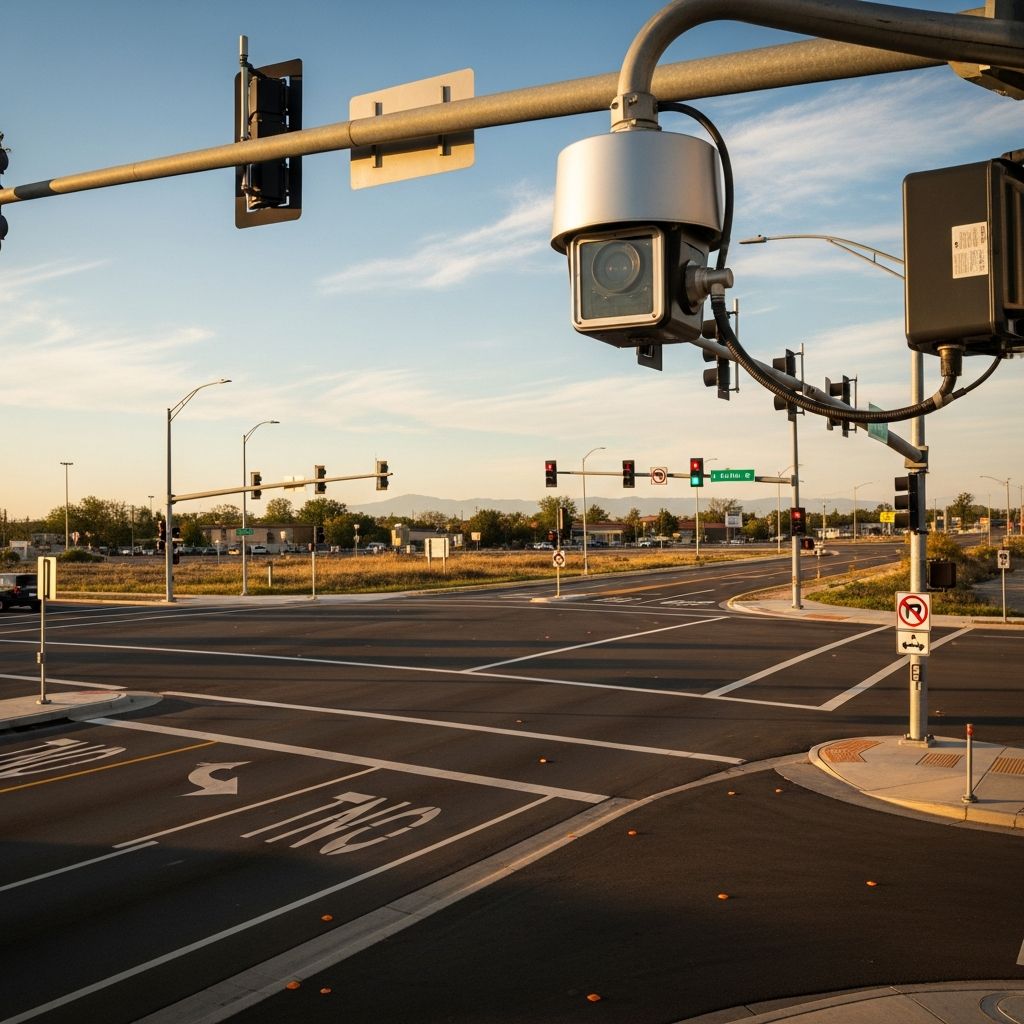
Automated traffic enforcement cameras, especially red-light cameras and speed cameras, are now a common feature on U.S. roads. Yet their legality, where they can be placed, and how tickets are handled vary widely from state to state.
This guide explains how these systems work, summarizes the range of state approaches, and highlights key issues for drivers who receive a camera-based citation.
What Traffic Enforcement Cameras Are and How They Work
Traffic enforcement cameras are systems that capture violations without a police officer present at the scene. The two most common types are:
- Red-light cameras – Triggered when a vehicle enters an intersection after the signal turns red. They record photos or video of the vehicle, license plate, and signal status.
- Speed cameras – Use radar, lidar, or sensors embedded in the roadway to measure a vehicle’s speed and record vehicles traveling above a set threshold.
Images are typically reviewed by an officer or authorized employee, and if the evidence supports a violation, a notice of violation or civil citation is mailed to the vehicle’s registered owner.
Why States Use (or Restrict) Traffic Cameras
State and local governments justify camera programs in several ways, but opponents raise competing concerns.
Common Safety and Enforcement Goals
- Reducing crashes at dangerous intersections – Research from the Insurance Institute for Highway Safety (IIHS) finds that red-light cameras, when properly implemented, are associated with fewer fatal red-light-running crashes in large cities.
- Slowing traffic in sensitive areas – Speed cameras are frequently deployed in school zones and work zones to protect pedestrians, children, and road workers.
- Extending enforcement capacity – Cameras allow continuous monitoring at high-risk locations without tying up on-duty officers.
Key Objections and Policy Concerns
- Privacy and surveillance – Critics argue that widespread camera use can create a record of people’s movements, raising civil liberties concerns.
- Perceived revenue motivation – Some communities question whether programs are designed primarily to generate fines rather than improve safety.
- Due process and fairness – Automated tickets can arrive weeks after an incident, and the camera cannot be cross-examined like an officer in court.
- Ownership vs. driver identity – Tickets are often sent to the registered owner, even if someone else was driving the vehicle.
Because of these competing interests, states have adopted very different policies about whether and how cameras may be used.
How States Regulate Traffic Cameras
The U.S. has no single national law for traffic cameras. Instead, each state decides whether red-light and speed cameras are allowed, restricted, or banned, sometimes leaving further decisions to cities and counties.
Typical State-Level Approaches
- Statewide authorization – Some states permit camera enforcement statewide, subject to general standards. Local jurisdictions may then choose whether to implement a program.
- Limited authorization – Other states allow cameras only in specific settings, such as school zones, work zones, or high-crash corridors.
- No specific state law – In a number of states, there is no explicit statute authorizing or prohibiting cameras, leaving legal arguments to local ordinances and court interpretations.
- Explicit prohibitions – At least 10 states prohibit speed cameras, and several ban red-light cameras outright, often citing privacy or enforcement philosophy.
Examples of Allowing and Banning States
The chart below summarizes a sample of approaches based on current research. It is not exhaustive and laws change frequently, so drivers should verify the latest rules in their state.
| State | Red-Light Cameras | Speed Cameras | Typical Limits |
|---|---|---|---|
| Maryland | Allowed | Allowed | School zones and work zones are common sites; widely studied county programs operate under state law. |
| Oregon | Allowed | Allowed | Permitted in high-crash corridors and school zones, with detailed placement and signage rules. |
| Virginia | Allowed | Allowed | Red-light cameras limited by population-based caps; speed cameras allowed in school and work zones and high-risk segments. |
| Texas | Generally prohibited | Generally prohibited | State law bans automated enforcement programs, with narrow exceptions, such as limited grandfathered contracts for earlier red-light camera systems. |
| New Jersey | No state red-light camera law | Speed cameras prohibited | State statute bans speed cameras; prior red-light camera pilot program expired without renewal. |
| South Carolina | Generally prohibited | Generally prohibited | State law bars camera enforcement except in limited emergency circumstances. |
Other states fall in between, sometimes allowing local experimentation through pilot programs or granting broad discretion to local governments under a general enabling law.
Typical Rules for Where Cameras May Be Installed
When cameras are allowed, state statutes and regulations often spell out where and how they can be used.
Common Location Restrictions
- Intersections of major roads – Red-light cameras are usually limited to intersections of arterial or high-volume roads where crash risk is elevated.
- School zones – Many states permit speed cameras only in signed school zones or immediately adjacent walk routes used by children.
- Work zones – Automated enforcement is widely used or piloted in highway work zones to protect flaggers and construction workers.
- High-crash corridors – Some laws require a documented collision or violation history before a camera can be placed.
- Local authorization – A city council or county board may need to pass an ordinance before cameras can be installed at specific sites.
Signage and Public Notice Requirements
To increase transparency and prevent claims of unfair surprise, many state laws require some form of notice:
- Warning signs – Advance signs are often mandated at the city limits or before each camera-enforced zone.
- Public hearings or reports – Some statutes require a public process before implementation and periodic reporting on safety outcomes and revenue.
- Grace periods – During initial rollout, a short period of written warnings (instead of tickets) is sometimes required.
How Camera-Based Tickets Are Treated Legally
Not all traffic camera tickets are treated the same. Key distinctions include whether a violation is considered civil or criminal and whether points are added to a driver’s record.
Civil vs. Criminal Classification
- Civil infractions – Many states classify camera violations as civil penalties similar to parking tickets.
- No jail time or criminal conviction.
- Typically no points on a driver’s license.
- Fines are limited by statute (for example, caps of around $50–$150 in several states).
- Criminal or quasi-criminal offenses – In some jurisdictions, the camera citation mirrors a standard moving violation, with possible points and insurance consequences, though this is less common for automated enforcement.
Owner Liability vs. Driver Liability
States also differ in who is presumed responsible for the violation:
- Registered owner liability – Many programs presume that the vehicle’s owner is liable unless they submit an affidavit identifying another driver or proving the vehicle was sold or stolen.
- Driver identification requirements – A smaller number of states require the photo to clearly identify the driver’s face, not just the license plate, to support a conviction.
Collection and Consequences
- Non-payment penalties – Unpaid camera fines can lead to late fees, collection actions, or—in some states—restrictions on registering the vehicle.
- Insurance and driving record – Many camera laws explicitly state that citations are not considered for insurance rating and are not recorded on the driver’s record, although this varies by state.
Examples of Evolving State Policies
State policies on traffic cameras continue to change as legislators respond to public opinion and new safety data.
- Texas – The state enacted a law banning red-light cameras, but allowed some communities to operate systems temporarily to fulfill existing contracts.
- Work zone and school zone pilot programs – Recent legislative trends include authorizing limited-duration pilot projects to test speed cameras in work zones or school areas before broader expansion.
- Restrictions on sharing data – Some states limit how motor vehicle departments share driver or vehicle information with camera vendors or other states, especially where automated fines are banned.
Practical Tips If You Receive a Camera Ticket
Because procedures vary widely, the specific steps for handling a camera ticket depend on your state and local court. However, several general points are commonly relevant.
1. Read the Notice Carefully
- Check the type of violation (red-light vs. speed), date, time, and exact location.
- Confirm the deadline for responding or paying.
- Look for information about how to view the images or video online.
2. Verify the Legal Basis
- Identify the statutes or ordinances cited in the notice.
- Determine whether your state generally allows or prohibits camera enforcement, and whether local governments need special authorization.
- Consider contacting a local traffic attorney if the legal status of cameras in your area is uncertain.
3. Check for Possible Defenses
Possible arguments (where permitted by law) may include:
- Incorrect vehicle or plate – The image may not clearly show your plate, or your vehicle may have been cloned, sold before the violation date, or reported stolen.
- Insufficient signage – If your state requires warning signs, their absence or poor visibility might be relevant.
- Operational errors – Some statutes require regular calibration, testing, or certification of the camera equipment, and a failure to comply may affect the citation.
4. Understand the Consequences of Paying or Contesting
- Determine whether the violation will appear on your driving record or affect insurance rates under state law.
- Compare the time and cost of contesting the ticket with the amount of the fine.
- Keep proof of payment, correspondence, and any court orders in case of future questions about registration or collections.
Frequently Asked Questions (FAQs)
Q: Are red-light cameras legal everywhere in the United States?
No. Some states allow red-light cameras statewide, others limit them to certain areas or programs, and a number of states have banned them entirely through state law.
Q: Can a state ban speed cameras but still allow red-light cameras?
Yes. A state can treat these technologies differently. For example, some states prohibit speed cameras while having no active red-light camera law or allowing local red-light camera programs.
Q: Do camera tickets usually add points to my license?
In many states, camera-based violations are civil infractions similar to parking tickets and do not add license points or appear on the driver’s record, but this depends on the exact statute in your state.
Q: What if I was not the person driving my car?
Some states let the registered owner submit an affidavit identifying the actual driver or explaining that the car was sold or stolen. Others still hold the owner civilly responsible unless a specific exemption applies.
Q: Where can I find the specific camera laws for my state?
Official state resources such as highway safety offices, transportation departments, and legislative websites maintain up-to-date summaries of traffic camera laws. Organizations like the IIHS and Governors Highway Safety Association also compile state-by-state overviews based on current statutes.
References
- Safety Camera Laws — Insurance Institute for Highway Safety (IIHS). 2025-06-01. https://www.iihs.org/research-areas/red-light-running/safety-camera-laws
- Speed & Red Light Cameras — Governors Highway Safety Association. 2025-06-30. https://www.ghsa.org/state-laws-issues/speed-red-light-cameras
- Where Are Speed Cameras Legal? A State-by-State Overview — Verra Mobility. 2024-05-15. https://www.verramobility.com/what-states-are-speed-cameras-legal/
- Red Light Cameras by State 2025 — World Population Review. 2025-01-10. https://worldpopulationreview.com/state-rankings/red-light-cameras-by-state
- Traffic Safety Trends: State Legislative Action 2024 — National Conference of State Legislatures (NCSL). 2024-12-01. https://www.ncsl.org/transportation/traffic-safety-trends-state-legislative-action-2024
Similar Articles








Read full bio of medha deb


