
Understanding Solar Financing Risks for Homeowners
A clear guide to how rooftop solar is financed, the risks hidden in common contracts, and how to protect yourself before you sign.
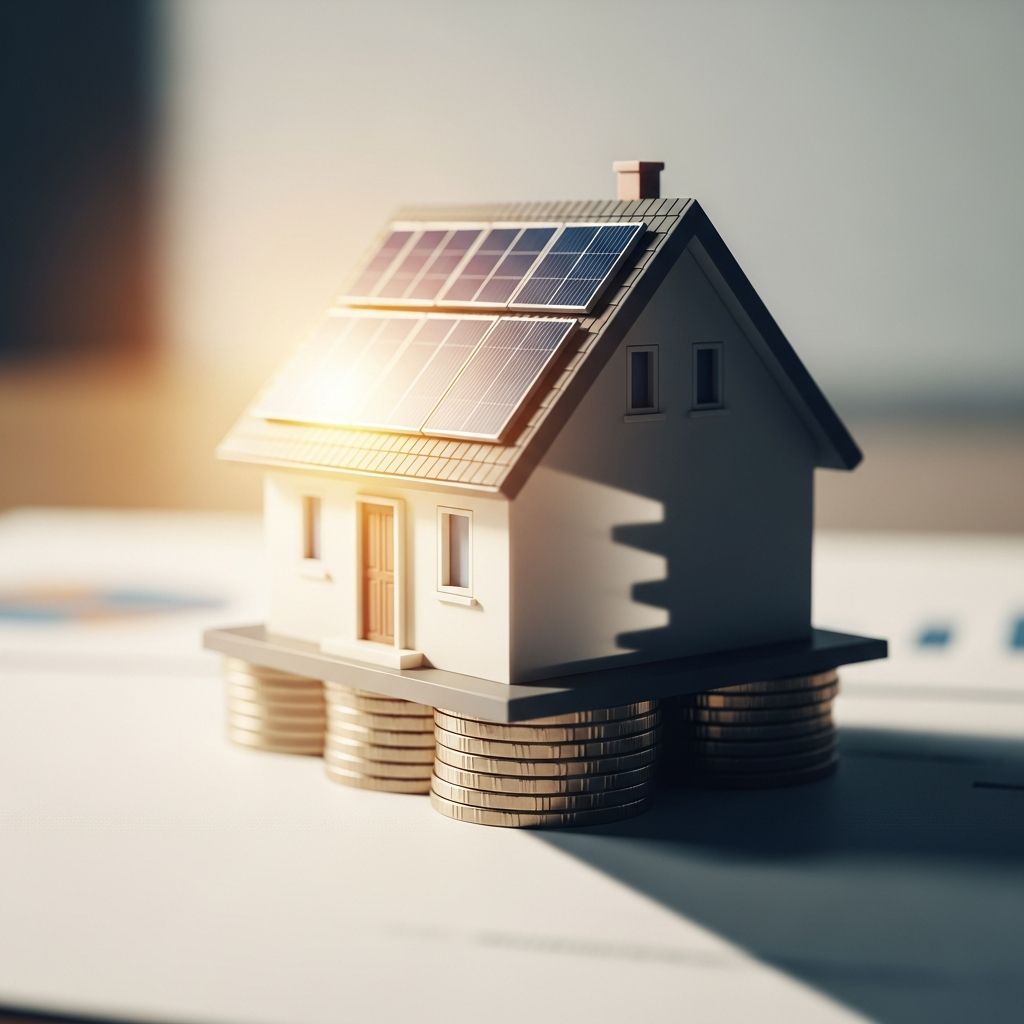
Rooftop solar and community solar projects promise lower utility bills and cleaner energy, but the way these systems are financed can create significant risks for households. This guide explains how residential solar is commonly financed, what can go wrong in those arrangements, and how consumers can better protect themselves before signing a contract.
1. How Households Access Solar Power Today
Most households encounter solar in two main ways: by putting panels directly on their homes or by subscribing to power generated at another location.
1.1 Direct ownership: Rooftop systems on your home
When you install solar panels on your roof, you are typically responsible for:
- The up-front cost of the equipment and installation
- Ongoing maintenance after any warranty periods
- Working with your local utility to connect the system and receive bill credits
Because rooftop systems are expensive, many homeowners rely on financing to spread the cost over time, such as loans, leases, or power purchase agreements (PPAs). Utility and state policies, like net metering or bill credits for exported electricity, strongly influence potential savings.
1.2 Indirect access: Community solar and shared projects
Community solar projects let consumers benefit from solar without putting panels on their own property. These projects are typically located offsite and may be owned by a utility, a developer, or a cooperative.
Households can typically:
- Subscribe to a share of a project and receive credits on their utility bill
- Buy a portion of the project and receive the output associated with that share
- Join a program targeted at low- or moderate-income customers, often with special protections or guarantees
Renters and people who cannot install panels on their own homes often rely on community solar as their primary route to renewable energy.
2. The Main Ways Residential Solar Is Financed
To manage the high up-front cost of solar, the market has developed several financing models. Each model shifts costs and risks differently between the homeowner, lender, and solar company.
2.1 Paying cash
Some households pay for rooftop solar entirely in cash. This requires substantial savings but offers key advantages:
- No interest or financing fees
- Full ownership from day one
- Eligibility for any available tax credits or incentives (if the homeowner qualifies)
The main drawback is the high up-front cost, which can limit who can realistically pursue this option.
2.2 General-purpose credit and home equity
Many households use familiar credit products to finance solar, such as:
- Unsecured installment loans
- Credit cards or personal lines of credit
- Home equity loans or home equity lines of credit (HELOCs)
These products tend to have:
- Standardized disclosures and protections under federal credit laws
- Familiar billing practices, such as monthly statements and clear interest terms
- Established dispute-resolution practices with banks and credit unions
Home equity products may offer lower interest rates but put the home at risk if the borrower cannot repay.
2.3 Solar-specific loans
A growing share of rooftop installations are financed using solar-specific loans marketed or arranged by solar installers and specialized finance companies. These loans are often:
- Integrated directly into the installation sales pitch
- Structured with features tied to state and federal incentives
- Offered by nonbank lenders that partner with contractors and dealers
Solar-specific loans can be secured (for example, with a lien on the solar equipment) or unsecured, and they may be designed so that expected tax credits or rebates are needed to keep payments affordable.
2.4 Leases and power purchase agreements (PPAs)
Instead of borrowing to buy the system, some households enter contracts where a third party owns the panels and the consumer pays for the use of the system or its output.
- Solar lease: The household pays a fixed periodic fee to use the system, typically for 15–25 years.
- Solar PPA: The household pays for electricity generated at an agreed price per kilowatt-hour, often with annual price escalators.
In both cases, the provider usually retains ownership, handles maintenance, and often claims available tax benefits rather than the household. These contracts can involve complex terms around performance guarantees, price adjustments, and early termination.
2.5 Comparing common financing options
| Financing type | Who owns the system? | Up-front cost | Key risks for consumers |
|---|---|---|---|
| Cash purchase | Homeowner | High | High initial cost; potential performance shortfalls |
| Home equity / unsecured loan | Homeowner | Low to moderate | Debt obligation; possible lien on home |
| Solar-specific loan | Homeowner | Low to moderate | Complex terms; reliance on future incentives; dealer-driven sales |
| Lease or PPA | Third-party provider | Often minimal | Long contract term; price escalators; transfer issues if selling home |
3. How Solar-Specific Loans Work in Practice
Solar-specific loans have emerged as a distinct product category, with business models similar to those used in home improvement and auto finance. Understanding how these loans are originated and structured is critical to recognizing potential risks.
3.1 Dealer and contractor-driven origination
Solar installers and sales companies often act as intermediaries between borrowers and nonbank lenders. In many arrangements:
- The contractor markets the loan at the kitchen table or during in-home visits
- Digital tools are used to submit loan applications within minutes
- Lenders rely heavily on the dealer’s pipeline of customers, creating incentives to prioritize volume
This model can increase the risk of aggressive sales tactics, mischaracterization of loan terms, or pressure to sign quickly.
3.2 Loan structures tied to incentives
Solar-specific loans often assume the homeowner will receive tax credits or rebates and apply them to the loan balance. Federal law currently offers an income tax credit for eligible residential solar expenses, but households must have sufficient tax liability to benefit from it.
Common features include:
- Promotional periods with low payments that later jump if an expected lump-sum payment is not applied
- Balloon-like adjustments where the borrower is expected to make a large payment after receiving incentives
- Steep payment increases if the borrower cannot use or does not receive the anticipated credit
Households that are not fully informed about how their tax situation affects these loans may face unaffordable payments in later years.
3.3 Long terms and total cost
To make monthly payments appear low, some solar loans are offered with terms stretching 15–25 years, similar to the expected life of the equipment. Over such long periods:
- Total interest paid can be substantial
- Changes in utility rates or policy may affect the expected savings
- The homeowner may move before the loan is paid off, complicating sale of the property
Because of the long horizon, small differences in interest rate or fees can materially change the economics.
4. Key Consumer Risks and Complaint Patterns
Regulators and consumer protection agencies have received rising numbers of complaints related to solar financing, particularly around misrepresentation and billing problems. While experiences vary, several recurring themes stand out.
4.1 Overstated savings and misleading sales claims
Households frequently report that contractors promised very large bill reductions or even “free” electricity, which did not materialize once real utility bills arrived. Contributing factors include:
- Optimistic assumptions about future utility rate increases
- Failure to explain how net metering or bill credits actually work
- Understating how shading, roof orientation, or local climate affect production
In some cases, the solar financing product is marketed as if it were guaranteed to save money, even though performance and savings are uncertain.
4.2 Confusing or incomplete loan disclosures
Consumers have reported difficulty understanding:
- How promotional payment periods transition to higher payments
- What happens if they do not receive the expected tax credit
- Whether there are prepayment penalties or fees for early payoff
Because many loans are arranged by sales personnel rather than bank staff, borrowers may not receive or review key disclosures until very late in the process, or may rely on verbal explanations that do not match the written terms.
4.3 Quality, installation, and service disputes
Another common frustration arises when the installed system does not work as promised, the contractor fails to complete work, or service issues go unresolved. In loan-financed installations, the lender may have already paid the contractor, leaving the homeowner:
- Making loan payments on a system that underperforms or is inoperative
- Chasing the installer for repairs or completion
- Trying to get the lender involved in resolving disputes over workmanship
Because the loan and installation contracts are often with different entities, it can be unclear who is responsible when things go wrong.
4.4 Challenges selling or refinancing the home
Long-term leases, PPAs, or liens associated with solar equipment can complicate real estate transactions. Buyers or mortgage lenders may be wary of:
- Assuming a long-term payment obligation with price escalators
- Unclear ownership of equipment installed on the roof
- Liens filed by solar providers or lenders that need to be paid off or subordinated
In some cases, homeowners report that unresolved solar financing issues delay or derail home sales or refinances.
5. Legal and Regulatory Protections That May Apply
Several federal and state laws may apply to solar financing arrangements, depending on the product and the parties involved.
5.1 Federal consumer credit laws
When solar installations are financed with loans or credit, key federal laws may apply:
- Truth in Lending Act (TILA): Requires clear disclosure of loan terms, including the annual percentage rate (APR), finance charges, and payment schedule.
- Equal Credit Opportunity Act (ECOA): Prohibits discrimination in credit decisions based on protected characteristics.
- Consumer Financial Protection Act: Prohibits unfair, deceptive, or abusive acts or practices by covered entities.
Nonbank lenders that originate or service solar loans can be subject to supervision and enforcement by federal regulators, including the Consumer Financial Protection Bureau (CFPB).
5.2 State-level oversight of contractors and energy programs
States often license or regulate solar installers, home improvement contractors, and third-party energy providers. State laws may address:
- Requirements for written contracts and disclosures
- Cancellation rights and cooling-off periods for door-to-door sales
- Standards for marketing renewable energy and utility bill savings
Some states also regulate third-party ownership models, such as leases and PPAs, through public utility commissions or specialized energy statutes.
5.3 Tax rules and eligibility for incentives
Households considering solar should understand that federal and state tax incentives are subject to eligibility criteria and may change over time. The U.S. Internal Revenue Service provides guidance on the federal residential clean energy credit, including what expenditures qualify and how to claim the credit.
Because these credits depend on individual tax circumstances, homeowners should not rely solely on installer statements about expected refunds or credits.
6. Practical Steps for Consumers Considering Solar Financing
Consumers can take several steps to reduce risks and make more informed decisions when evaluating solar offers.
6.1 Verify projected savings independently
- Request written assumptions about electricity prices, system performance, and degradation over time.
- Compare projections against your own recent utility bills.
- Use independent tools, such as those provided by utilities or government agencies, to estimate potential bill impacts.
6.2 Compare multiple financing options
- Obtain quotes for cash purchase, bank or credit union loans, and any proposed solar-specific loan.
- Compare total costs over the life of the system, not just the initial monthly payment.
- Ask whether you can use your own lender or financing instead of the installer’s preferred option.
6.3 Scrutinize loan and contract terms
- Read all documents before signing and keep copies of every agreement and disclosure.
- Understand what happens to your payment if you do not receive an expected tax credit or rebate.
- Check for prepayment penalties, dealer fees, and conditions that allow price increases.
- Clarify who is responsible for repairs, monitoring, and warranty claims.
6.4 Protect yourself when dealing with contractors
- Confirm that the installer is licensed and insured in your state.
- Look
- Avoid high-pressure sales tactics and offers that require you to sign immediately.
- Ask how disputes will be handled and whether mandatory arbitration clauses apply.
6.5 Plan for life events and property changes
- Ask how loans, leases, or PPAs affect future home sales or refinances.
- Clarify any transfer fees, approval requirements, or buyout options if you move.
- Confirm how any liens will be recorded and whether they could affect your mortgage.
7. Frequently Asked Questions (FAQs)
Q1: Are solar-specific loans safer or riskier than traditional home equity loans?
Solar-specific loans are not inherently safer or riskier than home equity loans, but they often have more complex features tied to incentives and are frequently sold through contractors rather than banks. This can increase the risk of misunderstanding or mis-selling, so careful review of terms is essential.
Q2: Can I cancel a solar loan or contract after I sign?
Your rights to cancel depend on the type of agreement and applicable state and federal law. Some home improvement or door-to-door sales contracts provide a short cancellation window, while credit agreements may not. You should review the contract’s cancellation section and consult state law or a legal adviser if you are unsure.
Q3: What happens if the solar company goes out of business?
If the installer or third-party owner fails, you may still be obligated to repay your loan or continue making lease or PPA payments, depending on contract terms. Warranties and maintenance obligations may be harder to enforce. Checking the company’s track record and asking how obligations are transferred in a bankruptcy or sale can help you assess this risk.
Q4: Will installing solar affect my ability to refinance my mortgage?
It can. Liens on solar equipment, long-term leases, or PPAs may need to be addressed before a lender will refinance. Lenders may require subordination or payoff of certain obligations. You should notify your mortgage lender before installing solar and keep detailed documentation of all solar-related contracts and liens.
Q5: How do I know if I qualify for a federal solar tax credit?
Eligibility for the federal residential clean energy credit depends on factors such as ownership of the system, the type of property, and your income tax liability in the year the system is placed in service. Because this is a tax matter, checking IRS guidance or consulting a tax professional is advisable before relying on a specific refund amount to repay a loan.
References
- Issue Spotlight: Solar Financing — Consumer Financial Protection Bureau. 2024-02-01. https://www.consumerfinance.gov/data-research/research-reports/issue-spotlight-solar-financing/
- Financing Options for Solar — Pacific Gas and Electric Company (PG&E). 2023-06-15. https://www.pge.com/en/clean-energy/solar/getting-started-with-solar/financing-options-for-solar.html
- Residential Clean Energy Credit (Form 5695) — Internal Revenue Service. 2024-01-18. https://www.irs.gov/credits-deductions/residential-clean-energy-credit
- Commercial Solar Financing — Transect. 2023-09-05. https://www.transect.com/insights/commercial-solar-financing
- Homeowner’s Guide to the Federal Tax Credit for Solar Photovoltaics — U.S. Department of Energy, Office of Energy Efficiency & Renewable Energy. 2022-12-22. https://www.energy.gov/eere/solar/homeowners-guide-federal-tax-credit-solar-photovoltaics
Similar Articles








Read full bio of Sneha Tete


