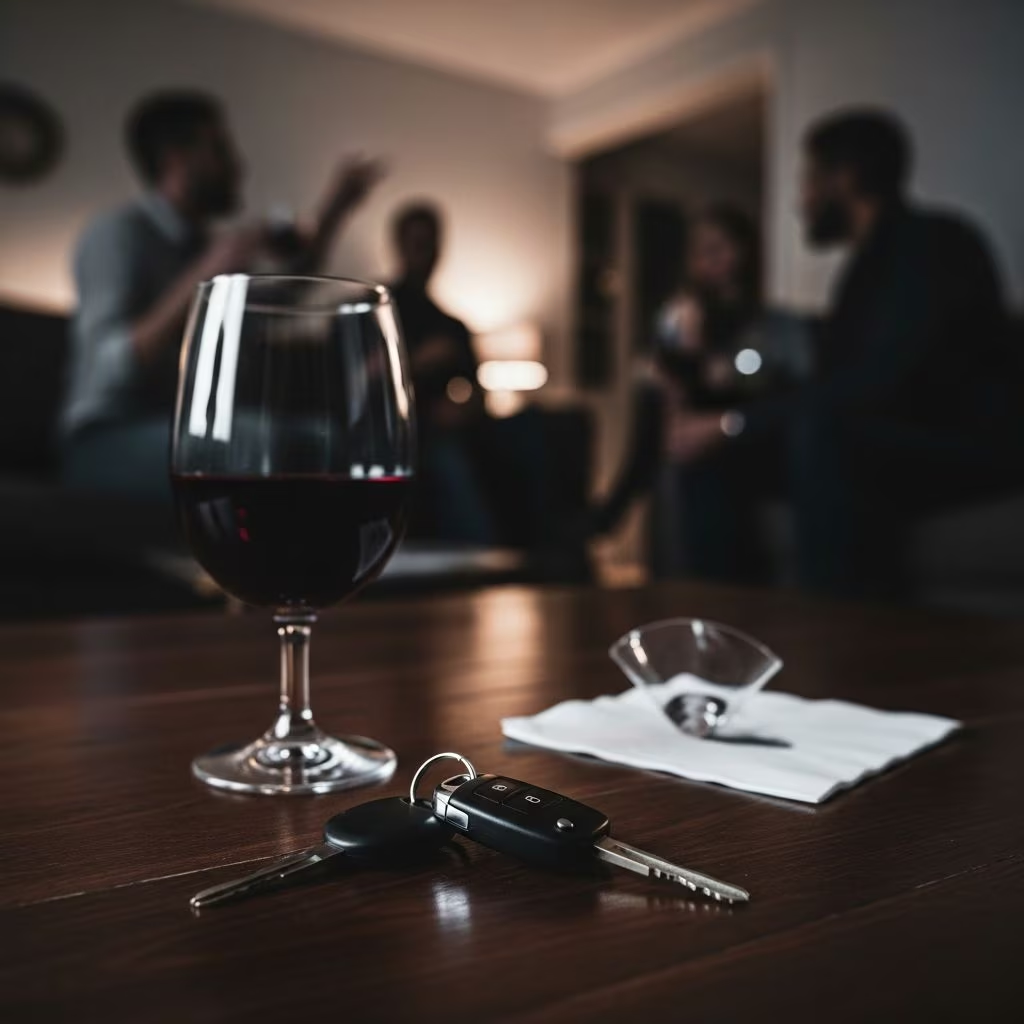
Inviting friends, family, or coworkers over for drinks may feel like a casual social event, but in many states it can also create real legal exposure. Social host liability is the legal concept that, under certain circumstances, a private individual who provides alcohol can be held responsible if an intoxicated guest causes injury, death, or property damage to others.
This guide explains how social host liability works, how it differs from dram shop laws, the role of underage drinking, insurance considerations, and practical steps you can take to reduce your risk.
What Is Social Host Liability?
Social host liability refers to the civil responsibility of a non-commercial host—such as a homeowner, tenant, or event organizer—who provides or allows the provision of alcohol at a private gathering.
In states that recognize some form of social host liability, an injured person may be able to sue the host based on allegations such as:
- The host served alcohol to a guest who was already visibly intoxicated, and that guest later injured someone in a crash or altercation.
- The host knowingly allowed underage drinking on property they own or control, and an underage guest went on to cause harm.
- The host facilitated or encouraged high-risk drinking (for example, drinking games) and failed to take reasonable steps to protect others.
Whether a host can actually be held liable depends heavily on state law, court decisions, and the specific facts of the incident.
How Social Host Liability Differs from Dram Shop Laws
It is important to distinguish social host liability from dram shop liability. While they both involve alcohol-related harm, they apply to different types of providers.
| Feature | Social Host Liability | Dram Shop Liability |
|---|---|---|
| Who it applies to | Private individuals or non-commercial hosts (e.g., homeowners, tenants, party organizers). | Commercial sellers of alcohol such as bars, restaurants, and liquor stores. |
| Typical setting | House parties, backyard gatherings, office celebrations, private events. | On-premises alcohol service and retail alcohol sales. |
| Main legal focus | Provision of alcohol to intoxicated adults or minors; allowing underage drinking. | Service of alcohol to visibly intoxicated patrons or minors in violation of regulations. |
| Source of law | State statutes, local ordinances, and case law.* | State alcohol statutes (dram shop laws) and associated regulations. |
| Common claims | Negligence, negligent supervision, statutory claims tied to underage drinking. | Statutory dram shop actions for third-party injuries caused by intoxicated customers. |
*Many state social host rules are judge-made through court decisions, and they vary significantly from one jurisdiction to another.
Where and When Social Host Liability May Apply
Because there is no single nationwide rule, the reach of social host liability depends on each state’s statutes and court interpretations. Some patterns are common:
1. Liability for Serving or Enabling Underage Drinking
Many states focus heavily on underage drinking. For example, North Dakota’s social host liability law holds people accountable when they knowingly allow underage drinking on property they own, rent, or control. Similar approaches appear in other states, often through criminal or civil penalties for adults who supply or permit alcohol for minors.
In these states, liability can arise when:
- The host directly serves or provides alcohol to a person under the legal drinking age.
- The host allows minors to drink on the premises and does not take reasonable steps to stop it.
- The host creates or tolerates an environment where underage drinking parties occur, such as repeatedly hosting large unsupervised gatherings.
Hosts may face civil lawsuits from injured third parties, and in some jurisdictions they can also face fines or criminal charges, especially where local ordinances specifically target underage drinking parties.
2. Liability for Serving Intoxicated Adults
Some states extend social host liability beyond minors and impose duties when a host serves alcohol to adults who are obviously intoxicated and likely to drive.
Courts in certain jurisdictions have articulated factors such as:
- The host provided alcohol to the guest who later caused an accident.
- The host knew or reasonably should have known the guest was intoxicated at the time.
- The host knew or should have known the guest would be driving afterward.
If these elements are proven, a host may be held partially responsible for injuries to third parties on the theory that continuing to serve a visibly impaired driver was negligent.
By contrast, other states significantly limit or reject social host liability for adult guests, especially where legislatures have chosen to place primary responsibility on drinkers themselves.
3. States With Minimal or No Social Host Liability
A few states largely decline to impose civil liability on social hosts for adult guests, viewing the decision to drink and then drive as the drinker’s own negligent act. However, even in those jurisdictions, hosts can still face separate consequences for violating underage drinking laws or local ordinances.
Typical Scenarios That Trigger Social Host Claims
While the legal details differ across states, many social host cases arise from a common set of factual patterns:
- Drunk driving collisions following a house party or holiday gathering, where victims allege the host overserved or failed to intervene.
- Underage drinking parties leading to serious crashes, alcohol poisoning, assaults, or falls, with claims that adults permitted or ignored illegal drinking.
- Violent altercations at private events where intoxicated guests injure others and plaintiffs argue the host failed to manage foreseeable risks.
- Property damage incidents, such as fires or vandalism caused by intoxicated guests, sometimes paired with insurance coverage disputes.
Legal Elements in Social Host Cases
Although each state frames the claim differently, plaintiffs generally must prove key elements similar to negligence, sometimes combined with statutory requirements:
- Duty – That the host had a legal duty under state law or court decisions not to provide alcohol in certain circumstances (for example, to minors or visibly intoxicated persons likely to drive).
- Breach – That the host breached that duty by serving, supplying, or allowing access to alcohol in a prohibited or unreasonable way.
- Causation – That the host’s conduct contributed to the resulting harm; courts often require proof that the guest’s intoxication was a significant factor in causing the injury.
- Damages – That the plaintiff suffered legally recognized injuries, such as medical bills, lost income, property damage, or pain and suffering.
Some states also impose specific statutory requirements, such as proving that the host acted “knowingly” in permitting underage drinking on the property.
Insurance and Financial Exposure for Social Hosts
Many people first learn about social host liability through their homeowners or renters insurance. Standard policies often include some level of liquor liability coverage, but coverage can be limited and subject to exclusions.
According to the Insurance Information Institute, homeowners policies typically have liability limits in the range of $100,000 to $300,000 for covered claims, which may not be sufficient in a serious injury or wrongful death case. If damages exceed policy limits, the host’s personal assets may be at risk.
Key issues to review with an insurance professional include:
- Whether the policy expressly covers claims related to serving alcohol at private events.
- Exclusions for intentional or criminal conduct, including violations of underage drinking laws.
- Whether an umbrella liability policy is advisable to provide additional coverage beyond the base policy limits.
Practical Steps to Reduce Social Host Liability Risk
While you cannot eliminate all risk, there are concrete measures that can significantly lower the chance of alcohol-related harm and legal exposure:
- Follow underage drinking laws strictly – Do not serve alcohol to anyone under the legal drinking age, and do not allow minors to drink on property you own or control.
- Limit or stop serving clearly intoxicated guests – Train yourself and any helpers to recognize visible signs of impairment and to decline further alcohol service when appropriate.
- Plan transportation in advance – Encourage designated drivers, provide taxi or rideshare options, and be prepared to take keys or offer a place to sleep when necessary.
- Offer food and non-alcoholic drinks – Providing substantial food and appealing non-alcoholic options can slow consumption and give guests alternatives.
- Set expectations before the event – Let guests know you will not tolerate underage drinking, excessive intoxication, or drunk driving.
- Supervise large gatherings – Especially where teens or young adults are present, maintain responsible adult supervision instead of leaving the group unattended.
- Review your insurance coverage – Discuss your plans with an insurance professional to understand what is and is not covered and whether higher limits are appropriate.
When to Speak With a Lawyer
Social host cases can be complex because they often involve multiple parties, conflicting witness accounts, and state-specific legal rules. Consulting a qualified attorney can be important in several situations:
- You have been injured by an intoxicated driver or another drunk individual who was coming from a private event.
- You are a parent or property owner who is being investigated or sued in connection with an underage drinking incident on your premises.
- You are a host who has been notified of a claim or lawsuit related to an event where alcohol was served.
An attorney can help evaluate which state laws apply, identify all potentially liable parties (including commercial providers), work with insurers, and pursue or defend against claims.
Frequently Asked Questions (FAQs)
Q: Am I automatically liable if a guest drives drunk after leaving my party?
No. Liability is not automatic. Whether you can be held responsible depends on your state’s laws and the facts of the situation, such as whether you served the alcohol, whether the guest was visibly intoxicated, and whether you knew they would be driving.
Q: Can I be sued if an underage person drinks at my house even if I did not personally hand them alcohol?
In some states, yes. Laws like North Dakota’s social host liability statute can apply when an adult knowingly provides an environment or property where underage drinking occurs, even if they did not personally pour the drinks. Courts may look at whether you knew or should have known that minors were consuming alcohol.
Q: Does my homeowners insurance protect me if someone is injured after drinking at my home?
Many homeowners policies provide some liability coverage for injuries connected to social events, but limits are often modest and certain alcohol-related or criminal acts may be excluded. It is important to review your policy and ask your insurer specific questions about social host exposures.
Q: Is social host liability the same in every state?
No. Social host liability is highly state-specific. Some states impose broad liability, especially for underage drinking; others restrict it to narrow situations or reject it for adult guests. Because of this variation, local legal advice is critical.
Q: What if alcohol is “BYOB” and I do not supply the drinks?
Allowing guests to bring their own alcohol can still create risk in some jurisdictions. Courts and statutes may focus on whether you controlled the premises and knowingly permitted dangerous or illegal drinking behavior, particularly when minors are present.
References
- Social Host Liability vs. Dram Shop Laws in North Carolina — James Scott Farrin. 2021-07-02. https://www.carolinalaw.com/2021/07/social-host-liability-vs-dram-shop-laws-in-north-carolina/
- What is Social Host Liability? — Horwitz, Horwitz & Associates. 2023-05-01. https://www.horwitzlaw.com/faq/premises-liability/what-is-social-host-liability/
- Social Host Liability — Insurance Information Institute. 2019-10-01. https://www.iii.org/article/social-host-liability
- Social Host Liability Law — North Dakota Health and Human Services. 2022-03-15. https://www.hhs.nd.gov/prevention/alcohol/underage-drinking-prevention-strategies/social-host-liability-law
- What Is Social Host Liability in South Carolina? — Jordan Law Center. 2023-04-10. https://jordanlawcenter.com/what-is-social-host-liability-in-south-carolina/
- Party Time! What You Should Know about Social Host Liability — HWP Attorneys at Law. 2022-12-05. https://hwpalaw.com/party-time-what-you-should-know-about-social-host-liability/