
Your Rights During Traffic Stops: Understanding Sobriety Testing Laws
Know your constitutional rights when asked to perform roadside sobriety assessments during DUI investigations.
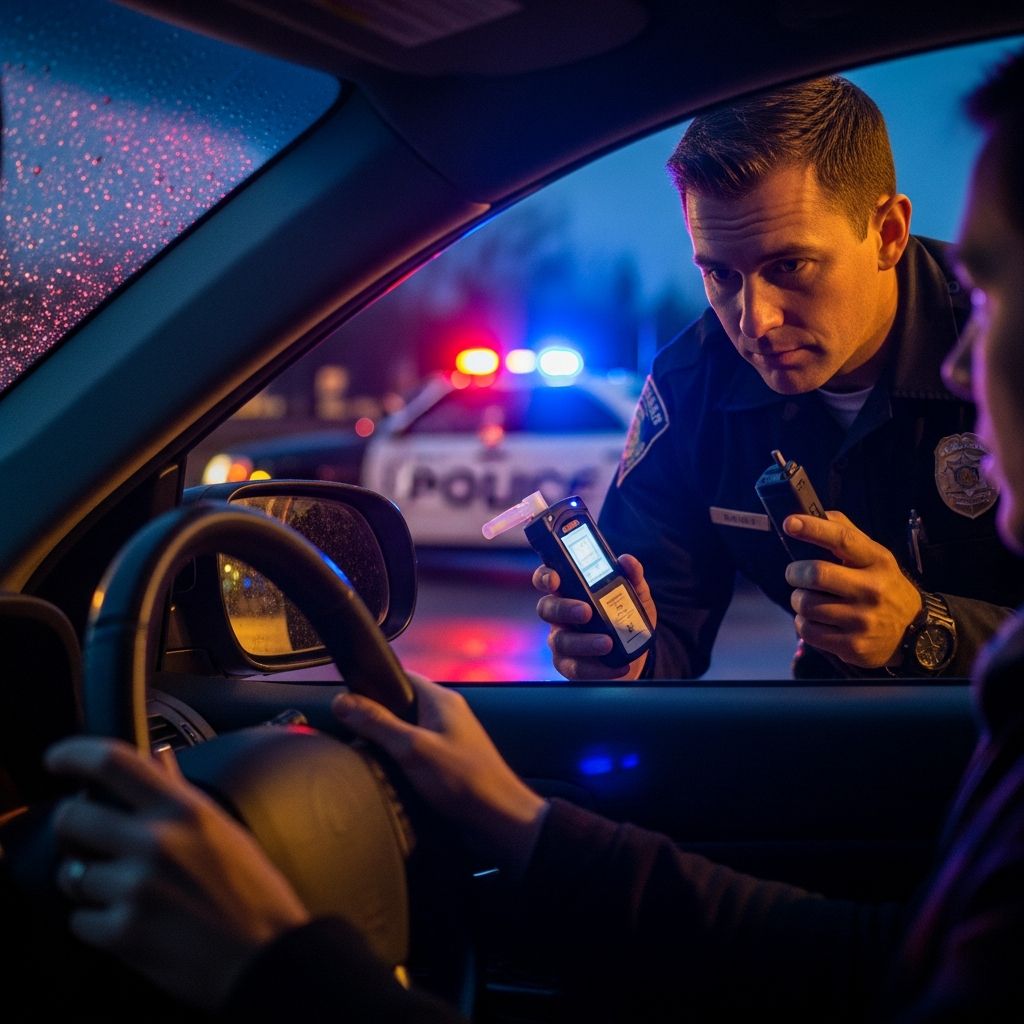
Understanding Your Constitutional Protections During DUI Investigations
When law enforcement officers suspect you of driving under the influence, they may request you to perform a series of physical and behavioral assessments commonly referred to as field sobriety tests. Many drivers feel pressured to comply with these requests, believing they have no choice in the matter. However, understanding your actual legal rights in this situation is crucial for protecting your interests. The fundamental principle underlying American criminal law is that you have the constitutional right to decline participation in evidence-gathering activities before formal arrest, and field sobriety testing falls squarely within this protection. This article examines the nuances of your rights, the distinctions between different types of testing, and the strategic implications of your choices during traffic stops.
The Voluntary Nature of Roadside Physical Assessments
One of the most important facts that law enforcement officers are not obligated to disclose is that field sobriety tests are entirely voluntary. Police officers are well aware of this legal reality, yet they frequently communicate test requests in ways that make them sound like mandatory orders. This approach takes advantage of the power differential inherent in traffic stops, where most citizens feel intimidated and uncertain about their actual legal obligations. The truth is straightforward: no statute in any state requires drivers to submit to these assessments, and you will face no criminal penalties for declining. Officers may observe your refusal and document it in their reports, but the refusal itself does not constitute evidence of intoxication or grounds for arrest.
The critical distinction in American criminal procedure is that these tests occur before you are taken into custody. At this pre-arrest stage, you have maximum constitutional protection against self-incrimination. Once an officer formally arrests you and takes you to a police facility or medical facility, the legal landscape changes dramatically, but that distinction comes later in the process. Understanding this timing is essential for making informed decisions during your interaction with police.
Distinguishing Between Pre-Arrest and Post-Arrest Testing Requirements
The legal framework creates a clear division between two categories of sobriety testing, and this distinction has profound consequences for your rights and obligations. Pre-arrest assessments, conducted roadside at the location of the traffic stop, are purely voluntary in nature. Post-arrest testing, administered after formal custody, operates under different legal principles entirely. This distinction often confuses drivers, leading them to believe that all refusals carry similar consequences, which is incorrect.
Field sobriety tests performed during the initial traffic stop phase belong to the voluntary category. These include the horizontal gaze nystagmus test, the walk-and-turn test, and the one-leg stand test. A portable breath test device, sometimes called a preliminary alcohol screening device, also falls into this voluntary category. Refusing any of these roadside tests will not result in automatic license suspension, criminal charges for refusal, or other direct legal penalties.
In contrast, chemical testing conducted after arrest—including breath analysis, blood draws, and urine analysis—operates under implied consent laws in most jurisdictions. These laws establish that by accepting the privilege of driving on public roads, you have implicitly consented to chemical testing if lawfully arrested for impaired driving. Refusal of post-arrest chemical testing carries serious consequences, including automatic license suspension, criminal charges for test refusal, and enhanced penalties that may exceed those for the underlying impaired driving offense itself. Some states classify post-arrest test refusal as a more serious crime than the DUI or DWI charge itself.
How Law Enforcement Uses Field Assessments in Investigation
Police officers employ field sobriety tests as screening tools to establish probable cause before making an arrest. These tests allow officers to observe multiple dimensions of physical and cognitive functioning in a roadside setting. An officer will watch your balance and coordination during specific movements, listen to your speech for slurring or unusual patterns, observe your eye movements, and assess your ability to follow complex instructions. The subjective nature of these observations is important to understand.
Unlike chemical tests that produce numerical results, field assessments involve considerable officer judgment and interpretation. Multiple factors unrelated to intoxication can affect your performance, including nervousness about the traffic stop itself, fatigue, medical conditions, medications you may be taking, physical disabilities, footwear, and environmental conditions such as uneven pavement or inadequate lighting. An officer’s conclusion about your performance is not objective scientific data but rather a subjective interpretation filtered through their expectations and training.
Officers frequently record these tests on body cameras or dash cameras, and prosecutors later use the footage in court proceedings. However, the video record of your performance can be misleading without proper context about the conditions under which the test was administered and the various non-intoxication factors that may have affected your physical performance.
Strategic Considerations: Why Refusal May Protect Your Legal Position
Criminal defense attorneys often advise clients to refuse field sobriety testing, and there are legitimate strategic reasons for this counsel. First, performing these tests provides the prosecution with visual evidence captured on video. Even if you believe you performed well, subjective interpretation means prosecutors can argue otherwise to a jury. Without this visual evidence, the prosecution’s case becomes more difficult to prove beyond a reasonable doubt.
Second, the initial basis for asking you to perform these tests is that an officer already suspects intoxication. You are not in a neutral situation where the officer is undecided about your status. The officer has already formed a suspicion and is using the tests to confirm that suspicion, not to objectively assess your condition. In this biased context, the interpretation of any test performance will likely be filtered through the officer’s existing expectations.
Third, refusal does not make you appear guilty in the legal sense. Many people mistakenly believe that refusal will be interpreted as consciousness of guilt, but this is a misunderstanding of how the legal system operates. You have a constitutional right to decline self-incriminating evidence-gathering activities, and exercising that right is not evidence of guilt. Defense attorneys have successfully argued in numerous cases that refusal of field tests strengthened rather than weakened their clients’ legal positions because it prevented the prosecution from obtaining problematic evidence.
What Actually Happens When You Decline Participation
If you politely decline to perform field sobriety tests, the officer will not release you simply because you refused. Officers can still arrest you based on other observations they have made, including the smell of alcohol, slurred speech, erratic driving patterns that led to the initial stop, appearance of bloodshot or watery eyes, or other indicators of potential intoxication. Refusal of field testing does not prevent arrest; it merely prevents you from providing the officer with additional evidence.
Following an arrest, you will typically be transported to a police station, hospital, or medical facility where you will be asked to submit to chemical testing. This is where the legal landscape changes fundamentally. Refusing post-arrest chemical testing is not a constitutional right but rather a choice with serious legal consequences. In most jurisdictions, such refusal results in automatic license suspension independent of any criminal conviction, and it may also result in criminal charges for test refusal itself.
It is important to note that you cannot be arrested solely for refusing field sobriety tests. The refusal alone does not constitute probable cause for arrest. However, officers typically request these tests because they already have observations that create probable cause or reasonable suspicion of impairment, so refusal is unlikely to affect whether an arrest occurs.
How Refusal Affects Prosecutors’ Evidence and Case Strategy
Prosecutors may attempt to use your refusal as evidence suggesting consciousness of guilt, attempting to convince juries that innocent people would have no reason to refuse. However, this argument has significant weaknesses. You exercised a constitutional right that existed precisely because the law recognizes that self-incriminating evidence-gathering should be voluntary. A skilled defense attorney can explain to the court that refusal is an exercise of rights, not an admission.
Without field test video or documented performance observations, the prosecution loses evidentiary material they could have used. They must instead rely on other observations made at the scene, such as the driving pattern that prompted the stop, physical appearance indicators, and statements you made. These other observations are generally less convincing than video evidence of failed field tests would have been. Many cases have been dismissed or significantly weakened for the prosecution because the defendant refused field testing and the prosecution could not prove impairment beyond a reasonable doubt without that evidence.
Common Misconceptions About Testing and Refusal
A widespread misconception is that refusing field sobriety tests will result in automatic license suspension. This is false. License suspension automatically results only from refusal of post-arrest chemical testing under implied consent laws, not from refusal of voluntary field tests. This confusion likely arises because officers sometimes present field test requests in ways that make them sound like mandatory chemical testing, causing drivers to believe the consequences are equivalent.
Another misconception is that police officers are required to inform you that you have the right to refuse field sobriety tests. They are not. Officers have no obligation to educate drivers about their constitutional rights in this regard. The legal principle is that ignorance of law is not an excuse, meaning you are presumed to know your rights even if police do not explain them.
A third misconception is that refusal automatically means you will be arrested. While arrest may occur based on other evidence and observations, refusal of field testing alone does not provide grounds for arrest. An officer still needs other probable cause or reasonable suspicion.
How to Conduct Yourself During a Traffic Stop
If you are stopped on suspicion of impaired driving, several principles should guide your conduct. First, remain polite and calm throughout the interaction. Argumentative or hostile behavior can provide officers with additional observations they might use to establish probable cause. Second, provide identification and vehicle registration when requested; these are legal obligations. Third, you can and should decline to answer questions about your drinking or where you are coming from, as these are self-incriminating inquiries.
When asked to perform field sobriety tests, you can politely decline by saying something like, “I would prefer not to perform field sobriety tests.” You do not need to provide extensive explanations or justifications. If the officer persists, remain firm but respectful in your refusal. If you are arrested and taken to a facility for chemical testing, you should request an attorney before undergoing that testing and before answering additional questions about your driving or drinking.
Frequently Asked Questions About Field Sobriety Testing Rights
Q: Will refusing field sobriety tests make it certain I’ll be arrested?
A: No. Refusal alone cannot be the basis for arrest. However, if an officer has other probable cause based on observations like driving pattern, speech, or appearance, they may arrest you regardless of whether you refuse the tests. The refusal does not change what they already observed.
Q: Can a police officer charge me with a crime just for refusing field tests?
A: No. Refusal of field sobriety tests is not itself a criminal offense in any jurisdiction. Only refusal of post-arrest chemical testing (breath, blood, or urine) can result in criminal charges or license suspension.
Q: What if I am nervous and perform poorly on field tests even though I have not been drinking?
A: This is precisely why performance on these tests is unreliable. Nervousness, medical conditions, fatigue, and other factors unrelated to intoxication affect performance. By refusing, you avoid providing evidence that could be misinterpreted, even if you performed poorly for innocent reasons.
Q: If I refuse field tests, will the prosecutor definitely think I’m guilty?
A: Not necessarily. Refusal is an exercise of constitutional rights. A competent defense attorney can explain this to the court. Juries understand that people have the right to decline self-incriminating requests.
Q: Are field sobriety tests the same as breathalyzer tests?
A: No. Field sobriety tests are physical assessments conducted roadside and are voluntary. Breathalyzer tests are chemical tests measuring blood alcohol content, typically conducted after arrest, and refusal carries legal consequences.
Q: What should I say if an officer asks me to perform field sobriety tests?
A: You can politely say, “I do not wish to perform field sobriety tests.” You do not need to provide reasons or justify your refusal. You have the legal right to decline without explanation.
References
- Refusing a Field Sobriety Test in a DUI Stop & Your Legal Rights — Justia. https://www.justia.com/criminal/drunk-driving-dui-dwi/handling-a-dui-stop/refusing-to-perform-a-field-sobriety-test/
- Can you refuse a field sobriety test? — Sheridan & Dulas, P.A. https://www.ssdpa.com/blog/can-you-refuse-a-field-sobriety-test
- Should You Refuse a Field Sobriety Test? A DUI Attorney Explains — True Law Firm. https://truelawfirm.com/dui/should-you-refuse-a-field-sobriety-test-a-dui-attorney-explains/
- Field Sobriety Tests: Are They Legally Required or Optional? — Lotvén Law Firm. https://www.lotvenlawfirm.com/blog/are-field-sobriety-tests-legally-required-or-optional/
Similar Articles








Read full bio of medha deb


