
Understanding Slip and Fall Injury Claims
Learn how slip and fall accidents happen, who may be legally responsible, and what steps protect your health, rights, and potential compensation.
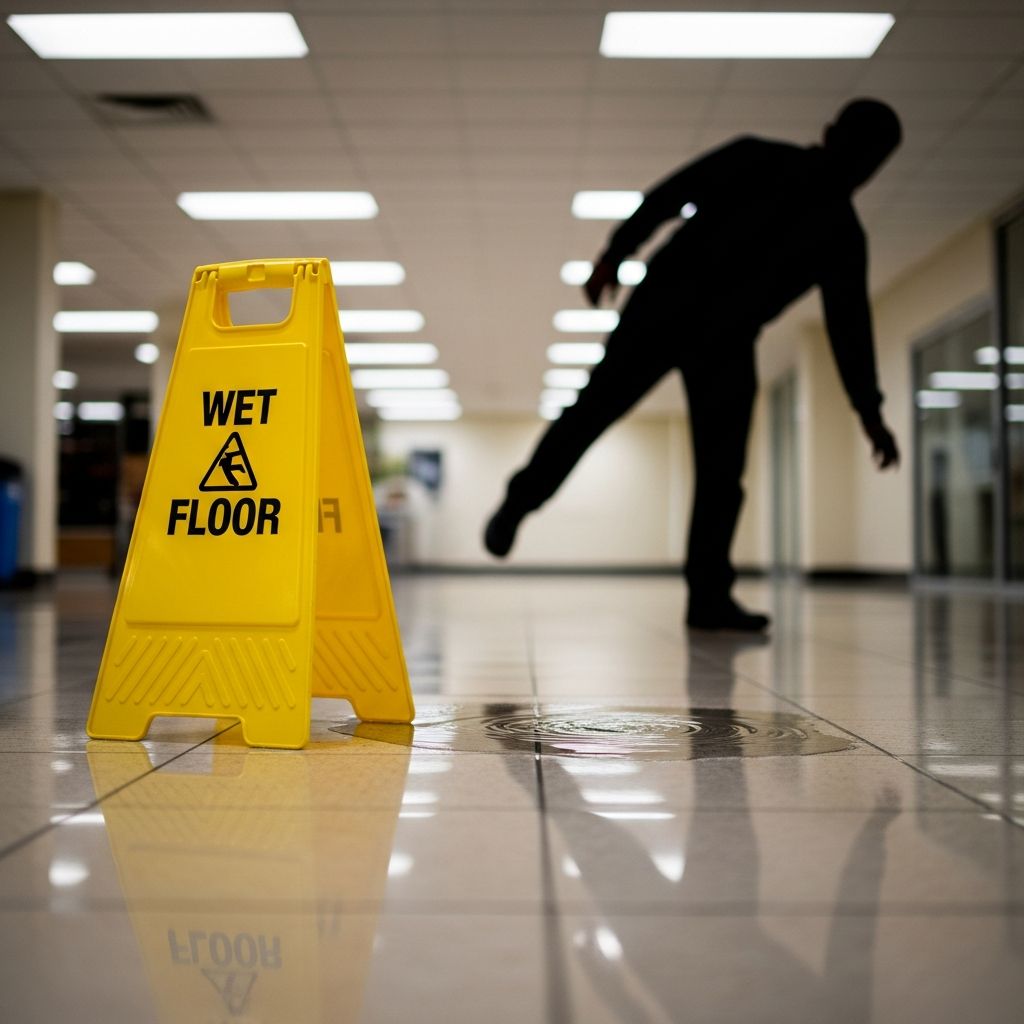
Slip and fall accidents may look like minor mishaps, but they are a major source of serious injuries and personal injury claims every year. Falls can lead to broken bones, traumatic brain injuries, spinal damage, and long-lasting pain, particularly for older adults and workers exposed to hazardous conditions. Understanding how these incidents happen, when a property owner may be legally responsible, and what you should do after a fall can make a critical difference in both your recovery and your legal rights.
What Is a Slip and Fall Accident?
A slip and fall accident is a type of personal injury incident where someone loses balance and falls due to a dangerous condition on a walking surface. In the legal context, many of these claims fall under the broader category of premises liability, which concerns injuries caused by unsafe conditions on property.
Although the term “slip and fall” is commonly used, it also covers related events such as:
- Tripping over objects, uneven flooring, or unexpected changes in elevation
- Falling on stairs, ramps, or escalators because of hazards
- Sliding on ice, snow, or other weather-related surfaces
- Losing balance due to poor lighting that hides obstacles or defects
Falls occur in many settings, including private homes, apartment buildings, parking lots, retail stores, restaurants, offices, factories, and public walkways. Workplace slip, trip, and fall incidents are a leading cause of lost time at work and injury in many industries, making prevention a key safety priority for employers.
Common Causes of Slip and Fall Incidents
Although every accident is unique, certain hazards frequently contribute to slip and fall injuries. Identifying these risks helps clarify whether a fall could have been avoided with reasonable care.
Typical Hazardous Conditions
- Wet or slippery floors from spills, leaks, mopping, or rain and snow tracked indoors
- Uneven surfaces, such as cracked sidewalks, loose tiles, abrupt changes in floor level, or worn carpeting
- Cluttered walkways with boxes, cords, debris, or misplaced equipment obstructing paths
- Poor lighting in stairwells, corridors, and parking areas that makes hazards hard to see
- Missing or damaged handrails on stairs or ramps
- Weather-related hazards, including ice, snow, wet leaves, or mud on exterior walkways
Good housekeeping, regular inspections, and prompt maintenance are recognized as fundamental strategies to prevent these conditions in workplaces and public spaces.
Human and Environmental Factors
Not every fall is solely the result of a property condition. Other contributing factors often include:
- Inadequate or inappropriate footwear with poor traction
- Rushing, running, or carrying heavy loads that obstruct the view
- Distractions such as texting or looking at a phone while walking
- Age-related balance issues or mobility limitations
- Fatigue, illness, or medication side effects that affect coordination
In a legal case, these human factors may influence how fault is allocated between the property owner and the injured person, especially under comparative negligence rules.
Legal Responsibility: When Is a Property Owner Liable?
Slip and fall claims generally arise under premises liability law, which addresses the duties of those who own, occupy, or control property. The exact rules vary by state, but several core ideas appear in most jurisdictions.
Duty of Care to Visitors
Property owners and occupiers usually owe a legal duty to keep their premises reasonably safe for people who are lawfully on the property. This often includes:
- Maintaining floors, stairs, and walkways in a reasonably safe condition
- Inspecting the premises within a reasonable time frame to find hazards
- Repairing dangerous conditions, or when immediate repair is not possible, providing adequate warning (such as signs or barriers)
- Following applicable building codes and safety regulations
The level of care may depend on the visitor’s status (such as customer, invited guest, or in some states, trespasser) and how foreseeable it was that the person would be in the area where the hazard existed.
Key Elements of a Slip and Fall Claim
To recover compensation, an injured person typically must prove several elements. While legal wording varies, the core issues often include:
| Element | What the Injured Person Usually Must Show |
|---|---|
| Duty | The owner or occupier owed a duty of reasonable care under the circumstances (for example, to keep the area reasonably safe for customers). |
| Breach | The owner failed to act reasonably, such as by ignoring a spill for an extended time or not repairing a known defect. |
| Notice | The owner knew or, using reasonable care, should have known about the dangerous condition (actual or constructive notice). |
| Causation | The unsafe condition and the owner’s failure to address it directly led to the fall and resulting injuries. |
| Damages | The injured person suffered actual losses such as medical bills, lost income, pain, or disability. |
Proving that a property owner “should have known” about a hazard often involves evidence of how long the hazard existed, the owner’s maintenance protocols, and whether similar problems had occurred before.
Comparative and Contributory Fault
In many states, a court or insurer may evaluate whether the injured person also shared some responsibility for the fall. Examples might include ignoring visible warning cones, running on a wet surface, or walking while distracted by a phone.
- Under comparative negligence, an injured person’s compensation may be reduced in proportion to their share of fault.
- In a few jurisdictions with contributory negligence, any fault by the injured person may bar recovery entirely.
Because these rules are state-specific, legal advice tailored to the location of the accident is often essential.
Where Slip and Fall Injuries Commonly Occur
Slip and fall hazards can appear on almost any property, but several locations tend to present recurring issues.
- Retail stores and supermarkets – Spills, recently mopped aisles, product debris, and entryways affected by weather.
- Restaurants and bars – Food and drink spills, greasy kitchen floors, and crowded paths between tables.
- Apartment complexes – Poorly lit stairwells, loose railings, crumbling steps, or icy walkways.
- Workplaces and factories – Cluttered work areas, cords, uneven flooring, and inadequate housekeeping.
- Parking lots and sidewalks – Potholes, broken pavement, oil spots, and snow or ice not promptly treated.
In the workplace, regulatory standards such as those from the Occupational Safety and Health Administration (OSHA) require employers to address fall hazards and may influence how liability is evaluated following an accident.
What to Do After a Slip and Fall Accident
Your actions in the minutes and days after a fall can affect both your medical recovery and any future claim. The following steps are commonly recommended by safety and legal professionals.
1. Get Medical Attention
- Seek immediate medical care if you suspect serious injury, head impact, or loss of consciousness.
- Even if you feel “okay,” consider a prompt exam; some injuries, such as concussions or soft-tissue damage, may not be obvious right away.
- Follow your provider’s treatment recommendations and keep copies of all medical records and bills.
2. Document the Scene
- Take photographs or videos of the area where you fell, including any liquid, debris, uneven surfaces, or lack of warning signs.
- Capture the wider surroundings: lighting conditions, absence or condition of handrails, and any visible cameras.
- Note the date, time, weather, and what you were doing just before the fall.
3. Report the Incident
- Notify the property owner, manager, or supervisor as soon as possible.
- Request a written incident report and ask for a copy for your records.
- Provide factual information, but avoid speculating about fault or accepting blame at the scene.
4. Preserve Evidence and Information
- Collect names and contact details of any witnesses.
- Keep the shoes and clothing you were wearing; do not repair or discard them.
- Save receipts, pay stubs, or other documents that may show lost income or out-of-pocket expenses.
5. Consider Legal Advice
Because slip and fall liability depends heavily on the specific facts and local law, many injured people consult a personal injury attorney experienced in premises liability to evaluate the claim, manage communication with insurers, and track important deadlines.
Insurance Claims and Potential Compensation
Slip and fall claims are often handled through liability insurance carried by property owners, such as homeowners, renters, commercial general liability, or business policies.
Types of Losses You May Recover
If a property owner or occupier is found legally responsible, recoverable damages may include:
- Medical expenses – Emergency care, hospitalization, follow-up visits, rehabilitation, and future medical costs related to the injury.
- Lost wages – Income lost while you are unable to work, and in some cases reduced future earning capacity.
- Pain and suffering – Physical pain, limitations, and loss of enjoyment of daily activities.
- Out-of-pocket costs – Transportation for medical visits, assistive devices, or home modifications.
- In severe cases, permanent disability or disfigurement may be compensable.
Insurers often investigate slip and fall claims by reviewing medical records, incident reports, maintenance logs, and any available surveillance footage. Detailed documentation can significantly strengthen a claim.
Preventing Slip and Fall Accidents
Prevention protects both potential victims and property owners. Many strategies recommended by occupational safety agencies and insurers are practical and cost-effective.
Best Practices for Property Owners and Businesses
- Conduct regular walk-through inspections to identify wet spots, clutter, uneven surfaces, or poor lighting.
- Clean spills immediately and use clear, visible signs around temporary hazards.
- Repair damaged flooring, secure loose rugs or mats, and fix broken steps or railings promptly.
- Maintain adequate lighting in entrances, exits, parking areas, and stairways.
- Develop written housekeeping procedures and train employees to follow them consistently.
- During wet or icy weather, shovel or treat walkways, place absorbent mats at entrances, and monitor conditions throughout the day.
Safety Tips for Individuals
- Wear shoes with appropriate traction for the environment, especially in wet or winter conditions.
- Use handrails on stairs and ramps whenever available.
- Keep your hands free when possible to improve balance; avoid carrying items that block your view.
- Avoid looking at your phone while walking and stay alert to surface changes and obstacles.
- At home, remove clutter, secure rugs, improve lighting, and consider grab bars or non-slip mats in bathrooms for older adults.
Frequently Asked Questions About Slip and Fall Cases
Q: Do I automatically win a case if I fell on someone else’s property?
A: No. A successful claim usually requires proof that the property owner or occupier failed to use reasonable care, that they knew or should have known about the hazard, and that this negligence caused your injuries. Simply falling, without an unsafe condition or fault, is not enough in most jurisdictions.
Q: How long do I have to file a slip and fall lawsuit?
A: Each state has its own statute of limitations that sets a deadline for filing personal injury cases. This can range from one to several years from the date of the accident. Missing the deadline can bar your claim, so it is important to confirm the specific time limit in the state where the fall occurred.
Q: What if I was partly to blame for the fall?
A: Many states use comparative negligence rules, which may reduce your compensation in proportion to your share of fault but do not always eliminate your claim. In a few states that follow contributory negligence rules, any fault on your part may prevent recovery. Local legal advice is essential in these situations.
Q: Can I bring a claim for a workplace slip and fall?
A: If the fall occurred in the course of your employment, you may be entitled to workers’ compensation benefits, which typically cover medical costs and a portion of lost wages regardless of fault. In some cases, if a third party (such as a contractor or property owner other than your employer) was negligent, you may also have a separate personal injury claim.
Q: What evidence is most helpful to support my claim?
A: Photographs of the hazard, witness statements, incident reports, surveillance footage if available, medical records, and documents showing the property owner’s inspection or cleaning routines are all valuable. Preserving your footwear and clothing from the day of the fall can also be important.
References
- Prevention of Slips, Trips and Falls — Canadian Centre for Occupational Health and Safety (CCOHS). 2022-06-21. https://www.ccohs.ca/oshanswers/safety_haz/falls.html
- Fall Protection — Occupational Safety and Health Administration (OSHA), U.S. Department of Labor. 2023-01-12. https://www.osha.gov/fall-protection
- Slip and Fall Prevention: Protecting Yourself and Your Rights — Morgan & Morgan. 2023-09-15. https://www.forthepeople.com/blog/how-does-one-prevent-slips-trips-and-falls/
- Protect Your Business Against Slip and Fall Accidents — Nationwide Mutual Insurance Company. 2023-05-10. https://www.nationwide.com/lc/resources/small-business/articles/slip-and-fall-accidents
- Prevention of Slips, Trips and Falls: Housekeeping — Canadian Centre for Occupational Health and Safety (CCOHS). 2021-09-30. https://www.ccohs.ca/oshanswers/hsprograms/house.html
Similar Articles








Read full bio of medha deb


