
Understanding Slip and Fall Injury Claims
Learn how slip and fall claims work, what victims must prove, and the steps that protect your health, rights, and compensation.
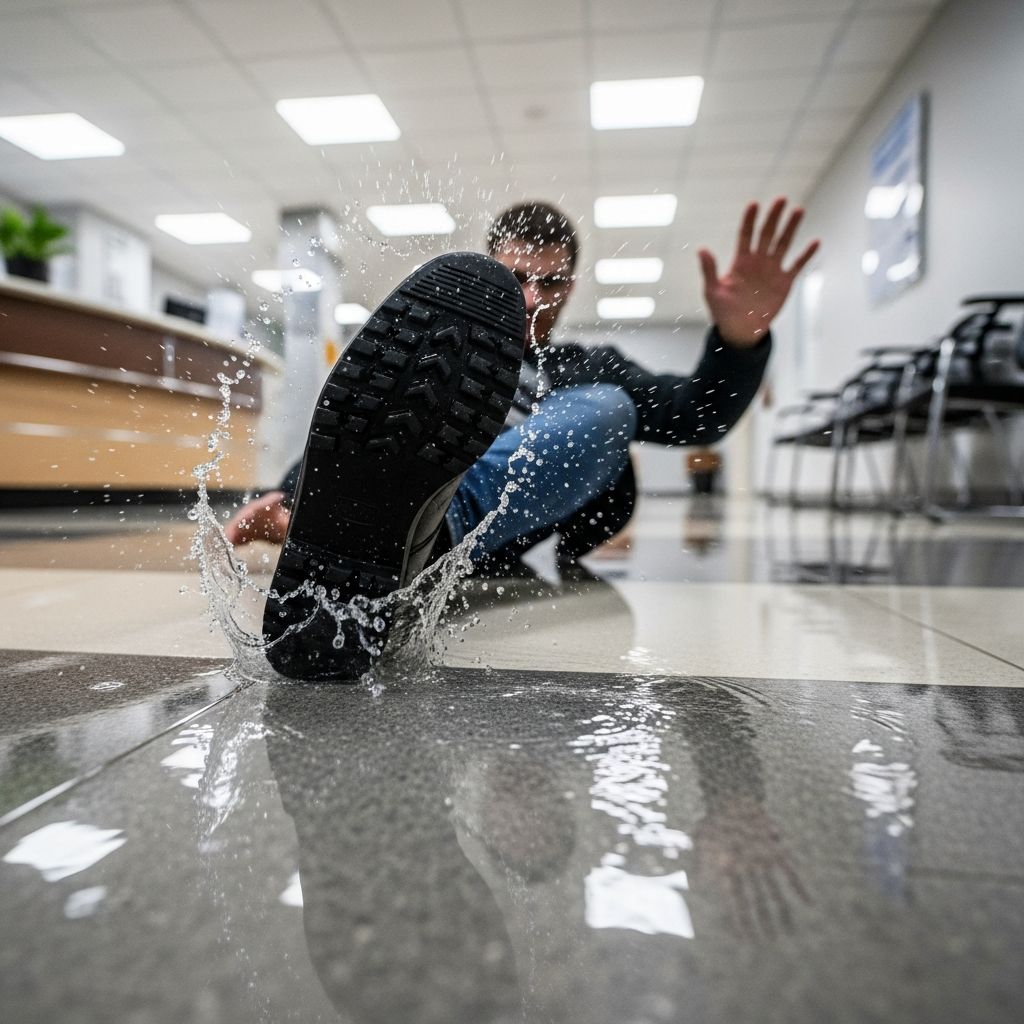
Slip and fall accidents are some of the most common personal injury claims. They can occur in grocery stores, apartment buildings, parking lots, public sidewalks, offices, and private homes. While some falls cause only minor bruising, others lead to life-changing injuries that generate significant medical bills and lost income. Understanding how the law treats these incidents is critical if you or a loved one has been hurt.
This guide explains how slip and fall claims work under premises liability law, what an injured person must prove, what evidence matters most, and the procedural rules that can make or break a case.
What Counts as a Slip and Fall Accident?
A slip and fall case generally arises when a person loses footing or trips on another person’s property because of a dangerous condition that should have been prevented or fixed. In legal terms, most of these claims fall under premises liability, which is the body of law that regulates the responsibilities of property owners and occupiers toward people who enter their property.
Typical hazards that lead to slip or trip accidents include:
- Wet or recently mopped floors without warning signs
- Spilled food or liquid in aisles
- Uneven or broken flooring, tiles, or sidewalks
- Loose rugs or unsecured mats
- Snow, ice, or standing water that was not reasonably treated
- Poor lighting that hides steps, curbs, or obstacles
- Cluttered walkways or cords across walking paths
Not every fall leads to a valid legal claim. The central question in any case is whether the person responsible for the property failed to use reasonable care in finding and fixing the dangerous condition or warning visitors about it.
Premises Liability: Who Owes a Duty of Care?
Slip and fall claims usually arise from a property owner or occupier’s duty of care toward people lawfully on the premises. Under premises liability principles, the person or entity that controls a property must take reasonable steps to keep it safe for visitors.
| Type of Visitor | Typical Example | General Duty Owed* |
|---|---|---|
| Invitee | Customer in a store, tenant’s guest in an apartment complex | Use reasonable care to inspect, repair hazards, and warn of dangers that are known or should be known |
| Licensee | Social guest in a private home | Warn about known hazards that may not be obvious |
| Trespasser | Person entering without permission | Limited duties; usually avoid intentional or reckless harm, with special rules for children |
*Duties can differ by state; many states have modernized or modified these traditional categories.
Responsibility may fall on different parties depending on the situation:
- Commercial property owners and tenants (e.g., shops, malls, offices)
- Residential landlords and sometimes homeowners
- Property management companies that control maintenance
- Government entities that control sidewalks, schools, or public buildings (often with special rules)
Legal Elements of a Slip and Fall Claim
Most slip and fall cases are based on negligence. To win, an injured person (the plaintiff) generally has to prove four elements against the property owner or occupier (the defendant).
- Duty: The defendant owed a legal duty to keep the area reasonably safe for the plaintiff.
- Breach: The defendant failed to act as a reasonably careful property owner or occupier would have acted.
- Causation: The unsafe condition and the defendant’s failure to address it caused the fall and resulting injuries.
- Damages: The plaintiff suffered actual harm, such as medical bills, lost income, pain, or disability.
In slip and fall litigation, the most contested elements are usually breach and causation—specifically:
- How long the hazard existed before the fall
- Whether the owner knew or reasonably should have known about it
- How quickly and effectively they tried to fix or warn of the danger
Courts often look to whether the defendant followed reasonable inspection and maintenance routines and whether other similar incidents occurred in the past.
Notice: Did the Property Owner Know about the Hazard?
A central issue in many slip and fall cases is notice—whether the person responsible for the property either knew, or reasonably should have known, about the unsafe condition.
Notice can be shown in several ways:
- Actual notice: Employees or owners directly saw the hazard or received specific complaints about it.
- Constructive notice: The hazard existed long enough, or occurred often enough, that a reasonably careful owner would have discovered and corrected it through routine inspections.
- Creation of the hazard: The owner, employees, or contractors created the dangerous condition themselves (for example, leaving equipment or debris in a walkway).
Evidence that can help prove notice includes maintenance logs, cleaning schedules, internal incident reports, video footage, and employee testimony regarding inspection routines.
Common Injuries in Slip and Fall Cases
Falls can cause serious harm, especially for older adults. The U.S. Centers for Disease Control and Prevention (CDC) reports that falls are the leading cause of injury-related emergency department visits among older adults and a major cause of hip fractures and traumatic brain injuries.
Typical injuries in slip and fall claims include:
- Sprains and strains of ankles, knees, and wrists
- Broken bones, especially hips, wrists, and ankles
- Back and neck injuries, including herniated discs
- Head injuries and concussions
- Soft tissue damage and deep bruising
Because some injuries (especially brain and spinal injuries) are not immediately obvious, prompt medical evaluation is important both for health and for documenting the claim.
Damages: What Compensation May Be Available?
If liability is established, the injured person may recover various types of damages. Specific categories depend on state law, but typically include:
- Medical expenses (past and future), such as emergency care, surgery, rehabilitation, and assistive devices
- Lost income and reduced earning capacity if injuries limit the ability to work
- Pain and suffering, including physical pain and emotional distress
- Loss of enjoyment of life when injuries limit activities and independence
- Out-of-pocket costs such as transportation for treatment or home modifications
In rare cases involving particularly reckless conduct, some states allow punitive damages to punish and deter extreme misconduct, though these are less common in typical slip and fall cases.
Evidence That Strengthens a Slip and Fall Claim
Successful claims almost always rely on timely, thorough evidence collection. Legal and consumer resources emphasize documenting conditions at the scene, preserving physical evidence, and obtaining prompt medical records.
Important types of evidence include:
- Scene photographs or video showing the hazard, surrounding area, lighting, and any warning signs (or lack of them)
- Witness names and contact information and their descriptions of what they saw
- Incident reports filled out at businesses or workplaces
- Footwear and clothing worn during the fall, preserved without alteration
- Medical records documenting injuries, treatment plans, and prognosis
- Surveillance footage when available from security cameras
- Maintenance and cleaning logs showing when the area was last inspected or serviced
Because some evidence can be lost or destroyed quickly (for example, video overwritten by the system or a spill cleaned up), many attorneys send prompt preservation letters asking that key materials be retained.
Deadlines: Statutes of Limitations and Notice Requirements
Every state sets a statute of limitations that limits how long an injured person has to file a lawsuit. For personal injury cases such as slip and fall claims, these deadlines are typically between one and four years from the date of the accident, depending on the state.
Additional time limits may apply if the defendant is a government entity. Many states require:
- Formal written notice of claim within a short period (sometimes just a few months)
- Compliance with special procedures under state tort claims acts
Missing these deadlines usually means the claim cannot be brought, no matter how strong the evidence of negligence might be.
Comparative Fault: When the Injured Person Shares Blame
Slip and fall cases often involve disputes about whether the injured person was also careless. Many states use a form of comparative negligence to address shared fault, which can reduce or bar recovery based on the plaintiff’s share of responsibility.
Examples of circumstances that defendants may raise include:
- Ignoring clearly posted warning signs
- Walking while distracted (e.g., texting)
- Wearing footwear obviously unsuitable for the conditions
- Crossing into areas that were clearly closed to the public
Under a typical modified comparative negligence rule, an injured person’s damages are reduced by their percentage of fault; if their fault exceeds a certain threshold (often 50%), they may not recover anything. The specific rule varies by state, making local law particularly important.
Practical Steps to Take After a Slip and Fall
Actions taken immediately after a fall can strongly influence both health outcomes and legal rights. Consumer legal guidance and safety organizations consistently recommend the following steps, adapted here for general educational purposes.
- Seek medical care promptly even if injuries seem mild. Some conditions, such as concussions and internal injuries, may not appear right away.
- Document the scene as soon as possible by taking photos or video of the hazard, lighting, and surrounding area.
- Get witness information including names, phone numbers, and brief descriptions of what they observed.
- Report the incident to the property owner, manager, or appropriate authority and request a copy of any written report.
- Preserve physical evidence such as shoes and clothing, and avoid cleaning or altering them.
- Keep records of medical appointments, expenses, missed work, and ongoing symptoms or limitations.
- Avoid detailed statements or social media posts about the incident until you understand your rights.
- Consider consulting a qualified attorney to evaluate deadlines, evidence, and potential compensation.
Typical Defenses in Slip and Fall Cases
Property owners, their insurers, and defense attorneys commonly raise several arguments to limit or defeat liability, such as:
- No notice: The hazard appeared only moments before the fall, so they had no reasonable opportunity to fix or warn about it.
- Open and obvious condition: The danger was sufficiently visible and should have been avoided by a reasonably careful person.
- Plaintiff’s negligence: The injured person was distracted, disregarded warnings, or otherwise failed to use reasonable care.
- Lack of causation: The defendant claims the injuries were pre-existing or resulted from something other than the fall.
- Compliance with policies: The owner argues that reasonable inspection and cleaning procedures were in place and followed on the day of the incident.
Overcoming these defenses often requires careful factual investigation, expert analysis, and strong medical documentation.
Prevention: Reducing Slip and Fall Risks
Slip and fall incidents are not only a legal problem; they are a serious public health issue. The CDC and occupational safety agencies emphasize that many falls are preventable through relatively simple measures.[10]
Effective prevention strategies for property owners and managers include:[10]
- Establishing regular inspection and cleaning schedules for floors and walkways
- Promptly cleaning spills and placing visible warning signs
- Maintaining adequate lighting in halls, stairways, and parking areas
- Repairing uneven surfaces, broken steps, and loose handrails
- Using non-slip flooring materials and mats where wet conditions are likely
- Implementing snow and ice treatment plans for outdoor areas
These steps not only reduce the risk of injuries but can also help demonstrate that the owner acted reasonably if a claim arises.
Frequently Asked Questions (FAQs)
Q: Do I automatically win a case if I fell on someone else’s property?
No. The fact that a fall occurred does not by itself create liability. You must generally prove that the property owner or occupier was negligent—that is, they failed to use reasonable care to discover and fix the hazard or warn about it—and that this failure caused your injuries.
Q: What if there was a warning sign where I slipped?
A warning sign can be an important defense, but it does not automatically defeat a claim. Courts look at whether the warning was clear, visible, and reasonably placed, and whether other steps should also have been taken under the circumstances. Comparative negligence rules may reduce compensation if you disregarded an adequate warning.
Q: How long do I have to file a slip and fall lawsuit?
Time limits, called statutes of limitations, vary by state but often range from one to four years for personal injury cases. Claims involving government property may require additional notices within a much shorter time. Because missing a deadline can end your claim, it is wise to get legal advice as soon as possible.
Q: Can I still recover money if I was partly at fault?
In many states that use comparative negligence, you may still recover compensation even if you share some blame, but your award may be reduced by your percentage of fault. In some jurisdictions, you cannot recover if your share of fault exceeds a specific threshold, such as 50%.
Q: Do I need a lawyer for a slip and fall claim?
There is no legal requirement to hire an attorney, but slip and fall cases often involve complex questions about notice, building codes, comparative fault, and medical causation. Many legal resources recommend at least consulting with a qualified personal injury lawyer, particularly in serious injury cases, to understand your rights and the value of your claim.
References
- Slip and Fall Accidents — Justia. 2024-05-01. https://www.justia.com/injury/premises-liability/slip-and-fall-accidents/
- How to Document Your Slip and Fall Accident for Legal Purposes — The Dominguez Firm. 2023-11-10. https://dominguezfirm.com/injury-lawyer/slip-fall-accident/how-to-document-your-slip-and-fall-accident-for-legal-purposes/
- Understanding Slip & Fall Accidents: Prevention and Legal Insights — Lynch Law Firm. 2024-02-14. https://www.lynchlawyers.com/understanding-slip-fall-accidents-prevention-and-legal-insights
- What To Do After a Slip & Fall Accident in Massachusetts? — Lynch & Owens. 2025-11-08. https://www.lynchowens.com/blog/2025/november/what-to-do-after-a-slip-fall/
- Guide to Winning Your Slip and Fall Case — The Roth Firm, LLC. 2023-06-20. https://www.rothlawyer.com/slip-and-fall-guide/
- Slip and Fall Injuries Among Older Adults — Centers for Disease Control and Prevention (CDC). 2023-09-13. https://www.cdc.gov/falls/facts.html
- Slips, Trips and Falls — U.S. Occupational Safety and Health Administration (OSHA). 2022-12-15. https://www.osha.gov/slips-trips-falls
Similar Articles








Read full bio of Sneha Tete


