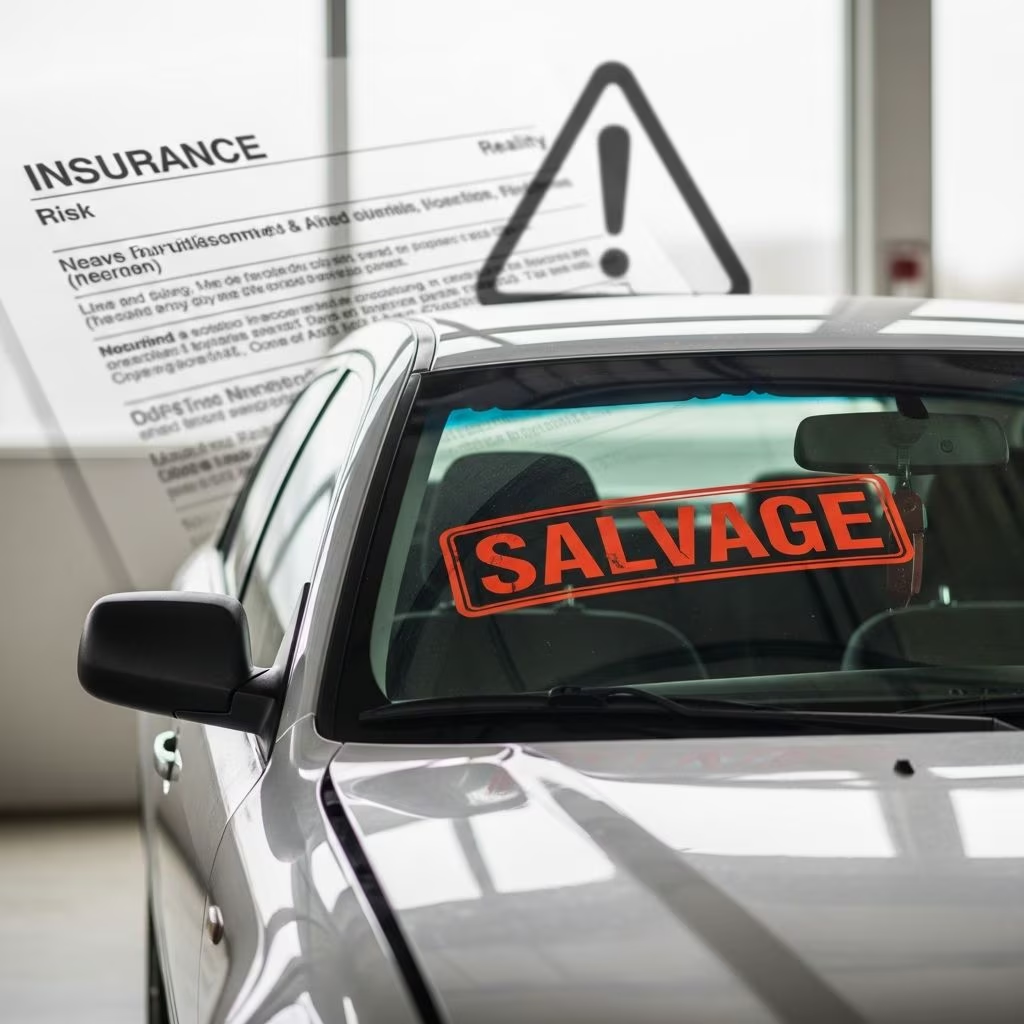
What a Salvage Title Actually Tells You
When shopping for a used car, the title is one of the most important documents you’ll examine. Among the various types of titles, a salvage title stands out as a major red flag for many buyers. But what does it actually mean when a car carries this designation?
A salvage title is a legal branding applied to a vehicle that an insurance company has declared a total loss. This doesn’t necessarily mean the car is completely destroyed, but rather that the cost to repair it exceeds a certain percentage of its market value. In most U.S. states, that threshold ranges from about 50% to 95% of the car’s pre-damage worth, depending on local laws.
Once a vehicle is deemed a total loss, the insurer typically takes ownership and issues a salvage title. This branding stays with the car unless it’s repaired, inspected, and rebranded as a rebuilt or reconstructed vehicle. The salvage label is meant to warn future buyers that the car has suffered significant damage, whether from a collision, flood, fire, or theft-related vandalism.
How Vehicles Earn a Salvage Designation
Salvage titles are not limited to just wrecked cars. While major accidents are the most common cause, several other scenarios can lead to this branding:
- Collision damage: Severe crashes that compromise the frame, suspension, or safety systems often result in a total loss determination.
- Flood damage: Water intrusion can ruin electronics, engines, and interiors, making repairs more expensive than the car’s value.
- Fire damage: Even a small fire can destroy wiring, upholstery, and critical components, leading to a salvage title.
- Theft and recovery: If a stolen car is recovered after the insurer has paid a claim, it may be sold as salvage, especially if parts were removed or the vehicle was vandalized.
- Vandalism or abandonment: In some states, heavily vandalized or long-abandoned vehicles that are later recovered may be branded salvage.
It’s important to note that the exact rules for issuing salvage titles vary by state. Some states require a salvage title only for damage-related total losses, while others also apply it to unrecovered stolen vehicles. This inconsistency means that a salvage title in one state might reflect a different level of damage than in another.
From Salvage to Rebuilt: The Road Back to the Road
A salvage title doesn’t mean a car can never be driven again. Many salvage vehicles are repaired, inspected, and rebranded as rebuilt or reconstructed. This process generally involves:
- Repairing the vehicle to a safe, operable condition by a licensed or qualified mechanic.
- Passing a state-mandated safety and emissions inspection.
- Submitting documentation to the motor vehicle department to change the title from salvage to rebuilt.
Once a rebuilt title is issued, the car can usually be registered and legally driven. However, the rebuilt status remains permanently on the vehicle’s history, just like the original salvage branding. This transparency is intended to protect future buyers by making it clear that the car was once considered a total loss.
Why Salvage Titles Matter to Buyers
For consumers, a salvage title is more than just a piece of paper—it’s a signal of potential risk. Here’s why it matters:
- Uncertain repair quality: There’s no guarantee that repairs were done properly or with quality parts. Frame damage, for example, can be difficult to fix correctly and may affect handling and crashworthiness.
- Hidden damage: Flood-damaged cars may appear fine on the surface but suffer from corroded wiring, moldy interiors, or failing electronics that show up months later.
- Resale value impact: Salvage and rebuilt vehicles typically sell for significantly less than comparable clean-title cars, and their value tends to depreciate faster.
- Financing and insurance challenges: Many lenders are reluctant to finance salvage or rebuilt cars, and insurers may offer only limited coverage or charge higher premiums.
Even if a salvage car looks great and runs well, the history of major damage can make it a riskier long-term ownership proposition.
Impact on Vehicle Value and Resale
One of the most immediate effects of a salvage title is on the car’s market value. Industry valuation guides like Kelley Blue Book and Edmunds typically apply substantial discounts to salvage and rebuilt vehicles, often 20–40% below comparable clean-title models.
For example, a five-year-old sedan worth $15,000 with a clean title might be valued at only $9,000–$12,000 with a rebuilt title, depending on the extent of past damage and the quality of repairs. This discount reflects the increased risk and uncertainty associated with the vehicle’s history.
When it comes time to sell, the salvage or rebuilt branding can make the car harder to move. Many private buyers and dealerships are wary of such vehicles, and some online marketplaces restrict or clearly flag them. As a result, owners may have to accept lower offers or sell to specialty buyers or parts recyclers.
Insurance Challenges for Salvage and Rebuilt Cars
Insuring a salvage or rebuilt vehicle is possible, but it comes with significant limitations:
- Liability-only coverage: Many insurers will only offer liability coverage, which pays for damage you cause to others but not for damage to your own car.
- No comprehensive or collision: Full coverage (comprehensive and collision) is often unavailable or offered at much higher rates, if at all.
- Lower claim payouts: If the car is insured with full coverage, insurers typically base payouts on the salvage or rebuilt value, not the clean-title value, leading to smaller settlements in the event of another total loss.
- Inspection requirements: Some insurers require a pre-insurance inspection to verify that the vehicle is safe and roadworthy before issuing a policy.
Because of these restrictions, owners of salvage and rebuilt cars often face higher out-of-pocket costs if the vehicle is damaged again. They also have less financial protection in the event of theft, fire, or major accidents.
Safety Concerns with Salvage-Branded Vehicles
Safety is perhaps the most critical consideration when dealing with salvage or rebuilt cars. While many repaired vehicles are perfectly safe, others may have hidden or poorly addressed issues:
- Structural integrity: Improperly repaired frame or unibody damage can affect crash performance, increasing the risk of injury in a collision.
- Electrical and electronic systems: Flood-damaged or fire-damaged wiring can lead to short circuits, fires, or failure of critical systems like airbags or ABS.
- Corrosion and rust: Water exposure can cause hidden rust in structural areas, compromising strength over time.
- Missing or aftermarket parts: Some rebuilt cars may have non-OEM parts or missing safety components, which can affect performance and crashworthiness.
Because of these risks, it’s essential to have any salvage or rebuilt vehicle thoroughly inspected by a trusted, independent mechanic before purchase. A pre-purchase inspection should include a detailed look at the frame, suspension, electrical systems, and safety features.
When a Salvage or Rebuilt Car Might Make Sense
Despite the risks, there are situations where buying a salvage or rebuilt vehicle can be a reasonable decision:
- Budget constraints: For buyers with very limited funds, a rebuilt car can provide reliable transportation at a much lower price than a clean-title vehicle.
- Project or hobby cars: Enthusiasts who plan to modify or restore a car may prefer a salvage vehicle as a starting point.
- Parts cars: Some buyers purchase salvage vehicles specifically to harvest usable parts for other cars.
- Short-term use: If you only need a car for a short period, a rebuilt vehicle might be acceptable as long as you understand the risks and limitations.
In these cases, the key is to be fully informed, realistic about repair costs, and prepared for potential resale and insurance challenges.
How to Evaluate a Salvage or Rebuilt Vehicle
If you’re considering a salvage or rebuilt car, follow these steps to reduce your risk:
- Get the full history: Use a vehicle history report (from services like Carfax or AutoCheck) to learn about past accidents, flood damage, and title changes.
- Inspect the car thoroughly: Look for signs of poor repairs, mismatched panels, uneven gaps, rust, water stains, and unusual odors.
- Have a professional inspection: Pay for a detailed inspection by a mechanic experienced with collision and flood damage.
- Check for safety features: Verify that airbags, seat belts, ABS, and other safety systems are present and functional.
- Review repair documentation: If available, ask for receipts and records of repairs, especially for structural or electrical work.
- Test drive carefully: Pay attention to handling, braking, noises, and warning lights during the test drive.
Taking these precautions can help you avoid a lemon and make a more informed decision.
Common Misconceptions About Salvage Titles
Several myths surround salvage and rebuilt vehicles:
- Myth: All salvage cars are unsafe. Reality: Many are repaired to a high standard and can be safe and reliable, but this isn’t guaranteed.
- Myth: A rebuilt title means the car is like new. Reality: It only means the car passed a state inspection; it doesn’t guarantee quality or longevity.
- Myth: Salvage titles are only for wrecked cars. Reality: They can also result from flood, fire, theft, or abandonment.
- Myth: You can’t insure a rebuilt car. Reality: Many insurers offer liability coverage, and some provide limited full coverage, though options are more restricted.
Understanding these realities helps buyers make smarter choices and avoid being misled by either fear or false promises.
Key Questions to Ask Before Buying
Before committing to a salvage or rebuilt vehicle, ask the seller or dealer these critical questions:
- Why was the car branded salvage? (Accident, flood, fire, theft?)
- Has the car been rebuilt and inspected? Can you see the rebuilt title and inspection report?
- What repairs were done, and who performed them?
- Are there any known mechanical or electrical issues?
- Can I get a vehicle history report?
- Is the car currently insured, and what type of coverage does it have?
- Are there any liens on the vehicle?
Getting clear, documented answers to these questions can help you assess whether the car is a reasonable risk for your needs and budget.
FAQs About Salvage and Rebuilt Titles
What is the difference between a salvage title and a rebuilt title?
A salvage title is issued when a vehicle is declared a total loss by an insurer. A rebuilt title is issued after the salvage vehicle has been repaired and passed a state inspection, allowing it to be registered and driven again.
Can I finance a car with a salvage or rebuilt title?
Many traditional lenders are hesitant to finance salvage or rebuilt vehicles due to their higher risk and lower resale value. However, some specialized lenders and credit unions may offer financing, often with higher interest rates and stricter terms.
Is it safe to drive a car with a rebuilt title?
It can be, but safety depends on the quality of repairs and the nature of the original damage. A thorough inspection by a qualified mechanic is essential before driving a rebuilt car regularly.
Does a rebuilt title affect insurance?
Yes. Many insurers offer only liability coverage for rebuilt vehicles, and full coverage (if available) is often more expensive and based on a lower valuation, resulting in smaller payouts if the car is totaled again.
Can a salvage title be removed completely?
No. Once a vehicle has a salvage title, that history remains part of its record. Even after being rebuilt, the car will carry a rebuilt or reconstructed title, which discloses its past salvage status.
Are flood-damaged cars always salvage titled?
Not always, but they often are if the damage is severe enough to make repairs uneconomical. Some flood-damaged cars may be repaired and sold without proper disclosure, which is why a vehicle history report and inspection are crucial.
References
- Salvage Title — Wikipedia. Accessed 2025-12-08. https://en.wikipedia.org/wiki/Salvage_title
- What Is a Salvage Title Vehicle and Are They Worth Buying? — Edmunds. Accessed 2025-12-08. https://www.edmunds.com/car-buying/what-is-a-salvage-title-vehicle.html
- Can You Get Insurance on a Salvage Title Car? — Progressive. Accessed 2025-12-08. https://www.progressive.com/answers/insurance-salvage-title-car/
- What Is a Car Salvage Title and Is It Bad? — Car and Driver. Accessed 2025-12-08. https://www.caranddriver.com/auto-loans/a41613291/what-is-car-salvage-title/