
Understanding Your Rights and Duties in a Traffic Stop
Learn how traffic stops work, what police may lawfully do, and how to assert your constitutional rights calmly and effectively.
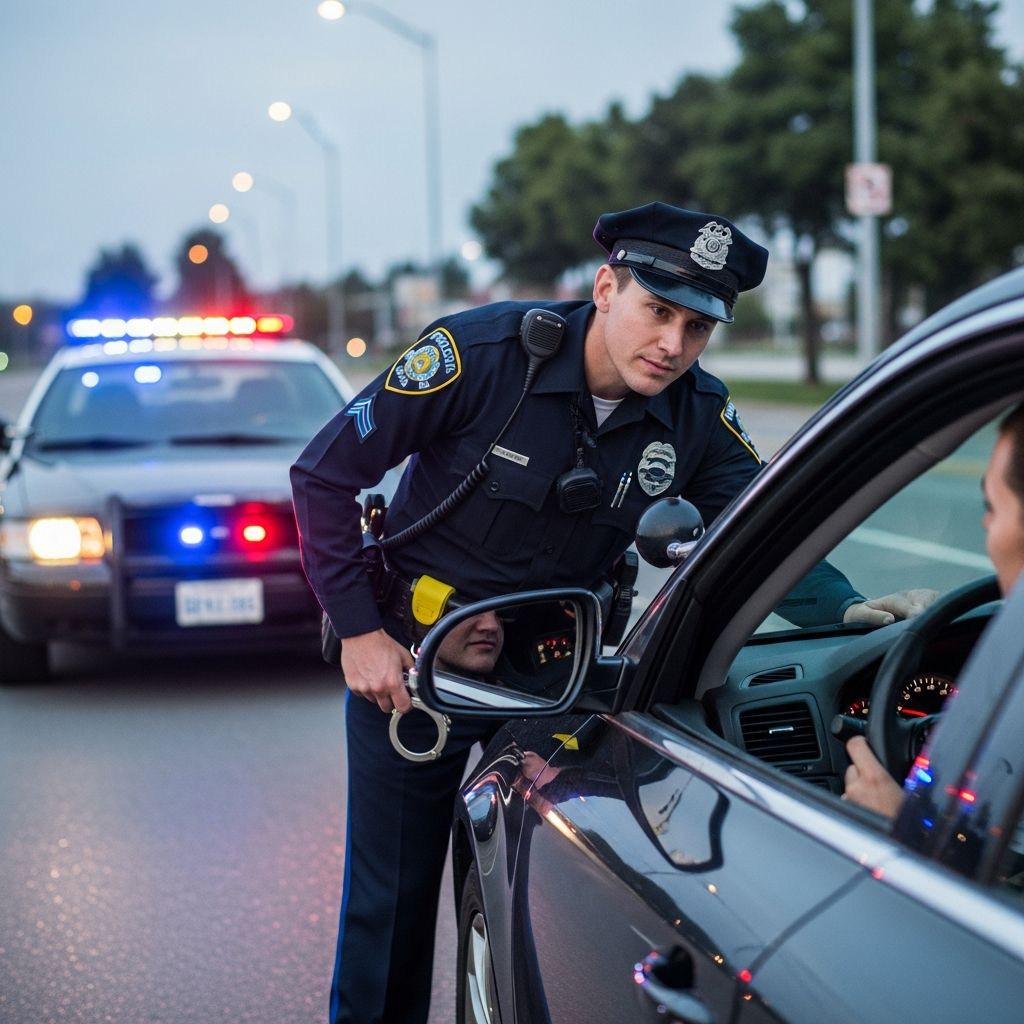
Being pulled over by law enforcement can be stressful, but knowing the rules that govern traffic stops can make the encounter safer and more predictable. This guide explains how traffic stops work, what officers are allowed to do, what you must do as a driver, and how to assert your rights calmly and lawfully.
1. Why Police Can Stop a Vehicle
In the United States, traffic stops are considered seizures under the Fourth Amendment, which means they must be reasonable. Generally, an officer needs at least one of the following to stop a vehicle:
- Probable cause of a traffic violation (for example, speeding, running a red light, broken taillight).
- Reasonable suspicion that a crime is occurring or has occurred, based on specific observable facts.
- Checkpoint or roadblock that complies with constitutional requirements (e.g., neutral criteria, limited discretion).
“Reasonable suspicion” is a lower standard than probable cause but must still be based on facts, not a mere hunch.
Key Legal Standards at a Glance
| Standard | What It Means | What It Allows |
|---|---|---|
| Reasonable suspicion | Specific, articulable facts suggesting a law may have been broken. | Brief stop and limited questioning or investigation. |
| Probable cause | Facts and circumstances indicating it is likely a crime or violation occurred. | Arrest in many situations and broader search authority. |
| Warrant | Judicial authorization based on probable cause. | Full search consistent with warrant terms. |
2. First Steps When You See the Lights
The way you respond in the first moments after an officer signals you to pull over can affect both safety and the tone of the encounter.
- Pull over promptly and safely to the right side or another clearly safe location.
- Turn on your hazard lights if it takes a moment to find a safe spot.
- Switch off the engine and, at night, turn on the interior light if possible.
- Keep your hands visible, ideally on the steering wheel; passengers should keep their hands where the officer can see them.
- Stay in the vehicle unless the officer clearly asks or orders you to step out.
Officers are trained to treat traffic stops as potentially risky, so visible hands, calm movements, and clear communication promote safety for everyone involved.
3. What You Must Provide to the Officer
Every state requires drivers to present basic identification and vehicle documents on demand. While exact rules vary, you are typically required to provide:
- Driver’s license
- Vehicle registration
- Proof of insurance
Refusing to provide lawful identification or these documents when required can lead to additional citations or even arrest in some jurisdictions.
To reduce tension:
- Tell the officer where your documents are kept before reaching for them (for example, “My registration is in the glove box.”).
- Move slowly and avoid sudden motions when retrieving items.
4. Your Right to Remain Silent
Both drivers and passengers have the right to remain silent about most questions beyond basic identifying information.
You generally do not have to answer questions like:
- “Where are you coming from?”
- “Where are you going?”
- “Have you had anything to drink?”
To assert this right calmly, you can say something like, “I choose to remain silent” or “I prefer not to answer any questions.”
However, some states have laws requiring a person who is lawfully stopped to provide their name in certain situations. Failing to identify yourself when required can lead to additional charges, so it is important to know your local rules.
5. May Police Order You Out of the Vehicle?
Courts have allowed officers to order drivers and passengers to exit the vehicle during a lawful traffic stop, largely for safety reasons. If an officer clearly instructs you to get out:
- Comply calmly and promptly.
- Keep your hands visible as you step out.
- Stand where the officer directs you to stand.
Although you may later challenge whether the order was lawful, resisting or arguing on the roadside can escalate the situation and may result in arrest. Legal challenges are handled later, in court, with the help of an attorney.
6. Searches of You and Your Vehicle
Search and seizure rules during traffic stops are shaped by the Fourth Amendment and numerous court decisions. There are several common situations:
6.1 Consent Searches
Officers often ask, “Do you mind if I look in your car?” You do not have to consent to this search.
- You may reply, “I do not consent to a search.”
- Your refusal cannot, by itself, be used as proof that you have done something wrong.
6.2 Searches Based on Probable Cause
If an officer has probable cause to believe your vehicle contains evidence of a crime or contraband, they may search areas where that evidence could reasonably be found, even without your consent.
Examples can include:
- Strong odor of illegal drugs.
- Visible contraband or evidence in plain view.
6.3 Searches Incident to Arrest
If you are lawfully arrested after a traffic stop, officers may search you and, in some circumstances, parts of the vehicle, such as the passenger compartment, as a search incident to arrest. Courts limit such searches to areas where evidence related to the arrest might be found or situations involving officer safety.
6.4 Pat-Downs (Frisks) for Weapons
If an officer reasonably suspects that you are armed and dangerous, they may perform a limited pat-down of your clothing to check for weapons, even during a traffic stop. This is not a full search of your pockets for evidence, but a safety measure focused on weapons.
7. Duration and Scope of the Stop
A traffic stop is not supposed to last longer than necessary to address the reason for the stop and to complete routine tasks like checking your license and registration.
During a typical stop, an officer may:
- Run your license and registration information through databases.
- Check for outstanding warrants.
- Write a warning or citation.
Extended questioning about unrelated matters or prolonged detention may require additional reasonable suspicion or probable cause.
You can politely ask, “Am I free to go?” If the officer says yes, you may leave. If the officer says no, this indicates that you are being detained, at which point you should generally stop answering questions and may state that you wish to remain silent and speak with an attorney.
8. Recording a Traffic Stop
Courts have recognized that the public has a First Amendment right to record police in public places, as long as doing so does not interfere with official duties.
- You may usually record video and audio of the encounter from a safe distance.
- Do not physically interfere or disobey lawful safety orders, such as instructions to stand back.
- Keep your phone or camera in plain view and avoid sudden gestures that might be misinterpreted as threatening.
Some states have specific consent rules for audio recording; however, many recognize a right to openly record police in public. When in doubt, keep your conduct calm and non-obstructive.
9. Tickets, Warnings, and Arrests
After investigation, the officer will decide how to resolve the stop. Common outcomes include:
- Verbal warning: No ticket; you are informed of the issue.
- Written warning: Documented warning that does not usually carry a fine.
- Citation (ticket): Formal notice of an alleged violation with instructions for payment or court appearance.
- Arrest: Used for serious offenses, outstanding warrants, or when statute or policy requires custody (for example, some DUI cases).
If you are issued a ticket, signing it typically acknowledges that you received it, not that you agree you are guilty. Refusing to sign if required can lead to arrest in some jurisdictions.
If you believe the officer is mistaken or acted unfairly, the recommended approach is:
- Stay calm and avoid arguing at the roadside.
- Gather information after the stop (time, location, badge number, patrol car number, names of witnesses).
- Challenge the ticket or file a complaint later through legal or administrative channels.
10. Special Considerations: DUI and Sobriety Checks
Driving under the influence (DUI) investigations often arise from traffic stops, and many states also use sobriety checkpoints under specific rules.
Key points that commonly apply (but can vary by state):
- Officers at checkpoints typically ask brief questions and observe for signs of impairment.
- You retain your right to remain silent and to refuse consent to a vehicle search.
- Many states have implied consent laws: by driving, you agree in advance to chemical tests (breath, blood, or urine) after a lawful arrest for DUI.
- Refusing these official chemical tests can result in automatic license suspension, separate from any criminal case.
Rules about roadside field sobriety tests and portable breath tests differ by jurisdiction, so consulting a local attorney after any DUI-related stop is wise.
11. How Passengers Are Affected
Passengers are also impacted by a traffic stop and have important rights as well.
- Passengers may be asked for identification under some circumstances.
- Like drivers, passengers have the right to remain silent and generally do not have to answer investigative questions.
- Officers may order passengers to step out of the car as a safety measure.
- If the officer develops reasonable suspicion or probable cause related to a passenger, that person may be detained or searched under normal constitutional rules.
12. Protecting Your Rights After the Stop
If you believe your rights were violated, most legal remedies occur after the encounter, not during it.
- Write down everything you remember as soon as possible: time, location, what was said, and any witnesses.
- Save any recordings or documents from the stop.
- Consult a qualified attorney, especially if you were arrested, searched, or given a serious citation.
- You may be able to challenge evidence obtained through an unreasonable search or seizure in court.
13. Practical Safety Tips for Any Traffic Stop
Legal rights matter, but so does practical safety. The following strategies can help keep interactions with law enforcement as low-risk as possible:
- Stay polite and speak in a calm, steady voice.
- Avoid sudden movements; tell the officer what you are going to do before you do it.
- Do not touch the officer or their equipment.
- Do not try to flee or physically resist, even if you think you are right.
- Use your rights (such as remaining silent or refusing consent to search) with clear, respectful statements.
Frequently Asked Questions (FAQs)
Q1: Can I ask the officer why I was pulled over?
Yes. You may politely ask, “Officer, can you tell me why I was stopped?” Officers are generally expected to explain the reason for the stop, either at the beginning or during the encounter.
Q2: Do I have to answer questions about where I’m going or where I came from?
No. Beyond providing identification and required documents, you usually do not have to answer questions about your travel plans or other personal details. You may calmly state that you prefer not to answer.
Q3: What should I do if I think the search of my car was illegal?
Do not try to stop the search physically. Instead, clearly say, “I do not consent to this search” and allow it to proceed. Then, speak with an attorney as soon as possible to explore challenging the evidence in court.
Q4: Can I refuse to get out of the car when ordered?
Refusing a clear order to exit can lead to arrest or additional charges in many jurisdictions. Courts have generally allowed officers to order both drivers and passengers out of the vehicle during lawful stops for safety reasons, so legal challenges should be made later through counsel.
Q5: Is it legal to record the officer during the stop?
In most places, yes. You may record as long as you do not interfere with law enforcement duties and you obey lawful safety instructions. Keep the recording device visible and maintain a calm, non-obstructive distance.
References
- Stopped by Police: Know Your Rights — American Civil Liberties Union (ACLU). 2021-06-01. https://www.aclu.org/know-your-rights/stopped-by-police
- Traffic Stops: Police Powers Under the Fourth Amendment — U.S. Department of Justice, Office of Justice Programs (OJP). 1998-01-01. https://www.ojp.gov/ncjrs/virtual-library/abstracts/traffic-stops-police-powers-under-fourth-amendment
- What to Do and Expect When Pulled Over by Law Enforcement — American Association of Motor Vehicle Administrators (AAMVA). 2020-07-15. https://www.aamva.org/law-enforcement/what-to-do-when-stopped-by-law-enforcement
- Probable Cause and Reasonable Suspicion — Maricopa County Attorney’s Office. 2023-03-10. https://www.maricopa.gov/5233/Probable-Cause-and-Reasonable-Suspicion
- Understanding Your Rights During a Traffic Stop in Arizona — Pajerski Law. 2023-08-01. https://www.pajerskilaw.com/articles/understanding-your-rights-during-a-traffic-stop-in-arizona
- Your Rights During a Police Stop in Arizona — Doran Justice. 2022-05-05. https://www.doranjustice.com/your-rights-during-a-police-stop-in-arizona
- Know Your Rights During a Traffic Stop in Arizona — Alarid & Associates. 2023-02-20. https://www.alariddefense.com/blog/know-your-rights-during-a-traffic-stop-in-arizona
Similar Articles








Read full bio of Sneha Tete


